Nintendo is preparing a broad Customer Appreciation Sale running from September 13 through September 26, spanning digital and physical games, downloadable content, hardware accessories, amiibo, bundles and Nintendo-branded apparel. The company has characterized the event as one of its biggest promotions to date, with discounts reaching as much as 30% on eligible products.
That is a substantial enough list to attract attention on its own. The unusual wrinkle is Nintendo’s explanation for how the event became possible: the company says tariff-related refunds it received from the U.S. government helped support the promotion. Nintendo also says it absorbed most tariff-related expenses itself. That makes this more than an ordinary seasonal eShop markdown; it is a sale explicitly tied to a politically and legally complicated cost issue that has followed hardware makers and import-dependent consumer brands.
For shoppers, the immediate practical details are straightforward but incomplete. Savings are expected across the Nintendo eShop, Nintendo Stores and selected participating retailers. However, Nintendo has not yet published the full list of discounted items. Until that lineup arrives, players do not know which specific games, controllers, console bundles, amiibo figures, DLC packs or clothing will receive the advertised reductions.
A wide promotion, but not yet a complete deal list
The September 13 start date gives Nintendo players a defined window of nearly two weeks to look over the offerings. The sale ends September 26. Nintendo’s wording suggests a catalog-wide event rather than a promotion attached to one franchise or one piece of hardware, since its planned categories include both digital and boxed software alongside merchandise and accessories.
That breadth matters because Nintendo’s ecosystem is not limited to game purchases. A shopper might be waiting for a first-party digital title, a physical release for the shelf, an expansion pass, a controller, an amiibo, or a Nintendo-themed garment. Bundles can also be meaningful during a promotion because their value depends on what is included and whether the discounted total is lower than buying every piece separately.
Still, “up to 30% off” should be read precisely. It describes the maximum advertised discount, not a promise that every product will be cut by 30%. The actual value of the sale will depend on the eventual item-by-item pricing, regional eligibility, stock of physical goods and which retail partners participate. Shoppers particularly interested in a particular accessory or game should wait for Nintendo’s specific sale pages rather than assume that every major release or peripheral is included.
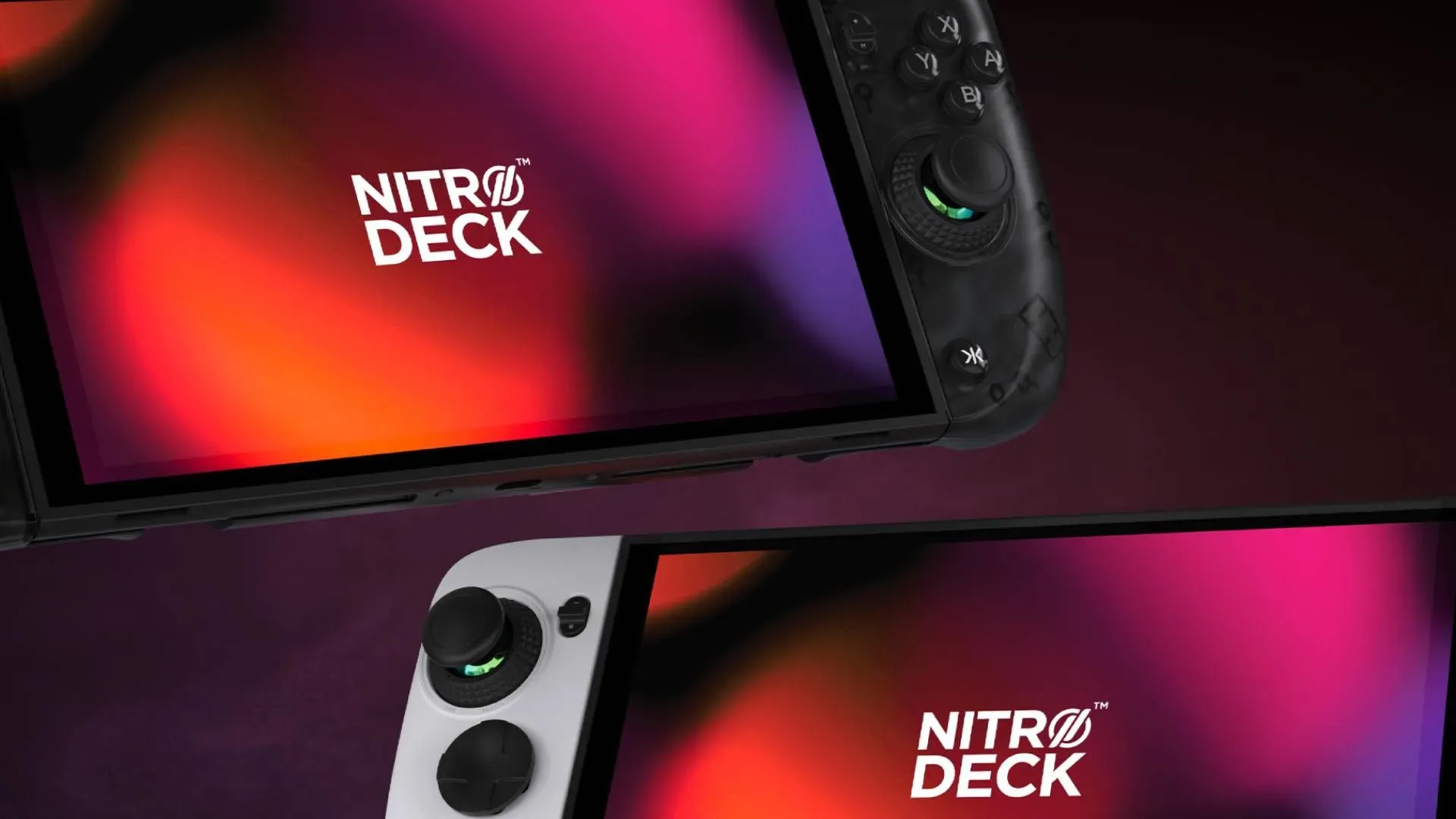
Anyone building a Switch setup may also want to keep an eye on the accessory portion of the event. Third-party hardware has continued to arrive for both Switch 2 and earlier Switch systems; for example, the CRKD Nitro Deck 2 has begun global shipping for Switch 2 and older Switch models. Nintendo’s own promotion could be an opportunity to compare official options, eligible bundles and collectible add-ons without treating any single product’s inclusion as confirmed before the formal list appears.
Why tariff refunds have become part of the headline
Nintendo described the Customer Appreciation Sale as a thank-you to its players and said tariff-related refunds played a role in making promotions of this kind possible. It also maintained that it had taken on most of the tariff-related cost burden. In conventional corporate language, that is an explanation of the financial conditions behind the sale. In this case, though, the statement carries extra weight because the refunds are connected to an ongoing dispute over who should ultimately benefit from money returned after tariffs were collected.
Related coverage includes Nintendo Details Customer Appreciation Sale Fueled in Part by Tariff Refunds.
Earlier in 2026, Nintendo filed suit against the U.S. Treasury Department, the Department of Homeland Security and Customs and Border Protection seeking the return of tariff payments. The action followed a Supreme Court decision described as finding President Trump’s tariffs unlawful. Nintendo’s lawsuit seeks to recover the money it paid, putting the company among businesses seeking relief related to those tariff collections.
At the same time, Nintendo has been contesting efforts by some customers to obtain a share of the related refund money. That contrast is why the sale has drawn so much discussion. Nintendo’s position, as reflected in its promotion, is that it absorbed most of the relevant costs and that the refunds help create room for a consumer-facing sale. Customers pursuing litigation have argued for a different outcome: that buyers who paid prices affected by tariffs should receive some part of any refunds.
Neither a discount campaign nor a company statement settles the legal questions around those claims. A sale can put lower prices in front of customers now, but it is not the same thing as an individualized repayment tied to a previous purchase. The two ideas may be related in public debate, yet they operate differently. One is a limited-time retail promotion determined by product eligibility. The other concerns potential restitution and the legal treatment of past payments.
Lower prices arrive after an expensive hardware period
The dispute is especially sensitive because consumers faced higher prices for Switch 2 consoles and controllers in the prior year. Hardware price increases are felt immediately: a console is often the largest single purchase in a gaming household, and additional controllers, charging gear, cases and other essentials can quickly raise the total cost of entry.
Game discounts are welcome, but they do not erase the expense of a console bought earlier at a higher price. The same is true of a controller purchased at a premium. That is why Nintendo’s decision to connect its new sale to tariff refunds is likely to be read in two ways. Some players will see practical savings across a large range of items and appreciate a chance to buy into games, collectibles or accessories at a reduced price. Others will focus on the still-contested question of whether prior customers should receive direct compensation.
The company is plainly presenting the event as a benefit for the broader Nintendo community rather than a settlement for specific purchasers. Its timing and inventory selection will therefore be crucial. If widely desired products are included at meaningful reductions, the promotion could feel genuinely expansive. If the strongest markdowns concentrate on limited merchandise, older software or less sought-after items, the “up to” figure will naturally receive closer scrutiny.
What to watch once the sale begins
With the detailed discount list still pending, a measured approach is the best one. Consumers can compare the promotion’s listed price with the usual eShop price, the standard price at Nintendo Stores and prices offered by participating retailers. Physical products also introduce stock considerations that do not apply in the same way to a purely digital sale. An amiibo or clothing item may sell through, while a digital game may remain available throughout the advertised period so long as the regional storefront participates.
- Eligible products: Confirm whether the desired game, DLC, controller, amiibo, bundle or apparel item is actually part of the event.
- Discount size: Check the exact reduction instead of assuming the headline maximum applies.
- Storefront: Look at the eShop, Nintendo Stores and participating retailers, since selection may vary.
- Bundle math: Compare the package price with the combined cost of buying included items separately.
- Physical availability: Verify inventory before expecting a collectible or apparel item to remain in stock until September 26.
Nintendo’s Customer Appreciation Sale is therefore notable for two linked reasons. First, it promises a large multi-category promotion across much of the company’s consumer ecosystem. Second, it openly identifies tariff-related refunds as part of the financial backdrop, even as the question of refunds to customers remains contested in court.
Players will have from September 13 to September 26 to decide whether the individual deals fit their wish lists. The headline may be about a maximum 30% discount, but the fuller story will be told by the confirmed product list, the actual savings available in each storefront and the continuing legal debate surrounding the funds Nintendo says helped make the promotion possible.