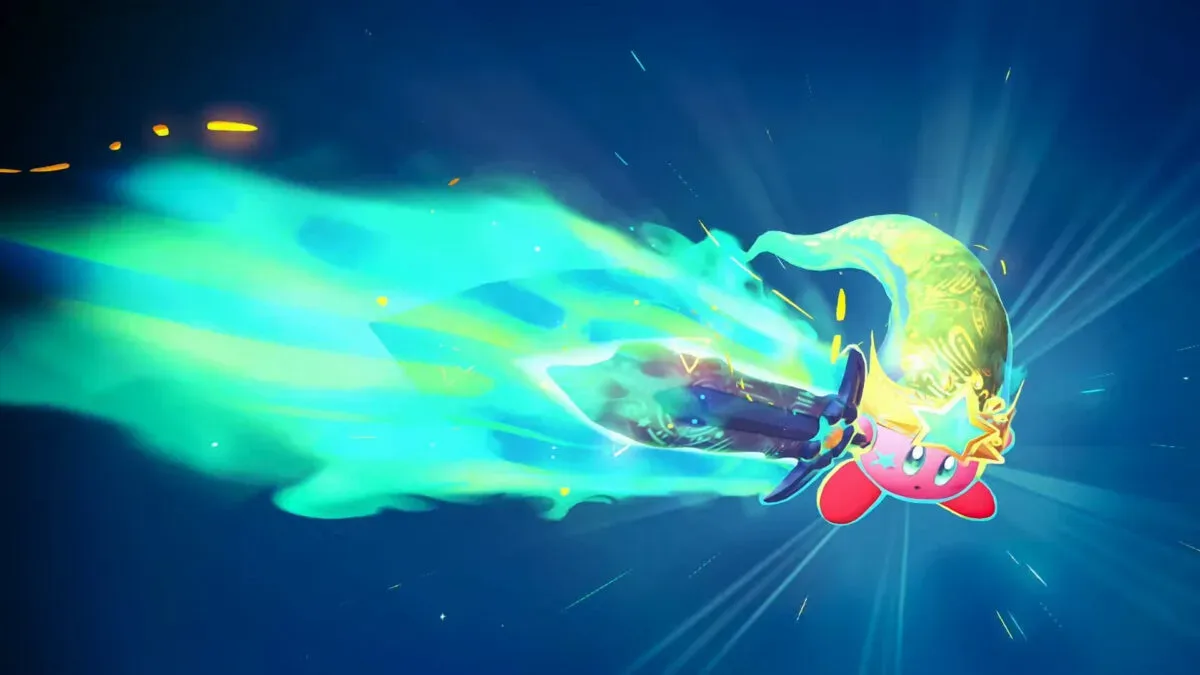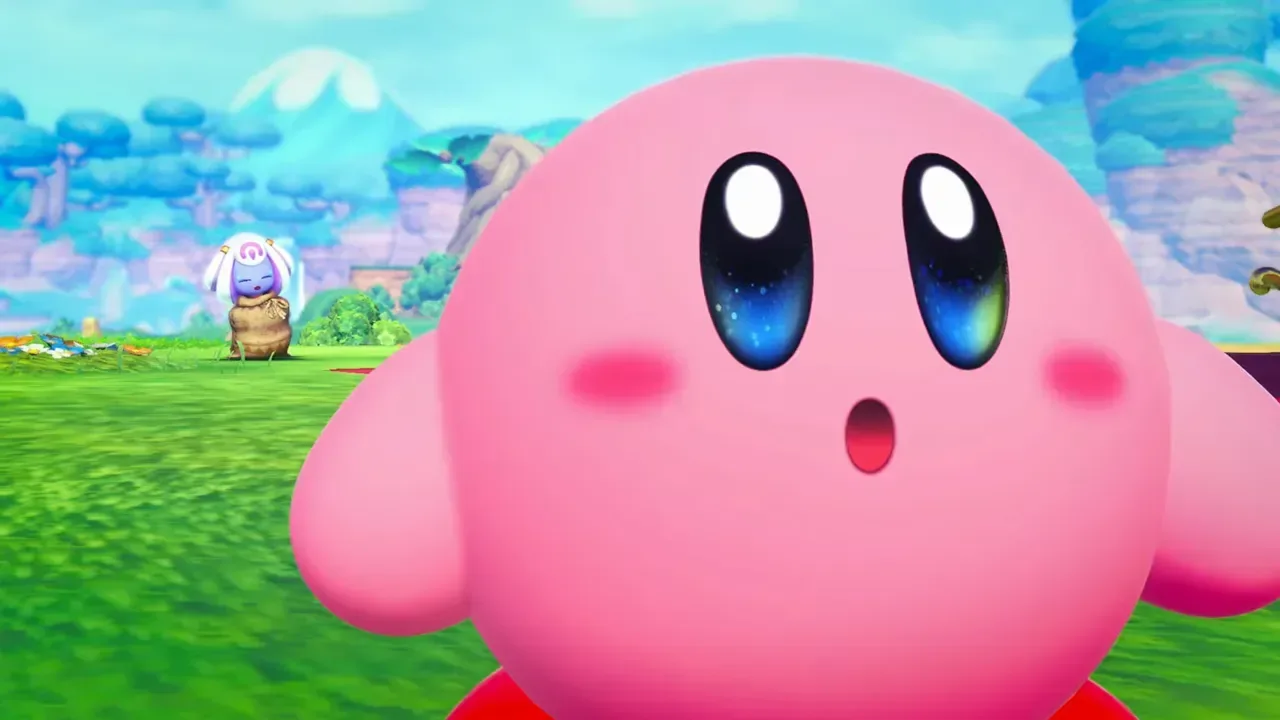
Kirby has swallowed gods, dismantled eldritch-looking final bosses, driven improbable vehicles, and generally treated physics as a polite suggestion. Yet a crack in the sky may be one of the most unsettling things the series has ever put in front of him. In footage for Kirby and the World Beyond, the pink hero spots a flaw overhead, breaks it open, and reveals another world beyond the reality he thought he knew. It is a clean, instantly readable visual twist—and it has sparked a very specific pop-culture association.
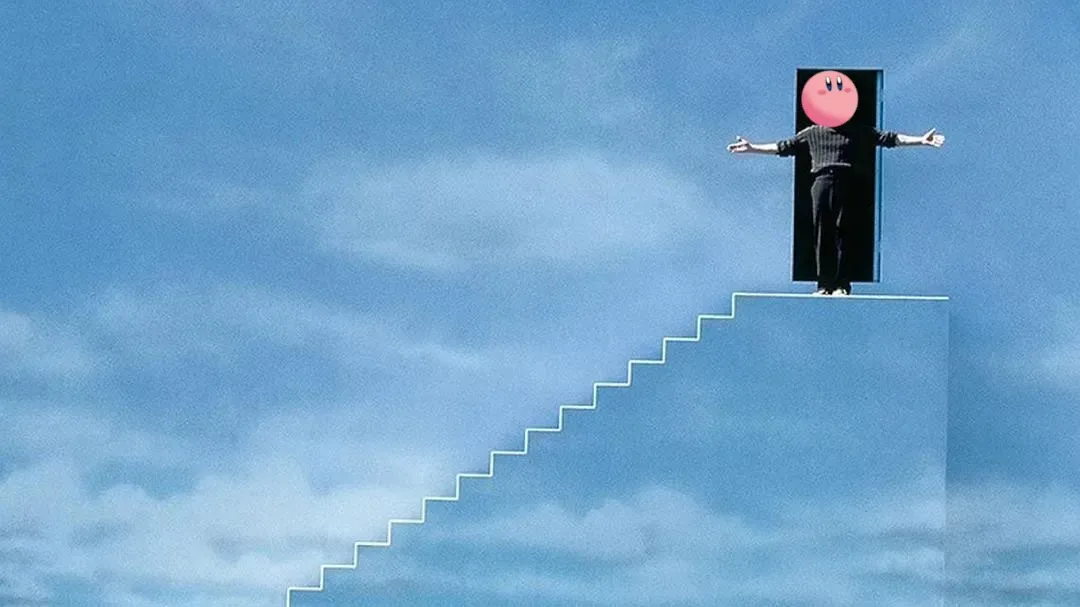
For plenty of viewers, that sky-breaking image lands squarely in The Truman Show territory. The comparison is amusing because Kirby’s usual energy is closer to a cheerful afternoon picnic than an existential crisis. Still, the basic image is powerful: a character discovers that the borders of their familiar world may be artificial, then physically tears through the scenery to find something on the other side. Put that next to a story about a manufactured life existing inside a gigantic constructed environment, and the internet connection practically makes itself.
Why the Truman Show comparison arrives so quickly
Released in 1998, The Truman Show stars Jim Carrey as Truman Burbank, a man who gradually learns that his entire life has unfolded inside a controlled television production. The town around him is a set, the people closest to him are performing roles, and his private existence has been converted into entertainment without his meaningful consent. The film balances bright artificiality and broad comedy with an increasingly uncomfortable story about surveillance, consumer culture, manipulation, and a person trying to reclaim agency.
Kirby and the World Beyond is not established as an adaptation, homage, or deliberate reference to that film. There is no need to force the connection beyond what the visual provides. The resemblance is simply unusually precise: a pristine-looking world, a sudden fault in its supposed limits, and the discovery that an expansive “outside” has been concealed from the protagonist. Sometimes one image is enough to make two unrelated works collide in everyone’s brain at once.
The resulting fan jokes have naturally recast the movie’s most recognizable cadence into Kirby language, including variations involving his signature “poyo.” It is a crossover of tone more than canon: an unnervingly polished sci-fi satire meeting one of games’ roundest and most relentlessly optimistic adventurers. The gap between those moods is what makes the joke work. Imagining Kirby confronting a tyrannical producer figure is funny precisely because Kirby is more likely to solve the problem by inhaling a prop lighthouse.
A mystery that suits an open-world Kirby game
The sky reveal does more than provide a meme-ready frame. It suggests a useful structure for an open-world adventure. Exploration games often ask players to scan the horizon, climb toward distant landmarks, and assume the map’s edges represent the whole of the playable reality. A game named Kirby and the World Beyond can play with that assumption. If the world players begin in is only part of the picture, discovery is no longer limited to finding collectibles or hidden routes. The nature of the map itself becomes a question.
That leaves room for several possibilities without pretending the trailer confirms any of them. The world beyond could be a second region, a mirrored version of an existing landscape, a place whose rules differ from Kirby’s starting environment, or the setting for a larger villain-driven conflict. It could also mean the earlier world is not literally fake at all; a concealed threshold does not automatically mean every tree, resident, and path is a stage prop. The footage establishes mystery, not the full explanation.
The detail that the newly visible world appears similar to the one Kirby already knows makes the setup more interesting. Similarity can mean repetition, contrast, escalation, or a deliberate invitation to look harder. Familiar geography seen from a new angle is one of the most effective ways to make an exploratory game feel strange. A player may believe they understand a place, only to find that the same visual language hides an entirely different purpose once a barrier comes down.
Related coverage includes Kirby and the World Beyond's Sky-Shattering Reveal Has Everyone Thinking of The Truman Show.
That approach would also fit Kirby’s history of keeping its biggest narrative turns in reserve. The series is famous for presenting charming, colorful surfaces before introducing threats that are much larger, weirder, or sadder than the opening hours suggest. Its bright presentation is not evidence that it cannot build suspense. If anything, a friendly world makes an abrupt rupture in the sky feel more dramatic because it interrupts an expectation of safety.
Not every facade needs the same meaning
It is tempting to import all of The Truman Show into Kirby’s new premise: invisible controllers, an imprisoned hero, and a calculated system built to keep someone from reaching the truth. But that would be more fan fiction than evidence. The film’s central horror comes from Truman being watched and exploited throughout his life. Nothing described for Kirby and the World Beyond establishes surveillance, television, actors, or an equivalent scheme.
What the comparison does provide is a helpful vocabulary for discussing the feeling of the scene. A painted horizon is not merely scenery once a character realizes it is a barrier. A beautiful sky is not just atmosphere once it can crack. A world that looked complete can become suspicious in seconds. Those are visual storytelling tools, and they can support comedy, fantasy adventure, melancholy, menace, or all of the above. Kirby’s version may ultimately prove much less cynical than Peter Weir’s film while still using the same basic shock of discovering an apparent boundary is not real.
There is another important difference. Truman’s escape is bound to a struggle for self-determination against a system designed around him. Kirby’s adventures generally hinge on active forward momentum. He does not need much persuasion to investigate a strange new opening, and that makes him a particularly funny but effective hero for this kind of reveal. Where another protagonist might spend an act questioning whether to cross the threshold, Kirby sees an impossible problem and treats it as the day’s next destination.
The appeal of a trailer moment that invites theories
Modern trailers often try to sell scale by showing more terrain, more enemies, and more spectacle. The broken-sky scene sells something different: uncertainty. It asks viewers to wonder what their eyes are actually looking at. That is more valuable than a checklist of locations because it creates a reason to revisit the footage. Is the outer world larger? Is it older? Is it a duplicate? Is the divide natural, magical, or the work of an antagonist? Those questions are currently more compelling than any premature answer.
It also creates an appealing tension for open-world design. Open worlds are commonly about freedom, but this premise hints that apparent freedom may have been bounded. The player can roam broadly and still discover that the horizon was withholding a further layer. If the game follows through on that idea, the revelation could make the first landscape feel newly meaningful rather than simply replacing it with a second map.
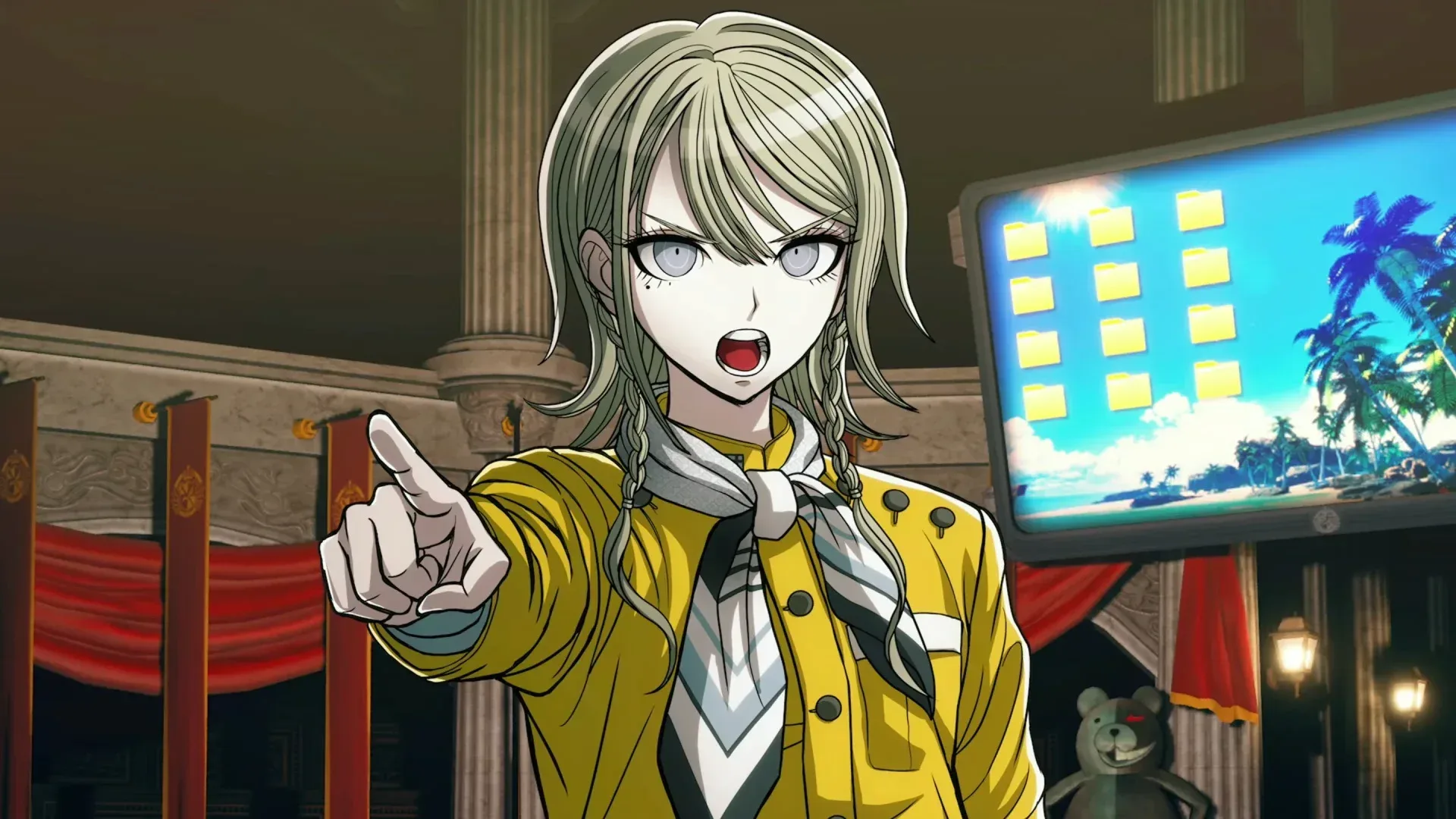
For Nintendo fans who enjoy trailers hiding a person, a premise, or a structural twist in plain sight, the setup sits comfortably beside other recent speculation-driven reveals. Danganronpa 2×2’s Slayhem trailer, for example, has also prompted close reading over what might be tucked into a brief promotional glimpse. Kirby’s mystery is different in tone, but the impulse is the same: pause, examine, compare notes, and decide whether the trailer has shown more than it initially appears to.
A surprisingly durable pop-culture mashup
The most entertaining part of the response may be how quickly the association has become inseparable from the image. A single crack in a digital sky has produced a collision between 1990s movie anxiety and a character whose chief talents include floating, copying powers, and consuming objects much larger than himself. It works as a gag because it is so disproportionate, but it works as criticism because both images understand the drama of an unseen limit suddenly becoming visible.
For now, Kirby and the World Beyond remains an upcoming Switch 2 game with a deliberately tantalizing setup rather than a fully explained metaphysical puzzle. The trailer has supplied the key fact: Kirby reaches a break in the sky and exposes a world beyond his own. Everything else—the possibility of an illusionary prison, the role of a villain, and the exact relationship between the two environments—belongs to the theory board.
That is enough to make the wait more interesting. Kirby’s world has always had room for a surprise behind a cute façade. This time, the façade may be the sky itself.