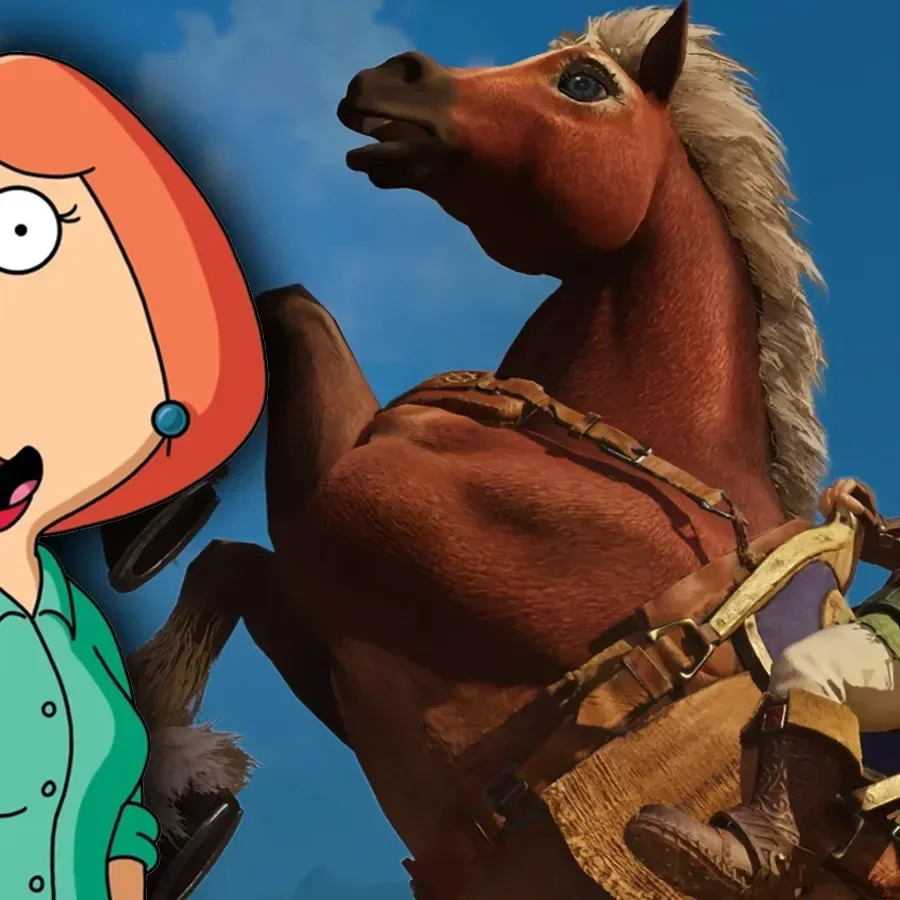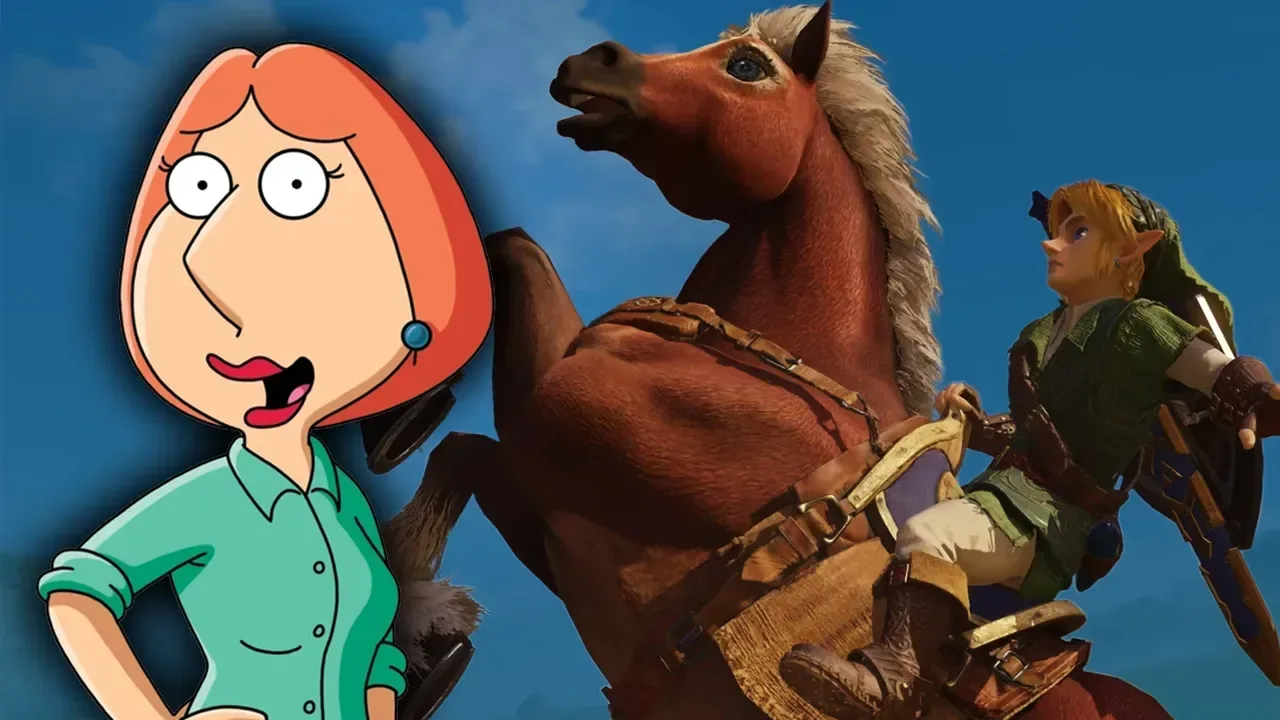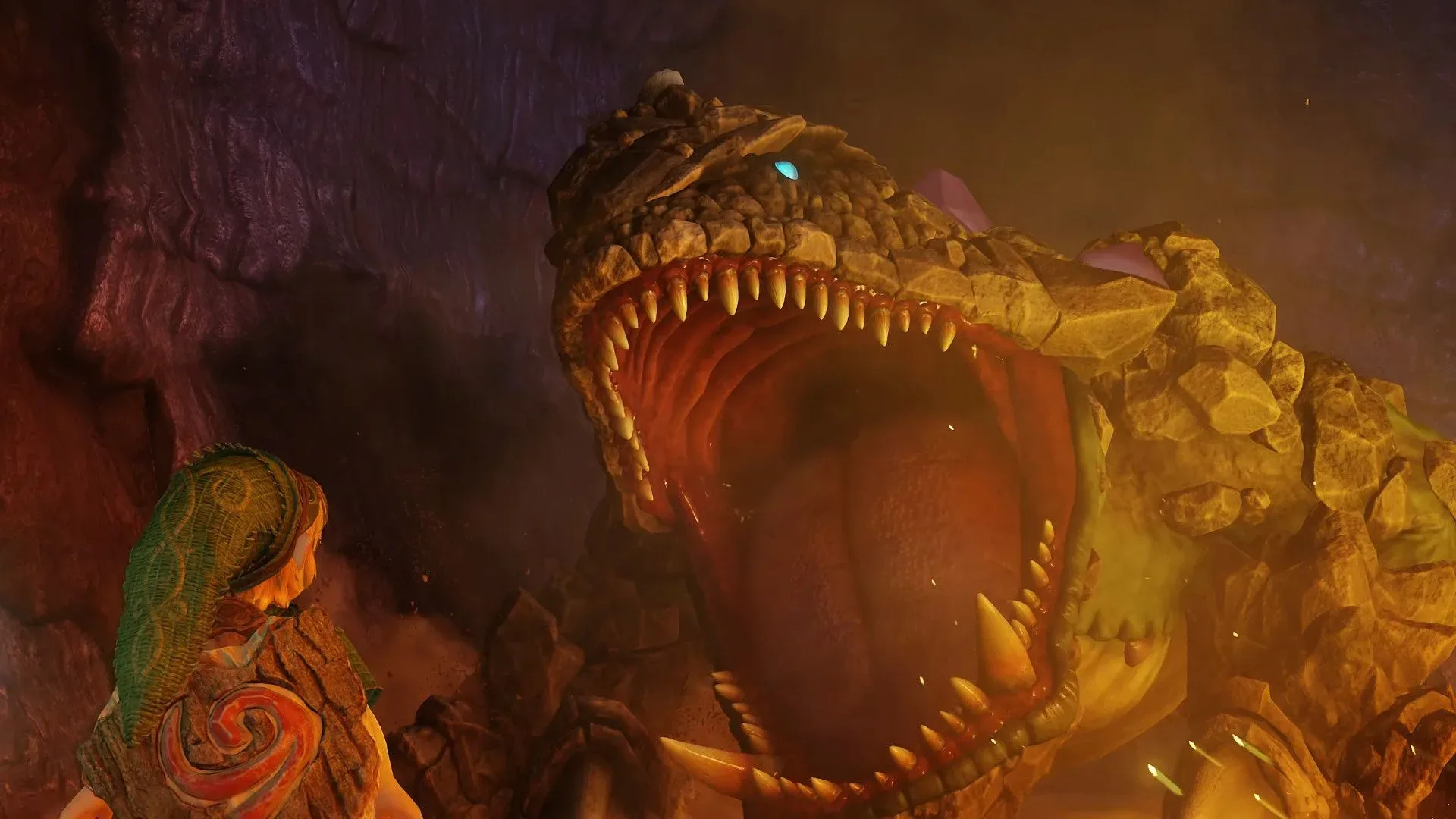
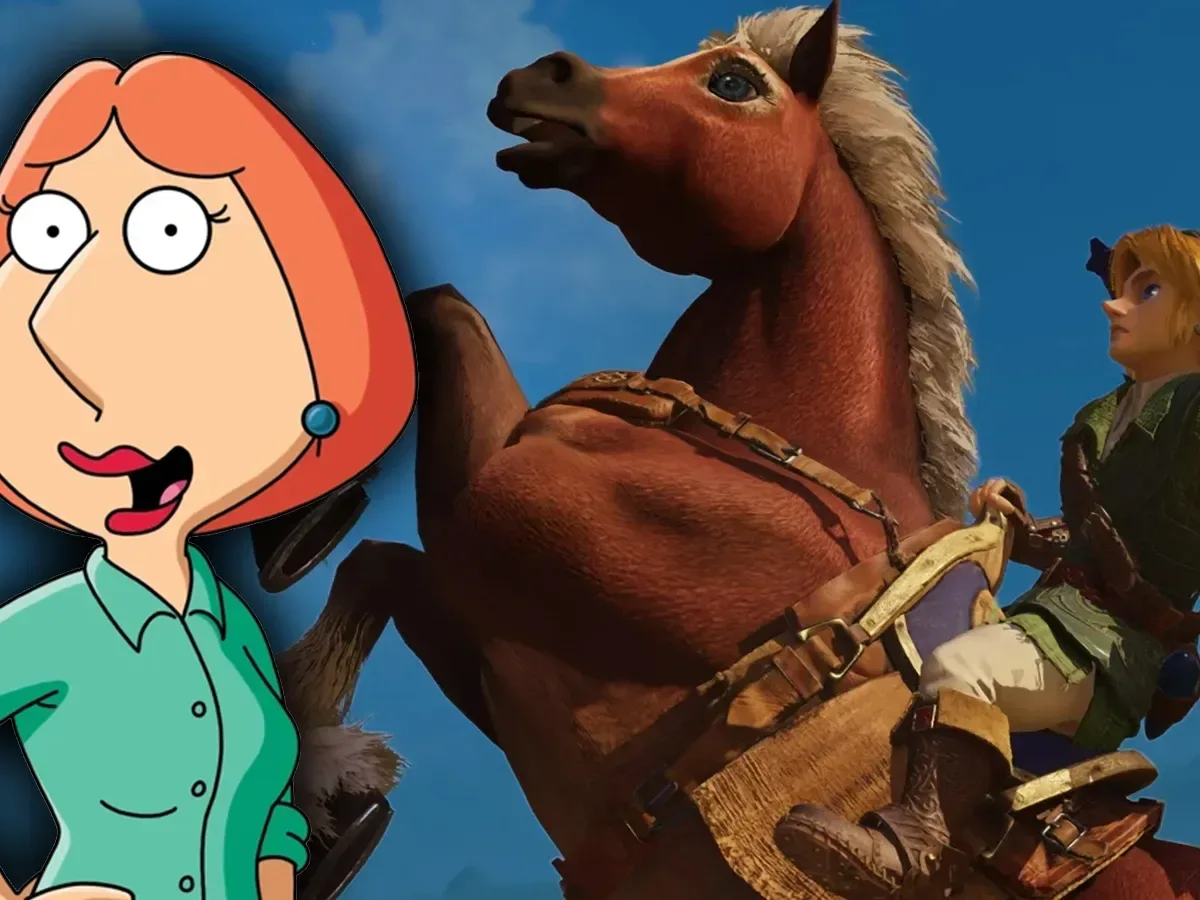
The reported microphone option in The Legend of Zelda: Ocarina of Time remake is producing exactly the kind of accidental magic that game mechanics built around musical recognition tend to invite: players are apparently able to summon Epona by reciting a Family Guy meme.
The phrase is “Petah, the horse is here,” delivered in an imitation of Lois Griffin. Clips shared online suggest that, while in microphone mode, the game can identify the cadence and pitch closely enough to interpret it as Epona’s Song, the tune associated with calling Link’s horse. In other words, a joke about a horse may be functioning as the horse-call song. Hyrule’s acoustics are having a very silly day.
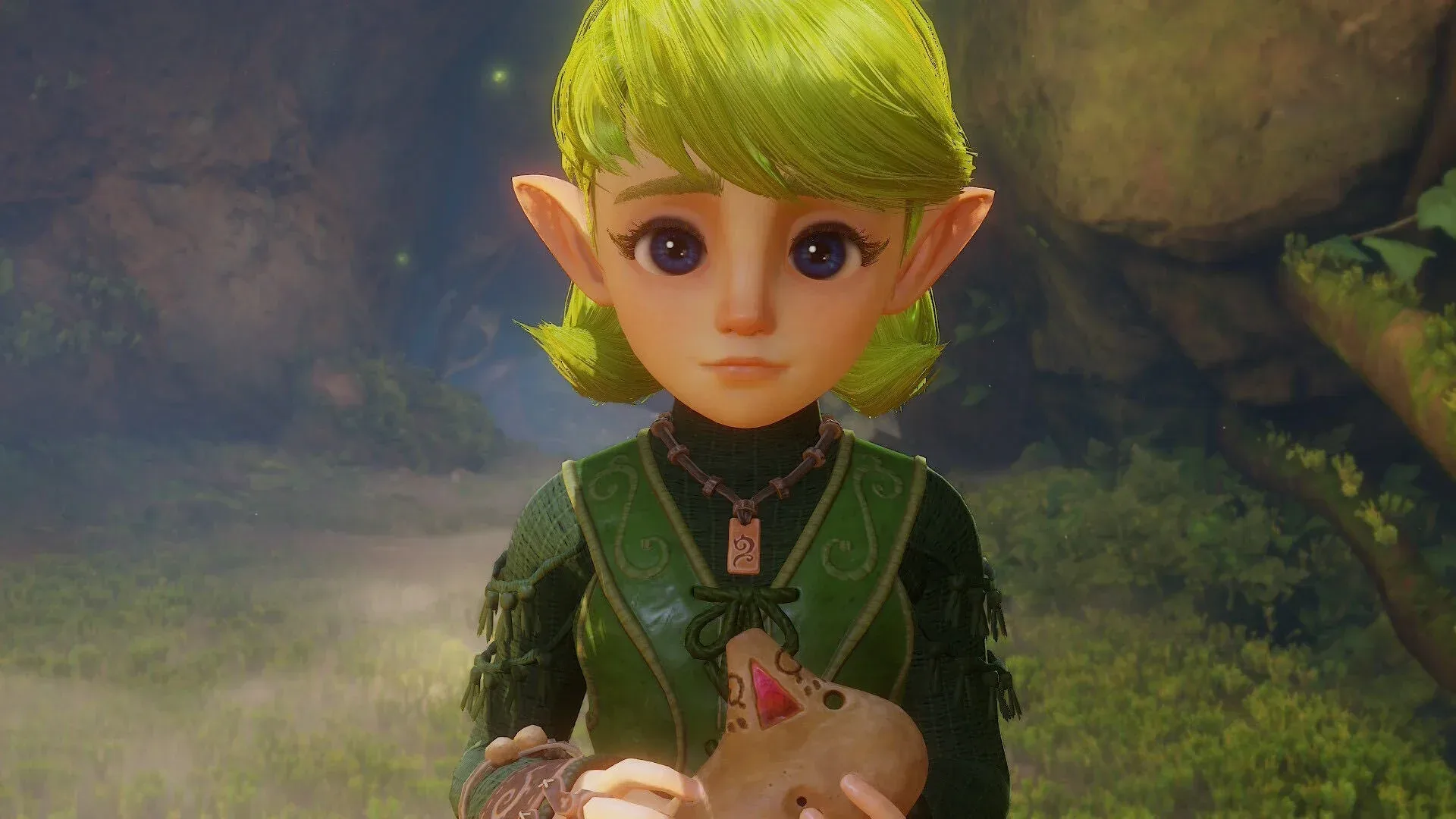
The unusual result has reportedly been reproduced by more than one creator, which makes it more interesting than a single strange clip or an editing gag. It also helps explain why the remake’s microphone feature has become a social-media talking point: rather than requiring players to press predetermined note buttons, the system is said to let them hum, whistle, sing, or even play an instrument into the Nintendo Switch 2’s built-in microphone.
That flexibility can make the familiar ritual of playing an Ocarina song feel more immediate. It can also make it vulnerable to anything that happens to resemble the expected melody well enough. The meme does not need to contain Zelda lyrics—there are no lyrics to Epona’s Song in the first place. It only needs to land near enough to the tune the game is trying to recognize.
For more context, explore GTA 6’s Blue-Tank-Top Mystery Man Has Fans Asking: Is That Tony Prince?.
A report collecting the circulating clips is available here.
Why the line can apparently pass for Epona’s Song
It is useful to separate speech recognition from melody recognition. Speech recognition attempts to determine the words a person says. Melody recognition, as described for this feature, is concerned with the musical contour: the sequence of notes or approximate pitch movement a player produces. A person can therefore say a phrase rather than sing it and still create enough of a tune for a forgiving system to accept it.
The reported “Petah, the horse is here” trick is funny because the sentence’s timing and vocal inflection appear to map surprisingly closely to Epona’s Song. An exaggerated character impression can make that melodic shape more pronounced, but the key point is not that the game understands the reference. It almost certainly does not. It appears to be matching sound against a musical target, then accepting an approximation.
That distinction matters. If the feature is working as described, the game is not responding to the semantic meaning of “horse,” Family Guy, or a specific character voice. It is responding to pitch and rhythm that fall within its acceptance range. The outcome looks like crossover comedy; the likely mechanism is tolerant musical input.
That tolerance is arguably necessary for a microphone-driven Zelda instrument. Players have different vocal ranges, different senses of pitch, different microphones, different room noise, and wildly different willingness to subject nearby family members to live ocarina renditions. A system that demanded exact notes would be frustrating. A system with leeway lets more people participate—but it also opens the door for a horse-related meme to become an impromptu transportation command.
A long-running meme finds an extremely specific new punchline
The quote comes from the eighth episode of Family Guy’s seventh season, which aired in 2009. In the scene, Peter Griffin has bought a brain-damaged racehorse at auction. The horse puts its head into the dining room while the family is eating, and Lois delivers the line that would later become a durable online in-joke.
Its staying power has less to do with an elaborate setup than with delivery. The quote is brief, odd, and instantly recognizable to people familiar with the meme. Adding the coincidence that it apparently summons a famous video-game horse transforms an old soundbite into a new, highly specific gag: Lois Griffin is now, functionally, a Hyrule stablemaster.
That is also why the clip has such an easy viral hook. It needs almost no explanation. Viewers who know the game understand what Epona’s Song does; viewers who know the meme recognize the phrase; everyone else can still see the immediate cause-and-effect of someone speaking near a console and a horse arriving. It is a compact demonstration of a new control method, a recognizable pop-culture reference, and an absurd payoff all at once.
It reportedly is not the only odd microphone success
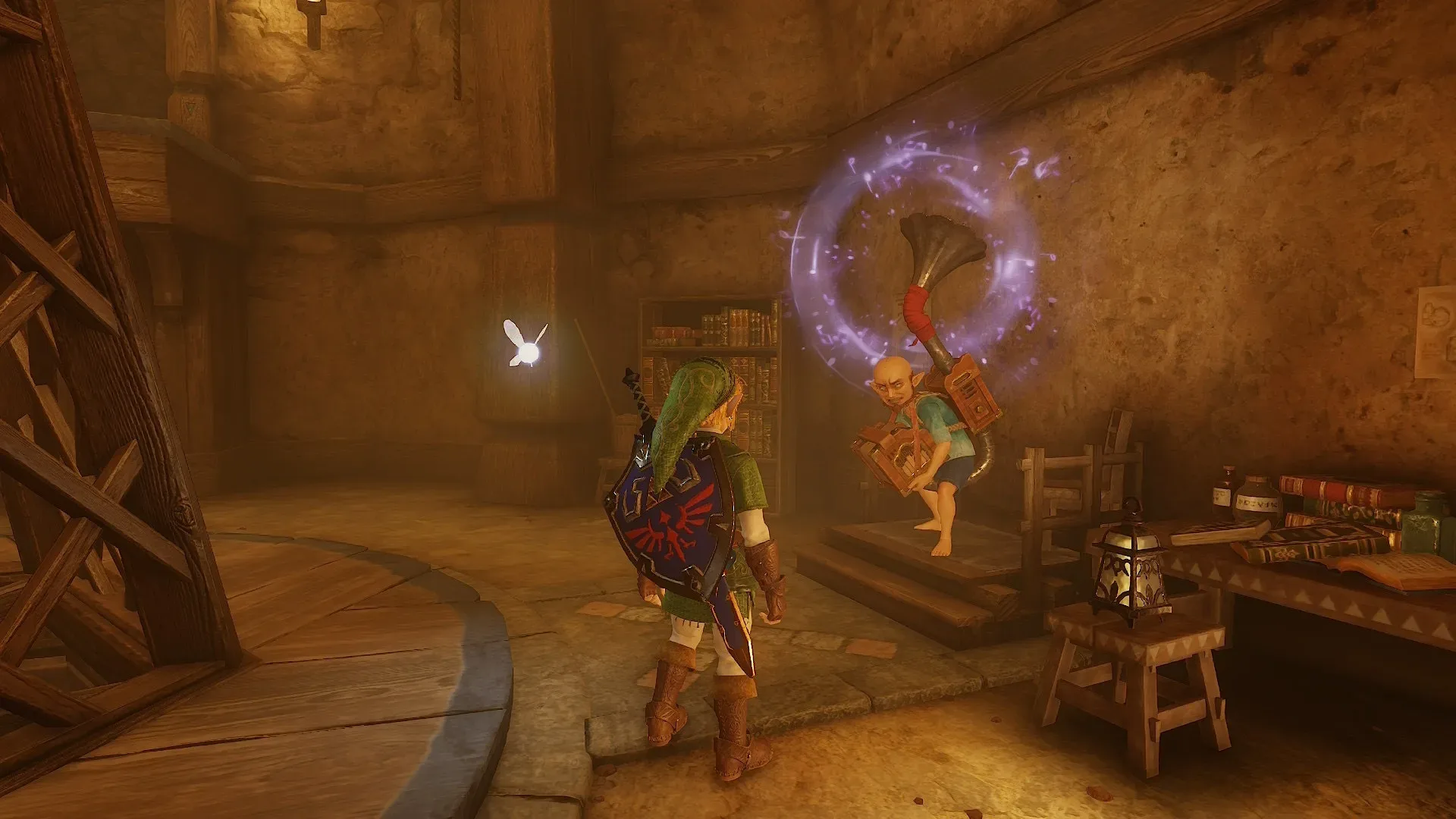
The Epona example is part of a wider set of reported clips testing the remake’s input recognition with unconventional vocal performances. One circulating video has creator Lythero saying “Mark Zuckerberg” in an approximation of the Song of Passing, with the game reportedly accepting it and changing night to day.
That clip reinforces the same practical lesson. A musical matching system can allow a degree of variance, and words can carry a melody even when the speaker is not conventionally singing. The resulting clips should not necessarily be read as proof that every phrase will work every time. Microphone distance, volume, ambient sound, delivery, and the game’s own matching threshold could all affect consistency. But repeated examples suggest that experimentation is part of the appeal, rather than merely a bug-shaped novelty.
For players, the sensible takeaway is not that a specific meme is a replacement for learning Zelda songs. It is that spoken phrasing with a close melodic contour may be worth trying if the microphone option is enabled. Humming or whistling the intended tune remains the clearer and more dependable approach, while memorizing the standard controller inputs remains useful when quiet is needed, the environment is noisy, or the game simply does not accept an impression on the first try.
Practical expectations for microphone mode
- Use the intended tune as the baseline: A joke phrase may work because it approximates the melody, not because the game has a hidden library of references.
- Keep the delivery distinct: If a feature is assessing pitch and rhythm, a clearly paced hum, whistle, sung phrase, or spoken approximation is likely easier to identify than rushed or very quiet audio.
- Expect imperfect results: The feature has been characterized as not especially precise, so a viral success may take attempts to reproduce.
- Retain button inputs as the fallback: Traditional note entry avoids the variables introduced by microphones and surroundings.
More than a novelty, but definitely still a novelty
Ocarina songs have always been more than soundtrack motifs. They are gameplay commands: musical phrases tied to actions, locations, time changes, or characters. Making those commands playable through a voice or instrument changes the interaction from selecting inputs to performing an approximation of Link’s action.
That is a meaningful design shift even when it produces nonsense. Pressing a sequence asks players to remember a pattern. Humming asks them to remember how the pattern sounds. Neither is inherently better in every circumstance, but the latter is more expressive and more social. It also creates a lower barrier for playful discovery, because players can test a tune with their own voice instead of treating the ocarina solely as a controller puzzle.
The Family Guy clip is therefore not merely a punchline about lenient technology. It illustrates a tradeoff in the feature’s design. The same tolerance that can accept a meme may make the system approachable for people who cannot reproduce each note perfectly. The same unpredictability that launches viral clips may also be what turns a familiar Zelda mechanic into something players want to show friends.
There is a reasonable limit to what can be concluded from online snippets. They do not establish exactly how broad the game’s recognition window is, whether all songs accept similarly loose interpretations, or how performance differs across rooms and players. Still, the reported examples give a clear picture of the feature’s personality: it seems willing to reward a close-enough musical idea, occasionally with results that are much funnier than the intended use case.
And for one particular Zelda tune, it has created a rare meeting point between a 2009 animated-TV quote and a classic Hyrule horse. “Petah, the horse is here” may not be an official Ocarina composition, but if the clips are representative, it is close enough for Epona.