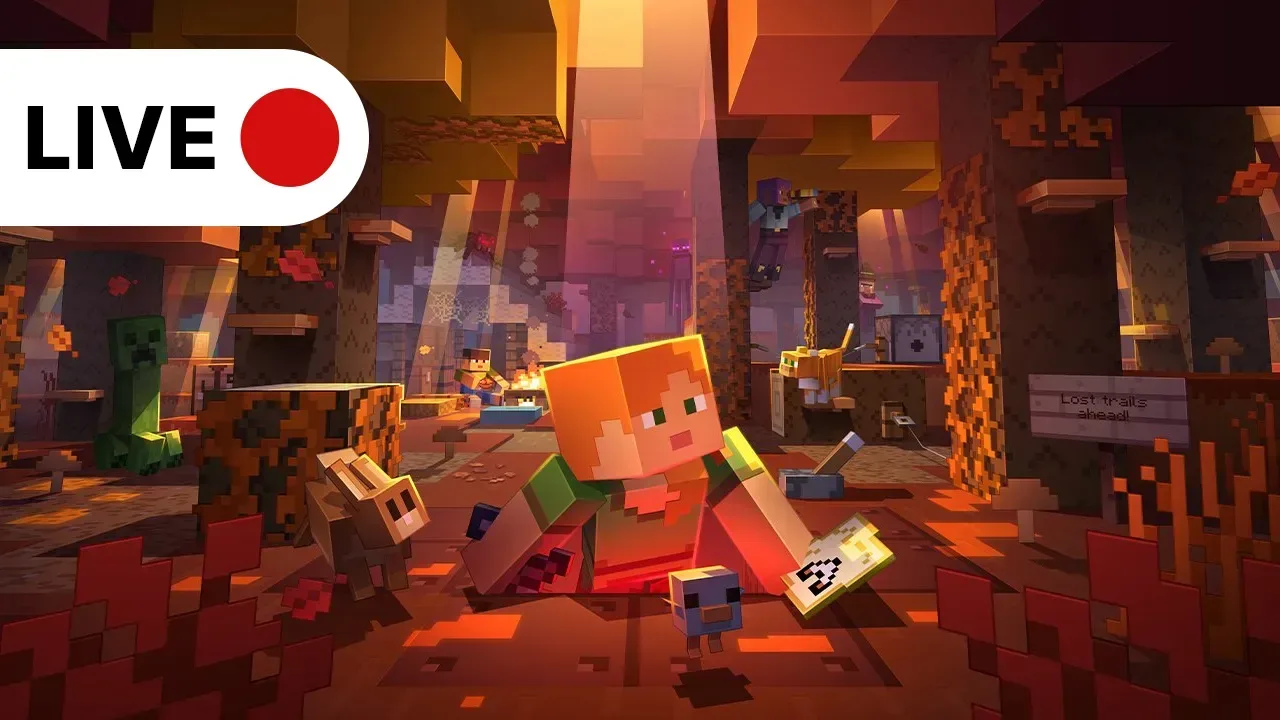
Minecraft is preparing to add a fourth dimension, the Sift, and the early reaction shows just how unusual that prospect is for a game whose biggest mysteries have long been framed by fire, voids, darkness, and danger. Revealed during Minecraft Live, the Sift is set to reach the core game in 2027, after appearing first in the action-RPG spin-off Minecraft Dungeons II.
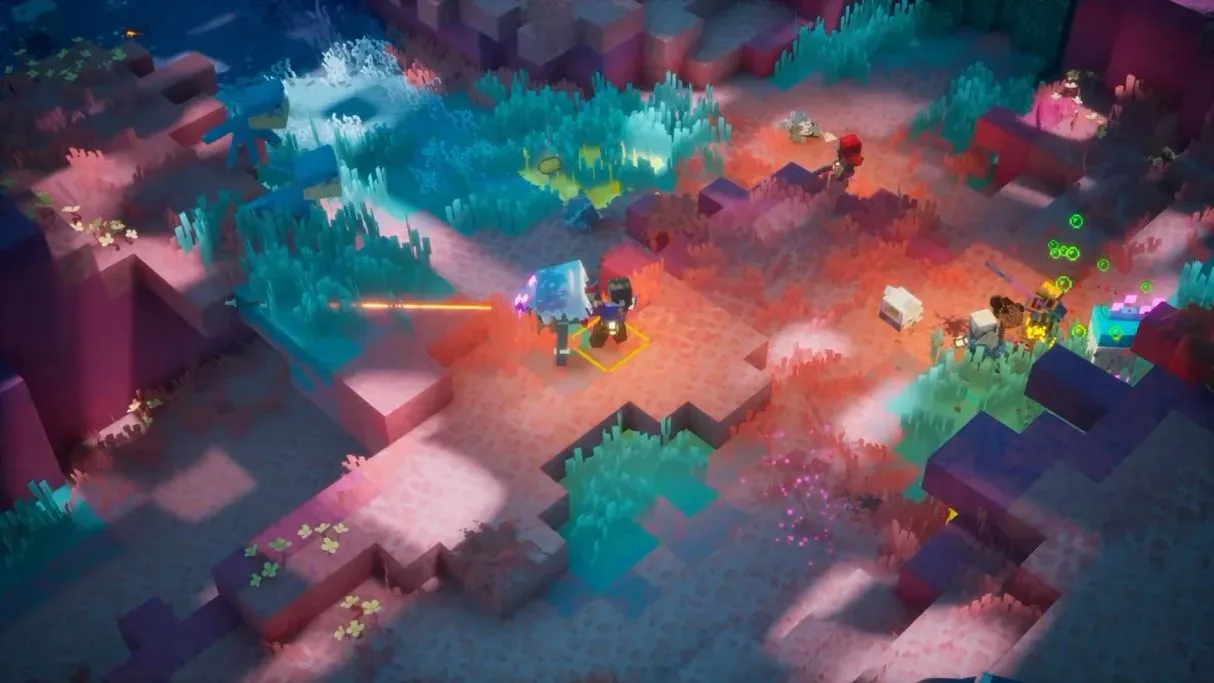
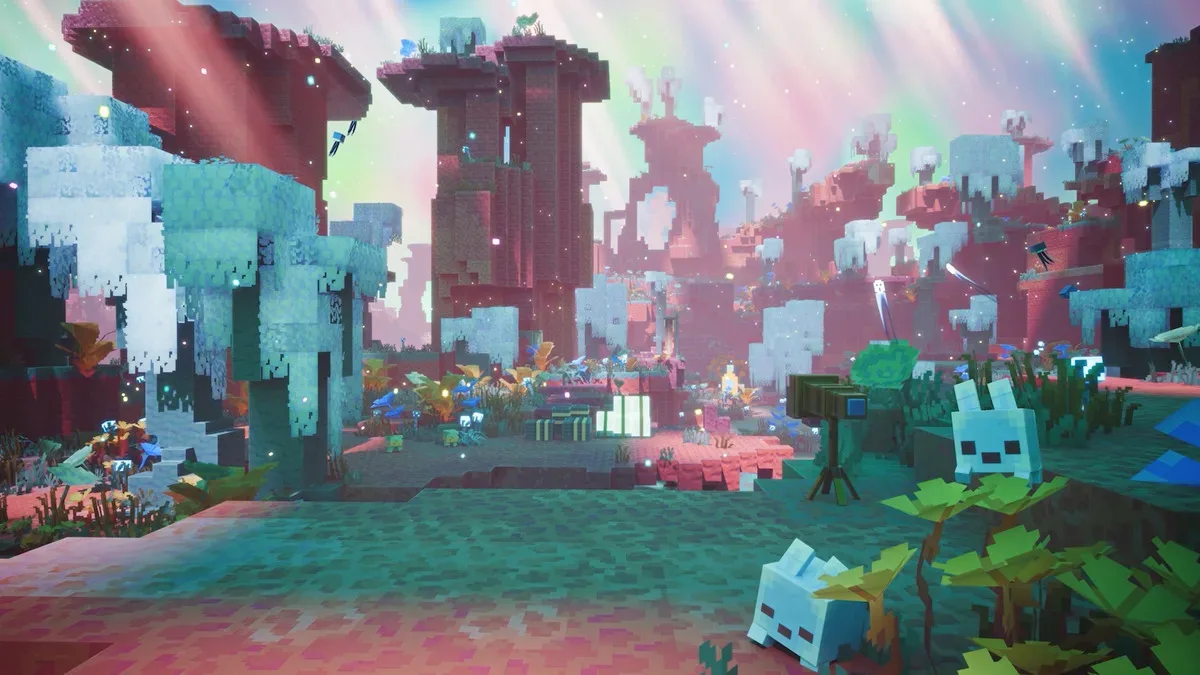
The brief look at the realm offered a deliberately different mood from the game’s existing alternate spaces. The Sift appears cotton-candy colored, with pink vegetation and what was described as a small blue bunny. That limited glimpse has been enough to start a familiar Minecraft ritual: players trying to determine whether a new addition is exciting, out of place, secretly menacing, or all three at once.
For a community accustomed to treating every block, portal, and visual clue as potential lore, the Sift’s cheerful surface is not merely a palette swap. It is an invitation to speculate about how Mojang may be redefining what a Minecraft dimension can be.
Why a new dimension is a major Minecraft event
In Minecraft, a dimension is a separate world-space with its own environmental rules, terrain, creatures, and resources. Most play happens in the Overworld, the familiar landscape of forests, caves, villages, oceans, and player-built bases. The game’s other dimensions are not simply distant biomes; they are distinct destinations that reshape the player’s priorities and sense of risk.
The Nether arrived in 2010 as a hot, hostile realm defined by molten terrain. The End followed in 2011, presenting an ominous void and some of Minecraft’s most formidable threats. Both spaces became fundamental to how players understand progression, exploration, and the game’s atmosphere.
That history helps explain the attention on the Sift. It is the first announced new dimension in 14 years. The End’s name has also encouraged a longstanding assumption that Minecraft’s dimension roster might be effectively complete. A new realm does not just add more land to explore: it changes the symbolic map of a game players have inhabited for years.
The initial material suggests the Sift may be designed as a stronger contrast to its predecessors than another lava-filled or shadowy destination would have been. Where the Nether and the End advertise danger immediately, the Sift seems soft, colorful, and welcoming. Whether that impression holds once players enter it is not yet known.
“Cute pink heaven” meets a foreboding route
One prominent fan response focused on the possible contrast between the Sift and the place players may have to go to reach it. Minecraft player harri praised the idea of a “heaven dimension” concealed behind a horror-oriented challenge in the depths underground, calling the design choice especially compelling. The reaction also referred to a “death cult city portal” leading into a cute pink realm.
That response captures why the Sift’s premise is resonating with some players. Minecraft has always been able to move quickly between gentle building-game imagery and unsettling exploration. A bright destination reached through an intimidating process would push that contrast further rather than remove it.
It is important, however, to separate what has been shown from what fans are interpreting. The available reveal establishes the Sift’s name, its vivid visual identity, and some early imagery. Details about its exact access method, dangers, progression systems, materials, or deeper narrative significance remain uncertain. The community is reading possible meaning into the presentation, not working from a complete feature list.
That uncertainty is part of the fun, but it is also a reason to be cautious about treating early theories as confirmed design. Minecraft’s sparse presentations often leave room for players to build elaborate expectations around a small number of visual details.
The visual break is the point—and the sticking point
The Sift is provoking divided reactions largely because it does not immediately resemble what many players associate with Minecraft’s other dimensions. The Nether is fiery and claustrophobic; the End is cold, empty, and eerie. The Sift’s pink weeds and blue bunny create a far lighter first impression.
For supporters, that sharp shift is a strength. A dimension should feel distinct enough that entering it matters, and a realm that looks radically unlike both the Overworld and the existing alternatives has a clearer identity from the start. Some early discussion has appreciated the severity of that contrast, with the Sift’s subdued-but-unusual palette compared to the aesthetic sensibility of alternative indie games.
For skeptics, the same visual choice can feel disconnected from Minecraft’s established tone. This is less an argument over whether pink belongs in the game—Minecraft has always made broad use of color—than a question of whether this particular kind of softness belongs in a location carrying the weight of a new dimension.
Neither reaction requires anyone to be wrong. A first impression does real work, especially for a game with such a durable visual language. The Sift is being asked to feel fresh without feeling like it belongs to an entirely unrelated game. That is a difficult balance to assess from a brief preview.
Another discussion of the reveal can be found in this look at the debate over Minecraft’s bright new direction.
Change anxiety is a Minecraft tradition
Some fans responding to the backlash have pointed to an older pattern: players often react warily when Minecraft updates transform familiar areas. One commenter, LaDestitute, argued that people are generally afraid of change and noted that similar complaints accompanied the Nether forests introduced in the 1.16 update.
That comparison is useful because it distinguishes two different concerns. One is a healthy request for more information: players want to know what the Sift actually contains and how it functions. The other is a reflexive judgment based on a single unfamiliar screenshot or short segment. The first can be answered through future details; the second tends to fade only once people spend time with an update.
The Sift has an especially high bar because dimensions are rare. A new biome can be enjoyed or ignored within the existing Overworld. A dimension, by definition, carries a more sweeping promise: new rules, new reasons to travel, and a world that ought to feel meaningfully separate. Players are therefore scrutinizing its tone before they have seen its mechanical purpose.
There is a practical question underneath the aesthetic argument. Will the realm have the depth to justify repeat visits? The initial presentation has made it clear that Mojang is aiming for a more substantial experience than a one-note novelty, but its specific systems have not been laid out. The quality of its exploration loop, resources, threats, and reasons to return will matter more in the long run than whether viewers liked its first color palette.
Dungeons II will provide the first visit
The order of release adds another wrinkle. The Sift will debut in Minecraft Dungeons II before it arrives in Minecraft’s core game in 2027. That means an action-RPG will introduce the setting before the sandbox where players will eventually encounter it in their own worlds.
The two games have different structures. The core game is a world-building sandbox built around open-ended survival, creativity, and exploration. Minecraft Dungeons II is an action RPG, a genre centered more directly on combat-oriented progression and adventure structure. A first appearance in the spin-off may give players an early impression of the Sift’s art direction and broader identity, but it should not automatically be treated as a complete guide to how the dimension will work in the main game.
That distinction is worth remembering as more information arrives. A location can serve a different gameplay role depending on the game around it. The Sift’s appearance in Dungeons II will offer an early taste, while the 2027 core-game version remains the key event for players who want to know how it will affect their own Minecraft worlds.
A dimension built for curiosity
The Sift’s reveal is effective precisely because it refuses to settle the central question: is this a gentle place, an unsettling place wearing gentle colors, or something that contains both? Minecraft’s most memorable environments often gain power from that tension. Safety is never entirely guaranteed, and an odd detail can become more memorable than a plainly threatening one.
The early fan split therefore says less about a settled verdict and more about the scale of the change. Some viewers see a welcome expansion of Minecraft’s emotional range. Others see an aesthetic detour that needs more context. Both sides are responding to a reveal that, for now, is richer in suggestion than explanation.
More concrete details will determine whether the Sift becomes a defining new destination or simply a pretty idea. Until then, the pink weeds, blue bunny, and dramatic break from the Nether and the End have accomplished one useful thing: they have made Minecraft feel surprising again.
That kind of creative disruption is familiar territory for games. As a separate look at claims about video games and popular culture argues, broad reactions to games often need more nuance than a simple verdict. The same is true here. The Sift is not yet a finished destination players can judge in full, but it is already a meaningful signal that Minecraft’s universe is not stopping at the End.