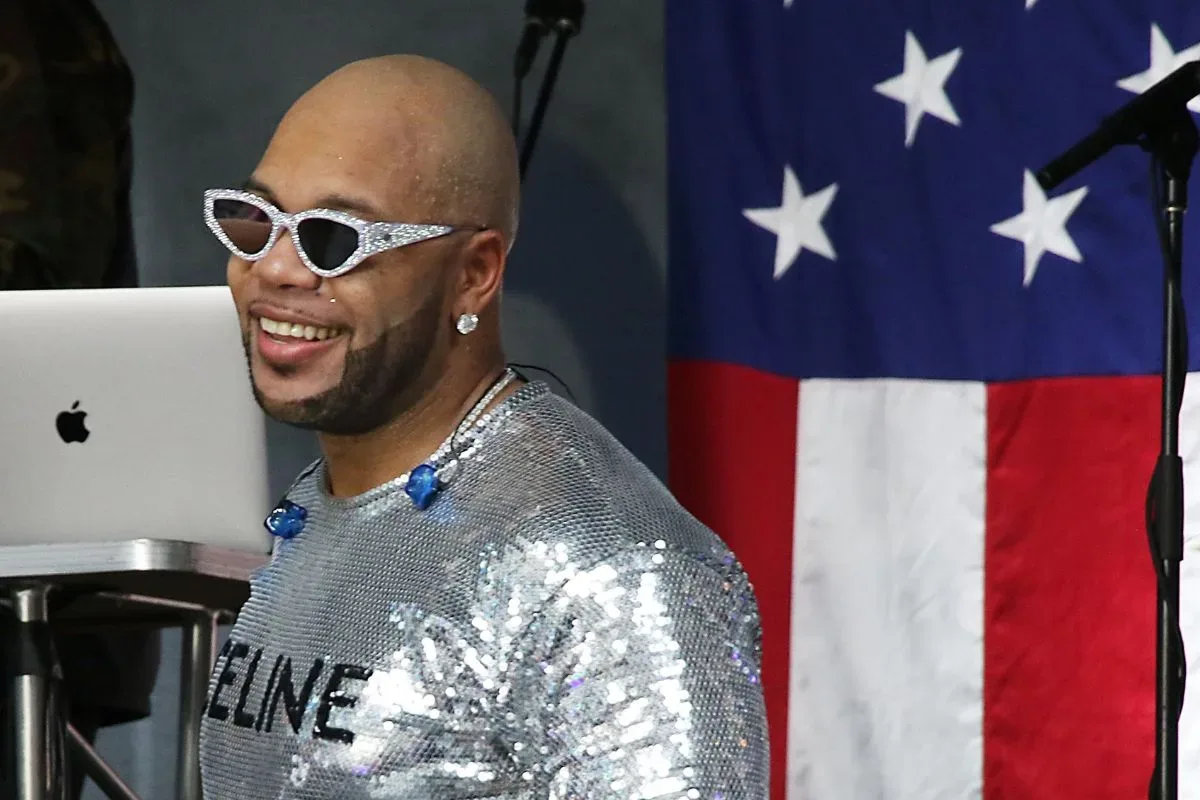
Mike Jones returned to Nimitz High School in Houston, the school he attended, for a Thanksgiving grocery giveaway that brought hundreds of drivers through the campus. The rapper joined Houston City Controller Chris Hollins and the Gulf Coast Community Services Association for the event on Sunday, November 22.
Families received envelopes containing a $20 voucher that could be used toward a turkey or ham and a $50 gift card for additional groceries. A total of 775 voucher-and-gift-card packages were available through the drive, organized as the first Thanksgiving event involving the three partners.
A homecoming built around practical help
The setting gave the giveaway a personal dimension for Jones. Returning to a former school can turn a civic event into something more immediate than a public appearance: the place is part of the participant’s own history, while the people arriving for help may be neighbors, former classmates, families connected to the school, or members of the broader community that shaped him.
Jones said the feeling of returning hit him when he arrived at the campus.
“I got nostalgia just when I pulled in,” Jones said. “Just nostalgia to see the people still coming back to show the love.”
That recognition showed up in the event’s small interactions as well as its logistics. As vehicles moved through the lot, Jones greeted attendees, posed for photos and hugged people. The giveaway was structured as a drive-through operation, allowing volunteers to distribute assistance directly to families in their cars.
The response was substantial enough that the queue extended from the Nimitz parking lot onto W.W. Thorne Drive. That visible line is a reminder of the practical stakes around holiday food budgets, particularly for households planning meals for large family gatherings.
Why vouchers and gift cards were the centerpiece
The assistance model was deliberately different from a traditional turkey handout. Rather than distributing only whole birds, organizers supplied a dedicated voucher for a turkey or ham alongside a separate grocery gift card. The $20 voucher established the holiday-meal purpose, while the $50 card gave each family room to address the other items that turn a centerpiece into a complete dinner.
Debra Fisher, interim CEO of the Gulf Coast Community Services Association, said the approach reduced costs and gave families more choice. That distinction matters. A direct food distribution can ensure that a specific item reaches a large number of recipients, but vouchers and gift cards let households decide what works for their own meal, cooking plans and family needs.
In this case, the choice was still focused. Recipients could use the voucher toward either a turkey or a ham, not merely a general grocery purchase. The gift card then offered flexibility for supporting groceries. Together, the two forms of aid recognized that a holiday meal requires more than one item, without forcing every household into exactly the same shopping list.
What the package provided
- $20 voucher: toward a turkey or ham.
- $50 gift card: for other groceries.
- 775 packages: the number made available for the drive.
- Drive-through distribution: envelopes were handed to drivers by volunteers at Nimitz High School.
For families, that structure can be especially useful when the number of guests is uncertain or large. Odalis Matute, a Houston grandmother who waited about an hour in line, had been unsure how she would purchase a turkey for a Thanksgiving gathering expected to include more than 10 relatives. Her situation put a human scale on the demand seen outside the school.
The organizations behind the event
Jones participated alongside Hollins and the Gulf Coast Community Services Association. Their collaboration paired a musician with a direct personal connection to the site, a city official and a nonprofit whose regular work includes a community food pantry and emergency assistance in the Houston area.
That combination is meaningful because a one-day holiday drive depends on more than visibility. Volunteers were needed to hand out the envelopes, organizers had to make the grocery assistance available, and the event had to accommodate a high volume of vehicles. The nonprofit’s existing focus on food and emergency support places the giveaway within work that extends beyond a single seasonal event.
The turnout also illustrates why organizers selected a vehicle-based format. Hundreds of people came through the campus, and the line reached onto a public road. A drive-through model does not eliminate waiting, as Matute’s experience shows, but it gives organizers a defined way to move a large number of households through a limited distribution site.
Choice is not a minor detail
Holiday aid is often described in broad terms, but the details of delivery shape what help looks like in a household. A turkey or ham is the customary focal point of many Thanksgiving meals; the rest of the menu can vary sharply by family. A grocery gift card acknowledges that difference without requiring organizers to predict every family’s needs.
For one household, the additional grocery funds may be directed toward side dishes. For another, they may help cover ingredients for a larger gathering. The event did not promise to solve every grocery expense connected to Thanksgiving, and the available facts do not establish what each recipient purchased. What is clear is that the dual package gave recipients a targeted option for the main dish plus spending flexibility for the remaining groceries.
Fisher’s explanation also points to the operational trade-off: purchasing and distributing physical turkeys involves costs that a voucher model can avoid. Lower distribution costs can matter when organizers are attempting to serve as many people as possible. The 775 available packages represent a defined pool of help, so an approach that controls overhead may preserve resources for the assistance itself.
A familiar place, a broader need
Nimitz High School was more than a convenient venue. For Jones, it was the place he attended, making the return an example of a public figure bringing support back to a community tied to his own formative years. His comments focused on seeing people return and show support, while the long line underscored how many families were looking for holiday grocery help.
The event also kept the attention on recipients rather than spectacle. Photos and greetings with Jones were part of the day, but the central transaction was straightforward: volunteers giving drivers an envelope containing resources for a Thanksgiving meal. The amount and purpose of each item were plainly defined, as was the number of packages organizers had prepared.
For readers following other developments involving figures in hip-hop, see coverage of the request to dismiss a civil case involving Takeoff’s estate.
At Nimitz, the immediate focus was simpler: helping families make Thanksgiving dinner more attainable. Jones’s return to his old school, the participation of city and nonprofit partners, and the voucher-based approach all centered on that shared purpose.