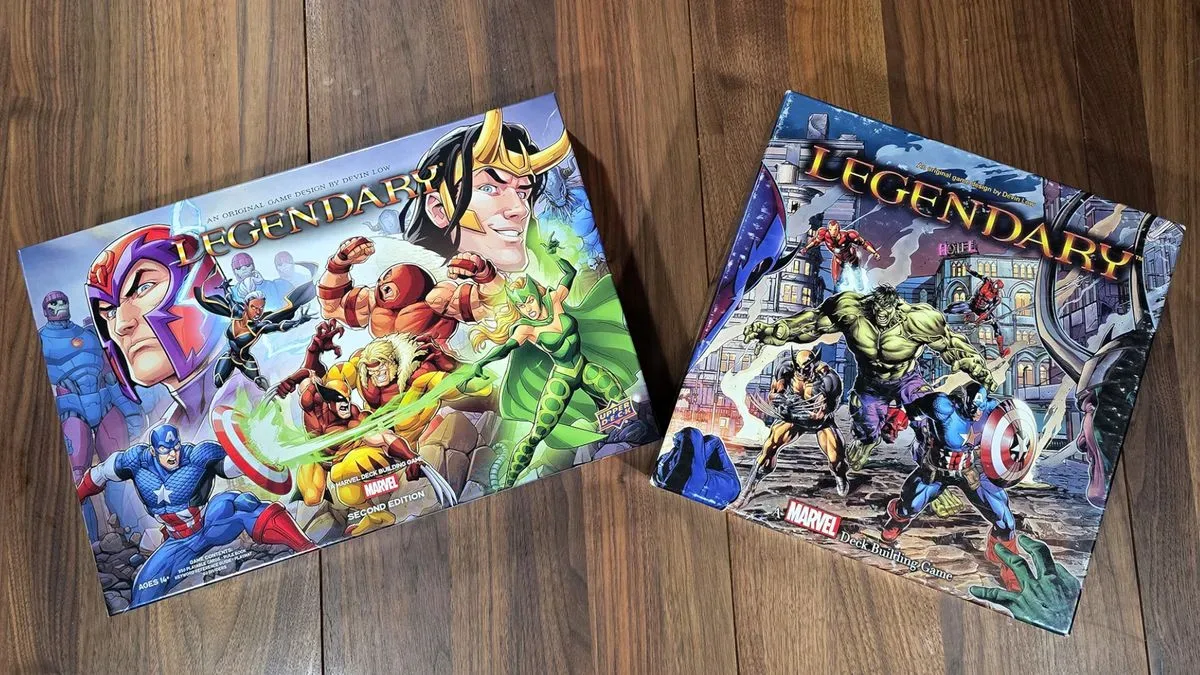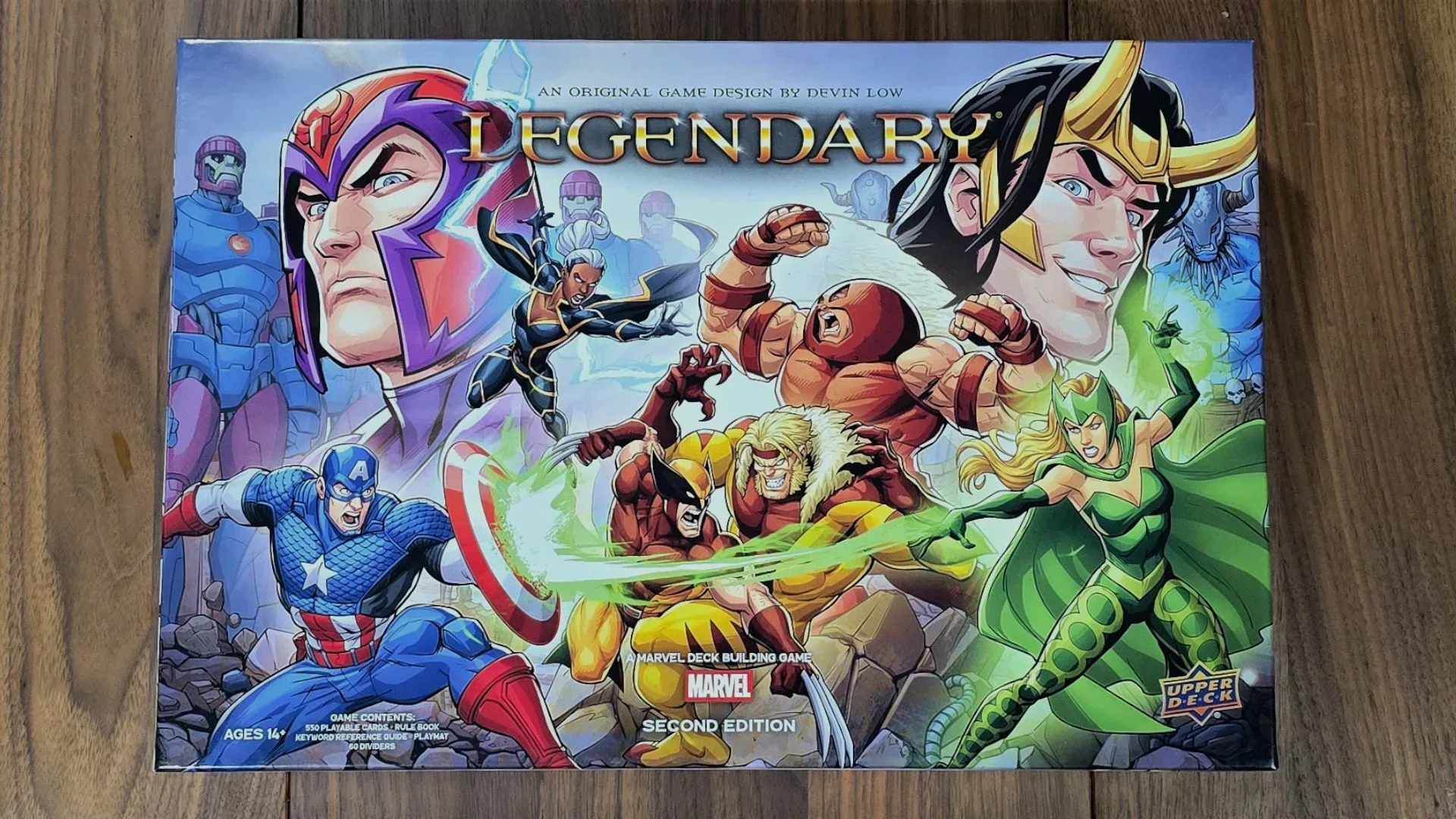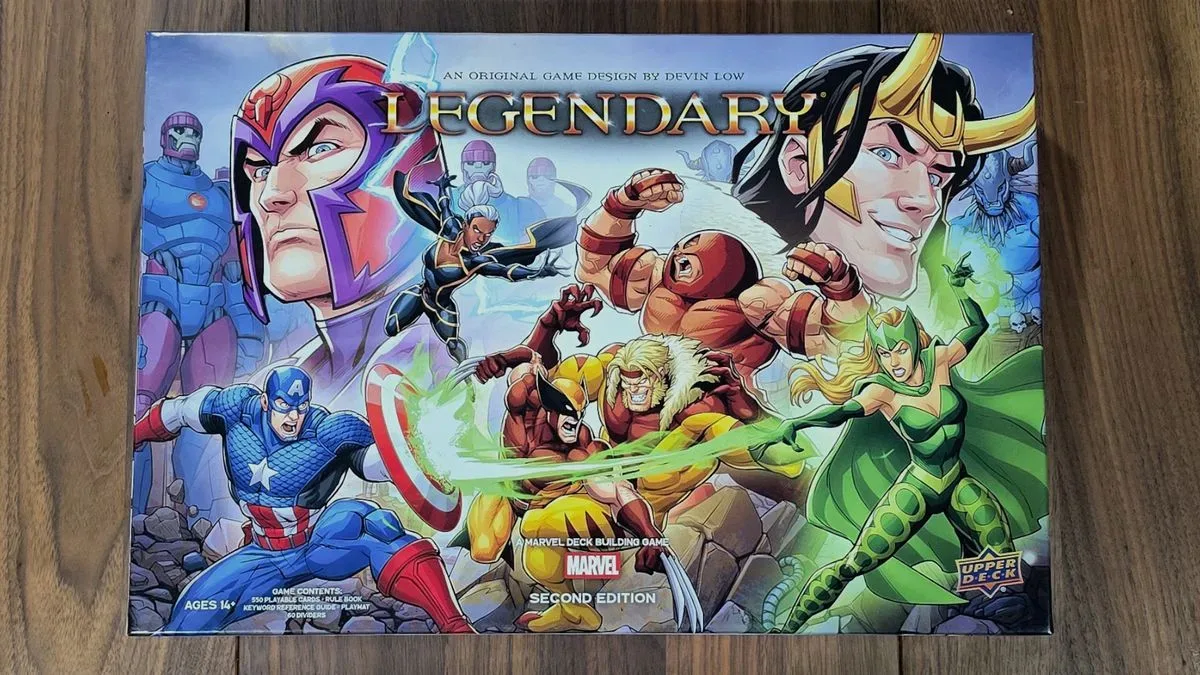
Marvel Legendary 2nd Edition arrives with an unusual task: improve a long-running, well-liked cooperative deck-builder without making its existing audience feel as though years of cards have been left behind. The new Upper Deck core box appears to take the evolutionary route rather than attempting a wholesale reinvention. Its central superhero-versus-mastermind structure remains familiar, but it adds updated presentation, revised cards, selected mechanics that previously appeared in expansions, and compatibility with those older expansions.
That makes the 2nd Edition an especially clear recommendation in principle for people who have wanted to try Marvel Legendary but never owned the original core box. It gives them a full, self-contained Marvel game with a deep pool of possible setups. For players who already have the earlier base game, however, this is not a simple automatic upgrade. The published $100 MSRP means the decision depends on how much value they place on refreshed art, rebalancing, a neoprene play mat, and a handful of additions to the starting experience.
The familiar mission remains the point
Marvel Legendary is a cooperative deck-building game for one to five players. In a deck-builder, participants typically start with modest personal decks and improve them during play by acquiring more capable cards. The key distinction is that players are not turning up with a completed deck from home; building it is the game’s central arc. Early turns establish resources and basic actions, while later turns ideally produce stronger combinations from the hero cards a player has acquired.
Here, players select heroes from a roster of 15, then build the opposing threat from a mastermind villain, a scheme, and supporting enemies such as henchmen. During the game, the heroes buy cards from a shared card pool, fight villains, rescue captured civilians, and work toward stopping the mastermind’s plan. The team succeeds or fails together.
That last point is important when deciding whether Legendary suits a particular game group. This is not built around one player defeating everyone else in a competitive showdown. Its drama comes from a common board state that can worsen if the group does not respond effectively, alongside the satisfaction of assembling hero powers into productive turns. The theme and rules are aligned: Marvel teams face an escalating threat, and the table has to solve it together.
The listed play parameters position it as a moderate-complexity game for ages 14 and up, with sessions estimated at 30 to 60 minutes. Designer Devin Low is credited for the game. Those figures do not erase the practical commitment of a card-heavy tabletop game, though. There are many smaller decks involved in setup and teardown, along with shuffling and scenario assembly. Players looking for a box that can be opened and played with virtually no table preparation should factor that in.
A changing card market gives each game movement
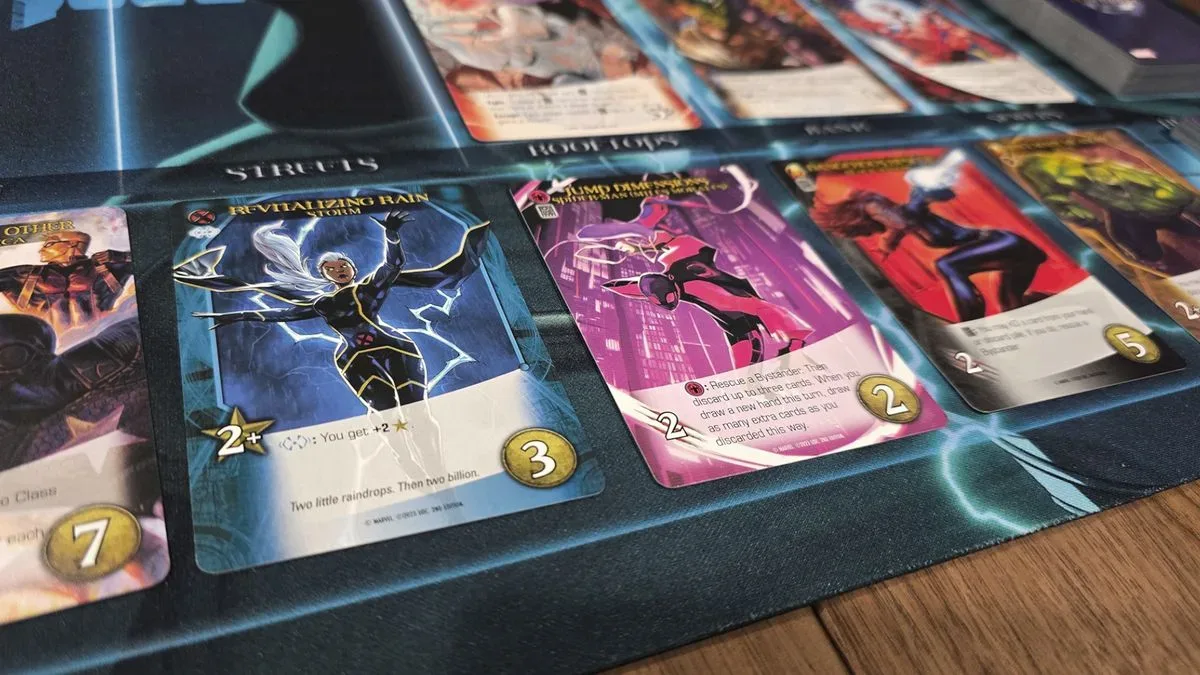
One of Legendary’s defining elements is its rotating marketplace. Hero cards become available from a shared selection that changes as cards are bought or otherwise leave the display. That differs from a fixed market, where the same choices remain visible throughout the game.
In practical terms, a rotating market means a player cannot always assume that the card they want will be waiting when their next turn arrives. It creates tactical questions: buy a useful card now, save purchasing power for a more expensive option that may appear later, or take a card that helps an immediate group problem? It also supports replayability. The heroes and villains chosen before a session influence the available cards and opposition, while the changing market determines which parts of those hero toolkits surface at a given moment.
Related coverage includes Marvel Legendary 2nd Edition Gives a Classic Deck-Builder a Stronger New Start.
That flow is part of why a core box can continue to matter even in a game with a large expansion catalogue. The supplied material characterizes the 2nd Edition as a thoroughly stocked game in its own right, rather than a skeletal entry point that requires immediate add-ons. Older expansions remain compatible, but a new group should not interpret compatibility as an obligation to start collecting immediately.
The broad Legendary line has also expanded beyond Marvel into licensed settings including The Matrix, Predator and DC. For superhero tabletop fans, that wider context makes the new Marvel core box feel less like a relic being preserved and more like a foundational design receiving a considered pass after a long run. There is room for more than one kind of comic-book card game, just as there are very different possible futures for DC’s biggest characters and teams across entertainment.
What the new edition changes
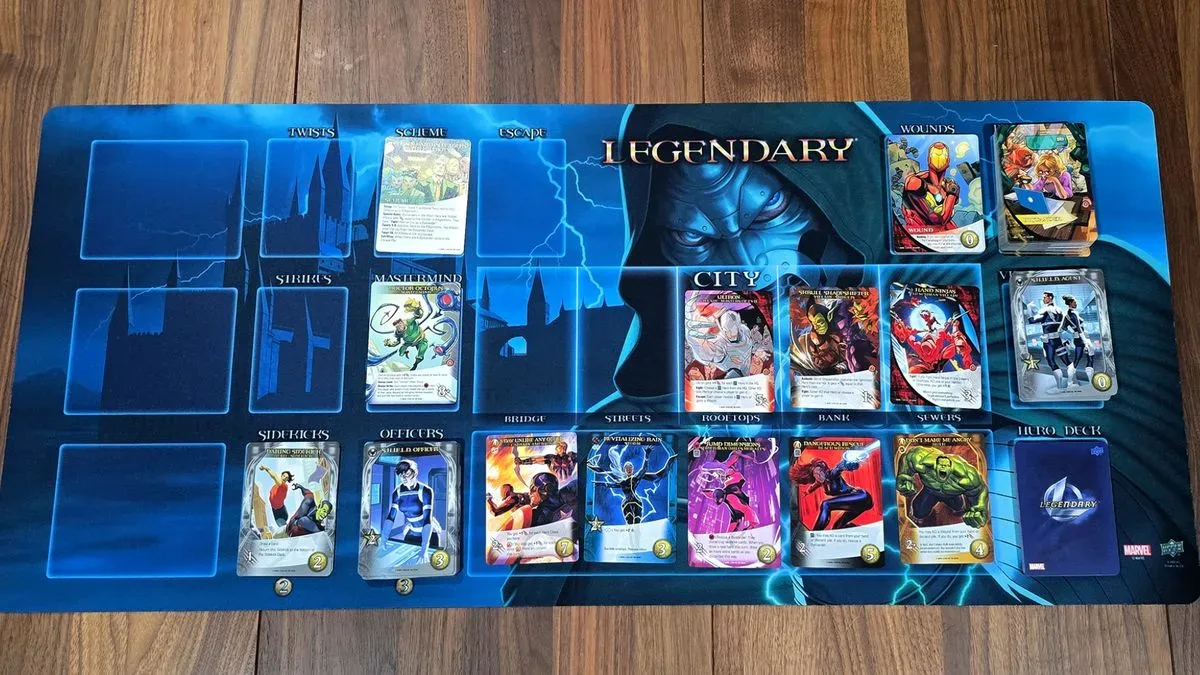
The most visible update is presentation. The old folding cardboard board has been replaced by a neoprene game mat. Neoprene is the rubber-backed material often used for premium play surfaces; it lies flatter than a folded board and is intended to provide a more durable, grippy space for arranging cards. For a game defined by multiple decks, a shared market and advancing threats, a dedicated layout is a meaningful usability upgrade rather than merely decorative packaging.
The art has also been redone, with individual hero-card power levels receiving their own illustrations. This matters more than it might sound. In a card game, repeated art can make a large deck feel visually smaller and make cards harder to distinguish at a glance. Distinct illustrations give progression within a hero’s stack more personality, and the schemes have likewise received new art. The overall assessment of the visual overhaul is favorable, though not every replacement is likely to land equally well for players who remember the old cards.
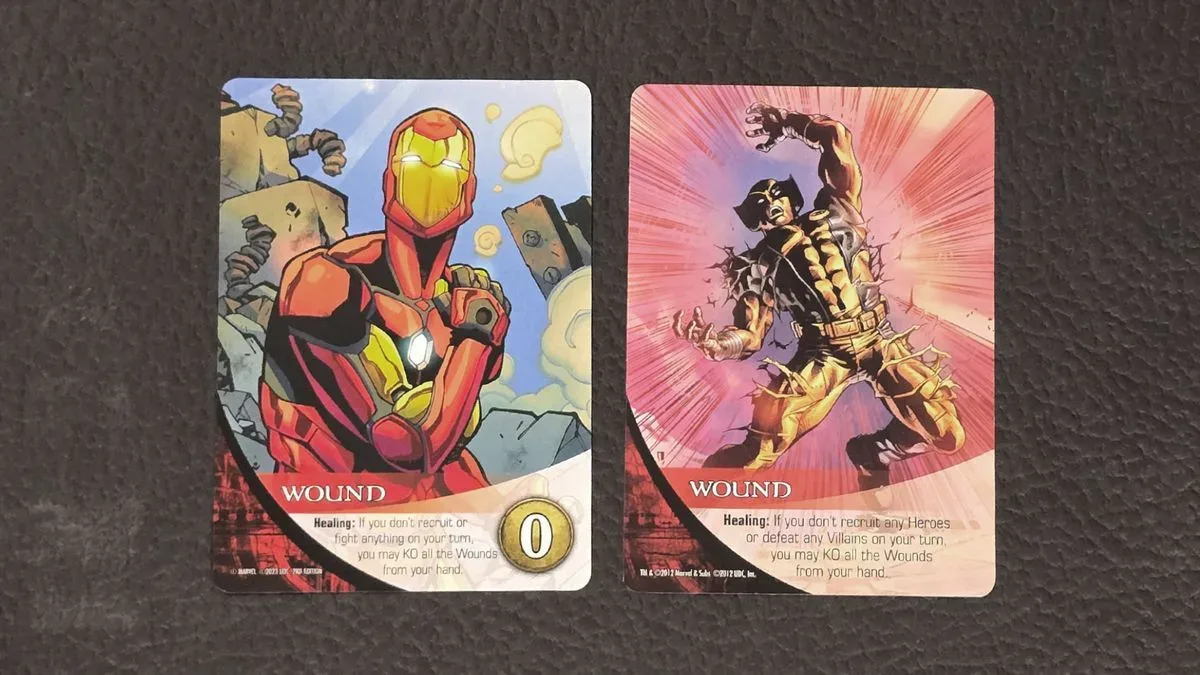
Wound cards are a useful example of the game’s mechanical language. A wound is a card that clogs a player’s deck: rather than improving their future turns, it dilutes the useful cards they draw. That is a familiar deck-building pressure mechanism. The new Wound illustration shifts from an older, visibly battered Wolverine image to a comparatively restrained depiction of Iron Man holding his shoulder. The difference will be subjective, but it underlines that the art refresh is not simply a one-for-one reproduction of the earlier box.
Beyond aesthetics, the 2nd Edition incorporates card types that had first appeared in expansions, including Sidekicks and S.H.I.E.L.D. Officer Specialists. The provided details do not define the precise effects of those cards, so prospective buyers should not assume their exact implementation from their names alone. What can be said is that their inclusion gives a first-time buyer access to mechanics that had previously been part of the line’s wider growth, without requiring expansion ownership to encounter them.
The box also includes rebalanced cards. Balance changes generally aim to reduce cards or strategies that are too efficient, too weak, or less satisfying than intended. That can make the baseline experience smoother, but it is also one reason existing players should see this as a revised edition rather than merely a cosmetic reprint.
The roster has changed, but not completely
The new base box retains considerable overlap with the original. On the hero side, Deadpool has been replaced by Miles Morales. Doctor Octopus joins the Mastermind selection, adding a Spider-Man-associated antagonist to the set of central villains. There are also adjustments to the henchmen and other villain groups.
For a newcomer, those choices amount to a broad Marvel starting selection with recognizable heroes, a mix of dangers and the flexibility to build varied sessions. For an original-box owner, they make the value proposition more complicated. The revised roster is not a completely new cast that makes every existing component redundant; it is a familiar foundation, selectively altered. That is not necessarily a flaw. A second edition designed for a new audience should preserve the identity that earned the game its following. But it does mean returning players should approach the purchase as a premium refresh of a game they already know, not as an all-new sequel.
Who should consider buying it?
New players are the clearest audience. Anyone interested in cooperative deck-building and Marvel’s hero teams has a direct route into an established system, with a complete box and expansion compatibility if they decide to go deeper later. The mix of adjustable heroes, mastermind villains and schemes suggests a substantial amount of scenario variety before extra content enters the picture.
Groups seeking a thematic cooperative game should also take note. Legendary’s core loop is easy to explain at a high level: improve decks, contain villains, rescue people, defeat the mastermind’s plan. Its moderate complexity and 30-to-60-minute listed play time make it a plausible regular game-night option, provided the group is happy with setup, card organization and a shared objective.
Existing original-core-box owners should be selective. The strongest reasons to move are the refreshed and more varied art, the neoprene mat, card revisions, integrated expansion-era card types, and the appeal of replacing a heavily used old box. Conversely, the considerable content overlap and $100 MSRP are serious counterweights. Since expansions work with the new edition, players do not face a forced collection reset—but they also may not need this box if their existing game remains in good shape and those refinements do not matter much to them.
Dedicated competitive players may want a different deck-builder. Marvel Legendary’s identity is collaboration against the system. There can still be lively discussion over purchases, targets and priorities, but the fundamental question is whether the team can overcome the scenario, not which player leaves the table as sole winner.
Why this edition’s restraint is probably its best feature
Fourteen years after the original core box, the 2nd Edition is positioned as a continuation of Marvel Legendary’s established strengths. It does not discard the rotating market, personal deck growth or cooperative villain pressure that define the game. Instead, it improves the physical play space, expands the visual treatment, incorporates selected later ideas, and makes targeted card and lineup changes while preserving expansion compatibility.
That is a practical approach to revising a tabletop staple. New buyers get a polished doorway into the system. Long-time players retain their collections and can decide on the new core box based on the tangible and balance-focused upgrades, rather than being told that every old card has suddenly aged out. The trade-off is inevitable: a measured update may be less urgent for veterans precisely because it has kept so much intact.
For Marvel fans without the original, that restraint looks like a strength. Marvel Legendary 2nd Edition offers the proven cooperative deck-building formula in a more modern package, with enough built-in variety to stand on its own. For owners of the first box, the sensible move is to weigh the quality-of-life improvements against a collection they already enjoy. Either way, the game’s core mission has not changed: assemble a team, improve the deck, and stop the villain before the scheme runs away with the table.