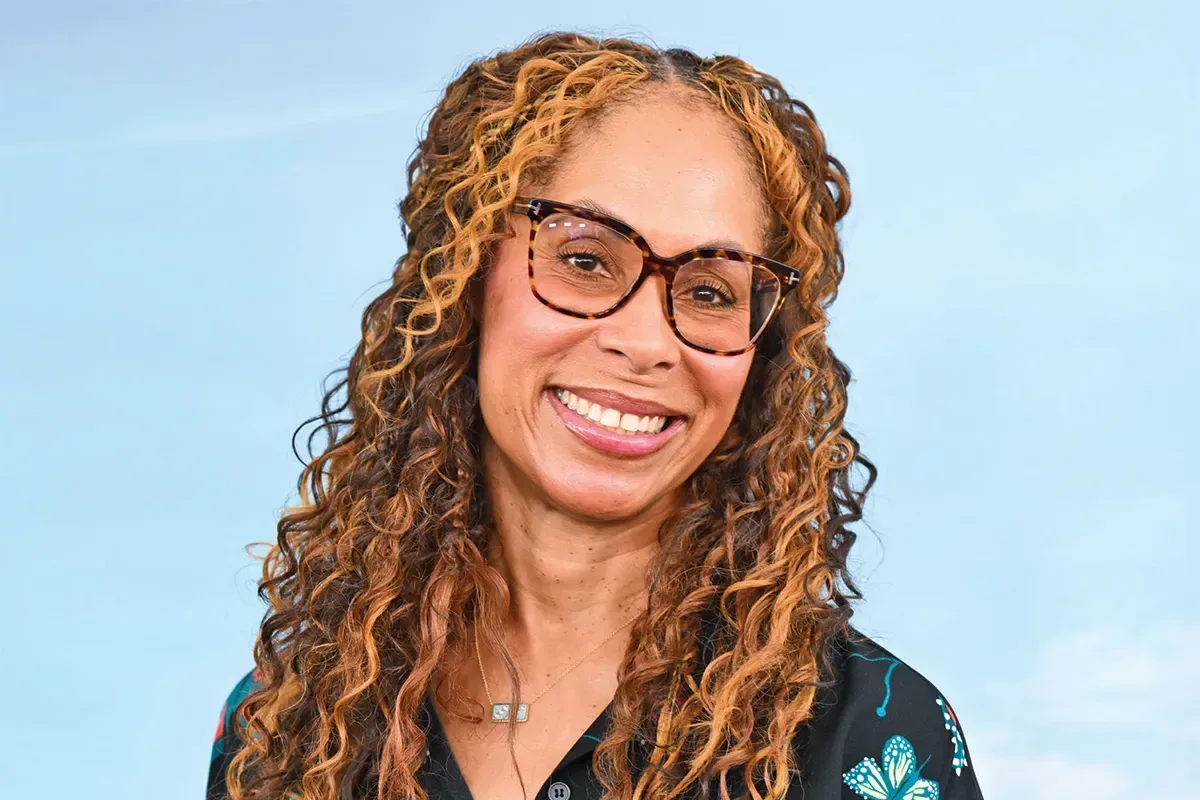
Corporate uncertainty can make any entertainment company look as though it has paused at a loading screen. Warner Bros. Television Group, however, is presenting a rather different picture: new orders across major streaming services, a thick list of renewals, returning franchise properties, significant creator deals and a colossal new Harry Potter adaptation intended to run for years.
Channing Dungey, chairman of Warner Bros. Television Group and also a leader of the company’s U.S. networks, says the possible Paramount Skydance acquisition and its unresolved timetable have not meaningfully altered the group’s day-to-day programming work. The longer that situation lasts, some large, long-range commitments may need additional discussion with prospective partners. For now, though, the studio is continuing to develop, buy and sell projects across many platforms.
That distinction matters. The studio is not operating solely as a supplier for HBO Max. Its current slate stretches through Netflix, Prime Video, Disney+, Apple TV, broadcast networks and cable. In a business where streamers have become more selective and fewer shows are ordered directly from a verbal pitch, having projects at different stages, for different buyers, is a useful kind of insurance.
A busy board of pickups, renewals and returning franchises
Since January, Warner Bros. Television has secured 12 new series orders. One of the most recognizable is Netflix’s Arrivals: A New Manifest Mystery, a revival of the Manifest universe. Jeff Rake and the creative team reportedly took time to find a version of the concept that could sustain itself over the long term rather than simply revisiting the earlier show.
The plan is designed to work on two levels. New viewers should be able to start with Arrivals without homework, while fans of the original series can expect mythology, connections and Easter eggs that acknowledge the history of the franchise. Cameos by members of the earlier cast remain possible, but there are no major confirmed plans for them at this stage. That is an important caveat for viewers hoping for a full reunion: possibility is not a casting announcement.
The other recent scripted orders show just how broad the studio’s current pitch can be:
- The People v. Gorilla Grodd, a DC true-crime mockumentary for HBO Max.
- Escorted, a romantic comedy from Brett Goldstein for Prime Video.
- Stillwater, a horror drama also set for Prime Video.
- Afterlife With Archie, a new take on the comic property for Disney+.
- I Suck at Girls, a Netflix sitcom.
On the renewal side, the list is equally substantial. HBO Max has continued The Pitt, It: Welcome to Derry, Stuart Fails to Save the Universe and Rooster. Netflix has renewed Leanne, Untamed and Running Point; Apple TV has more Shrinking and Bad Monkey on the way; Fox has continued Memory of a Killer; and CBS has renewed Georgie & Mandy’s First Marriage. ABC’s Abbott Elementary, identified as the leading broadcast comedy in multiplatform viewing among adults 18-49, is set to return for Season 6 next month.
There is also more than scripted television in play. The division includes new seasons of The Real Housewives: New York City, The Real Housewives: Salt Lake City and Season 30 of The Voice, plus syndicated staples Extra and The Jennifer Hudson Show. Animation has recently added Genndy Tartakovsky’s Heist Brothers and Tubi’s Yokoso Scooby-Doo. Netflix’s Scooby-Doo: Origins is another prominent upcoming project.
The Pitt points to a scheduling strategy, not merely a hit
Of all these shows, The Pitt may be the clearest illustration of what the studio wants more television to do. Its success is being viewed not only as a creative win but as support for two scheduling choices: release episodes weekly, and return with new seasons annually whenever possible.
Weekly episodes turn a show into a recurring event. Instead of an entire season becoming a weekend-sized cloud of discourse before it dissolves, viewers have time to react, talk and return. The strategy is hardly exclusive to The Pitt; Ted Lasso has also used weekly releases. But the theory here is direct: if episodes arrive one at a time, each can remain visible longer.
The annual cadence is the other half of the argument. A gap of 18, 20 or 22 months can make even an acclaimed series feel distant. An audience must remember plot points, rebuild its attachment to characters and find the show again amid a crowded menu. Bringing a series back yearly aims to maintain that connection. It is a simple ambition with a brutally complicated production reality, especially for effects-heavy shows, big casts and schedules shared with films. Still, it is becoming a notable point of emphasis.
American Blue was conceived with a similar repeatable model in mind. HBO Max passed on the police drama, but the completed pilot exists and five additional scripts are ready should another platform take it. The relationship drama How to Survive Without Me, from Greg Berlanti and starring Ray Romano, Josh Jackson and Kaley Cuoco, is also awaiting a decision at Max after another script is delivered.
Neither project should be treated as ordered until a buyer formally says yes. Yet the amount of prepared material shows an approach built around readiness: if a platform commits, production does not need to begin its quest from level one.
Big creators remain part of the strategy
Warner Bros. Television has renewed its overall agreement with Matt Reeves and his 6th & Idaho banner. Reeves first made the arrangement in 2020, committing television projects to the studio, and his company is associated with The Penguin. Dungey has praised the team’s character-focused storytelling.
Reeves joins a group of major creators with deals at the studio, including Greg Berlanti, Bill Lawrence, Chuck Lorre, Mindy Kaling, and the team of Lucia Aniello, Paul W. Downs and Jen Statsky. The recent renewal of John Wells’ major agreement is another signal that the company is willing to maintain relationships with dependable producers even while the overall market asks harder questions before opening its wallet.
That market caution is particularly relevant to the fate of Not Suitable for Work. Hulu canceled Mindy Kaling’s comedy after one season, and the studio is seeking another home. A move is not guaranteed. Comedy frequently needs time for audiences to settle into its characters, but the modern streaming environment can be impatient. The show’s potential future will depend on whether another service sees value in continuing that process.
Meanwhile, Ted Lasso remains a question mark beyond the season currently in editorial. There is no disclosed creative plan that definitively maps out a Season 5. The season being completed could open routes for further stories, but it could also function as a satisfying endpoint if Season 4 becomes the finale. Any decision would involve multiple parties, including Jason Sudeikis and Apple.
Franchises can evolve, but they cannot be assumed infinite
Stuart Fails to Save the Universe has earned a second season, continuing an unusual chain for The Big Bang Theory: a multi-camera comedy led to a single-camera successor, which led back to multi-camera, then to single-camera again. Whether Chuck Lorre has another extension in mind is unknown, but the studio would clearly listen.
The biggest long-form assignment is HBO Max’s upcoming Harry Potter series. Dungey has characterized it as unlike anything else she has worked on in sheer scope. Television gives the production room to explore the books without the same runtime limits that come with feature films. It is also envisioned as a long relay rather than a sprint, potentially lasting another decade from this early stage.
Such scale does not mean a return to the pre-pandemic era of freewheeling streaming budgets. The position now is more measured: spend what a particular show needs, at its appropriate price point, while remaining fiscally responsible. That may sound like executive vocabulary, but the practical result is clear. A project must increasingly demonstrate its engine, its scripts and its seasonal shape before it gets the green light.
For viewers tracking the awards side of this TV landscape, the wider ceremony conversation is also building; the 78th Emmys presenter lineup includes a growing list of familiar names. The Pitt had already won four Emmys at the prior weekend’s Creative Arts ceremonies and was expected to be a major drama contender at the main ceremony.
Linear networks are being treated as brands, not leftovers
Dungey’s role also covers TBS, TNT, TLC and Food Network. The idea is not that cable channels must choose between traditional linear programming and streaming relevance. Instead, the networks can function as both active channels and larger consumer brands.
Food Network has seen ratings growth, including with new series 24 in 24 and 100 Cooks, neither dependent on established star talent. TLC’s Suddenly Amish launched as the top new unscripted series. Discovery’s Shark Week posted its strongest ratings since 2019, while Puppy Bowl achieved its best cross-platform audience in eight years.
The broader brand logic is easy to recognize: HGTV branding can help sell paint, and Food Network branding can make a recipe more attractive to download. Television is still the core product, but recognizable identities can travel far beyond the channel guide.
Sam Register’s departure as head of Warner Bros. Animation, Cartoon Network Studios and Hanna-Barbera Studios Europe creates a major leadership opening, and the studio intends to fill it rather than wait for ownership matters to resolve. The creative teams already working in those units remain in place.
For the moment, Warner Bros. Television’s operating philosophy seems to be continued motion: build franchises carefully, hold onto creators, prepare projects thoroughly, serve many buyers and try to make hit shows return before the audience has moved on to the next enormous thing.