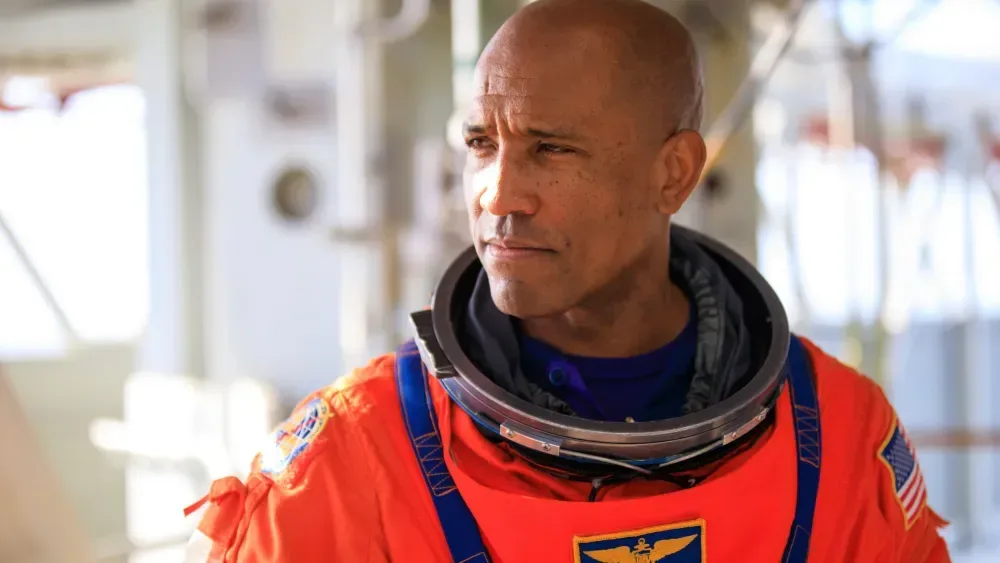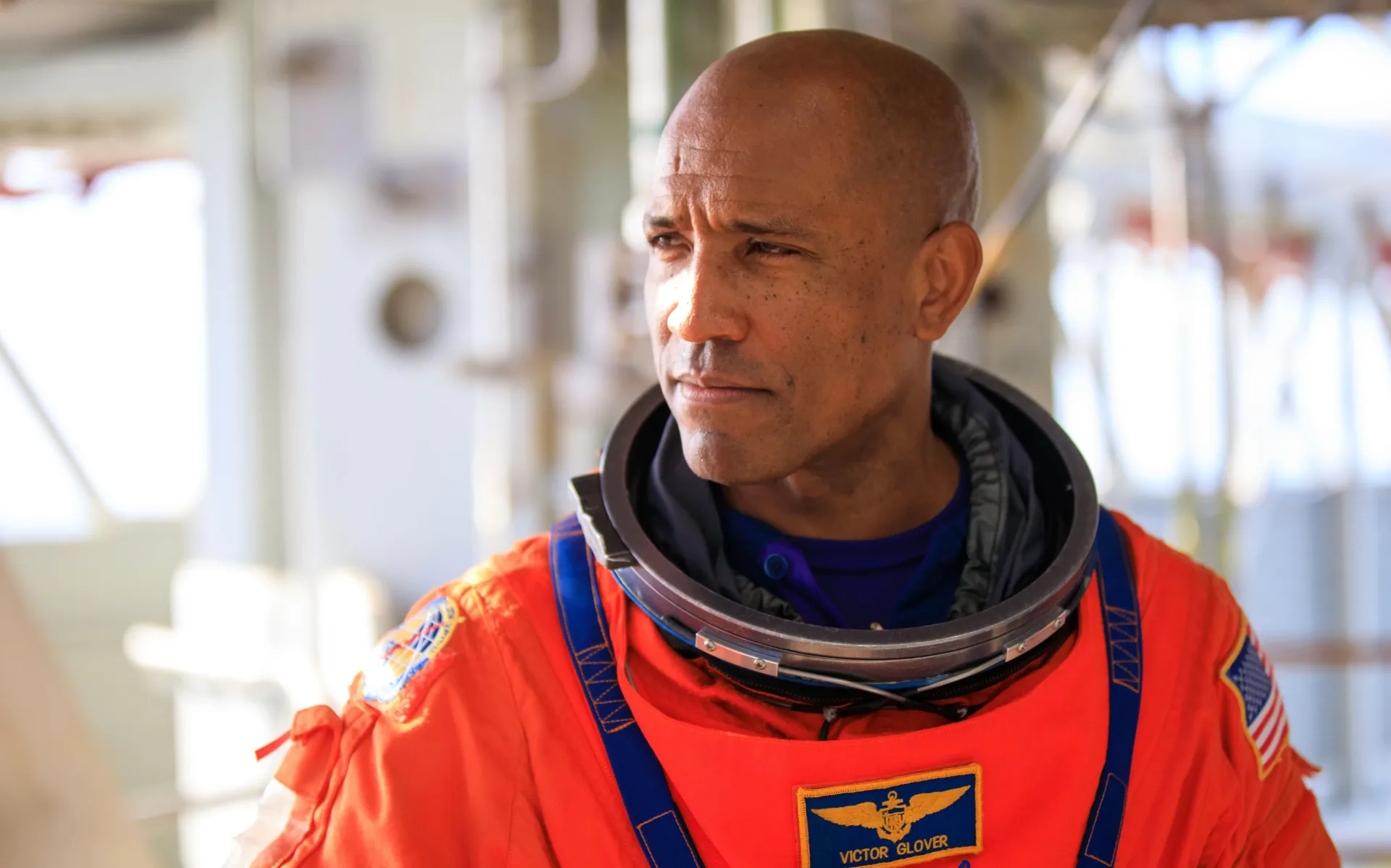
Victor Glover, the retired U.S. Navy captain and emeritus NASA astronaut whose flight record includes landmark missions to the International Space Station and around the Moon, has signed with CAA for representation in all areas.
The agreement brings a prominent spaceflight figure into a talent-representation business built around developing opportunities across public-facing fields. The supplied information does not specify particular projects or planned appearances. What is clear is that Glover arrives with an unusually substantial body of work: astronaut, naval aviator, test pilot, legislative fellow and higher-education adviser, as well as a participant in two missions with major historical significance.
For audiences accustomed to seeing space exploration filtered through fictional missions, game simulations and blockbuster storytelling, Glover’s career offers something more consequential: the work of a pilot and flight engineer on real human-spaceflight programs, with records that carry both operational and cultural importance.
A representation deal built on an extraordinary flight record
CAA will represent Glover in all areas. In practical terms, that broad phrasing means the scope is not limited in the provided information to one medium, one type of appearance or one subject. It establishes a representative relationship rather than confirming a specific book, screen project, speaking series, endorsement or other venture.
That distinction matters. Signing with an agency can create a framework for future opportunities, but it is not itself evidence that any particular production or commercial arrangement is underway. The announcement is best understood as the formal start of representation for a figure whose experience can speak to aerospace, leadership, education, public service and the human reality of working in space.
Glover’s résumé already spans institutions and roles that most public figures would treat as separate careers. Before NASA selected him as an astronaut in 2013, he had developed a career in naval aviation and served a term as a legislative fellow in the U.S. Senate. He later became known internationally through missions that placed him at the leading edge of American crewed spacecraft operations.
From Crew Dragon’s first operational mission to life aboard the ISS
In 2020, Glover piloted Resilience, the first operational flight of SpaceX’s Crew Dragon spacecraft to the International Space Station. The mission was a significant early operational step for Crew Dragon: “operational” here means a mission conducted as part of the spacecraft’s regular service role, rather than a demonstration flight intended primarily to prove that a new vehicle could perform the required tasks.
On that flight, Glover also served as a flight engineer for Expeditions 64 and 65. A flight engineer is a crew role involving the operation, monitoring and support of spacecraft and station systems. On a space-station expedition, that work is part of the routine that enables research, maintenance and the day-to-day functioning of a permanently occupied orbital laboratory.
The assignment made Glover the first Black American astronaut to live aboard the International Space Station. That achievement is central to the significance of his career, but it sits alongside the professional details of the mission: the piloting of a new-generation commercial spacecraft on its first operational ISS flight and a working role across two station expeditions.
The ISS milestone also helps explain why a broad representation arrangement may be meaningful. Glover’s experience is not reducible to a single ceremonial “first.” It includes the technical responsibilities of a mission pilot and flight engineer, sustained time in orbit, and the ability to discuss a rapidly changing era in which NASA missions and commercial spacecraft systems intersect.
Artemis II took Glover farther from Earth than any human before him
This April, Glover piloted NASA’s Artemis II mission, becoming the first Black astronaut to fly to the Moon. He and the rest of the Artemis II crew completed a mission lasting nearly 10 days and traveled as far as 252,756 miles from Earth. The provided account identifies that distance as farther than any humans have ever traveled.
The distinction is precise and important. Flying to the Moon refers to a crewed lunar mission, while a mission’s farthest distance from Earth is a separate measure of its trajectory. Artemis II’s stated maximum distance makes the flight a human-distance record, adding another historic dimension beyond the mission’s lunar destination.
Glover’s Artemis II role was that of pilot. In crewed spaceflight, a pilot is responsible for spacecraft operations within a larger command structure. The title reflects demanding preparation and operational expertise; it is not simply a symbolic seat on a mission. Glover brought to Artemis II a background that included test flying military aircraft as well as piloting Crew Dragon’s first operational trip to the ISS.
His accumulated spaceflight record is 178 days in space and four spacewalks. A spacewalk, also known as extravehicular activity, is work conducted outside a spacecraft or space station while protected by a spacesuit and life-support systems. The total underlines the range of his experience: not only piloting and station operations inside spacecraft, but work in the external space environment as well.
The aviation foundation behind the astronaut career
Prior to his astronaut selection, Glover was a Naval aviator and a test pilot. He flew the F/A-18 Hornet, F/A-18 Super Hornet and EA-18G Growler, and he has flown more than 45 aircraft in all, logging more than 4,000 hours in the air.
Those aircraft names describe related but distinct high-performance military platforms. The Hornet and Super Hornet are fighter aircraft, while the EA-18G Growler is an electronic-attack aircraft. The supplied record does not detail Glover’s assignments in each airframe, but the breadth of types flown and the test-pilot designation provide useful context for the skill set behind his later spacecraft duties.
Test pilots evaluate aircraft and systems under demanding conditions, a role that requires extensive technical knowledge as well as flying ability. That background naturally connects with crewed-spaceflight work, where astronauts must operate sophisticated vehicles, follow detailed procedures and respond to circumstances in which precise communication and systems awareness are essential.
Glover also served as a legislative fellow in the U.S. Senate before becoming an astronaut. The career path gives him direct experience in another part of the public system surrounding American spaceflight: the policy environment in which national programs are debated and supported. Again, the available information does not describe the substance of his Senate work, so it would be inappropriate to infer specific policy positions. Its significance is the unusually broad perspective it adds to an already varied professional background.
Service, education and recognition
Glover has received the Defense Superior Service Medal, Navy Commendation Medal, two Navy and Marine Corps Achievement Medals, the NASA Distinguished Service Medal and the NASA Space Exploration Medal. These honors reflect recognition across his military and NASA service, although the supplied material does not attach individual awards to particular missions or assignments.
A California native, Glover studied at California Polytechnic State University and now serves there as an executive adviser. He also holds master’s degrees from the Naval Postgraduate School. California Polytechnic State University and Howard University have each awarded him an honorary doctorate.
That educational record adds an important dimension to his public profile. An executive adviser role, advanced degrees and honorary recognition place Glover in conversations about learning and professional development as well as exploration. For students looking at technical fields, aviation or public service, a career that moves from university study to military flying, NASA missions and institutional advising offers a concrete example of how several disciplines can overlap.
What the signing does—and does not—signal
The most immediate news is straightforward: Glover now has representation through CAA across all areas. The announcement does not name a forthcoming movie, television program, game, memoir, classroom initiative or commercial partnership. Treating the signing as confirmation of any such project would go beyond the available facts.
Still, broad representation is a logical match for an astronaut with a record that reaches beyond one specialist audience. Glover has firsthand experience of orbital living, spacecraft piloting, spacewalks, military test flying, public service and educational advising. Those subjects can be relevant to public events and storytelling in ways that do not require reducing a technical career to spectacle.
It also arrives at a moment when audiences are paying close attention to the people behind ambitious missions, not merely the vehicles. Glover’s record provides a useful reminder that spacecraft milestones depend on careers built over years: education, disciplined training, aviation operations, systems knowledge and teamwork. The remarkable numbers—178 days in space, four spacewalks and a maximum Artemis II distance of 252,756 miles—tell only part of that story.
In the wider entertainment and creator economy, representation frequently helps specialists translate deep expertise for broader audiences while retaining a clear professional identity. That ecosystem extends well beyond conventional celebrity work; for instance, the games space continues to build audience-facing creator infrastructure, as seen in Jingle Jam’s creator sign-up plans for its 2026 fundraising event. Glover’s signing belongs to a different field, but it similarly puts a highly accomplished practitioner in a position to consider how and where his experience is shared.
For now, the durable significance rests on what Glover has already done. He piloted the first operational Crew Dragon mission to the ISS, became the first Black American astronaut to live aboard the station, and later became the first Black astronaut to fly to the Moon on Artemis II. With CAA now representing him in all areas, the next chapter may broaden the settings in which he brings that perspective to the public.