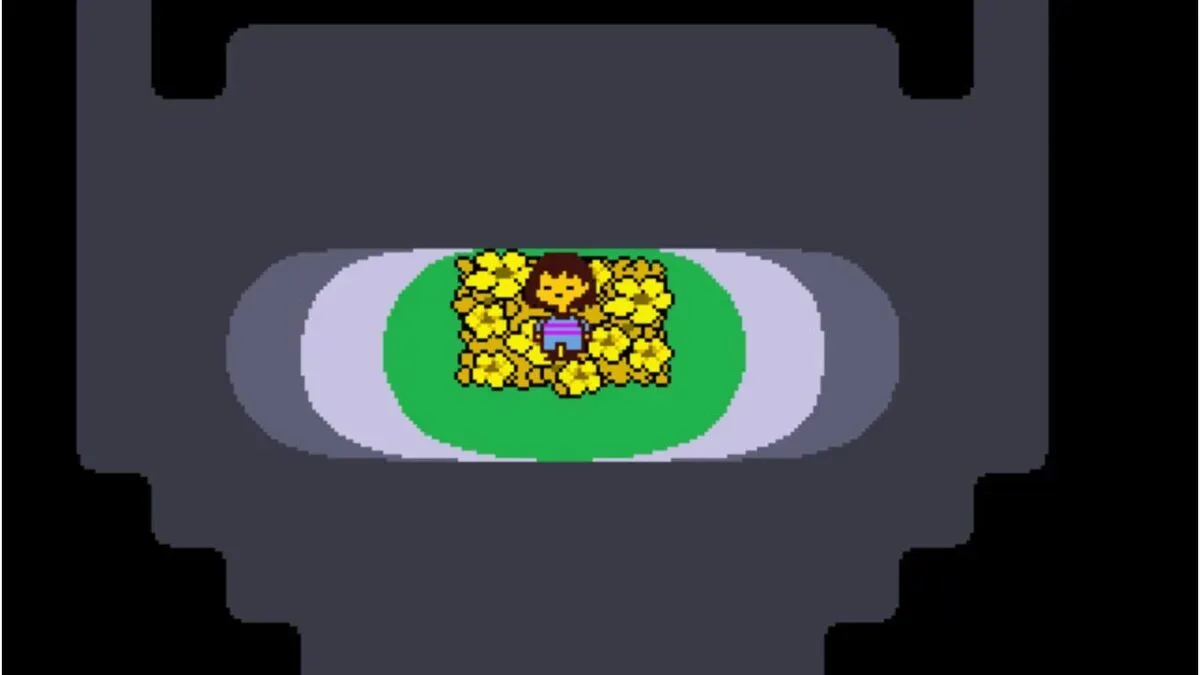
Roblox is facing renewed questions about how a vast user-created game platform should handle uploads that appear to be far more than fan tributes. Experiences said to reproduce Undertale, all five available chapters of Deltarune, and other commercial games have reportedly been circulating on the service under hard-to-search names and descriptions.
The important distinction is between a fan-made Roblox game inspired by another work and an upload that reproduces the original game itself. The reports here concern the latter: experiences that appeared to contain the actual games, rather than Roblox-built reinterpretations using a similar premise, visual style, or battle system. That distinction matters both to players trying to find legitimate versions of a game and to creators whose work can be copied, surfaced to an audience, and potentially monetized without their involvement.
One reported Deltarune upload was observed with roughly 58,000 concurrent players. A brief check of Chapter 1 and launches of the other chapters reportedly showed a version unmistakably recognizable as Deltarune, albeit with technical defects including audio problems and screen tearing. One early Susie line was also altered from “piss me off” to “tick me off,” apparently to make the text less likely to conflict with platform rules.
Similar uploads reportedly included Undertale and what appeared to be PaRappa the Rapper. A separate Roblox experience associated with Counter-Strike 2 was described as looking, sounding, and playing similarly to Valve’s shooter, while using different models and a different map. That version was said to be updated frequently, including changes to models or access restrictions that may help it avoid removal. These examples do not all appear equally direct, but together they show how difficult it can be to draw a practical enforcement line once a game is uploaded, renamed, altered, and moved through communities.
Why a port is different from a fan game
Fan projects are not one uniform thing. A creator may build an original Roblox experience with an homage to a favorite game, make a role-playing scenario around its characters, or recreate one mechanic through their own code and platform assets. Those projects can still raise permission questions, but they are meaningfully different from an apparent full-game upload.
A port, in this context, means a game moved from one platform or technical environment to another. An authorized port is normally undertaken by the rights holder or a party it has licensed. It is not simply a matter of making a game playable somewhere new: it involves rights to the game’s code, art, audio, writing, characters, branding, and distribution. The reported Roblox uploads are concerning precisely because they are described as entire games placed into a new environment without a clear indication that the original owners approved them.
That difference also affects players. A Roblox listing that hides its identity through vague naming may be difficult to locate deliberately, but still reach people through recommendations, social sharing, or a community page. Users could reasonably encounter something that looks like a way to play a familiar game without knowing whether it is official, stable, complete, or likely to remain available. The audio glitches and screen tearing reported in the Deltarune example underline a more basic consumer issue: an unauthorized upload may not preserve the experience that its original developers released.
The scale claimed for a prior Roblox recreation focused on Deltarune battles makes the point sharper. That separate project reportedly drew nearly 200 million players after appearing in August. A battle recreation is not the same thing as a full-game copy, but it demonstrates how quickly a recognizable work can attract an audience inside Roblox. The audience incentive is obvious; the distinction between an adaptation, a clone, and an apparent direct import is not always obvious to a player scrolling through listings.
Roblox’s policy puts rights holders in the loop
Roblox says users agree to follow its Terms of Use when creating content, and that its Community Standards prohibit material confusingly similar to another Roblox creator’s work as well as repetitive and misleading content. The company says its moderation systems can identify and act against copied games and misleading Roblox-game copycats.
For intellectual property owned outside Roblox, however, the company’s stated approach gives the rights holder a central role. Roblox points to its License Manager, which is intended to help rights holders provide and manage licenses at scale, and its Rights Manager, which allows them to report material they believe infringes their rights. Those tools can also accept reference material from rights holders so Roblox can surface matching content. Roblox says it does not tolerate intellectual-property infringement and responds quickly to valid takedown requests, including DMCA notices.
DMCA is shorthand for a U.S. copyright notice-and-takedown framework. In the narrow context described here, it means a rights holder can submit a request seeking removal of content it believes infringes its copyright. A takedown process is not the same as platform-wide pre-publication approval. The former reacts to a reported item; the latter would attempt to identify concerns before an upload can reach users.
Roblox also stresses that once an experience is published, it is subject to the same intellectual-property and clone policies as other Roblox games, and that its creator remains responsible for what they publish. That is the company’s formal position. The practical concern raised by the reported uploads is whether a reactive model can work quickly enough when the content is hard to find by name, changes over time, and can reach large numbers of players before a rights holder sees it.
Discovery is part of the moderation problem
The apparent uploads were reportedly not easily found by searching for “Deltarune” or “PaRappa.” That does not make them harmless or invisible. Rather, it creates an awkward split: ordinary search may not reveal an experience to a rights holder who is looking for it, while platform discovery and community circulation may still reveal it to potential players.
This is an operational problem more than a philosophical one. Roblox hosts a huge volume of games and frequent updates. A large company may be able to dedicate staff or outside help to monitoring prominent platforms and filing reports. An independent creator, by contrast, may not have the time to regularly search through vague titles, private or restricted access, changing thumbnails, and community links simply to determine whether their work has been copied.
That imbalance is especially relevant to the reported Undertale and Deltarune examples. Toby Fox and a small team are not in the same position as a major corporate rights department. A reporting tool can be valuable once an infringement is located, but it cannot by itself solve the discovery burden. Nor does an eventual takedown erase the attention, players, or possible revenue an upload may have accumulated before removal.
There is also a public-trust dimension. If a game’s listing is deliberately vague, players cannot easily distinguish an authorized version from an unofficial one. They may attribute technical problems, altered text, missing material, or sudden disappearance to the original game rather than the person who uploaded it. For works with distinctive writing and presentation, that can blur the line between the creator’s actual release and a compromised copy.
AI import technology changes the stakes, even if it is not behind these uploads
The current reports arrive as Roblox discusses an initiative called The Universal Player. The company has described its goal as enabling existing console, PC, and mobile games to be imported onto Roblox, allowing developers to bring games made elsewhere to the platform and monetize them there and on other platforms.
Roblox has been explicit that the tool is still in development and is not what is being used for the reported Deltarune and other uploads. For now, the company says it is starting with a select group of partners that hold the necessary rights and have a game already released through a major storefront. Roblox says its process includes ownership vetting, followed by an agreement before selected partners proceed.
That limitation matters. It would be inaccurate to frame the reported apparent copies as a demonstrated failure of The Universal Player, because Roblox says the technology is not responsible for them. But the future direction is still relevant. Roblox has described a planned AI-based import technology that converts an existing console, PC, or mobile game into a Roblox version. A system that lowers the technical friction of legitimate ports could also heighten pressure on the company’s verification and enforcement systems.
AI-based import does not mean that a game automatically becomes legal to distribute in another place. It describes a technical conversion process. Permission remains a separate question: the party submitting the game must have the authority to do so. Roblox’s present partner vetting is therefore a crucial safeguard in its own description of the initiative. If the feature reaches a wider group in the future, the effectiveness of ownership checks and the speed of action against apparent unauthorized uploads will be central to whether that distinction holds up in practice.
AI coding is another part of the concern. Tools that reduce the effort required to build, modify, or package an experience may make it easier for more users to attempt copies or near-copies. That does not establish that any particular upload was made with AI. It does mean that a platform designed around an enormous volume of creator content may face more attempts to disguise, alter, and republish recognizable games.
What players and developers should take from this
For players, an experience that appears to offer a complete commercial game inside Roblox should be treated cautiously when it is not clearly identified as an official, licensed release. A vague name, a strange access path, altered assets, or technical instability are not proof of infringement on their own, but they are useful signals that the listing may not be an authorized version. The safest route to a specific game remains its established official distribution channels.
For developers and publishers, the episode illustrates the practical value—and the limits—of Roblox’s Rights Manager and License Manager. These tools offer routes to report suspected infringement, provide reference material, and manage approved uses. Yet the reports also suggest that enforcement may depend on rights holders finding the uploads in the first place. That is a significant workload where games can be disguised, updated, or circulated outside normal search results.
Roblox is not alone in confronting these questions; platforms that host large volumes of user uploads routinely have to balance rapid publishing with safeguards against copied work. The company’s proposed import tools make its version of the problem unusually direct: its ambition is to make moving legitimate games into Roblox easier, while its policies must prevent the same broad idea from becoming cover for unauthorized copies.
The industry will be watching whether the reported experiences remain online, whether rights holders choose to act, and how Roblox develops its verification process as Universal Player moves beyond selected partners. For more on platform and business developments around games, see our recent industry coverage.