T-Mobile has begun its holiday phone promotions with offers centered on Apple’s newest high-end handsets: the foldable iPhone Duo and the iPhone 18 Pro. The carrier is advertising up to $1,200 off either device when customers meet the qualifying trade-in and select-plan requirements. Eligible customers may also have a route to a $0 upfront phone cost, though that is not the same thing as a phone with no conditions attached.
The key word throughout these offers is eligible. The largest advertised saving depends on both the phone handed in and the wireless plan selected. Anyone comparing an upgrade with a switch should treat the headline figure as the ceiling of the promotion, then confirm the value assigned to their specific trade-in device and the plan required for that amount.
Two very different takes on the flagship iPhone
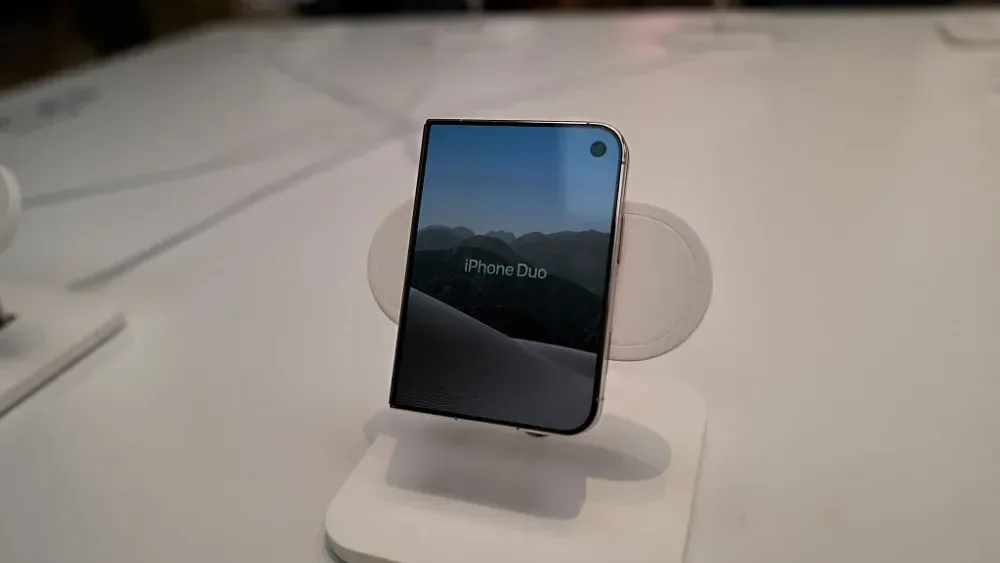
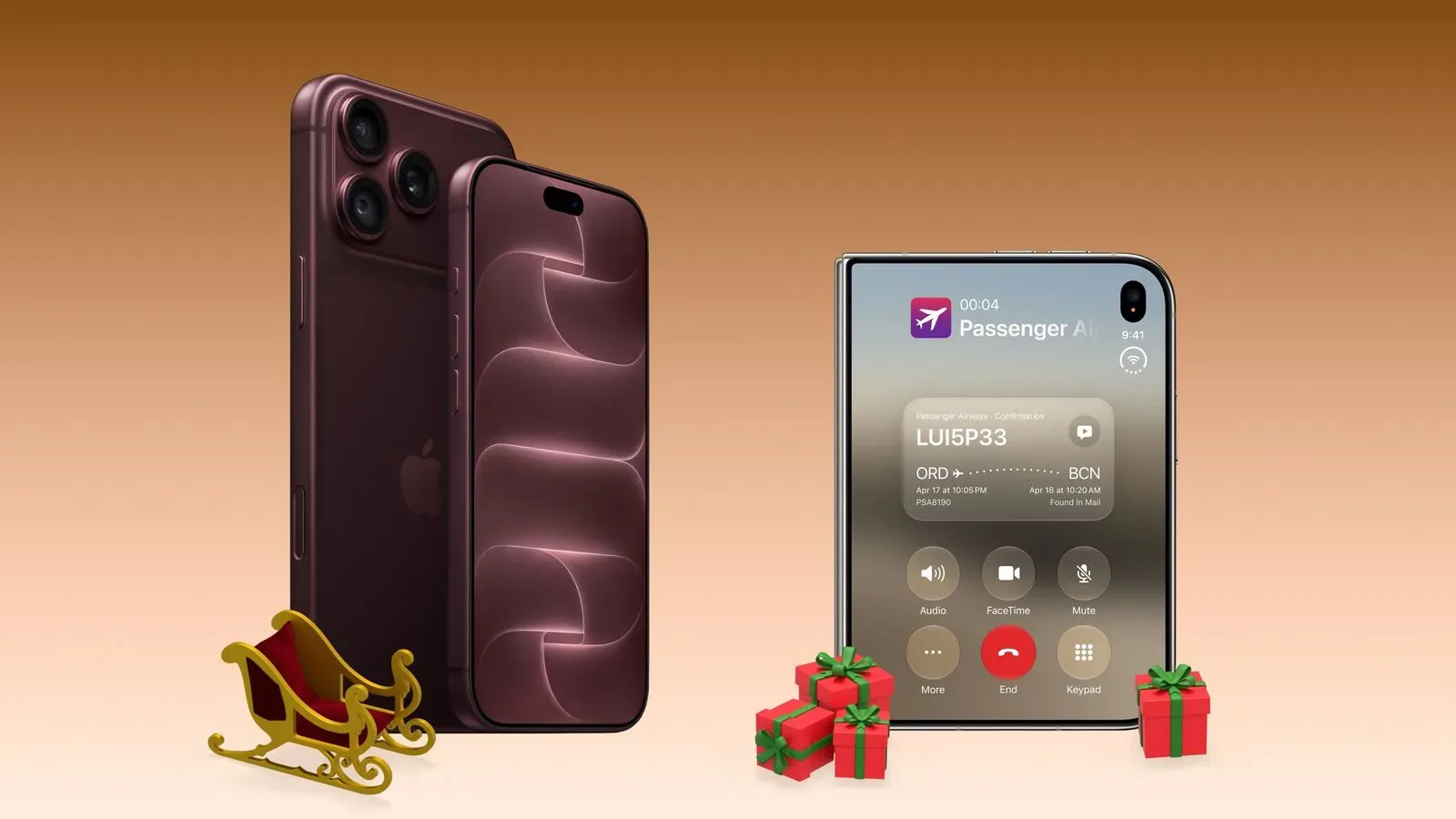
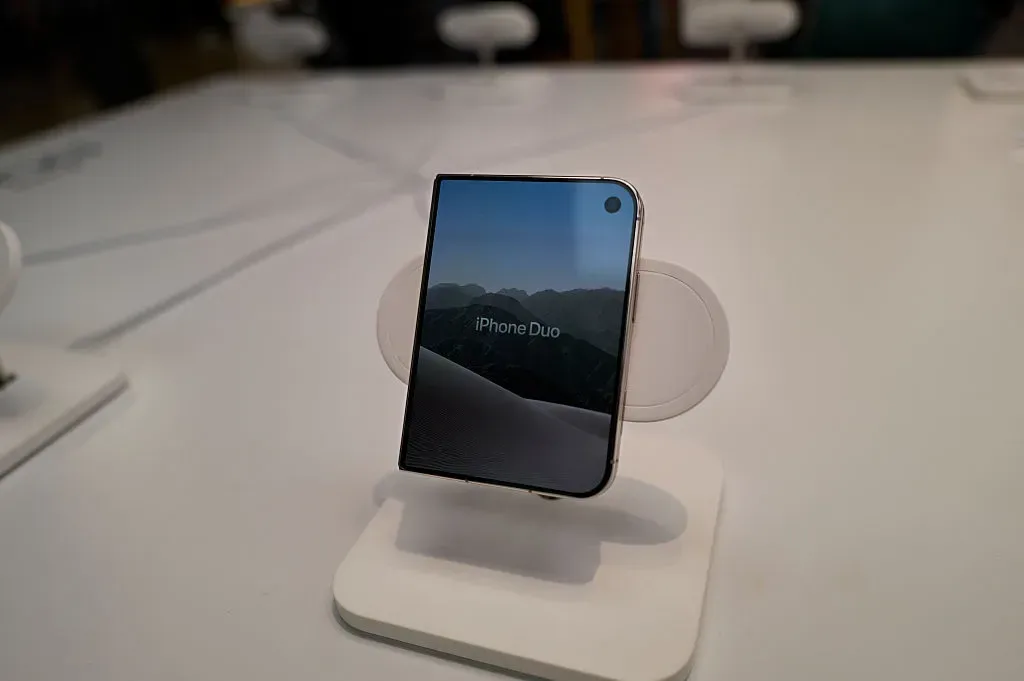
Apple’s current lineup gives shoppers a clear choice between a major shift in form factor and a conventional premium-phone upgrade. The iPhone Duo, released October 23, is Apple’s first foldable phone. It has a 5.4-inch external display and opens into a 7.6-inch screen, described as the largest display on an iPhone so far. The handset is available in Star White and Night Sky.
That layout has an obvious appeal for people who regularly watch video, play games, or keep multiple apps visible at once. A larger unfolded display can provide more room for on-screen controls, maps, chat windows, browsing, and video. Foldable is the important technical term here: rather than simply being a large phone, the Duo uses a display that opens from a smaller outer-screen device into a larger inner-screen device. T-Mobile’s offer places that newer design in the same maximum-discount bracket as the iPhone 18 Pro.
The iPhone Duo is also Apple’s thinnest iPhone when opened. That distinction is specifically about the unfolded device, and it matters because a foldable needs to balance a larger internal screen against the practicality of carrying it when closed. Shoppers should still focus first on whether they will actually use both modes: a pocket-sized exterior screen and a larger display for longer tasks.
The iPhone 18 Pro arrived September 18 and starts at $1,199. It is available in Black, Silver, Glacier, and Burgundy. Rather than changing the phone’s basic shape, its listed upgrades focus on the camera, processing, thermal design, and software capabilities.
What the iPhone 18 Pro’s camera change means
The 18 Pro introduces Apple’s first variable-aperture camera. Aperture is the adjustable opening through which light enters a camera. Changing it affects both light intake and depth of field, the area of an image that appears acceptably sharp. The phone lets users adjust depth of field and lighting in the Camera app.
In practical terms, that gives users more direct control over how much separation they want between a subject and its background, as well as control related to the amount of light reaching the camera. It is a different proposition from the Duo’s larger-screen pitch. People whose upgrade priorities are photography tools may find that more important than the foldable layout.
Other listed iPhone 18 Pro hardware includes a new 48-megapixel Fusion Main camera, Apple’s A20 Pro chip, and an upgraded cooling system. A megapixel count refers to the number of pixels a camera sensor can capture. It is one specification among several rather than a complete measure of image quality, but it identifies the main camera as a 48-megapixel component.
The A20 Pro is the phone’s processor, the central chip responsible for handling the device’s computing work. The upgraded cooling system is relevant to sustained activity because cooling is intended to manage heat generated while a phone is under load. The handset also lists enhanced AI capabilities through iOS 27. Those capabilities are software-linked, so buyers interested in them should distinguish the stated operating-system support from the hardware features of the phone itself.
Understanding the $1,200 figure before trading in
“Up to $1,200 off” is a meaningful headline because it is near the iPhone 18 Pro’s $1,199 starting price. But it should not be read as an automatic price for every shopper or every configuration. The offer is explicitly tied to qualifying trade-ins and select plans. A customer with an ineligible older phone, or a customer who does not choose a qualifying plan, may not receive the maximum value.
There are a few practical questions worth answering before turning a trade-in into a holiday purchase:
- Which exact phones qualify? Ask whether the model, storage configuration, and condition of the current device affect the value.
- Which plan is required? The promotion applies on select plans, so compare the required plan with the service arrangement you would otherwise choose.
- How is the discount applied? Confirm the format and timing of the promotional value, and read the full offer terms before relying on a headline total.
- What does $0 upfront cover? A $0 upfront option concerns the cost due at the start. It does not, by itself, explain all ongoing service or promotional conditions.
- Is a trade-in worth more than keeping it? A device can be useful as a backup, a family hand-me-down, or a separate sale. That decision is personal, but it is worth making before the trade-in is surrendered.
Those checks are especially useful with a foldable, because the iPhone Duo is a new category for Apple. Its 5.4-inch outer display and 7.6-inch unfolded display offer a specific kind of flexibility, but a larger screen alone will not be equally valuable to every buyer. Someone who mainly wants a camera-focused iPhone may find the 18 Pro’s variable-aperture feature more relevant. Someone who uses a phone for video, multitasking, and gaming could reasonably place more weight on the Duo’s screen arrangement.
More phones are included in the carrier’s holiday push
The iPhone Duo and iPhone 18 Pro are not the only devices named in the promotion. T-Mobile is also advertising up to $830 off the iPhone 17. Offers for the iPhone 16 and iPhone 17e can cover the full device cost in qualifying cases. Android shoppers are included as well, with discounts mentioned for Samsung’s Galaxy S26 series, Google’s Pixel 11 lineup, and Motorola Razr phones.
The Motorola Razr mention is notable simply because it gives shoppers another foldable family to compare within the wider promotion. The available information does not specify individual device prices, discount amounts, or the exact qualification rules for each Android offer, so prospective buyers should not assume the iPhone Duo’s stated $1,200 maximum applies to every listed phone.
For customers moving service rather than merely upgrading an existing line, the promotion also advertises four lines at $25 per line and four iPhone 17e devices “on us” when switching. That is a separate proposition from the iPhone Duo and 18 Pro trade-in offers. A household evaluating it should look at the number of lines it truly needs, the device model offered, and the switching qualifications rather than comparing only the advertised per-line number with a single-phone upgrade.
Why the phone decision can matter to gaming
Mobile gaming is one of the clearest use cases for a larger phone display, even though screen size is not the only consideration. The Duo’s 7.6-inch unfolded display is explicitly positioned for gaming as well as video and multitasking. More screen area can leave room for game visuals and touch controls at the same time, while the outer display offers a smaller format when the phone remains folded.
For players who bounce between games, clips, social feeds, messages, maps, or guides, multitasking is the other relevant term. It means working across more than one app rather than closing one task to use another. The cited information identifies the Duo as designed for this kind of use; it does not establish how any particular game or app behaves on the device. That difference is worth keeping in mind whenever a device’s feature list is being used to make a purchase decision.
Likewise, the iPhone 18 Pro’s A20 Pro chip and upgraded cooling system may be of interest to people who use demanding apps for extended periods, but the available details do not provide game performance figures. Buyers should see those items as stated hardware changes, not as a promise of a particular frame rate, compatibility result, or gameplay experience.
Gaming on a phone often sits alongside broader entertainment use, from videos to messaging and browsing. Players keeping up with the wider game conversation may also want a quick refresher on how GTA 6 earbuds let players listen to radio while exploring on foot. The larger point for a hardware upgrade is straightforward: buy for the use cases you will regularly return to, not merely for the longest list of specifications.
A sensible way to compare the offers
Start with the phone you would choose if no promotion existed. For the iPhone Duo, that means deciding whether the fold-out 7.6-inch display is a real advantage in daily use. For the iPhone 18 Pro, it means deciding whether the camera controls, 48-megapixel main camera, A20 Pro chip, cooling update, and iOS 27 AI-related capabilities match your priorities. Then compare the actual trade-in and plan terms that apply to you.
Next, separate the device decision from the service decision. The stated maximum discount requires both a qualifying trade-in and a select plan. A deal can look substantially different once those two requirements are considered together. This is also why a $0 upfront figure should prompt a closer read rather than end the comparison.
Finally, compare like with like. The iPhone 17’s maximum advertised discount is up to $830, while the iPhone 16 and iPhone 17e are mentioned in offers that can cover the full device cost. Those are not interchangeable descriptions: each relates to different devices and terms. The same care applies to the Galaxy S26, Pixel 11, and Motorola Razr discounts, whose individual figures are not provided here.
T-Mobile’s early holiday slate is broad enough to make the first choice less about whether a deal exists and more about which combination of phone, trade-in, plan, and number of lines fits the buyer. The iPhone Duo and iPhone 18 Pro lead the promotion with a maximum advertised $1,200 reduction, but the qualifying details remain the part that determines what a specific customer actually receives.