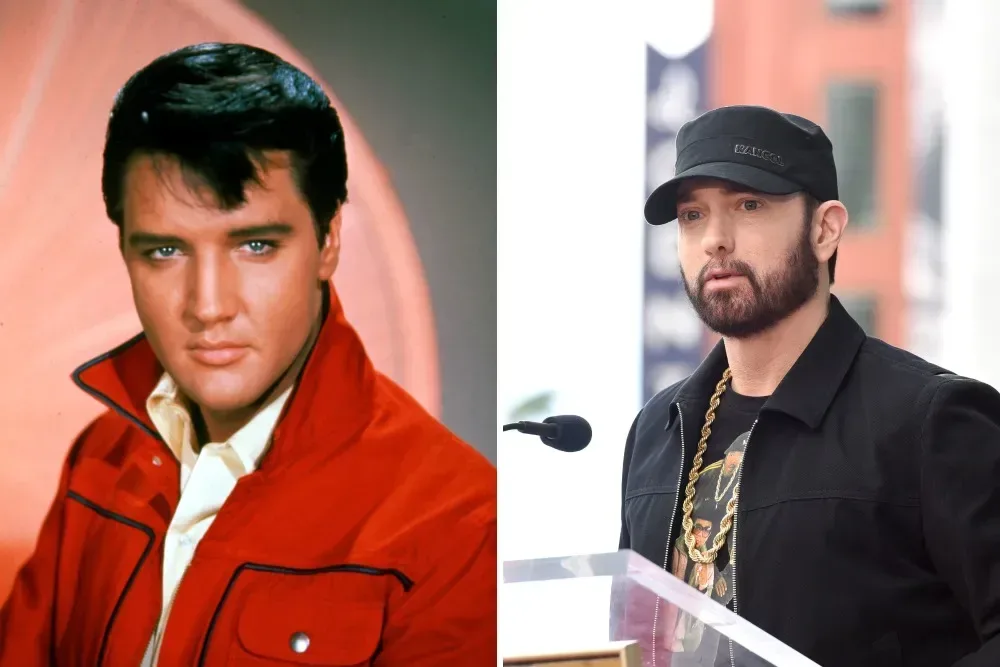
Suno is facing two new copyright lawsuits centered on AI-generated music that allegedly sounds like Elvis Presley or imitates Eminem’s lyrics. The separate cases were brought by a group that owns rights connected to Presley’s music and by Eight Mile Style, a music publishing company that owns hundreds of Eminem recordings.
The claims put a familiar but increasingly consequential question back in focus: what responsibility does an AI music service have when users can generate outputs that appear to closely evoke a famous performer or copyrighted lyrics? The answer is not established by the filing of a lawsuit itself. These are allegations that will need to be tested through the legal process. But the cases add pressure to an industry already trying to establish boundaries around model training, artist imitation, user prompting and licensing.
What the new lawsuits allege
Both complaints identify examples of songs made through Suno that the plaintiffs say either resemble Presley’s sound or mimic Eminem’s lyrics. The suits are described as copyright infringement actions, meaning the core dispute concerns protected musical material and whether it was used without permission.
There are several distinct ideas that can be easy to blur together in discussion of AI music. A recording may bring together a composition, lyrics, an arrangement, a performance and a recognizable vocal presentation. Copyright claims can concern protected songs and recordings, while arguments about a performer’s likeness or voice may raise separate issues depending on the claims and applicable law. The supplied allegations reference both outputs that allegedly sound like Presley and outputs said to mimic Eminem’s lyrics, so the precise legal theory and evidence in each case will matter.
A song merely reminding a listener of another artist is not, by itself, a complete account of infringement. The relevant questions can include what protected material is alleged to have been used, how close a particular output is claimed to be, how the system was trained and whether an allegedly infringing result stems from a user request, the product’s design or some combination of factors. Those details are especially important here because the disputes concern generative tools: software that produces a new audio output in response to prompts rather than simply serving a fixed catalog of tracks.
Suno says artist names and songs are prohibited
Suno has disputed the broad characterization of its conduct. In a statement, the company said it does not permit unauthorized use of an artist’s work. It specifically said its rules prohibit use of particular artists’ names and songs, and that it works with third-party companies to screen for potential misuse.
That response frames an important practical distinction. A platform can prohibit certain prompts or uploads while a claimant argues that prohibited results remain possible, or that the service’s underlying systems nevertheless make infringement possible. Content rules, automated screening and enforcement are related safeguards, but they are not necessarily the same thing.
For users, a ban on naming an artist should not be treated as a magic line that automatically makes every adjacent request safe. Asking for a track in the exact vocal identity of a living or deceased performer, reconstructing distinctive lyrics, or requesting an unusually close facsimile can create obvious risk even if a prompt avoids the artist’s name. Conversely, an AI-generated song being unusual, retro-styled or technically rough does not prove it copied anyone. The sensible approach is to consider the total result: lyrics, melody, vocal resemblance, phrasing and other specific similarities.
Related coverage includes Suno Faces New Lawsuits Over Alleged Elvis Presley and Eminem AI Songs.
That is also why listeners should be careful before declaring an audio clip artificial or accusing it of copying a particular song based on a few seconds of low-quality audio. Our guide to spotting possible AI-generated music without mistaking odd for artificial covers the value of looking for concrete signals rather than treating an unconventional performance as proof.
Why rights holders are pursuing these cases
The attorneys representing the plaintiffs argued that the alleged conduct reduces human creativity to something a machine can replicate in seconds without a license, despite the years of practice and refinement behind an artist’s work. Their position is not simply that AI is a new production tool; it is that the tool allegedly enables unlicensed replication of protected creative labor.
The Presley-related rights group has also taken action against another AI company. It recently sued Anthropic, seeking $41 million in damages and alleging that the company trained AI models on Presley’s works without permission. That separate dispute is important context because it highlights two routes through which copyright fights over AI can emerge.
- Training-data claims: These address whether copyrighted works were used to develop an AI model without authorization.
- Output claims: These focus on material produced by the service, such as a generated song alleged to reproduce lyrics, musical elements or a recognizable protected performance.
- Product-safeguard disputes: These examine what a company does to prevent misuse, including prompt restrictions and detection systems.
These categories can overlap, but they should not be assumed to stand or fall together. A company may defend its training practices while facing criticism over outputs, or argue that users violated rules even as rights holders challenge whether its enforcement measures are sufficient. The public summaries available here establish that the latest Suno cases offered alleged examples of objectionable outputs; they do not resolve the technical and legal questions a court may ultimately examine.
A crowded legal landscape around Suno
The new cases are not Suno’s only copyright challenge. Earlier this year, Sony Music Entertainment and Universal Music Group jointly filed a lawsuit alleging continued infringement involving Suno’s latest v6 models. That matter remains an allegation, but its existence shows that major music-rights companies are scrutinizing both the inputs and outputs of AI music systems.
Not every label relationship has followed the same path. Warner Music Group dropped its lawsuit against Suno last year and instead reached a licensing agreement with the company. The contrast matters. Licensing is a negotiated permission structure: it is not the same as a court finding that prior conduct was lawful or unlawful, and it does not automatically decide the claims of other rights holders. Still, it demonstrates that litigation is not the only possible route for a music company dealing with generative AI.
For the broader music business, these different approaches could shape a patchwork rather than a single industry-wide answer. Some rights holders may seek damages and restrictions through litigation. Others may attempt to build licensing frameworks. Services may respond with more tightly controlled models, better filters, revised terms or partnerships that identify what material is authorized. None of those outcomes is guaranteed by these lawsuits, but the cases create a clear incentive for platforms to show that their safeguards work in practice.
What this means for creators using AI music tools
The immediate legal dispute is between the plaintiffs and Suno, not a ruling about every person who uses AI to make music. Even so, the allegations carry useful cautions for creators, streamers, game developers and video editors who may be tempted to use generated tracks because they are fast to produce.
- Do not treat a generated output as automatically clear for commercial use. A tool producing audio does not answer every question about rights in the result, particularly if the prompt or output is tied closely to a recognizable artist or song.
- Avoid artist-name requests and lyric imitation. Suno says its policy already prohibits requests involving specific artists’ names and songs. More broadly, copying distinctive lyrics or seeking a vocal clone is a high-risk direction.
- Keep records of prompts and revisions. For a project that may be published or monetized, documentation can help establish what was requested and how a track developed. It is not a substitute for rights clearance, but it is better than having no production trail.
- Use licensed music when a project needs a specific sound. A license is a defined permission. An AI prompt aimed at recreating the identity of a known musician is not an equivalent substitute.
- Separate inspiration from imitation. Broad descriptors such as tempo, instrumentation, emotional tone and genre are different from targeting a particular performer’s identity or a known song’s lyrical content.
These are practical risk-management principles, not a prediction of how either case will end. Copyright and related rights can be fact-specific, and major commercial projects can warrant advice from a qualified legal professional.
The central issue is control, not just novelty
Generative music is often discussed as though the only choice is between embracing innovation and rejecting it. The cases against Suno point to a more concrete issue: who controls the use of existing creative work and artist identities when a system can make sound-alikes at immense speed.
The plaintiffs’ view is that Suno has enabled unlicensed replication. Suno’s position is that it bars unauthorized artist and song use and employs third-party screening aimed at misuse. Those assertions are in direct tension, and the lawsuits have not yet resolved them.
For now, the most meaningful development is the growing specificity of the challenge. Rights holders are not only speaking abstractly about AI’s potential effect on music. They are identifying alleged outputs, pressing claims tied to well-known catalogs and comparing the speed of generation with the years of human work behind the material they say is being copied. How the cases proceed could affect the safeguards users encounter, the licensing deals companies pursue and the limits AI music platforms are expected to enforce.