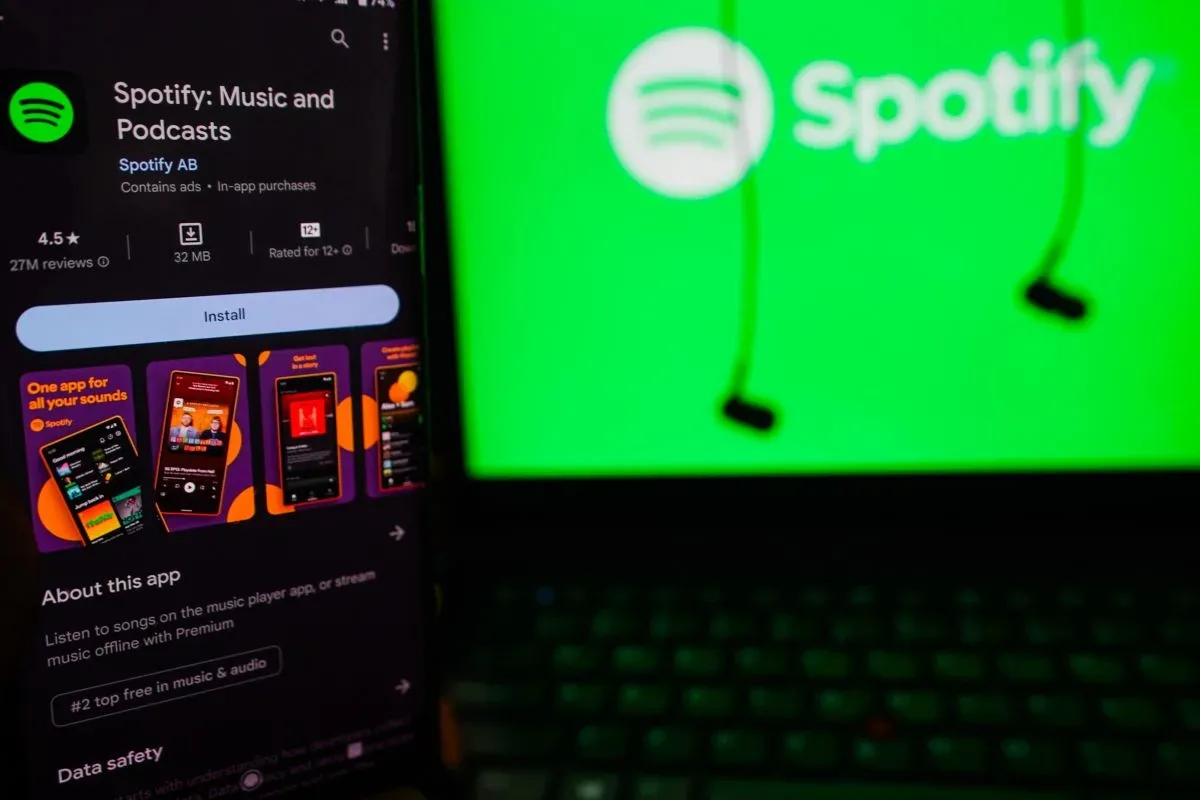
Spotify’s latest agreement with Believe puts a notable condition on its planned AI remix initiative: the company-level deal does not automatically make an indie artist’s catalog available for fan-made AI covers or remixes.
The arrangement, announced October 20, applies to artists and labels served by Believe and TuneCore. Its most consequential detail is the approval structure. Artists would first choose whether they want to receive information about AI plans. If Spotify later presents an offer involving the remix tool, those artists would have a second, separate opportunity to accept or decline it.
That distinction matters. In practical terms, agreeing to have a conversation about an AI product is not the same thing as authorizing that product to use a song. The rollout described so far treats those as two different decisions, with the artist retaining a choice at the offer stage.
A platform agreement is not blanket participation
Believe and TuneCore artists are covered by the broader commercial arrangement, but neither company’s participation means every act represented through those services is automatically enrolled. The stated framework is opt-in twice: first to hear the proposal, and then to decide on Spotify’s individual offer.
That is an important boundary for independent musicians, who may have sharply different views about AI-assisted fan creation. One artist may see authorized remixes as a way to keep a track circulating and introduce listeners to the original release. Another may be comfortable with certain promotional tools but unwilling to permit an AI system to alter vocals, style or composition. A third may simply want more information before making a decision.
The deal’s structure leaves room for all three positions. It also means that an artist who says yes to learning more has not, based on the details available, already committed their recordings or identity to the eventual feature.
There is no published list of singers, rappers or other musicians who have opted in. The financial split has not been detailed either. Those omissions are significant because consent and compensation are two of the clearest practical questions for artists weighing any participation offer.
What Spotify says the planned tool would do
Spotify’s proposed product is described as a paid add-on to a Spotify Premium subscription. It would enable fans to rework existing songs from artists who elect to participate, rather than generate completely new songs from scratch.
Related coverage includes Spotify and Believe Set Two-Step AI Remix Choice for Indie Artists.
Remix is the key term here. In this context, it means a fan would be working from a pre-existing piece of music rather than asking a system to create an unrelated track. The supplied description refers to AI covers and remixes, but it does not explain exactly which musical elements users could change, what creative controls would be available, or whether every participating artist would be offered the same terms.
Spotify has said streams of these reworked versions would pay royalties to the artists and rights holders behind the original music. Each remix would also link back to the original song and artist. That connection is designed to preserve a route from a fan-created version to the official release rather than presenting the remix as detached from its source.
Rights holders is a broad industry term for the people or entities that control relevant music rights. The information provided does not break down how payments would be divided between artists, labels, publishers or other parties. It only establishes that the original music’s artists and rights holders are intended royalty recipients when the remixes are streamed.
The difference between a royalty promise and a disclosed royalty formula should not be overlooked. A promise identifies who is meant to be paid; a formula explains how much, from which revenue pool, under what reporting rules, and on what schedule. No such breakdown has been announced here.
The questions artists may want answered before deciding
The two-step choice gives artists space to ask for specifics, and there are several obvious areas where more clarity would help. They are not allegations about the tool; they are basic questions raised by the information that remains unpublished.
- Payment: What share of revenue from the paid feature and remix streams goes to participating artists and rights holders?
- Approval: Is the artist’s initial election the only approval required, or would there be controls over particular uses or types of rework?
- Scope: Which recordings, voices or compositions would be eligible, and what kinds of covers or remixes could users make?
- Attribution: How prominently will the original artist and original track be identified when a listener encounters a remix?
- Removal: Can an artist later withdraw from the program, and what would happen to remixes already made?
- Release timing: When will the product arrive, and how much will it cost beyond Spotify Premium?
None of those answers should be presumed. Spotify has not announced a price or launch date for the tool. The agreement establishes a direction and a consent process, not a full public rulebook for the feature.
Believe joins a growing set of music partners
The Believe deal follows earlier Spotify agreements connected to the same planned capability. Spotify reached an agreement with Universal Music Group in May, then made arrangements with Merlin and Kobalt in August.
Those partnerships show Spotify is building the project through rights-industry relationships rather than treating the feature as an open invitation to rework any music on the service. Still, the Believe and TuneCore arrangement is especially relevant to the independent sector because it explicitly emphasizes the artist’s own decision after the larger businesses have made their deal.
For readers tracking how music-industry platforms are increasingly negotiating around creator consent, Joking Joystick’s industry coverage follows related questions at the intersection of artists, platforms and public music culture.
The AI argument is bigger than royalties
Money is a central issue, but it is not the only one. Debate around AI in music often separates tools that assist a human being’s work from tools that perform the artistic act themselves.
Engineer Young Guru expressed a firm objection to creative AI while drawing a distinction between creation and task-oriented assistance. He said, “I can’t stand the creative AI. There’s no reason for it.” His remarks were made before this agreement and were not a response to Spotify or Believe’s announcement.
He did not reject AI tools in every circumstance. His stated line was against using AI to create, while allowing that it may be useful for work-related tasks. He also raised concerns over who controls such systems and the private information they might be able to learn.
That distinction helps explain why a simple yes-or-no framing can be inadequate. “AI” can refer to very different uses: administrative assistance, discovery systems, voice-related generation, remix production and more. The real question for creators is usually not whether every AI tool is identical, but what a particular system does, who has control over it, what it learns, and how value is returned to the people whose work it relies upon.
Spotify and Believe’s two-stage process appears designed to acknowledge that artists may want to engage with that nuance. An invitation to hear a plan can be useful without forcing a decision before terms are available. An offer-specific approval can then turn broader curiosity into a more informed choice.
Spam enforcement and artist identity remain parallel issues
Spotify has also shared new figures on work intended to keep spam and low-value material out of listeners’ recommendations. The company said it had prevented more than 50 million tracks classified as spam or low-value content from reaching song recommendations this year.
That number is separate from more than 75 million tracks Spotify said it removed from the service for serious or repeated violations of its rules. The distinction is worth preserving: content kept out of recommendation feeds is not necessarily the same category as content removed from Spotify entirely.
Recommendations are the systems that surface music to listeners through suggestions. Being excluded from them can limit discovery, while removal means the track is no longer available through the service. Spotify’s figures describe two different enforcement outcomes and should not be merged into one total.
Another relevant effort is Spotify’s profile-protection tool, currently in testing. The tool allows artists to review releases that use their names. Spotify has said it plans to make that tool available to all artists by the end of the year.
That initiative is not described as part of the remix agreement, but it sits beside the same broader concern: artist identity can be misused or misapplied at scale, and artists need a practical way to see and challenge releases associated with their names. As AI-related music features develop, clear labeling, traceable attribution and accessible review tools may matter as much as the underlying creation technology.
What is known, and what remains open
The confirmed outline is relatively straightforward. Spotify and Believe have an agreement covering Believe and TuneCore artists and labels. Artists would opt in to receive AI-related information, then make a separate call on Spotify’s proposed fan remix tool. The tool is intended to be an extra paid service for Premium subscribers, focused on reworking participating artists’ songs rather than wholly original generation. Remix streams are intended to pay the original artists and rights holders, and remixes would point listeners to the source track and artist.
What remains unknown is equally important: which artists will participate, what the product will cost, when it will launch, what exact remix capabilities fans will receive, and how revenue will be allocated. Until those details arrive, the strongest takeaway is not that indie artists have accepted Spotify’s AI approach. It is that the proposed framework gives them two separate opportunities to decide whether it is right for them.