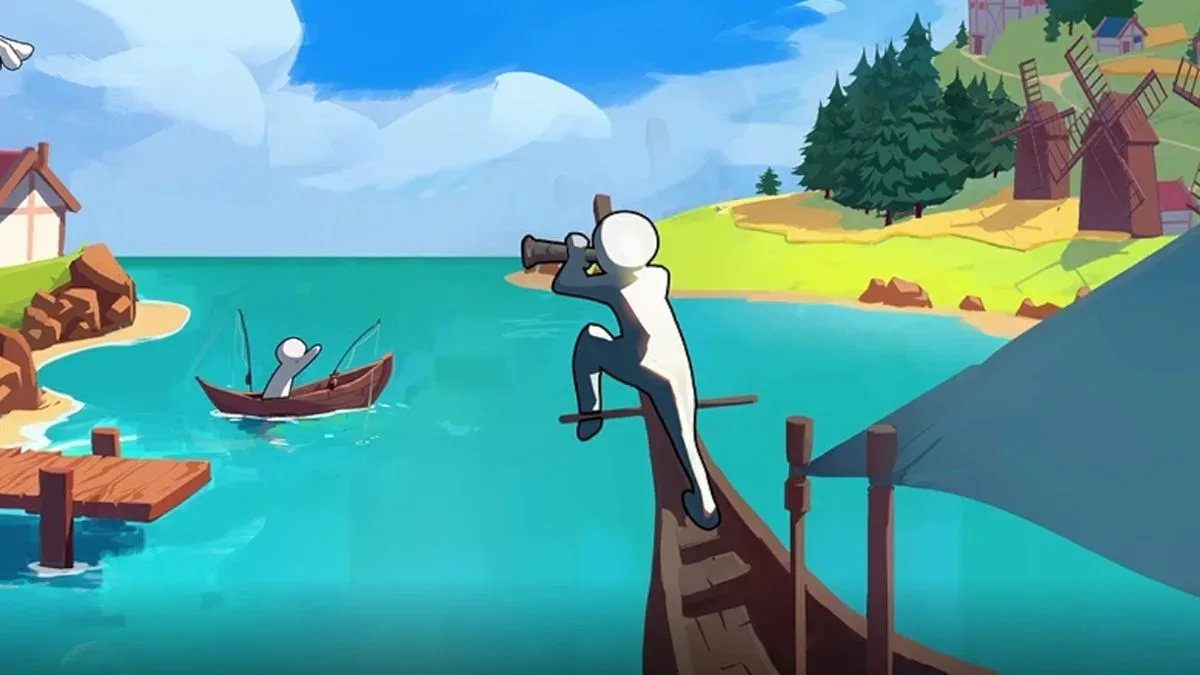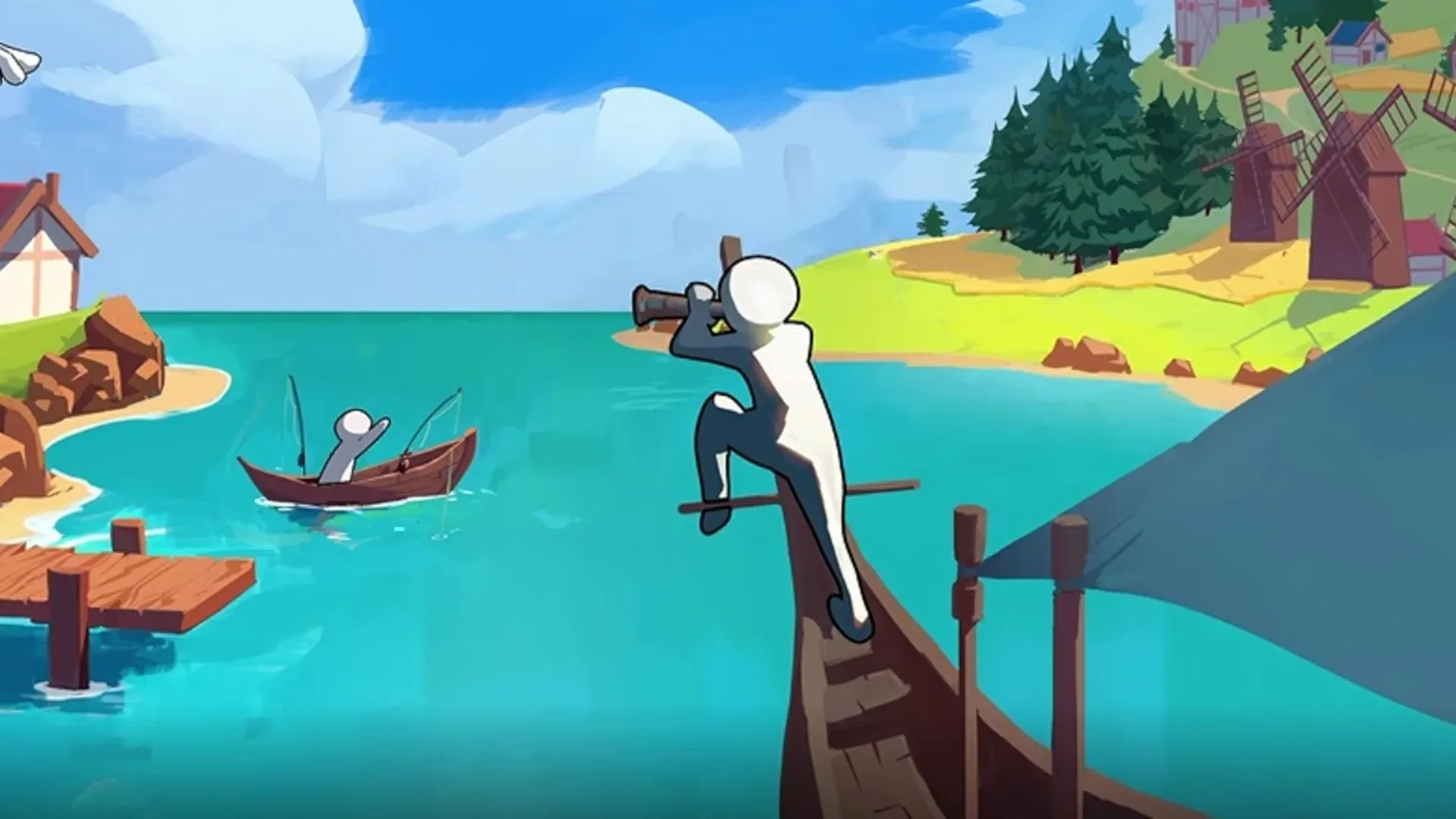
Clicky Islands, the island-building idle game published by Pocketpair, has exceeded the publisher’s expectations in its first 10 days. John “Bucky” Buckley, Pocketpair’s head of publishing and communications, said the game had “smashed every target,” while praising the two-person Polish team at Karrot Games behind it.
The statement does not disclose sales, player counts, revenue, wishlists, or the specific goals being measured. That makes the claim an encouraging publisher-side progress report rather than a numerical performance breakdown. Still, it is a notable early signal for a small project whose design is built around a deliberately simple loop: arrive on a remote island, make it increasingly livable, gather resources, and expand through clicks and gradual construction.
A small-scale builder with idle-game instincts
Clicky Islands combines two familiar genres without appearing to chase the complexity commonly associated with either one. It is described as an island builder, but its construction process is streamlined: players primarily click through actions, allow new structures to be made, and build up resources over time.
That places the game close to the idle-game tradition. An idle game is generally structured around accumulation: an early action generates a resource, that resource enables upgrades or additions, and those additions help produce more resources. The satisfaction comes from a cycle of visible growth and increasingly efficient systems, often without demanding constant high-precision input.
Here, that loop is paired with city-building language and an island setting. Rather than presenting settlement development as a dense management exercise, Clicky Islands appears to make expansion approachable through a lighter interaction model. The central appeal is not framed as mastering a complicated simulation. It is watching a settlement and its numbers develop in response to a series of small decisions.
That distinction matters. “City builder” can describe games with elaborate supply chains, traffic challenges, zoning concerns, or failure states. Clicky Islands, based on the available description, seems more focused on the comforting rhythm of progress: click, construct, collect, and unlock the next stage of development. Players interested in the broad idea of building a home for an island community, but not necessarily a dense management workload, may find that streamlined pitch especially relevant.
What “smashed every target” does—and does not—tell us
Buckley’s message is unambiguous in tone: Pocketpair views the launch as a success. He also described Karrot Games as “two Polish wizards,” emphasizing the small size of the development team and the publisher’s pride in backing the project.
However, the phrase “every target” should be read carefully. Publishers may establish different benchmarks for different releases, including commercial performance, audience reach, conversion, reviews, community activity, or milestones tied to a launch plan. None of those targets were specified here. It would be inaccurate to turn the claim into a confirmed sales total, a ranking, or a comparison with another game.
Related coverage includes Clicky Islands ‘smashed every target,’ Pocketpair says.
What can reasonably be taken from the update is narrower and still meaningful: Pocketpair believes Clicky Islands has performed beyond the expectations it set for the title during its first 10 days. For a game created by a two-person team, that is a useful marker of how publishing support can expand the visibility of a project that may otherwise have a harder time reaching an audience.
Why Pocketpair’s publishing role is the bigger story
Pocketpair is widely associated with Palworld, its monster-collecting survival adventure, but Clicky Islands illustrates a separate side of the company’s activity: helping smaller outside teams bring distinct games to market. Karrot Games is a creative duo, and the game’s modest, focused premise is far removed from the scale generally associated with a large survival adventure.
That contrast is significant because a publishing partnership does not require a game to resemble the publisher’s best-known release. A publisher can offer broader reach to a project that has a clear identity but a limited team size. In this case, the appeal is a compact blend of settlement building and incremental progression rather than a sprawling survival experience.
For players, that can make a publisher’s catalog worth tracking independently of its headline game. A recognizable publisher can function as a signal that a small title has access to additional promotional support, while the game itself remains rooted in the ideas of its own developers. Pocketpair’s celebration of Karrot Games’ work puts the focus on that relationship rather than suggesting the game is simply an extension of Palworld.
It is also a reminder that “indie” and “published” are not opposites. A small independent development team can work with a publisher for support in areas such as visibility and release planning without suddenly becoming a large internal studio. Buckley has recently discussed how blurred the definition of an indie studio can be, and Clicky Islands offers a practical example of why the term can be complicated: the developer is a two-person operation, while the game has the benefit of a larger company’s publishing support.
The appeal of visible progress
The design description evokes the long-running appeal of clicker and incremental games. These games can turn a small, repeatable action into a satisfying progression structure because each increase is legible. A player sees a resource total rise, sees a new build option become available, then sees the island become more developed as a result.
That is not necessarily about eliminating decision-making. The relevant question is how much friction a game puts between a player and the next meaningful improvement. Clicky Islands appears designed to keep that friction low. Its loop favors accessible momentum: actions lead to building, building contributes to resources, and resources support further development.
For a city-building theme, that approach can offer a different kind of fantasy from a simulation-heavy alternative. Instead of asking players to solve every administrative problem of a settlement, it emphasizes the pleasant arc from a remote island toward a more habitable place for its people. The focus is on forward motion, not on burying the player in menus or systems.
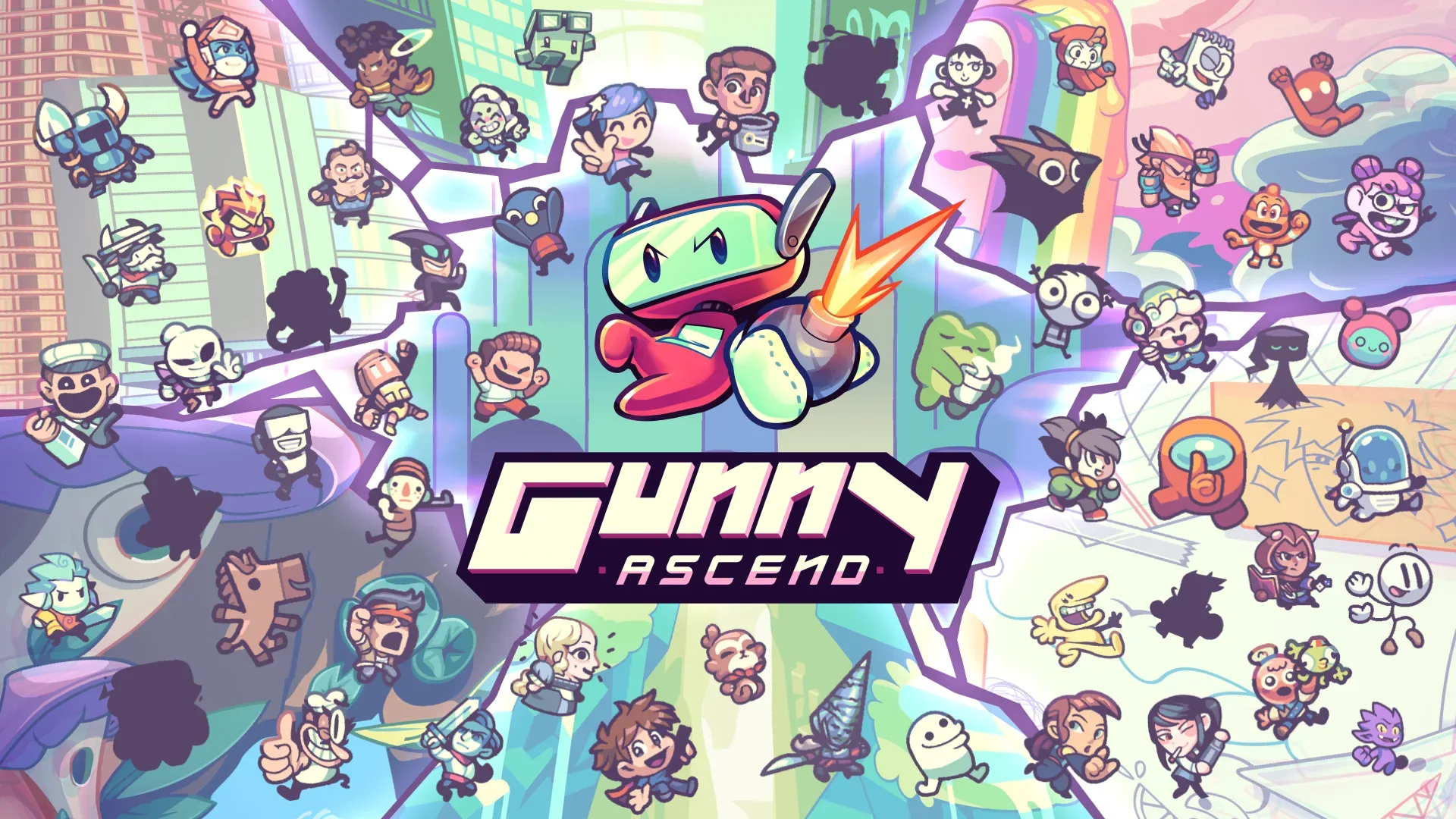
There is room in the broader PC space for that type of sharply scoped game. Another recent story on the site shows how indie projects can build attention through distinctive concepts and communities, as seen with Gunny Ascend’s expanding indie crossover roster. Clicky Islands takes a different route: a small-team island builder that aims for the low-pressure compulsion of incremental play.
What Pocketpair is watching next
Clicky Islands’ early result arrives while Pocketpair continues to look ahead on several fronts. Buckley has also teased further information about Palfarm and the anticipated Palworld 1.1 update. No additional details about those projects are established in this update, but their mention underlines that Pocketpair is balancing ongoing work around Palworld with broader publishing activity.
For now, Clicky Islands is the clearer immediate success story. The available evidence does not establish how large the game’s audience is or how its performance will hold over time. It does establish that Pocketpair’s internal goals were surpassed quickly, and that the publisher is eager to credit Karrot Games for delivering a project it considers a gem.
That is a promising outcome for a game whose core proposition is elegantly direct: turn a remote island into a more functional home, one click and one accumulating resource total at a time.