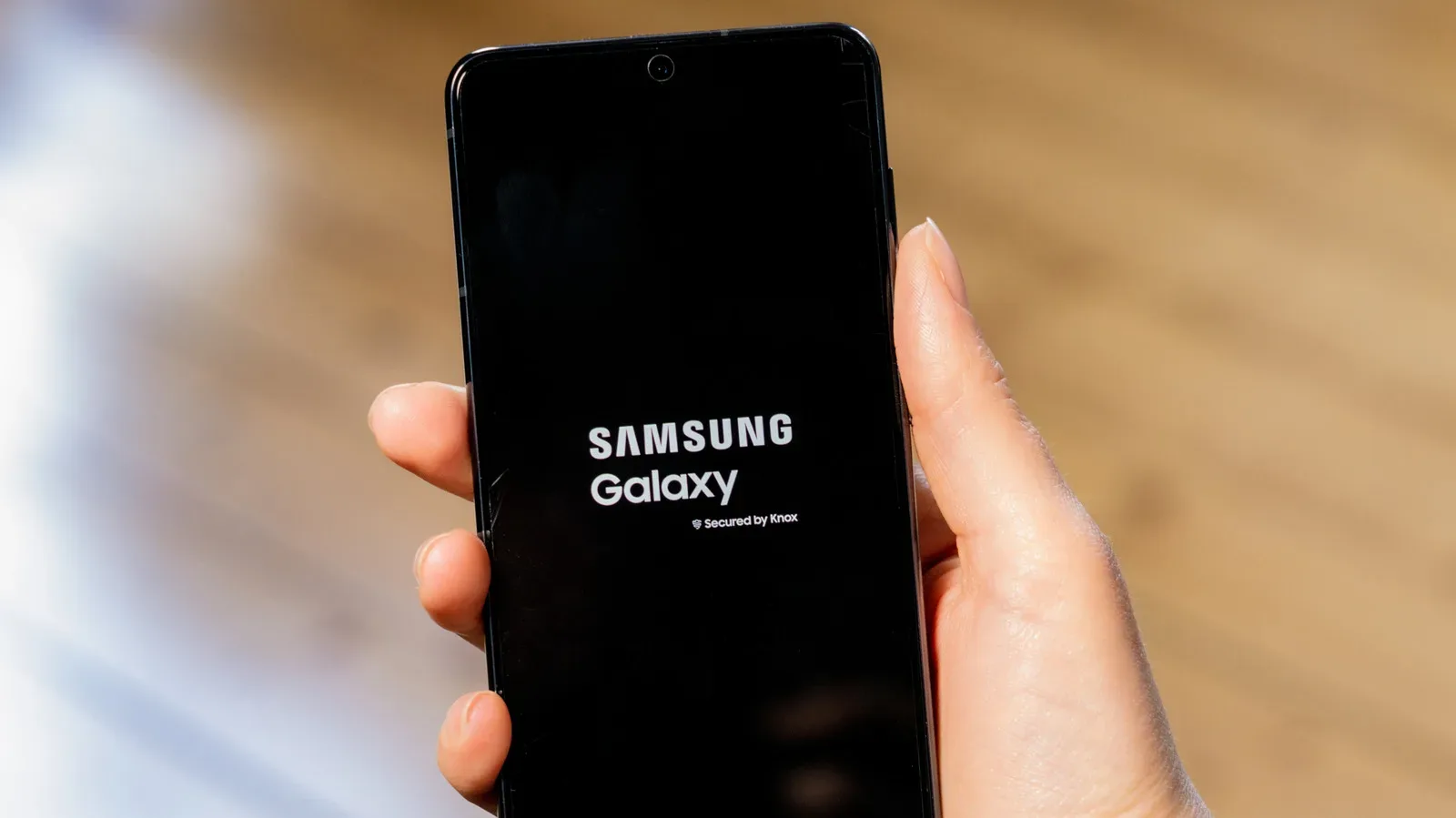
An old Samsung Galaxy sitting in a drawer may be worth substantially more than its age suggests—especially if it is an Ultra model or a recent foldable—but the number depends heavily on how it is sold. The central choice is not simply which buyer offers the largest figure on a comparison page. It is whether the owner values a quick, managed transaction, a potentially higher but more involved direct sale, or promotional credit toward a replacement device.
That distinction can add up to well over $100 for the same phone. For people replacing a handset used for games, media, controllers and everyday communications, it also changes the real cost of moving to a newer model. The most eye-catching trade-in promotion is not necessarily the best deal available at every point in a device cycle, and a quoted cash offer is not always a guaranteed final payout.
The resale figures: fast cash versus direct sale
US comparison data dated October 23 puts the top listed “Like New” cash offers for Samsung’s 256GB Galaxy Ultra phones at $449 for the Galaxy S24 Ultra, $291 for the Galaxy S23 Ultra and $196 for the Galaxy S22 Ultra. The Galaxy S21 Ultra reached $136.
Those are top buyback quotes, meaning they represent the strongest offer found among participating buyers rather than a promise that every seller will receive that amount. A phone sent for inspection can be reassessed if its condition does not match the stated grade. “Like New” should therefore be treated as a condition claim with consequences, not just an optimistic dropdown selection.
- Galaxy S24 Ultra, 256GB: top listed like-new cash offer of $449
- Galaxy S23 Ultra, 256GB: top listed like-new cash offer of $291
- Galaxy S22 Ultra, 256GB: top listed like-new cash offer of $196
- Galaxy S21 Ultra, 256GB: top listed like-new cash offer of $136
Completed-sale averages on Swappa point to a markedly different set of values for direct consumer-to-consumer sales: $600 for the S24 Ultra, $481 for the S23 Ultra and $383 for the S22 Ultra. Its Galaxy Z Fold6 average was $657. These figures illustrate the possible reward for finding a final buyer rather than selling inventory to a business that must refurbish and resell it, though Swappa does not specify the timeframe behind those averages.
The Galaxy S23 Ultra provides a clear example of the gap. Samsung launched the phone at $1,199.99 in February 2023. A like-new 256GB unit had a $291 top cash-buyback quote, while the reported completed-sale average was $404 as of October 23, 2026. That is a $113 difference before selling fees. Direct selling may make the headline price look better, but it does not turn the entire difference into take-home value.
Fees and effort are part of the price
Direct-sale listings require the owner to photograph the device, build the listing, communicate with a buyer and arrange shipping. Swappa’s seller fee is 3%, and payment-processing fees further reduce the final payout. In return for that work, direct selling can preserve more of a phone’s resale value.
A buyback service removes much of that process. It typically provides an online quote and prepaid shipping, then pays after receiving and inspecting the phone. The buyer takes on the work and the resale risk, so its offer is lower. Neither route is automatically right; the useful comparison is the realistic net amount against the time and logistics a seller is willing to accept.
That same trade-off applies to foldables. The 256GB Galaxy Z Fold6, which started at $1,900 in 2024, had a top cash offer of $512, while the Z Fold5 was quoted at $327 and the Z Flip6 at $278. The Fold6’s reported $657 direct-sale average suggests a higher possible return through a private sale, but not a recovery close to its original launch price. For a closer look at why the two foldable form factors are not interchangeable in daily use, see Clamshell vs. Book Foldables: Which Phone Shape Actually Fits Your Gaming Day?.
An older phone is not automatically a collectible
The Galaxy S20 Ultra offers a useful warning against reading too much into a single quote. Its 128GB version also received a $136 offer, matching the cited offer for a 256GB Galaxy S21 Ultra. Storage, age and model generation do not move in a perfectly straight line in the used-phone market.
Still, an offer does not establish scarcity or collector status. One comparison service showed only one offer for the S20 Ultra among 17 stores it tracks. That limited buyer interest is very different from broad demand. It means a seller should compare multiple live offers and avoid treating one unusually resilient figure as a universal market price.
For practical resale, a phone is best thought of as a used electronic product whose price reflects condition, current buyer demand, storage configuration and the number of businesses willing to buy it. A completed direct-sale price, a preliminary buyback quote and a promotional trade-in value are three separate measurements. They should not be mixed as though they were interchangeable cash values.
Software support gives newer used Galaxies an advantage
Resale is not just about the seller’s upgrade budget. It also shapes what a buyer can reasonably consider. Samsung’s software policy creates a notable dividing line around the Galaxy S24 series.
Beginning with that series, Samsung committed to seven generations of operating-system upgrades and seven years of security updates. On that schedule, S24-series support should continue into early 2031. The S23 series is expected to receive security patches until early 2028. The S22 series, meanwhile, is expected to receive quarterly security patches until early 2027 and has already received its final major Android version.
An OS upgrade is a move to a new major version of Android. A security update is maintenance intended to address security issues without necessarily delivering a new major operating-system release. The difference is important for anyone shopping used: a device can remain protected by ongoing patches after it has stopped receiving new Android versions, but its remaining support horizon is shorter.
That does not establish a single correct purchase choice. It does, however, explain why an older flagship’s lower sticker price must be weighed against how long it is expected to remain within Samsung’s support window. For sellers, documenting the exact model and storage capacity is equally important because the quoted figures discussed here apply to specific configurations, such as 256GB Ultra models and the 128GB S20 Ultra.
Three routes to turning a Galaxy into value
1. Cash-buyback comparison services
SellCell compares cash offers from buyers, providing a quick way to check the strongest listed quote available for a particular model and condition. Back Market’s buyback program gathers quotes from refurbishers and pays to a bank account after inspection.
These services are built around convenience. The seller does not need to create a public listing or manage a final buyer. The trade-off is lower proceeds and the possibility that inspection changes an initial quote. A seller should accurately describe the handset before sending it and recognize that “top offer” is a best-case benchmark rather than a settled payment.
2. Direct selling
Swappa can produce higher sale prices because the seller deals more directly with the end customer. The responsibility moves with the potential upside: listing creation, photos and shipping are all part of the process. The device also needs to meet the platform’s requirements: it must be fully paid off, have a clean IMEI, lack an activation lock, and have no cracked glass or water damage.
An IMEI is the phone’s identifying number used by mobile networks and resale checks. A clean IMEI is a core eligibility condition because the device must not carry an issue that prevents normal activation. Activation lock refers to an ownership security feature that can stop a new person from setting up the phone. These are not cosmetic details; they determine whether a buyer can use the device and whether a marketplace will accept it.
3. Samsung trade-in credit
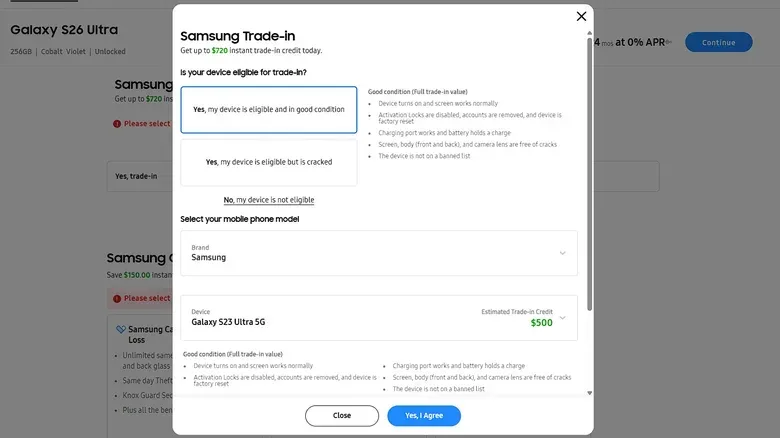
Samsung’s trade-in program supplies credit toward another device rather than cash. The precise amount depends on the product being purchased and the promotion available at checkout. That makes trade-in credit a different calculation from a cash sale: a large promotional value can be compelling when the replacement purchase already makes sense, but it is not money that can be redirected elsewhere.
Samsung also has a no-new-purchase trade-in route through Likewize. Its payment is a prepaid digital gift card rather than a bank transfer. That may suit a seller who prefers a managed transaction but does not need cash deposited to a bank account, though the form of payment is an important limitation to understand before committing.
Promotion timing can dwarf ordinary trade-in value
Trade-in values can change sharply around a new handset launch. During Galaxy S26 Ultra preorders in February 2026, Samsung offered $500 in credit for a Galaxy Note 20 Ultra. By March 11, when the S26 Ultra was available, that credit had fallen to $130.
The $370 swing does not mean the Note 20 Ultra suddenly changed in physical condition. It demonstrates that promotional trade-in value is partly an incentive attached to a specific purchase window, not simply a standing valuation of the old device. Anyone planning an upgrade should distinguish between an ongoing trade-in baseline and a time-limited credit attached to a preorder or launch promotion.
That matters more as new flagship pricing rises. Samsung increased the US starting price of the Galaxy S26 Ultra from $1,299.99 to $1,399.99 on October 1, amid rising memory costs, though it did not confirm the reason for the price change. With newer devices commanding more money, the difference between a $130 standard-style credit, a $500 launch offer, a $291 buyback quote and a higher private-sale result can materially affect the cost of upgrading.
A practical checklist before selecting a buyer
- Identify the exact model and storage configuration. The values here are configuration-specific; do not apply a 256GB S24 Ultra quote to a different model or capacity.
- Assess condition honestly. Quotes labeled like-new represent a best-case condition tier and can change after inspection.
- Check eligibility before listing or shipping. For direct sales, confirm that the phone is paid off, has a clean IMEI, has no activation lock, and has no cracked glass or water damage.
- Compare net value, not headline value. Include seller and payment-processing fees for private sales. For buybacks, remember that the listed quote may be revised after inspection.
- Separate cash from credit. A Samsung trade-in can be attractive, but it is purchase credit. Likewize pays via a prepaid digital gift card, not a bank transfer.
- Check support remaining if buying used. The S24 series has the longest stated support outlook of the phones discussed, reaching into early 2031; older lines have shorter expected patch windows.
- Watch promotional windows. The Note 20 Ultra example shows why waiting until after a preorder period can substantially reduce a trade-in offer.
There is no universal “actual worth” for an older Galaxy because a phone’s value changes with the transaction being offered. For quick cash, comparison tools and refurbisher programs reduce hassle. For the largest potential return, a direct sale can be worthwhile if the seller accepts the effort, fees and eligibility rules. And for someone already set on buying another Samsung device, a carefully timed promotional trade-in may beat both—provided that store credit, rather than cash, is the value they need.