
Nothing is trying to make a bigger impression in the United States with a retail route that is far more tangible than another glossy product page. Its Android phones and audio products are now available through Best Buy, including at more than 500 physical stores nationwide. That matters because Nothing has not signed sales deals with AT&T, T-Mobile, or Verizon, the carrier storefronts where many US phone purchases still begin.
The practical result is straightforward: shoppers can buy a Nothing handset from Best Buy, its website, Amazon storefront, or Nothing directly, then bring it to a compatible mobile plan. It is not the one-stop, carrier-financed checkout many buyers are used to. But it does give prospective owners a chance to see the company’s distinctive hardware in person before deciding whether its approach is worth the setup work.
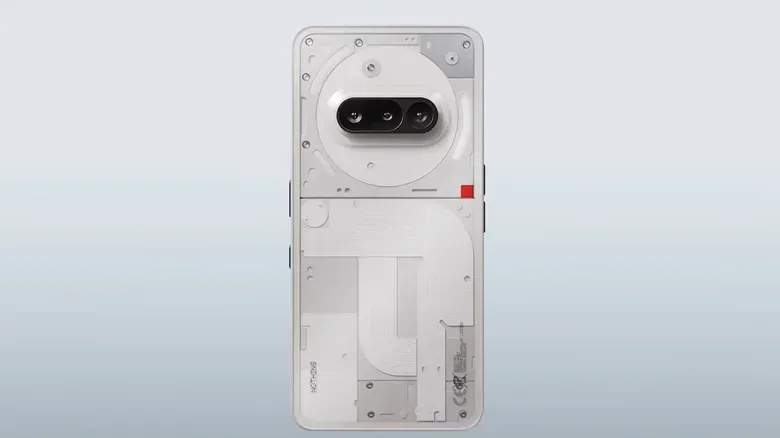
For gamers and gadget fans, that in-store presence is particularly useful. Phones are personal hardware, and design, screen feel, software presentation, and physical size are hard to judge from a product listing. Nothing’s visual identity—often described as minimalist with a cyberpunk edge—is a major part of its appeal. Seeing that design next to the more familiar Apple, Samsung, and Google alternatives makes the comparison considerably less abstract.
Best Buy gives Nothing a real-world foothold
The Best Buy arrangement, made in June 2026, brings Nothing phones and audio gadgets to a substantial US retail footprint. Customers outside participating store areas can also order through Best Buy’s website. Before the partnership, US buyers were limited to online purchases through Nothing or its Amazon store.
That earlier online-only model was a hurdle for a brand still building recognition in America. Nothing previously used a beta-program route to sell and test the Phone 3a, Phone 3a Pro, and CMF Phone 2 Pro in the country. The company also does not yet have a brick-and-mortar shop in the continental US, though a New York City flagship store is planned.
A retail shelf does not automatically solve the tougher task of convincing people to leave established phone ecosystems. It can, however, remove a basic obstacle: prospective buyers can now handle the device before committing. That is important for an unlocked phone brand whose products may otherwise be absent from the shopping trip where someone compares models, asks basic questions, and chooses a plan.
Nothing says its online US sales have been rising, but the Best Buy deal is its first physical retail arrangement in the country. The move signals a meaningful expansion in how Americans can encounter the brand, even if it is not the same as carrier distribution.
The two US phones to know
Nothing currently offers two smartphones to US audiences: the Nothing Phone 4a Pro and the Nothing Phone 3. They are not positioned as identical choices at different prices. The decision comes down to whether a buyer wants an affordable midrange device with the company’s signature styling or a more expensive model aimed at higher performance and an AI-forward experience.
Nothing Phone 4a Pro: the lower-cost, design-led option
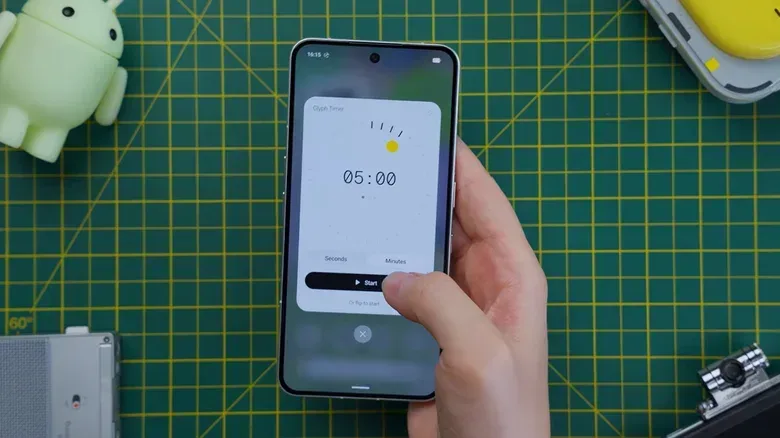
The Phone 4a Pro is presented as an affordable midrange phone with a bold appearance, strong battery life, a capable camera, and an updated Glyph Matrix. “Midrange” generally means a device designed to balance cost and everyday capability rather than chase the most powerful available components. That can be the sensible lane for someone who wants a current Android phone without paying flagship-level money.
The Glyph Matrix is part of Nothing’s visual hardware language. It distinguishes the phone from models built around more conventional exterior design, although prospective buyers should avoid treating visual flair as a substitute for checking the basics that affect their own use: carrier compatibility, plan costs, and whether the phone’s performance tier fits their apps and games.
There is a small timing inconsistency in the available information. The Phone 4a Pro is described as having arrived alongside Nothing’s latest headphones in March 2026, while another account places its release in June 2026. The important buying point is that it is among the Nothing models offered to US customers now; shoppers seeking an exact launch timeline should verify current product information before using either month as a reference.
Nothing Phone 3: the performance-focused flagship
The Phone 3 is described as Nothing’s first flagship phone and is substantially more expensive than the Phone 4a Pro. It uses Qualcomm’s Snapdragon 8s Gen 4 processor and is built around a more AI-heavy experience. The supplied information characterizes it as a significant performance improvement over earlier Nothing models.
A processor is the phone’s central computing chip, responsible for handling the operating system, apps, games, and many on-device tasks. A newer or more capable processor can improve responsiveness and give a phone more headroom for demanding software. That does not mean every buyer needs the flagship model. It means the Phone 3 is the more logical Nothing option for a purchaser whose priority is performance rather than the lowest possible entry cost.
For readers weighing it as a gaming device, processor capability is only one portion of the decision. The information available establishes a performance jump for the Phone 3, but does not establish game-specific frame rates, thermal behavior, display specifications, controller support, or battery endurance during gaming. Those should not be assumed from the flagship label alone. It is worth considering the broader Android gaming-phone conversation too: Google’s Pixel 11 Pro XL positioning against a Galaxy gaming rival shows how performance categories can quickly become more nuanced than a simple “Pro” name.
The catch: you buy the phone separately from service
Nothing’s US model is effectively BYOD, or “bring your own device.” In plain terms, buyers select and purchase the handset independently, then activate it on a carrier plan that supports it. The upside is flexibility: the phone purchase is not tied to a particular carrier’s sales system, and customers can shop separately for the network plan that suits their budget and coverage needs.
The downside is that customers must do more compatibility homework themselves. A phone bought directly through a major US carrier is usually part of that carrier’s approved device inventory and activation workflow. With an unlocked handset, the buyer needs to confirm that their exact model can be accepted on their intended network and that the expected network performance is supported.
“Unlocked” does not mean “universally effortless.” It means the phone is not restricted to one carrier at the point of sale. Network support still depends on carrier systems and compatibility. This distinction is especially relevant here because Nothing does not guarantee full network performance on Verizon’s networks for the Phone 4a Pro.
Verizon requires the most caution
AT&T, T-Mobile, and their compatible smaller providers are the simpler direction presented for Nothing buyers. Verizon is the network to approach carefully, particularly with the Phone 4a Pro.
The Phone 4a Pro’s Amazon listing warns against connecting the unlocked handset to Verizon networks. Activation is not described as impossible, but it can require Verizon to manually add the phone’s IMEI to its database. An IMEI is a unique identifier assigned to a phone; carriers use it in device-recognition and activation processes.
That manual step is the kind of friction many shoppers expect to avoid when purchasing a modern smartphone. Reports referenced in the available material indicate that some customers found the process difficult. More importantly, Nothing does not promise complete network performance on Verizon networks. That is a stronger concern than inconvenience: even if activation succeeds, buyers should not assume the experience will match a device that the carrier fully supports.
Anyone who relies on Verizon coverage should therefore validate compatibility before buying, rather than assuming a store sale or an unlocked label settles the question. Checking the relevant compatibility information, having the exact handset model available, and confirming what the carrier will support are sensible precautions. If the buyer does not want to navigate manual database enrollment or uncertainty around full performance, choosing another network path is the cleaner option described here.
MVNOs could be the value play
Nothing’s BYOD structure may suit buyers considering an MVNO, short for mobile virtual network operator. An MVNO does not operate its own nationwide cellular network in the same way as the largest carriers. Instead, it leases access to the networks run by companies such as AT&T, T-Mobile, or Verizon, then sells service under its own plans.
Mint Mobile, US Mobile, and Google Fi are examples named as options for connecting a Nothing device. The attraction is typically lower-priced service and the ability to pair a separately purchased phone with a plan selected on its own merits. The key qualifier is network choice: not every MVNO is using the same underlying network, and Nothing’s Verizon caveat remains relevant when a provider uses Verizon infrastructure.
That means “cheap plan” should not be the only filter. A practical order of operations looks like this:
- Choose the Nothing phone that fits the desired budget and performance level.
- Identify whether local service needs point toward AT&T, T-Mobile, Verizon, or an MVNO that uses one of those networks.
- Check compatibility for the exact model before purchasing or activating.
- Take Verizon’s Phone 4a Pro warning seriously, including the possibility of manual IMEI enrollment and the lack of a full-performance guarantee.
- Use the in-store Best Buy opportunity, where available, to inspect the handset before committing to the separate device-and-plan arrangement.
What this means for US buyers
Nothing is now easier to buy in the United States, not necessarily easier to activate everywhere. Best Buy’s footprint addresses the visibility issue that comes with online-only hardware sales and gives the company a route to reach shoppers in person. The Phone 4a Pro offers the more affordable route into the brand’s design-driven Android lineup, while the Phone 3 is its pricier flagship and performance-focused alternative.
But Nothing has not joined the usual US carrier retail ecosystem. There is no indication of a purchase deal with AT&T, T-Mobile, or Verizon. That makes this an attractive proposition for people comfortable buying unlocked hardware and choosing service separately, particularly those considering AT&T, T-Mobile, or suitable MVNO plans. For Verizon customers—especially those considering the Phone 4a Pro—the purchase needs more caution and confirmation than a conventional carrier-store upgrade.
In short, the retail boss door is open. The carrier puzzle remains part of the level.