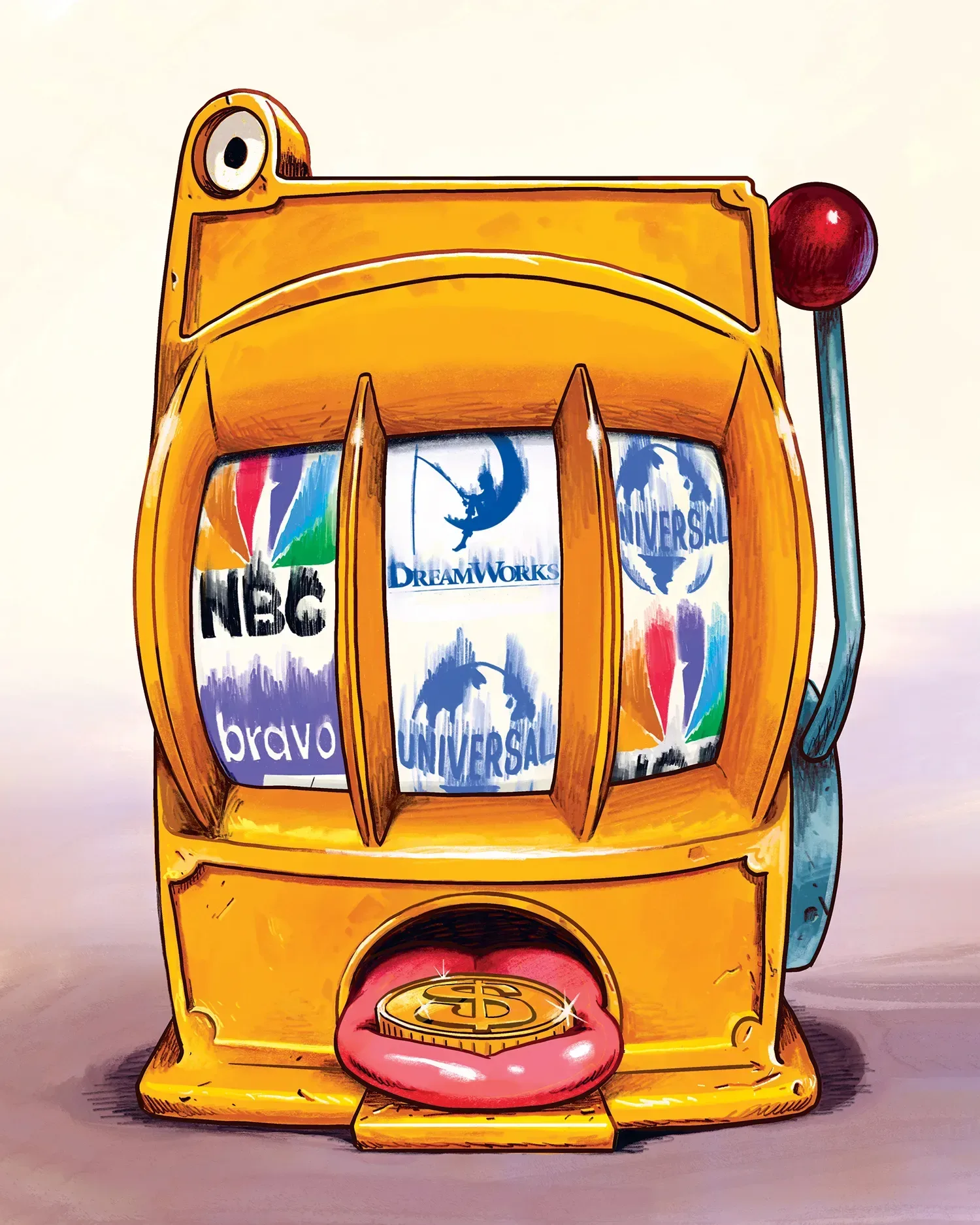
Hollywood’s merger map may be getting another enormous pin dropped on it. With NBCUniversal scheduled to separate from Comcast around the middle of 2027, industry speculation has increasingly centered on a question with very large numbers attached: could Netflix eventually pursue NBCUniversal?
There is no announced transaction. Comcast has explicitly said the spinoff is not being undertaken to prepare NBCUniversal for a sale, while Netflix declined to comment on deal speculation. Still, the idea has persisted because NBCUniversal is an unusually broad package of entertainment assets at a moment when Netflix is seeking fresh ways to sustain growth and other large media businesses are pursuing greater scale.
Morningstar has estimated that NBCUniversal could command about $60 billion from a motivated buyer after its separation. That is a striking figure, but it also reflects the scope of what is at stake: a major film and television library, Peacock, the NBC broadcast operation and its sports rights, cable brands including Bravo, a large theme-parks business, and Sky’s pay-TV and broadband operations in the U.K., Ireland and Italy.
For Netflix, the proposition would be far bigger than simply adding another streaming app to the menu. It would be a potential change in what Netflix is: from a global streaming leader with a substantial original-content machine into a company with theatrical distribution, linear television, major live-sports agreements and destination-based entertainment. That breadth is exactly why the theory is compelling—and why a deal would be exceptionally difficult to execute.
Why NBCUniversal is now the center of the conversation
Comcast’s planned separation is fundamentally a corporate-structure move. The company has said NBCUniversal may be valued more clearly as a standalone media business than as one part of a parent whose cable and wireless operations require considerable capital investment. Brian Roberts and the Roberts family are expected to remain controlling shareholders of both Comcast and NBCUniversal after the split.
Mike Cavanagh is set to lead NBCUniversal following the separation. Donna Langley is expected to remain chairman of NBCUniversal Entertainment, while Matt Strauss is expected to lead NBCUniversal Media Group, which includes Peacock. That leadership setup matters because the spinoff is not being described as a dismantling of the business. The stated plan is to position a unified NBCU for growth.
Yet independence can create more strategic options even if a sale is not the starting goal. Cavanagh has said an independent NBCUniversal would have freedom to consider adjacent businesses in which it has a credible role. That is not confirmation of a Netflix transaction, but it leaves room for partnerships, asset arrangements or other forms of consolidation that are harder to imagine inside the current parent-company structure.
A key timing wrinkle is tax treatment. Comcast expects the separation to be tax-free for shareholders. The supplied reporting notes that IRS rules could require Comcast and NBCUniversal to wait two years before a third-party sale without triggering steep capital-gains consequences, putting a conventional sale closer to mid-2029. That does not make a transaction impossible before then, but it makes structure and timing central rather than incidental.
Related coverage includes Could Netflix Make NBCUniversal Its Next Major Deal?.
What Netflix would actually be buying
The most obvious attraction is depth. Universal Pictures has a library of more than 4,000 films and 130,000 television episodes. Its franchise holdings include Back to the Future, Jurassic Park, The Bourne Identity, Fast & Furious and Despicable Me. A catalogue on that scale could give Netflix a sizeable reserve of recognizable viewing options alongside its originals.
Library ownership is especially important in streaming because it can strengthen a service between major premieres. New releases may draw a sharp rush of attention, but established franchises can keep audiences browsing, rewatching and discovering titles over time. In industry language, that can make a service “stickier”: less easy for a subscriber to cancel because it has more reasons to return.
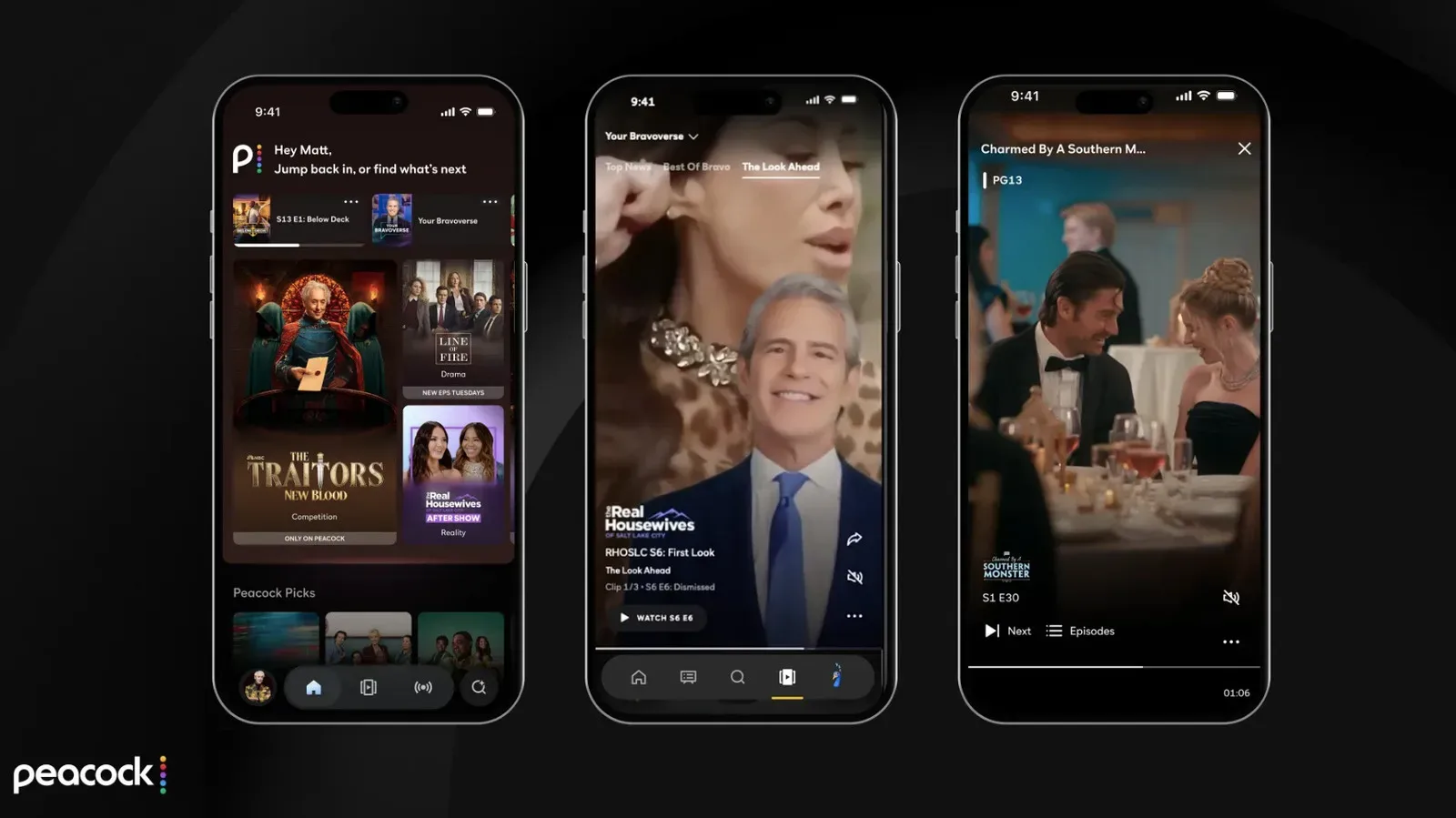
Peacock is another major component. It had 48 million subscribers at the end of September, compared with Netflix’s subscriber base of more than 325 million. Combining the services would not automatically mean every Peacock customer becomes a Netflix customer, nor would it resolve differences in programming rights or product strategy. But the numbers explain why analysts see potential value in a closer relationship. Netflix could gain a much larger pool of programming and Peacock could gain access to an enormous global distribution platform.
Bravo is a useful example of the potential editorial fit. Its lifestyle and reality programming has a recognizable identity that could conceivably become a distinct destination inside a broader Netflix interface. That is only an illustrative possibility, not a disclosed product plan. The larger point is that NBCUniversal owns brands built around different viewing habits, which could help Netflix serve audiences beyond the bingeable scripted series that formed much of its identity.
Sports, theatrical releases and parks are the bigger strategic shift
The possible appeal is not limited to a larger content shelf. NBC has major agreements involving the NFL, NBA and Major League Baseball. Sports rights are valuable because live events are scheduled appointments rather than a catalogue viewers can save for later. They can bring audiences to a service at a specific time, create advertising opportunities, and provide a recurring reason to maintain a subscription.
But sports are also expensive, complicated and frequently tied to distribution terms. Rights do not simply become frictionless streaming inventory because a company changes hands. A prospective buyer would need to understand every agreement’s duration, territorial limits, renewal provisions and platform restrictions. Netflix has shown interest in sports, but a full NBCUniversal acquisition would mean inheriting a much more expansive sports operation than a limited programming arrangement.
Theatrical distribution is another difference. Netflix has made films, but Universal Pictures would bring an established studio with a much broader theatrical footprint and a catalogue of global franchises. The supplied information also points to Christopher Nolan’s The Odyssey as one of 2026’s major blockbusters. For Netflix, buying a studio would raise practical questions about release windows, cinema partnerships and how theatrical and streaming ambitions would coexist.
Then there are the parks. NBCUniversal’s theme-parks unit is second only to Disney in size. Theme parks are often grouped with “experiences”: businesses that translate screen brands into locations, tickets, hotels, food, merchandise and repeat visits. They are plainly not the same as a subscription service. That difference could diversify Netflix’s business, but it would also push the company into operational territory with different costs, cycles and customer expectations.
Entertainment consolidation has been the wider backdrop to these discussions. David Ellison’s combination of Warner Bros. Discovery with Paramount into Skydance Corp. has increased attention on how much scale a media company needs to compete worldwide. Netflix also recently pursued Warner Bros. and HBO’s streaming and studios businesses in a deal valued at $72 billion before Paramount’s higher bid for all of Warner Bros. Discovery prevailed. The failed effort is relevant not because it proves a new bid is coming, but because it showed Netflix was prepared to examine a transaction far larger than the acquisitions it historically favored.
Scale has a less glamorous meaning than the word suggests. It means having enough programming, franchises, production capability, distribution and revenue streams to compete across markets. It can improve bargaining power and provide more content to a single consumer product. It can also create debt, integration problems and an organization so large that its benefits take years to realize.
Why Netflix might feel pressure to make a move
Netflix remains profitable and continues to grow, so the story is not one of a company in immediate distress. The concern is momentum. Its top-line growth was 11.8% in the third quarter of 2026, the lowest rate in three years, while U.S. subscribers were spending less time with the service than before.
Management has responded on the creative side as well. Ted Sarandos and co-chief executive Greg Peters changed Netflix’s content leadership, with Peter Rice brought in to replace Bela Bajaria as chief content officer. Dan Lin also left his role leading film. Those decisions suggest Netflix’s leaders see programming and audience engagement as issues they can actively address, not merely normal fluctuations in viewing behavior.
That creates two distinct possible routes. One is organic growth: improve the content pipeline, make better use of advertising, refine the service and retain viewers with a stronger slate. The other is inorganic growth, a finance term for expansion through mergers, acquisitions or investments rather than internal development. An NBCUniversal purchase would be an extreme version of the second route.
It is possible that Netflix does neither a full takeover nor a smaller studio acquisition. Bundling partnerships could offer another way to add value or reduce churn without absorbing an entire media conglomerate. Such arrangements can let companies package services together while leaving ownership, management and many risks separate. They are typically less transformative than an acquisition, but they can move faster and avoid some integration headaches.
Netflix’s previous move into advertising is a reminder that stated preferences can evolve. The company had once resisted the advertising model, then introduced it in 2022. Still, a change in revenue strategy is not equivalent to buying a business with broadcast television, parks, pay TV, broadband and sports rights. The leap from an ad-supported subscription tier to NBCUniversal ownership would be immense.
The obstacles may be as important as the assets
The Sky business illustrates the mismatch. Sky serves roughly 20 million subscribers across the U.K., Ireland and Italy and is centered on pay television and broadband. Netflix has expressed no interest in linear TV, the conventional scheduled-channel model, and an analyst cited in the reporting suggested Sky would be unattractive to Netflix. Any serious proposal would therefore have to confront whether Sky stayed in a deal, was spun out, or was addressed through some other arrangement.
Linear television is only one complication. A buyer would need to assess the financial burden of a deal potentially priced around $60 billion, on top of investment required for content, sports, parks and technology. Netflix’s stock fell after its Warner Bros. deal was announced because investors objected to the prospect of $60 billion in added debt. That reaction is a useful warning: being able to make an offer is not the same as persuading shareholders that the offer is wise.
There would likely be intense scrutiny over competition as well. This is analysis rather than a prediction of a regulator’s decision. A combination of the world’s largest subscription streamer with a major Hollywood studio, Peacock and NBC’s sports ecosystem would naturally invite questions about market power, programming access and the consequences for consumers and rivals. The precise outcome would depend on a final transaction’s design, which does not currently exist.
For viewers, a Netflix-NBCUniversal tie-up could eventually mean a broader selection of film franchises, reality programming and sports-adjacent offerings in one place. It could also mean changes to pricing, app design, release strategies and where particular programmes are available. None of those consumer outcomes is guaranteed. Rights agreements, regional licensing and business decisions would determine the real result.
For now, the sensible reading is not that Netflix is definitely buying NBCUniversal. It is that NBCUniversal’s coming independence has made it the most consequential possible target in a consolidating entertainment market, while Netflix’s recent deal-making posture and slower growth have made it an obvious name to attach to the rumor. Hollywood may be staring at the next loading screen, but the transaction itself has not started.
For more on the economic forces reshaping screen entertainment, see TV’s star-salary market as the rest of the industry tightens.