Meta is giving its smart-glasses strategy a conspicuous subtraction: no camera. The new Ray-Ban Meta Audio frames are built around calls, spoken message replies, music and podcast playback, plus access to Meta AI, while leaving out both a camera and the recording indicator light that accompanies camera-equipped models.
That design decision is the whole story. Smart glasses have often asked onlookers to accept a difficult proposition: a person can appear to be wearing ordinary eyewear while potentially recording what is around them. Meta’s new $349 model does not resolve every concern someone may have about wearable AI, but it removes the most immediately visible—and socially contentious—piece of hardware from the equation.
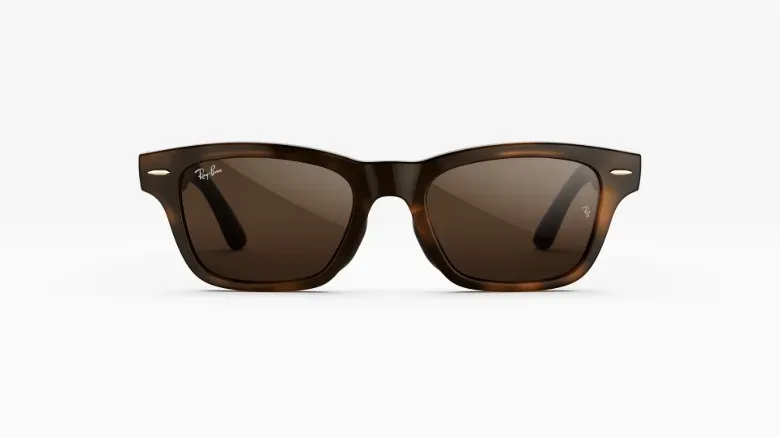
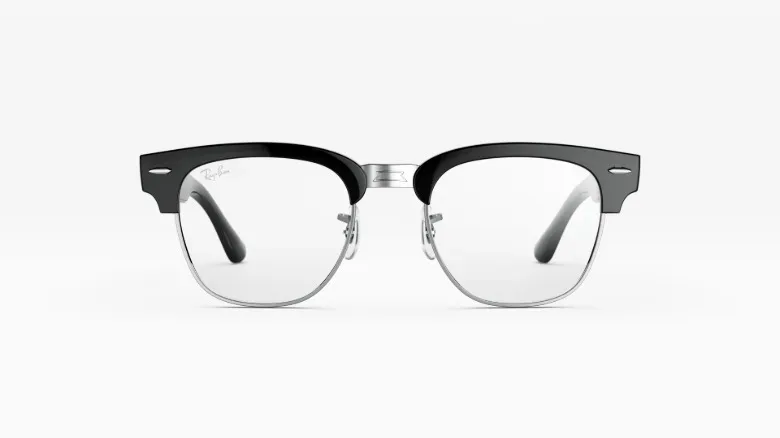
The glasses are scheduled to ship October 13 and are available for preorder. They arrive in Burbank, a rectangular frame, and Clubmaster, a retro-inspired style. Meta says both are offered across 23 colors and lens combinations and can support a range of optical prescriptions.
An audio-first smart-glasses pitch
Ray-Ban Meta Audio is not a display headset in disguise, and it is not presented as a device for capturing photos or video. Its stated functions are much closer to wearable, open-ear audio hardware with a voice assistant attached: taking calls, responding to messages by voice, listening to podcasts and music, using live translation, and asking Meta AI questions in real time.
Open-ear audio is the practical idea behind listening without sealing earbuds into the ear canal. The glasses use speaker cut-outs in the frame rather than conventional headphones, so the wearer can hear media while remaining aware of nearby sound. That can be useful for people who do not want to be completely isolated from their surroundings. It also means the device’s audio hardware is more noticeable on inspection than a normal pair of sunglasses, even if the frames otherwise blend in.
The assistant functions matter because they turn the glasses into more than a Bluetooth accessory. Live translation, as described here, is a real-time AI feature intended to help with language translation. “Real-time answers” similarly describes querying Meta AI through the glasses. Those are potentially convenient voice-driven uses, but they are separate from camera-based visual AI. The key distinction is that this model’s AI proposition is centered on audio and spoken interaction rather than seeing through a lens.
That makes the product easier to explain in ordinary terms. It is eyewear that can play audio, handle communications and offer voice AI. For buyers interested in those capabilities but not in a wearable camera, the missing camera is not a compromised spec sheet; it is the feature.
Why removing a camera changes the social contract
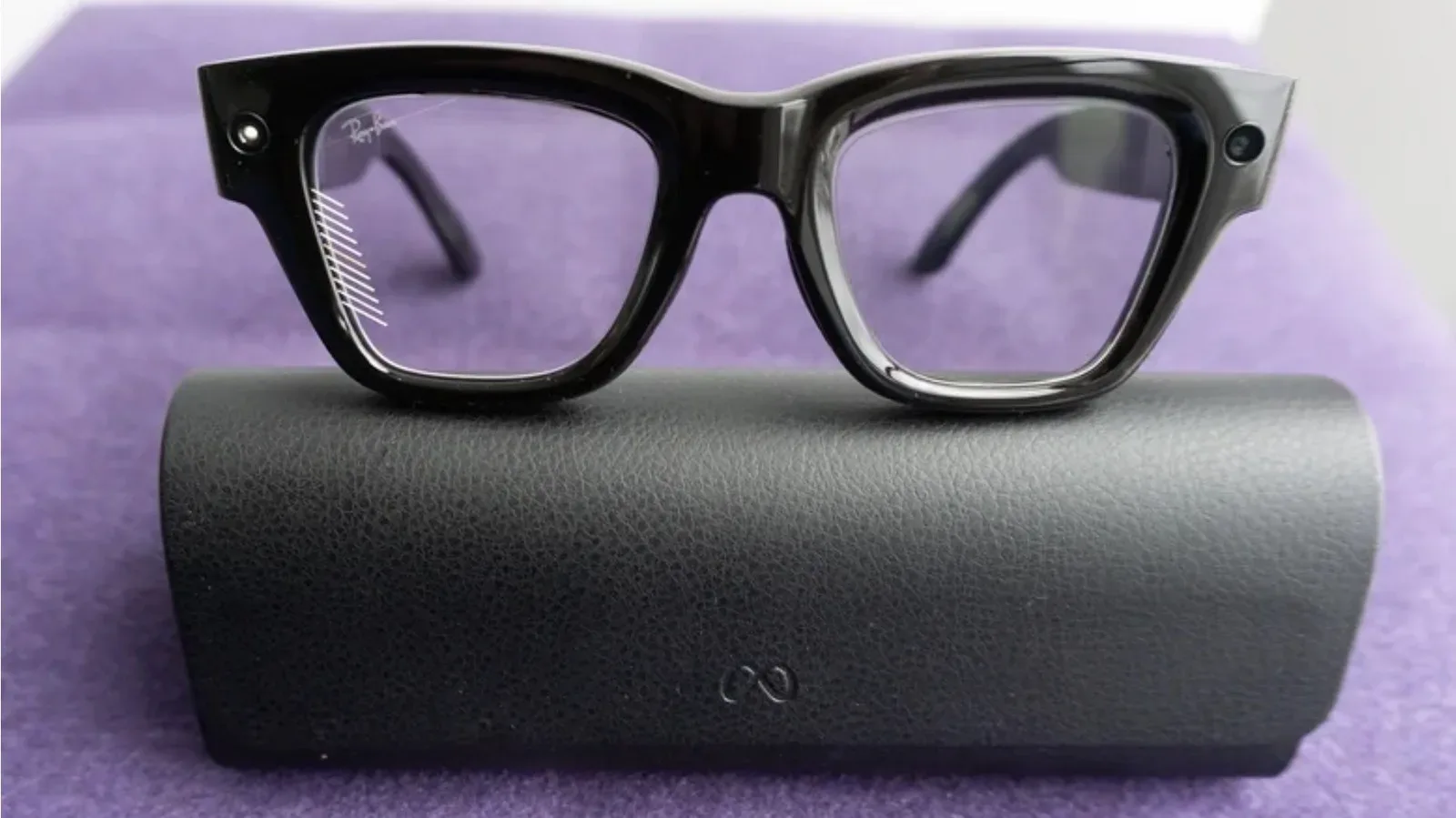
Camera-enabled smart glasses have drawn criticism for the possibility of discreet recording. Even where an indicator light is meant to signal recording, people around the wearer still need to recognize the device, notice the light and trust that it is functioning as intended. That is a lot of social interpretation to ask of strangers in public spaces.
Ray-Ban Meta Audio bypasses that particular tension by omitting the capability entirely. There is no camera to activate and no recording light because there is no recording function to signal. The frames may still invite questions because they contain speakers and AI features, but a bystander does not have to wonder whether they are being filmed by them.
This does not mean the glasses are a universal answer to privacy debates around AI hardware. Meta AI access and voice-based features can still prompt legitimate questions about how people want AI systems present in everyday devices. The available information does not spell out every operational or data-handling detail for these glasses, so buyers should avoid assuming that “camera-free” means “every privacy issue has vanished.” It means something more specific and important: the device does not capture visual media.
That narrower promise could be especially valuable in places where filming is socially unwelcome or simply distracting. The product’s appeal is not that it makes technology invisible, but that it removes the hardware function most likely to make other people wary. In a category where normal-looking eyewear has itself become a point of suspicion, fewer conspicuous capabilities can be an advantage.
Lighter frames, familiar wearable trade-offs
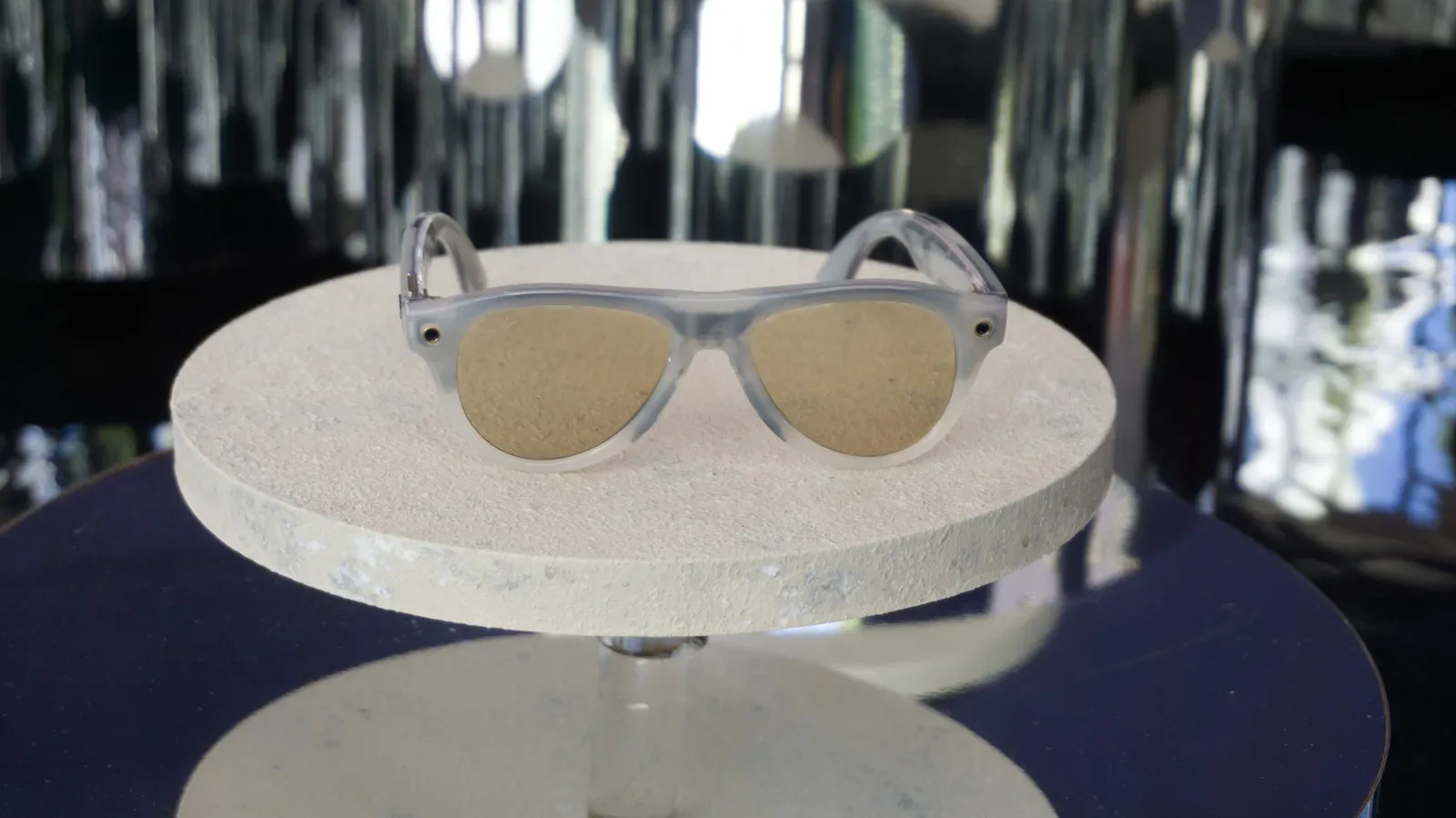
Meta says Ray-Ban Meta Audio weighs 43 grams. That is lighter than the company’s recent Optics glasses at 49.2 grams and the largest size of Meta Ray-Ban Display at 69 grams. Weight alone does not define comfort, but it matters more on a face than it might for a pocketable device: glasses are worn on the nose, ears and temples for long stretches, so relatively small reductions can affect whether a product feels like normal eyewear or like a gadget being tolerated.
The company is also carrying over fit options designed to accommodate different faces. These include adjustable temple tips, customizable nose pads and overextension hinges. Overextension hinges are spring-equipped hinges that can flex to fit a broader range of head widths and shapes. Alongside the nose-pad and temple adjustments, they are a practical acknowledgment that a smart-glasses product must first succeed at being glasses.
Meta rates the frames for up to 12 hours of use on a single charge, with another 48 hours available through the charging case. Those figures suggest a total of up to 60 hours when the case is included, though the single-charge claim is the more useful number for someone deciding whether the glasses can make it through a typical day without returning to the case. As with all battery estimates, prospective users should read “up to” as a stated maximum rather than a guarantee for every listening, calling or AI usage pattern.
The physical changes reinforce the product’s straightforward thesis. Removing cameras reduces weight, removes the recording light and helps the glasses look more conventional. Meta notes that the temples are slightly larger and the speaker cut-outs remain visible, so this is not literally indistinguishable from non-smart eyewear at close range. Still, the Burbank and Clubmaster styles are intended to read first as Ray-Ban frames, rather than as a face-mounted camera.
What buyers are gaining—and consciously giving up
The $349 starting price puts Ray-Ban Meta Audio in a category where shoppers should be clear about which job they want their glasses to perform. The device offers an audio-and-AI bundle without visual capture. That is a focused trade, not an all-purpose upgrade.
- What it offers: Calls, voice message replies, podcast and music playback, Meta AI access, live translation, prescription-lens support and frame-fit adjustments.
- What it leaves out: A camera, photo or video capture, and the recording light associated with camera-equipped smart glasses.
- What the design may improve: Lower weight and a less conspicuous social presence, since the absence of a camera is a substantive difference rather than just a cosmetic one.
- What remains personal preference: Whether open-ear speakers provide the desired listening experience, whether voice AI is useful enough to justify the price, and whether the wearer is comfortable relying on glasses as a communications device.
For some people, the limitation will be decisive in the wrong direction. Anyone who wants hands-free photo or video capture should look elsewhere, because that is precisely what these frames decline to do. But for someone whose interest begins with listening, calling and voice assistance, the camera may have been needless cost, added weight and unwanted social baggage.
The approach also positions Ray-Ban Meta Audio differently from Meta’s broader glasses work. The company has explored products with visual display and AI ambitions, while its camera-enabled models have pushed toward visual capture and assistance. This pair narrows the assignment. It does not try to turn a lens into a viewfinder or a display; it tries to make audio features and spoken AI live in a familiar glasses shape.
Readers tracking Meta’s other eyewear efforts can see how that broader lineup has been evolving in this look at Meta Ray-Ban Display updates. Ray-Ban Meta Audio takes almost the opposite route: less visual hardware, fewer outward signals and a more narrowly defined set of uses.
The bigger implication: smart glasses may need different lanes
The arrival of a camera-free model suggests that “smart glasses” do not have to be one thing. A camera-equipped pair appeals to users who prioritize capture and visual AI. A display-oriented pair pursues information in the wearer’s field of view. Ray-Ban Meta Audio is for people who want audio and an assistant without being identifiable as someone carrying a camera on their face.
That segmentation is sensible because the objections to smart glasses are not all technical. Battery life, fit, prescription support and sound quality are conventional product considerations. The camera question is different: it changes how a device affects people who did not buy it and did not agree to interact with it. A camera-free alternative cannot persuade everyone who is skeptical of Meta or of ambient AI devices, but it offers a meaningful choice to consumers who like the form factor while rejecting the recording function.
There is also an unusually simple message in the hardware itself. If the frames have no camera, their wearer does not need to explain why an indicator light is on, whether they are filming or where captured video goes. The product does not require a bystander to interpret a signal at all. That clarity may be more valuable than another sensor, particularly for a device intended to be worn in daily public life.
Ray-Ban Meta Audio therefore looks less like a retreat from smart glasses than an attempt to make one version of them easier to live with. At $349, Meta is betting that audio, voice control, AI assistance, lighter weight and recognizable frame styles can stand on their own. Whether that is enough to win over people wary of the category remains uncertain. But the premise is clear: sometimes the most convincing new wearable feature is the controversial one that has been deliberately left out.