Smart glasses have spent years looking for the kind of everyday job that makes wearing a computer on your face feel less like a novelty and more like a sensible choice. Cooking may be one of the clearest answers. A forthcoming integration between Meta’s glasses and a major Cooking app is designed around a kitchen reality that every recipe reader knows: hands become messy, phones lock at the worst moment, and long instructions are awkward to parse while something is already sizzling.
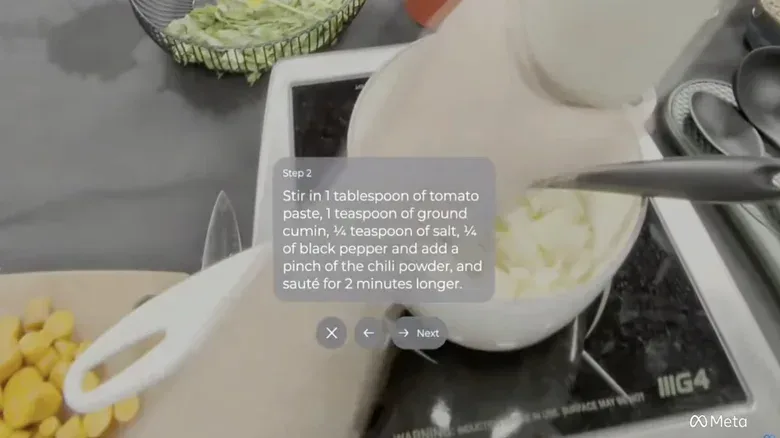
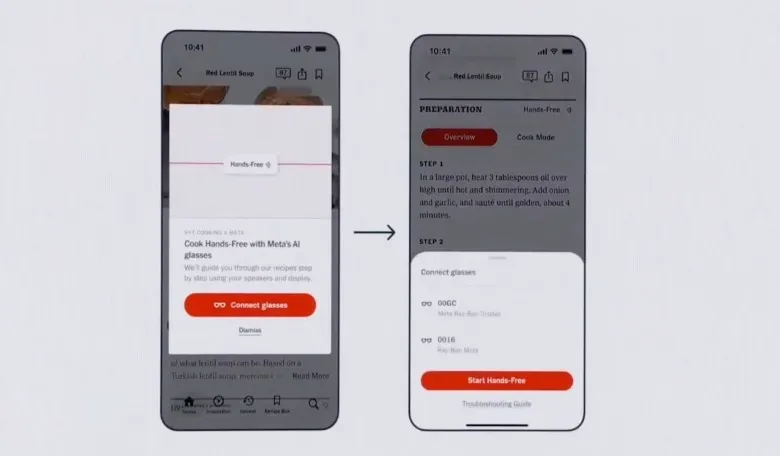
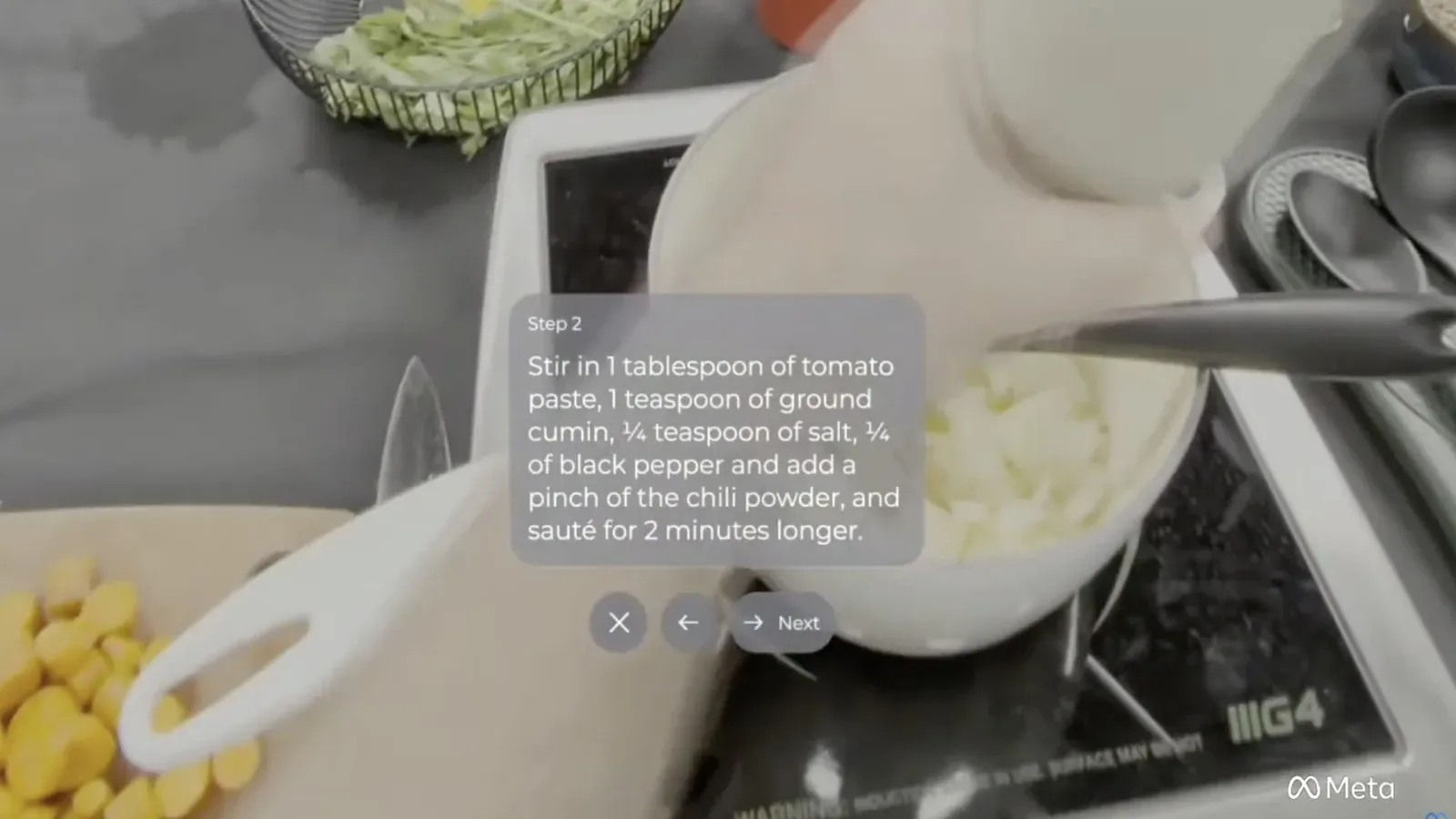
The app is adding a hands-free mode that pairs with Meta’s glasses to provide spoken guidance while a user cooks. The feature is planned for Meta’s broader non-display AI glasses as well as its display-equipped Ray-Ban Display glasses. On the display model, recipe directions will also appear as compact cards that users can swipe through step by step.
It is not available yet. The planned rollout for hands-free mode is later this fall, while a precise availability date for the glasses integration has not been provided.
The important change is not simply reading a recipe aloud
At first glance, audio instructions for a recipe may sound like a basic text-to-speech feature. The stated approach is more deliberate. Rather than narrating each written recipe step word for word, the Cooking team says it has restructured longer instructions into brief audio prompts. Crucially, those prompts are intended to retain the recipe author’s guidance while putting the needed ingredients and measurements directly into the instruction.
That distinction matters because written recipes and spoken recipes solve different problems. A written method can support rereading, visual scanning, and a cook moving back and forth through several sentences. Spoken guidance has to work at the speed of a person doing a task. If the cook is holding a pan handle, kneading dough, or simply has wet fingers, a concise prompt with the quantity included can be more useful than a paragraph that assumes the reader is looking at a screen.
In practical terms, the ideal audio cue is not a dramatic kitchen narrator reciting an entire page of directions. It is a prompt that reduces the next action to something a cook can hear, retain, and carry out without stopping to unlock a phone. The display-card approach follows the same principle: one short, current instruction instead of a dense block of text hovering in a tiny interface.
Why cooking is a meaningful test for smart glasses
Cooking makes an unusually demanding test case for wearable assistance. The task is sequential: preparation often needs to happen in a particular order, and a missed instruction can complicate the next stage. It is also time-sensitive. A user may need an answer while ingredients are heating, not after searching through a screen, scrolling past an introductory section, and locating their place in a recipe.
It is, above all, hands-busy. Touchscreens are capable recipe tools, but their most ordinary interaction pattern—tap, scroll, read, repeat—becomes annoying when hands are dirty. A device that shifts the interaction to voice and glanceable information has a credible advantage, provided the information arrives in a form that is actually usable.
That proviso is important. Display-enabled glasses previously relied on Meta AI for recipe content, and the display steps did not remain visible long enough to be reliably followed through a cooking task. The new plan responds to that weakness in two ways. First, it introduces an established recipe service rather than making AI-generated recipes the sole route to cooking content. Second, it treats recipe delivery as its own design problem, using deliberately shortened audio guidance and brief visual cards rather than assuming a conventional recipe page translates cleanly to glasses.
That is the difference between adding recipes to a platform and building a recipe experience for the platform. The former can be a content partnership. The latter requires deciding what information a cook needs at each moment and how that information should be delivered when the user cannot comfortably interact with a full screen.
What the two glasses experiences are expected to do
Non-display AI glasses: audio-first guidance
Meta’s non-display AI glasses will rely on audio cues through the hands-free mode. The cook pairs the glasses with the app and receives the reworked, compact instructions as they progress through a dish. This is the more constrained version of the experience, since it cannot place written directions in the wearer’s line of sight.
Audio-first interaction may still be a natural fit for many kitchen moments. A cook does not need to pick up a device to receive the next prompt, and the restructured directions are meant to include measurements and ingredients inline. But it also places a premium on clear wording. In a visual recipe, a reader can easily glance back at the ingredient list; in audio, the guidance itself needs to provide enough context to prevent unnecessary backtracking.
Ray-Ban Display glasses: short cards alongside audio
The Ray-Ban Display version adds a visual layer. Recipe steps will appear one at a time on cards that the user can swipe through. That sounds modest, but it addresses an important usability issue: lengthy, transient text is a poor match for a small wearable display. A stable, brief instruction can be checked quickly while still leaving the user focused on the counter, cutting board, or stove.
The display is not being positioned as a replacement for the recipe’s full written format. Instead, it is a companion for the active part of making the dish. The original recipe can contain nuance, background guidance, and extended explanations; the glasses need to communicate the immediate next move. The announced card system suggests the experience is being designed around that division.
What remains unknown
The preview explains the intended interaction but leaves several practical details unanswered. There is no exact launch day, and the available information does not specify which recipes will support the format, how users will navigate or repeat a cue, or whether every element of a recipe’s editorial guidance will be available through the glasses workflow.
Those details will determine whether hands-free mode becomes a helpful routine feature or merely an intriguing demonstration. A recipe assistant needs to remain dependable when a user loses their place, wants to confirm a measurement, or must return to a previous instruction. The planned use of short prompts is promising because it recognizes that wearable interfaces require edited information, but the eventual experience will depend on the controls surrounding those prompts as much as the prompts themselves.
There is also a straightforward boundary to the promise. Smart glasses can make access to recipe guidance more convenient; they do not eliminate the judgment involved in cooking. Users still need to prepare ingredients, observe food, manage timing, and make decisions when conditions differ from the written method. The meaningful goal is not automated cooking. It is reducing avoidable device friction during a task that regularly makes conventional screen interaction inconvenient.
A wider signal for glasses software
This integration is notable beyond recipes because it points to a more grounded use for AI glasses: focused, context-aware guidance from a service that already has structured information. The value is not that a general-purpose assistant can produce an answer to any request. It is that a specialized app can reshape its own material for a voice-and-display interface.
That could be a more useful model for wearable software broadly. A strong glasses experience may not be a miniature phone app projected into view. It may be a version of a service that understands which small piece of information matters now, strips away the rest, and makes progression possible without constant touching and scrolling.
For Meta, cooking is a particularly visible opportunity to show that AI glasses can fit into a real domestic routine. For the Cooking app, the partnership is a test of whether editorially developed recipes can retain their practical clarity after being converted into a new delivery format. And for users, the benchmark is refreshingly simple: can the glasses help them get through a recipe without covering a phone in flour or losing the next step?
The answer will not be clear until the feature arrives later this fall. Still, the move from general AI recipe suggestions toward concise, purpose-built instructions is a more credible direction for kitchen assistance. It acknowledges that good wearable design is less about putting more content in front of someone and more about putting the right instruction in front of them at the right time.
The partnership also arrives as media and platform businesses continue to explore new ways for familiar content products to reach audiences, a dynamic visible in recent interest surrounding Letterboxd’s potential sale. In this case, the immediate question is less about scale than execution: whether a recipe can become genuinely easier to follow once it moves off the phone and into a hands-free format.