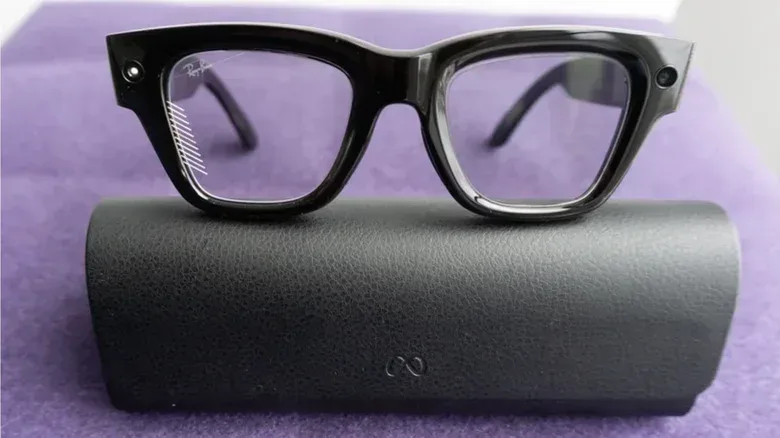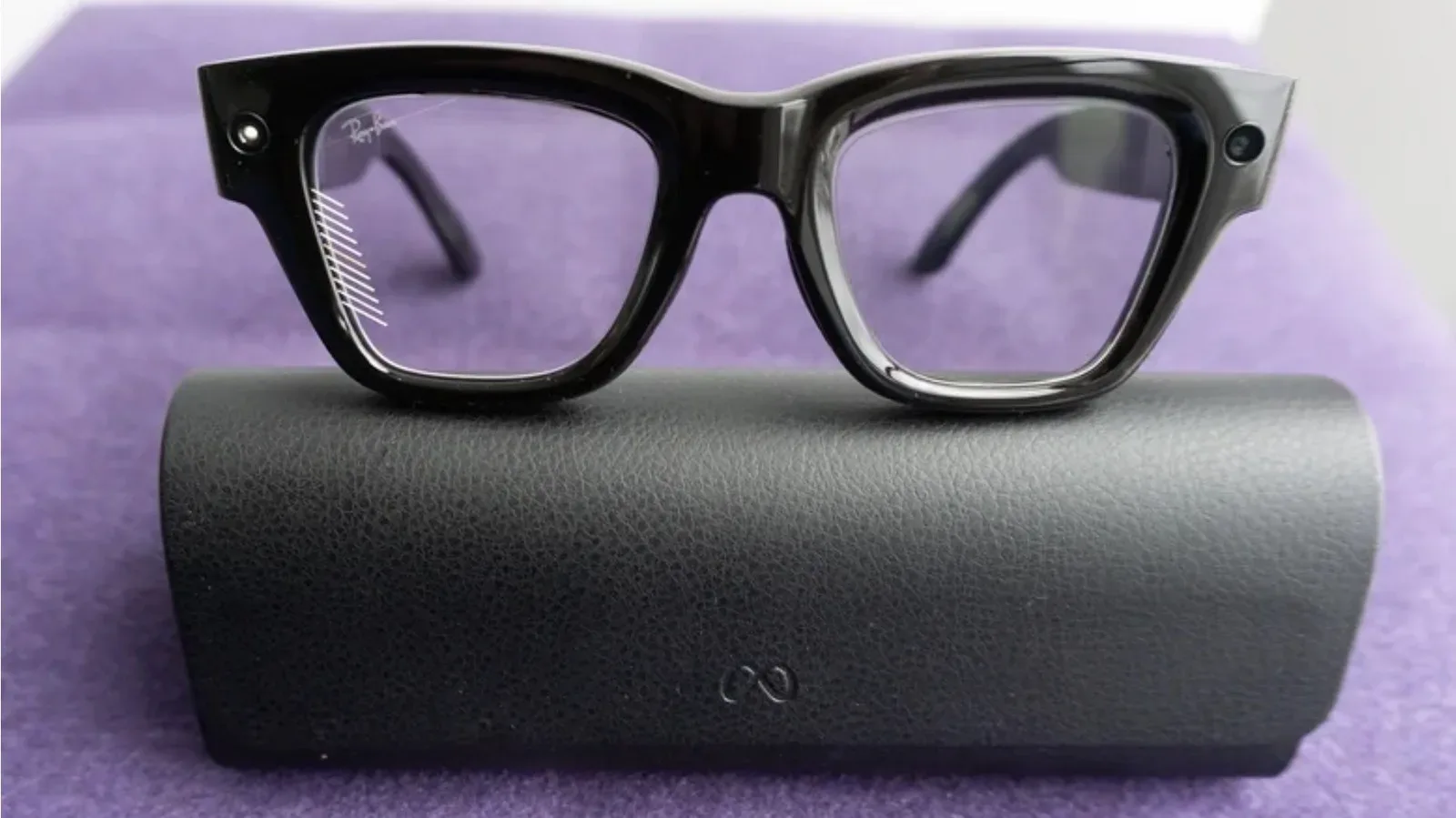
Meta is expanding the ambitions of its Ray-Ban Display smart glasses with a set of software features that focus on a central challenge for screen-equipped wearables: making the glasses useful without making the wearer constantly reach for a phone. The updates include a voice-driven holographic avatar for calls, hands-up navigation for cycling and public transit, and an Explore app for discovering compatible software.
The company is also widening the hardware’s regional availability. Ray-Ban Display is arriving in the UK, Canada, France, Italy and Germany, adding to online ordering in the US. The feature set and geographic push together suggest a product moving beyond its initial introduction and toward the harder work of establishing everyday reasons to put smart glasses on.
A hologram stands in for the caller’s unseen face
The most conspicuous new addition is called Hologram. During a call made through the glasses, the wearer’s face is not naturally visible to the other participant. Hologram is intended to fill that gap with a photorealistic digital representation made through the Meta AI app.
The system is designed to be driven entirely by the wearer’s voice. Rather than recording facial performance for the call, the hologram model infers expression from both the words being said and the way they are said. In practical terms, this means vocal delivery is doing double duty: it carries the conversation while also giving the system signals from which to generate an on-screen expression.
That distinction matters. A holographic avatar, as described here, is not simply a live camera view of the person wearing the glasses. It is a generated representation intended to convey a social presence when the camera arrangement cannot show the wearer’s actual face. Whether inferred expressions feel natural will be an important question for a tool whose purpose is to make a call feel more person-to-person rather than less.
Hologram will initially be offered in early access later this fall for WhatsApp users in the US. “Early access” is significant language: it identifies the feature as an initial, limited rollout rather than a broadly established capability for every caller, region or service. It also means interested users should separate what has been announced from what is immediately available to them.
The feature is part of a wider effort to make wearable communication more expressive. For readers following Meta’s broader avatar direction, Meta’s push to make glasses-based calls feel less like VR offers useful context on why a face substitute is becoming a priority.
Navigation moves from street names toward visible landmarks
Navigation is receiving an expansion that may be more immediately practical. Wearers will be able to request cycling and public-transit directions by voice. The update is scheduled to begin rolling out later this month for users in the US and Canada.
The notable part is not only the transportation modes. Directions can also use the visible world around the wearer rather than relying solely on conventional street-sign instructions. Instead of an instruction framed around a road name, a wearer could be guided by a nearby landmark, such as being told to turn at a yellow house.
This is an attempt at more conversational navigation. Traditional turn-by-turn directions generally depend on formal place information: street names, intersections, exits and distances. Landmark-based guidance instead links a route instruction to something a person can identify in their surroundings. On glasses, where the whole appeal is maintaining awareness of the world rather than staring down at a handset, that framing is a logical fit.
There are practical limits implied by this approach, even if the basic use case is clear. A landmark needs to be identifiable and useful at the relevant moment, and the wearer still has to make safe decisions based on the real environment. The update should be understood as an additional way directions may be presented, not a substitute for watching traffic, signs, changing transit conditions or surroundings.
Explore addresses the discoverability problem
Another announced addition is an Explore app that will appear on both Ray-Ban Display and the Meta AI app. Its job is straightforward: help people browse programs that work with the glasses.
Discoverability can be as consequential as the number of available apps. Even when software exists, it has limited value to a new platform’s audience if people cannot tell what is compatible, where it lives or what it does. An app browser does not by itself create a larger software library, but it can reduce the friction between owning the device and finding reasons to use it.
That is especially relevant because limited app availability had previously stood out as a key weakness of the Display. The Explore app is a direct response to the practical problem of making the existing compatible-program catalog visible to wearers. Its effectiveness will depend on the range and usefulness of the programs it surfaces, details that have not been specified here.
Smaller additions target the day-to-day interface
The rest of the announcement is a mix of incremental user-experience improvements. Dolby Atmos is coming to the glasses’ capture and playback tools. Dolby Atmos is an audio format associated with a more spatial presentation of sound; in this case, the stated change applies to media captured and played back through the device’s tools.
Other additions include photo editing on the Display screen, a more detailed calendar, mirrored phone notifications, and Threads for Community Feeds. None of those functions changes the basic premise of the product on its own. Together, though, they point toward a device trying to handle more of the small actions that otherwise pull a user back to a phone.
- Photo editing on the display: adjustments can be handled within the glasses interface rather than only through another device.
- More detailed calendar information: scheduling is receiving a richer view in the wearable experience.
- Mirrored phone notifications: alerts from the phone can appear through the glasses workflow.
- Threads for Community Feeds: the social service is being added to that part of the experience.
- Dolby Atmos capture and playback: audio tools are being updated with support for the spatial-audio format.
These are quality-of-life features, but quality of life is not trivial for a wearable. Glasses compete with the phone in a highly specific way: they must provide enough information quickly enough to justify their presence, while avoiding a cumbersome or distracting interaction model. Calendar detail, notification mirroring and easier media work all aim at that narrow but important gap between “interesting technology” and “something worn regularly.”
New markets, prices and rollout timing
Ray-Ban Display is expanding to five new markets this fall: the UK, Canada, France, Italy and Germany. The glasses can be ordered online in those regions as well as in the US.
In the UK, Display is available starting at £749. In Canada, it starts at CA$1,149. France, Italy and Germany are set to open pre-orders, with a base price of €899, before availability begins on October 13.
Feature access has its own regional and service boundaries. The navigation expansion is slated first for the US and Canada, while Hologram’s early access is initially for WhatsApp users in the US. That split is worth keeping in mind for prospective buyers in the newly added European markets: hardware availability does not necessarily mean every announced software feature arrives at the same time.
What the update says about Ray-Ban Display’s next phase
The announcements fall into three connected categories: communication, orientation and platform discovery. Hologram tries to solve the social awkwardness of calling from a device that cannot show the wearer’s face. Landmark-based navigation tries to make directions better suited to a person moving through the world with a heads-up device. Explore tries to make the software side of the product easier to understand and use.
That is a more coherent strategy than treating the glasses merely as a place to add isolated features. A display in eyewear has to earn its place in short, contextual interactions: checking a route, dealing with a notification, managing a schedule, capturing media or making a call. The announced upgrades are aimed at those moments.
There is also a clear degree of uncertainty around how some of this will land in normal use. The voice-derived hologram is an ambitious approach, but its early-access label means it is not yet a mature, universal part of the calling experience. Landmark instructions sound intuitive, but their usefulness will naturally depend on the situation and what is recognizable in the environment. The Explore app improves a path to discovery, but does not itself answer how extensive the compatible-app selection will be.
Still, the update provides a clearer picture of where Meta wants Ray-Ban Display to fit: not as a replacement for every phone task, but as a wearable interface for communications, directions, media and quick information. The next test is whether those features feel dependable and natural enough that users choose the glasses for those tasks when their phone is already in a pocket.