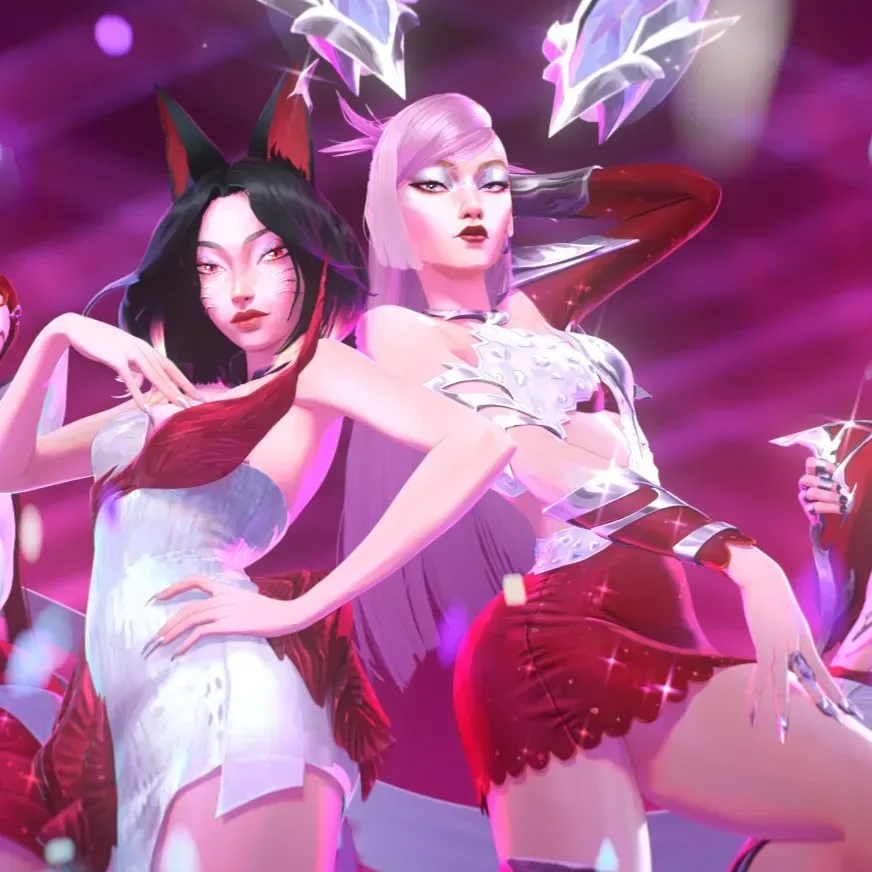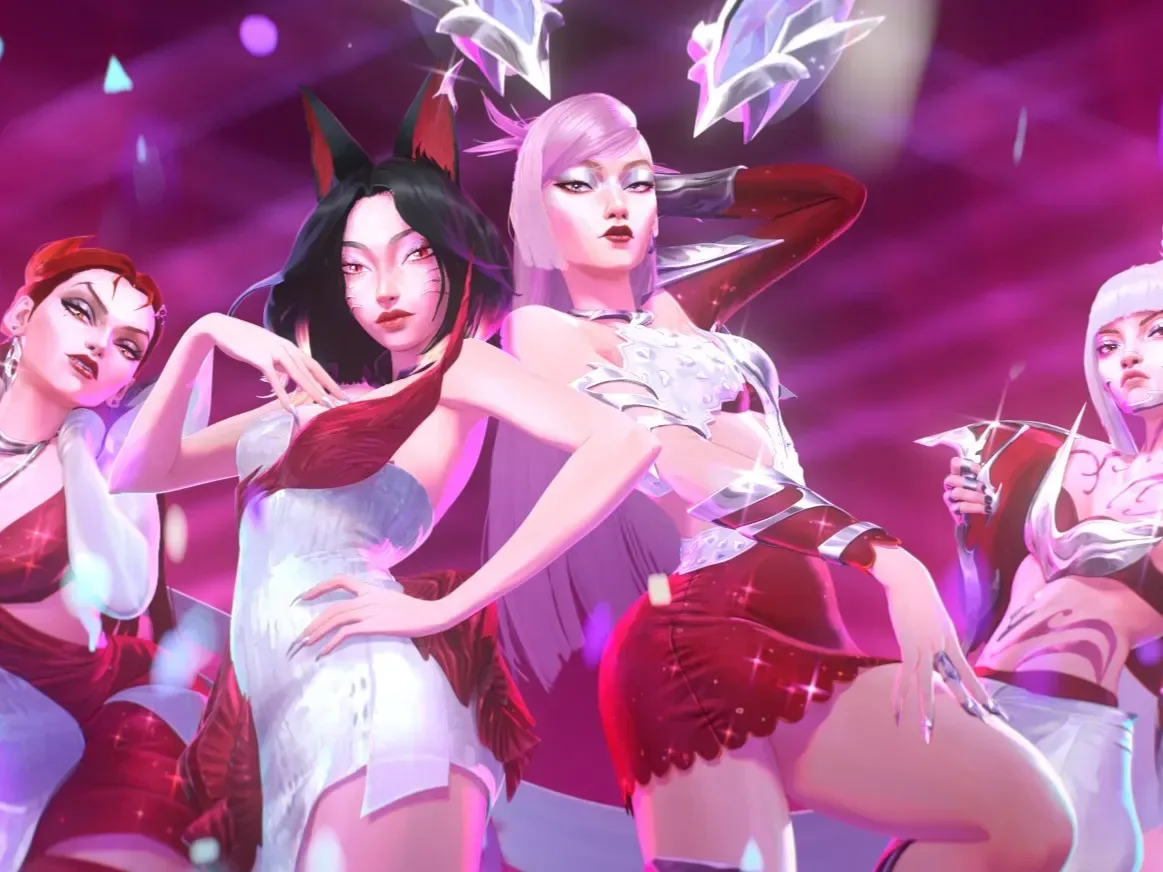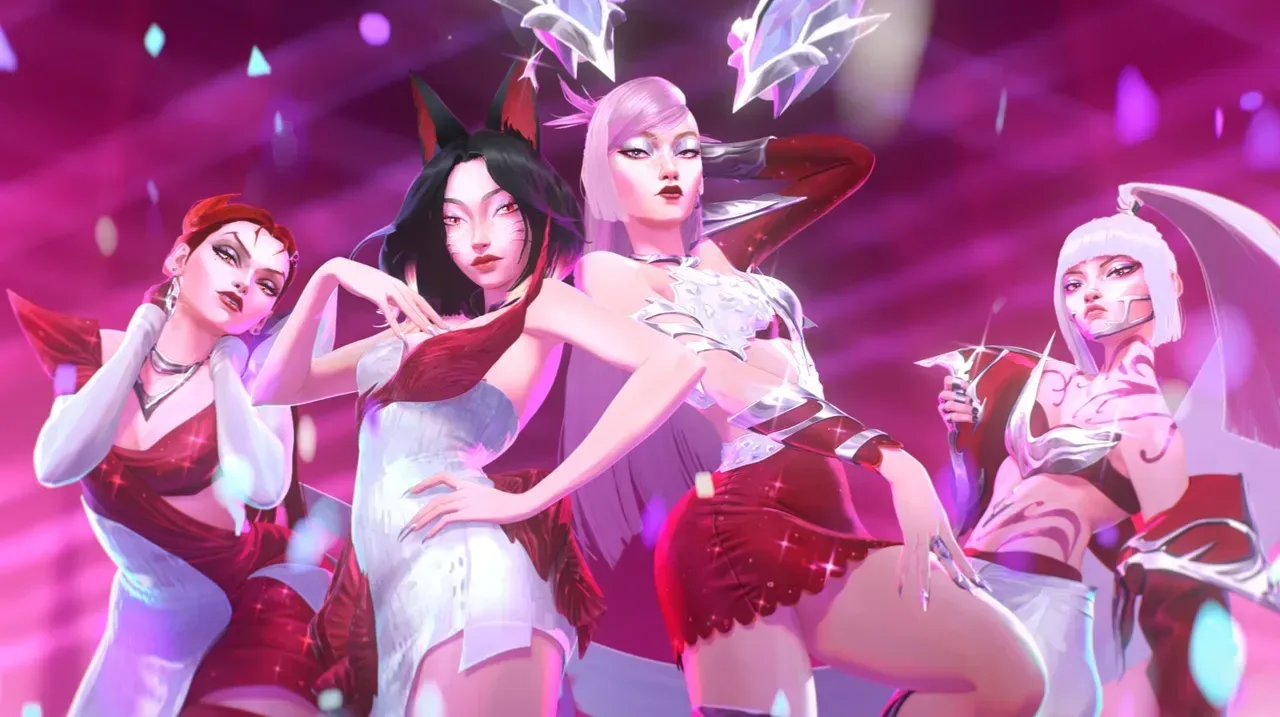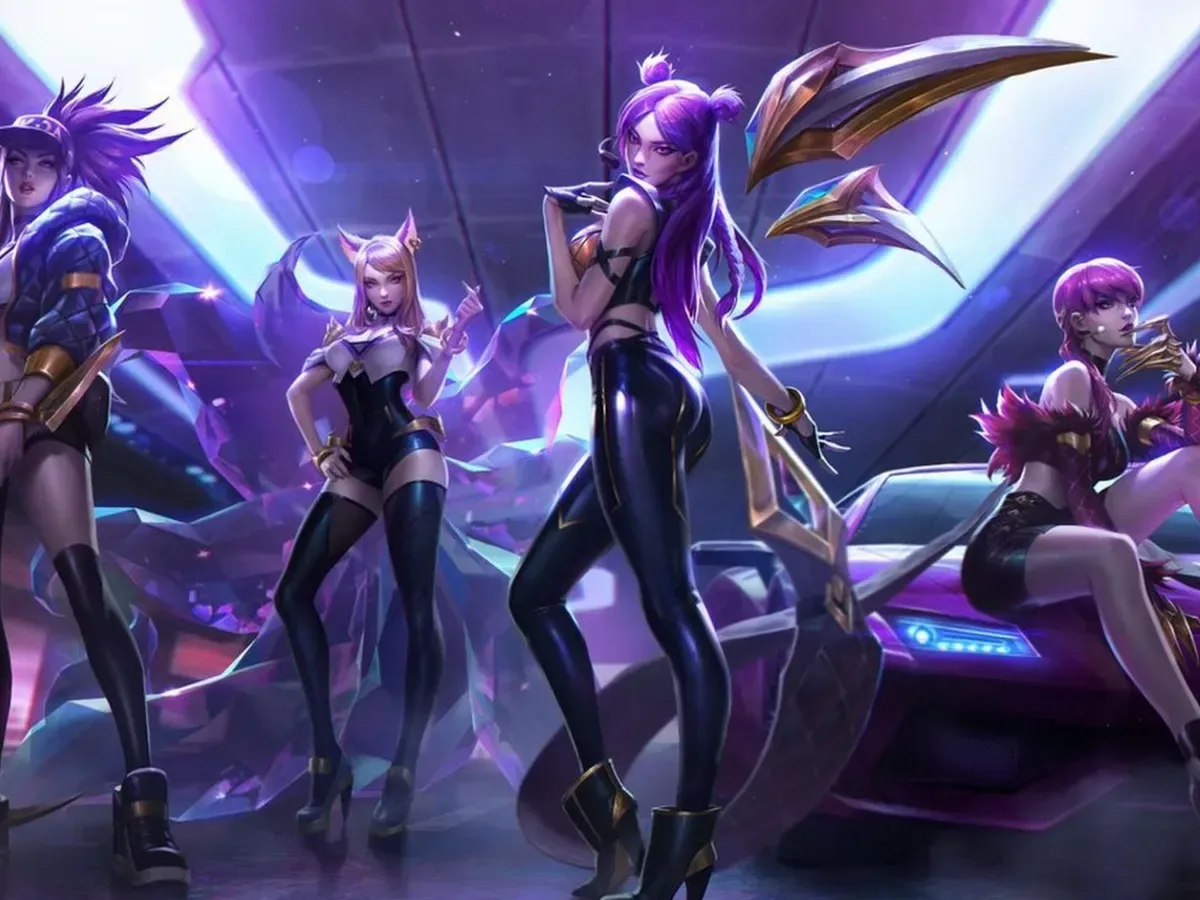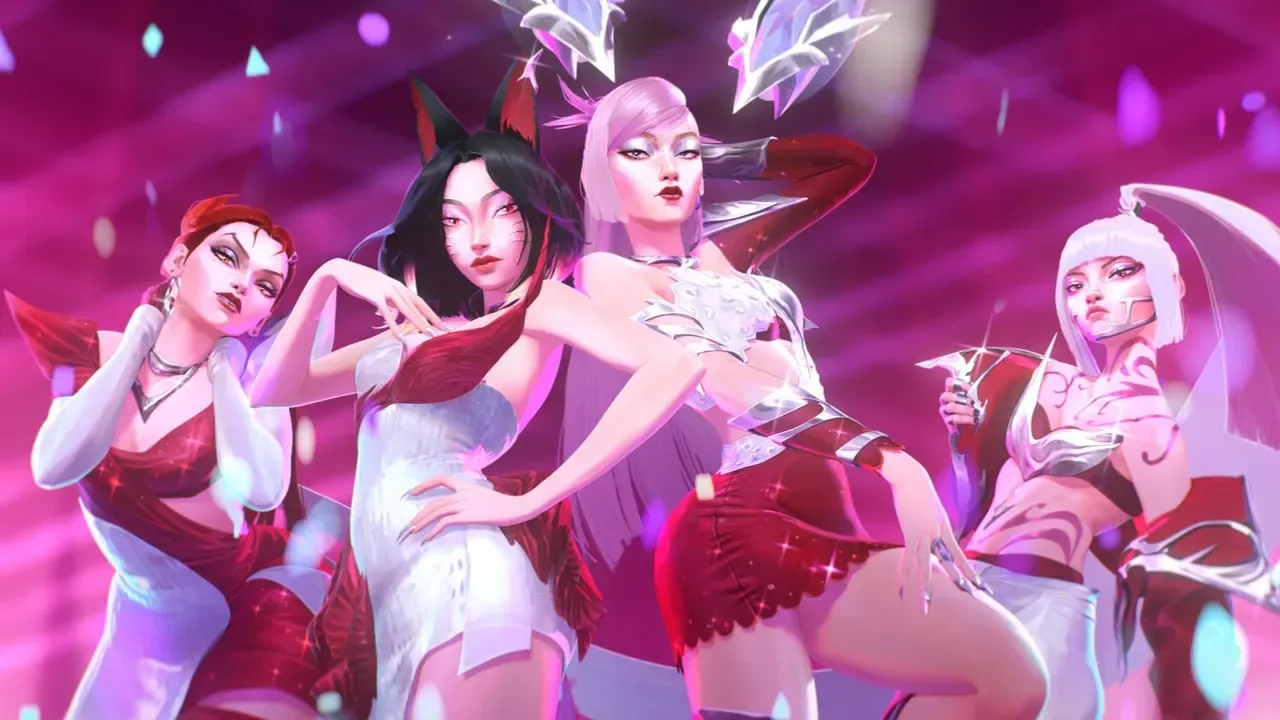
K/DA is back, and it has not returned quietly. The League of Legends virtual pop group has released Firestarter, its first new single after a six-year gap, alongside a music video from Fortiche. The French animation studio’s history with Riot Games stretches back to K/DA’s 2018 Pop/Stars video and later grew into Arcane, making this reunion feel less like a guest collaboration than the restoration of a particularly flashy creative superpower.
Firestarter leads a new K/DA EP scheduled for October 21. It will be the group’s second substantial release following 2020’s All Out. The song arrived a day ahead of its originally planned October 20 release, following leaks that had pointed toward K/DA’s return. Its video cleared 4.3 million YouTube views in its first nine hours, an early indication that six years without a new K/DA track did not erase the audience’s appetite for this particular blend of game characters, pop production and maximalist animation.
A new era, with familiar foundations
The new lineup includes returning i-dle members MIYEON and SOYEON, joined by Sophie Powers and Mimi Webb. That combination keeps an important through-line intact while giving the project fresh vocal identities. K/DA has always used a changing roster of real-world performers to voice its fictional members, rather than treating one fixed lineup as immutable canon. Madison Beer and Jaira Burns were among the performers featured in earlier material.
One notable absence is Seraphine. The character joined K/DA for 2020’s More, with Lexie Liu providing her voice, but is not part of this release. The omission matters chiefly because K/DA’s projects often double as character showcases within League of Legends’ broader universe. When a face or voice shifts, it changes the group’s musical chemistry and the set of stories fans may expect the video to foreground. Here, the emphasis is on the members and collaborators involved now rather than a nostalgic attempt to recreate every part of the 2020 configuration.
Kill Dave and Sebastien Najand produced Firestarter. Najand has worked on K/DA music from the group’s beginning, giving the new track a link to the sound audiences associate with the act. Continuity in a virtual group is not only about character models or branding; production choices are a large part of what makes a return feel recognizably like a continuation rather than an unrelated single wearing familiar costumes.
Fortiche turns choreography into game-language
Fortiche’s role is central. Its visual approach combines 3D CGI, hand-painted textures and hand-drawn 2D elements. In practical terms, that hybrid method can make digital performers feel less sterile: three-dimensional character movement and environments are interrupted or enriched by marks, textures and illustrative flourishes that behave more like painted animation than a purely computer-rendered image.
That design language gives Firestarter a look built around hot pinks and oranges, with infrared-like passages that make the performers appear to radiate heat. Oil-slick reflections under the characters, bursts of light and rapid single-frame disruptions add surface energy without requiring every moment to become visually identical. The restraint is significant. High-saturation music videos can blur into a single wall of color if every shot is pushed at the same intensity; changing the image’s texture and brightness creates room for the choreography and silhouettes to register.
For League of Legends players, the video also embeds recognizable ability references into its movement, including Ahri’s Charm and ultimate. An ultimate, in League terminology, is a champion’s especially powerful signature ability. The game references work as readable gestures for invested players while remaining part of the performance for viewers who do not know the terminology. That is a useful balance for an act like K/DA, which has always needed to serve a gaming audience without making a pop video inaccessible to everyone else.
Related coverage includes K/DA Returns With Firestarter, a New League of Legends Single Animated by Fortiche.
It is also an example of fan service in its more constructive form. Fan service here does not mean pausing the video to explain a reference or making recognition mandatory. It means placing a detail for players to spot while allowing the music video’s larger visual idea to continue uninterrupted. The reward is there for people who know Ahri’s kit; the scene still functions as dance-led animation for people who do not.
The song’s contrasts are doing the heavy lifting
Firestarter is arranged around contrast: punchy rap sections and a persistent beat give it force, while more melodic pre-choruses create a lighter, more suspended feeling before the chorus arrives. A pre-chorus is the section that typically raises anticipation between a verse and a chorus. Its job is not necessarily to be the song’s biggest hook; it is often the mechanism that makes the hook land with more impact. The track uses that shift between intensity and release to keep its momentum from becoming one-note.
That construction fits K/DA’s purpose unusually well. The project has to accommodate multiple performers, present a clean central hook and leave space for characters to have distinct moments in the video. Rap passages, melodic bridges into the chorus and a repeated refrain create those openings. There is enough sharpness in the delivery to match the song’s fire motif, but the melodic sections stop it from being solely an exercise in aggression.
The costumes and choreography strengthen the same push-and-pull. The styling is constructed around distinct member identities rather than a single uniform look, while the dance incorporates sharp poses, assertive gestures and theatrical scale associated with ballroom-inspired movement. Ballroom is not simply a synonym for any dramatic dancing: it refers to a culture and performance tradition with its own vocabulary, communities and history. Describing the choreography as ballroom-inspired is more useful than collapsing it into a generic “fierce” aesthetic, because the precision of pose, presentation and gesture is part of the visual grammar at work.
Why the timing matters for Riot’s music universe
K/DA’s return arrives during an active period for Riot’s other virtual acts. Heartsteel recently returned with Live My Life, while True Damage returned with Know My Name, described as the first League of Legends Worlds anthem from Riot’s virtual bands. Pentakill also collaborated on the orchestral Worlds theme. With Firestarter, K/DA is no longer the conspicuously absent major group in that slate.
This matters because Riot’s music projects are not all designed to do the same job. A Worlds anthem is attached to the competitive event and its spectacle; a virtual group release can be more focused on character, genre and music-video identity. Releasing material across Heartsteel, True Damage, Pentakill and K/DA gives the League of Legends universe multiple musical entry points rather than asking a single act to represent every mood or audience.
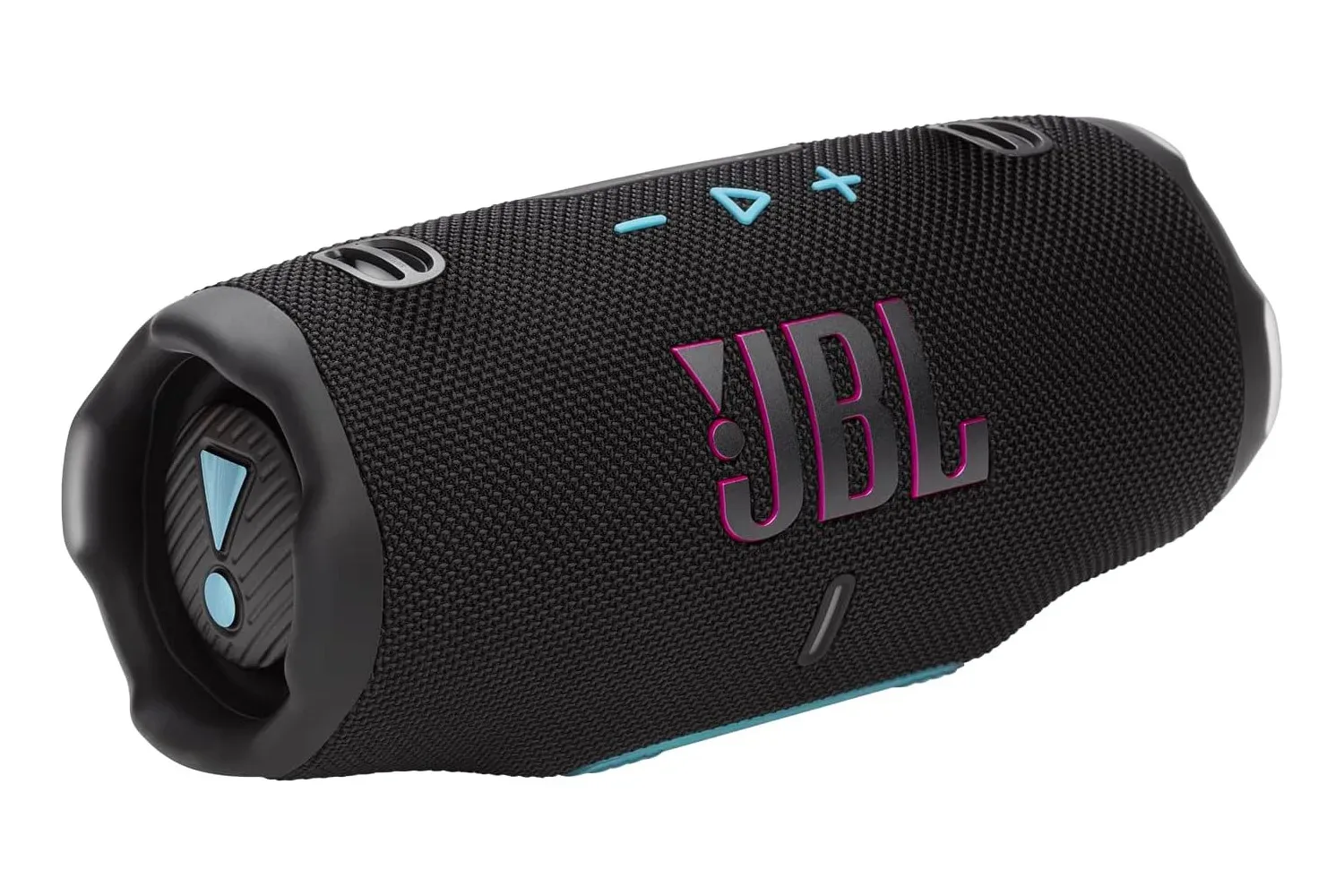
For players, the immediate practical implication is straightforward: Firestarter contains character-oriented visual references worth revisiting, especially for viewers who enjoy spotting ability nods and production details. For viewers arriving through animation or pop music rather than the game, it offers a self-contained video built to work without prior knowledge of champion abilities or League lore. And for anyone putting together a suitably loud replay session, a JBL Charge 6 discount may be timely, though the track’s animated detail arguably rewards a screen as much as a speaker.
K/DA’s strongest asset remains the bridge between audiences
Virtual music acts can sometimes be treated as a novelty: a promotional detour intended to generate a quick shareable moment around a game. K/DA’s sustained recognition suggests a more durable model. Its appeal depends on several layers supporting one another: characters with established game identities, real vocal performers, producers who understand the group’s musical continuity, and animation that does not treat the visuals as an afterthought.
Firestarter puts those layers back in contact. MIYEON and SOYEON provide a recognizable connection to K/DA’s past; Sophie Powers and Mimi Webb signal a new chapter; Kill Dave and Sebastien Najand anchor the musical side; and Fortiche supplies an audiovisual finish capable of carrying a release whose audience includes animation fans as well as League players. The result is not merely a comeback announcement. It is a reminder that K/DA works best when the music, character performance and animation all share the same level of ambition.
The October 21 EP will determine how fully this new era develops beyond its first single. But Firestarter has already re-established the key proposition: K/DA is most compelling when it does not ask people to choose between a game tie-in and a polished pop production. It aims to be both, then sets the frame on fire around them.