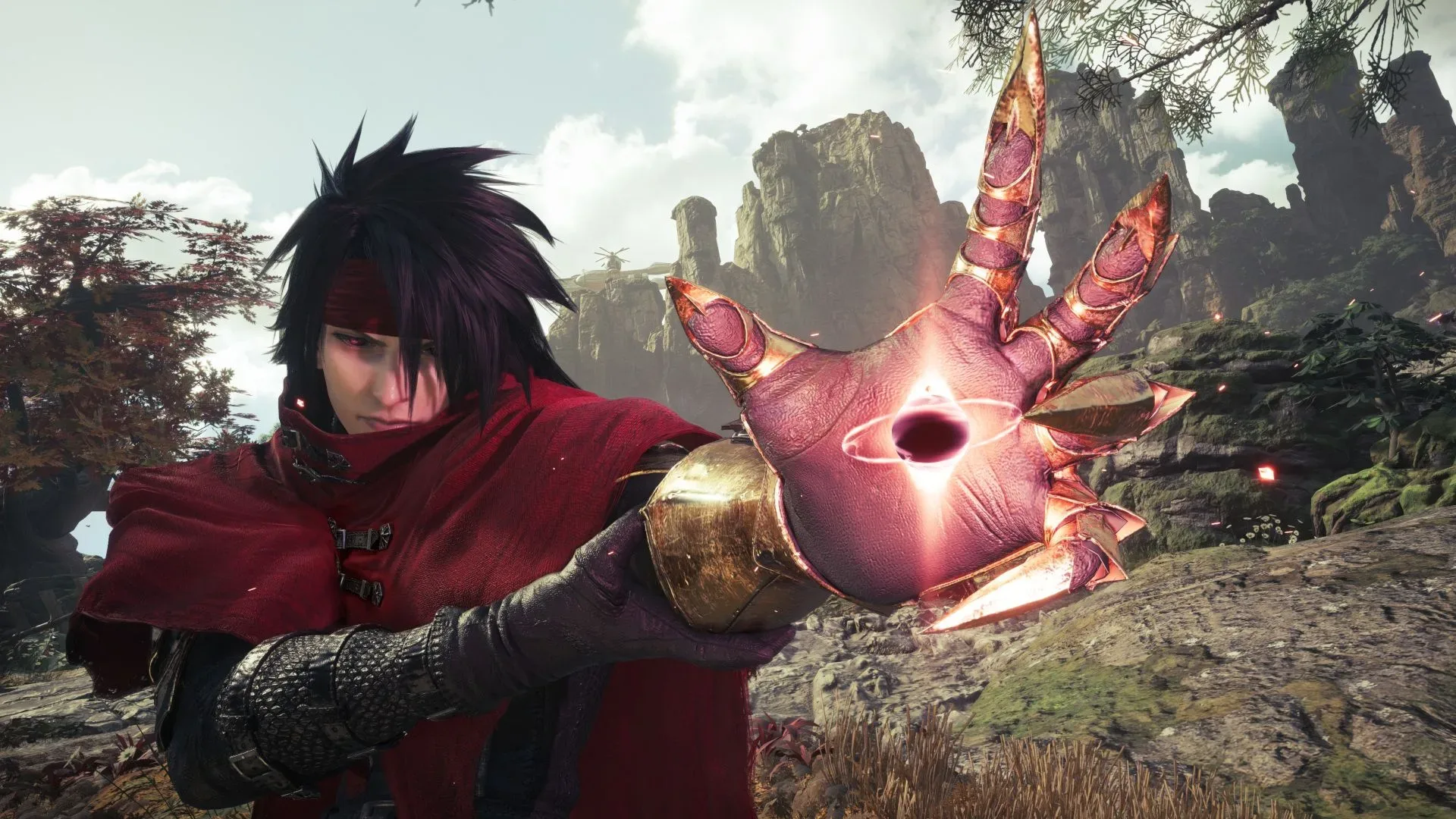
Final Fantasy 7 Revelation is set to take a kinder approach to its Platinum trophy than its predecessor. Director Naoki Hamaguchi has said the final chapter of the remake trilogy is being designed so that roughly 20% of players—or potentially more—can reach Platinum when the RPG arrives on April 8, 2027.
That is a striking target beside Final Fantasy 7 Rebirth’s visible Steam completion rate. Just 2.3% of Steam players have earned Rebirth’s Platinum trophy, The Planet’s Hope. Hamaguchi said the team expected more people to pursue it, and the feedback around its demands has prompted a meaningful rethink for Revelation.
The promise is simple: Revelation’s Platinum will be easier to obtain. The more interesting part is the reasoning behind it. The developers are not only reconsidering how much players must do, but also how the game’s battles feel while they are doing it.
A Platinum trophy is supposed to be a summit, not an endurance invoice
In PlayStation trophy language, Platinum is generally the top completion award: the one attached to earning the rest of a game’s trophy set. It is separate from merely seeing a story’s ending. A player can complete the main campaign and still be a long way from Platinum if the list asks for optional challenges, mastery tasks, broad activity completion, or high-performance combat requirements.
That distinction matters for a game as content-rich as Rebirth. Hamaguchi explained that the team deliberately wanted players to engage with the game’s large amount of material and to perfect it. Difficulty was therefore partly an intended consequence, rather than an accidental byproduct of one isolated requirement.
“There’s so much content. We wanted to make people go through all this content and perfect it. It’s kind of by design that that would make it difficult.”
There is a perfectly understandable design instinct there. A Platinum can function as a curated tour through the most demanding parts of a game, giving dedicated players a reason to learn systems they might otherwise skip. In a combat-heavy RPG, it can reward experimentation, party knowledge, tactical adaptation, and persistence.
But “do everything” is not automatically the same thing as “enjoy everything.” When a completion target combines a large checklist with difficult encounters, its perceived challenge can become less about one difficult skill test and more about the total burden of reaching that test, failing it, preparing again, and repeating the process. The finish line may be prestigious, but prestige is a hard sell if the route feels like administration with occasional monsters.
Related coverage includes Final Fantasy 7 Revelation Will Make Its Platinum Trophy Easier to Earn.
Rebirth’s 2.3% Steam figure gave the team a clear signal
The 2.3% figure does not measure every person who played Final Fantasy 7 Rebirth, nor does it establish a universal rule for every platform. It specifically reflects the proportion of Steam players who had unlocked the Platinum trophy at the point referenced. Still, it is a useful public indicator of how rare the award became among that audience.
Hamaguchi’s comments make clear that rarity alone was not necessarily the objective. The developers wanted the Platinum to require significant engagement, but underestimated how many players would want to fully clear the trophy list—and how strongly those players would respond to the barrier in front of them.
Battle director Teruki Endo reportedly expressed regret after seeing player reaction. Hamaguchi characterized the response as an “I feel bad” moment, while stopping short of calling the original approach a mistake in judgment. That nuance is important. The team is not disowning the idea that a Platinum should take commitment. It is acknowledging that the balance between commitment and friction did not land as intended for a substantial group of completion-minded players.
For players, that is more useful than a vague promise to make things “better.” It identifies the design problem: Rebirth asked players to work through an enormous amount of content and perfect it, and the team now believes more people want a realistic path through that challenge than it had anticipated.
Revelation’s new target is accessibility for committed players, not automatic completion
A projected Platinum rate of 20% or more should not be read as a promise that Revelation will hand out trophies for opening the menu and admiring the materia. Even at that level, Platinum would remain a reward earned by a minority of the overall player base. The stated shift is about making the pursuit feasible for a much wider slice of players who decide they want to commit.
That distinction is worth keeping in view as the game’s April 2027 release approaches. “Easier” can mean many things in trophy design. It might mean fewer bottlenecks, fewer extreme performance checks, a less punishing overall accumulation of tasks, or challenges that better teach and reinforce the combat system. Hamaguchi did not outline Revelation’s specific trophy requirements, so none of those potential changes should be treated as confirmed.
What is confirmed is the intended result: an easier Platinum. Players hoping for a less grueling completion track can reasonably take that as good news, while players who enjoy demanding optional goals should avoid assuming that difficulty has been removed altogether. A lower completion barrier and meaningful challenge can coexist; the unresolved question is precisely where Revelation will draw its line.
The combat change may matter more than the trophy change
Hamaguchi also connected the lesson from Rebirth to Revelation’s broader battle design. The goal, he said, is not merely to reduce the number of battles or make every encounter weaker. The priority is for the battles themselves to be enjoyable rather than simply challenging.
“It’s not just about the amount of battles that there are but the battles themselves that are going to be enjoyable.”
That sounds like a subtle distinction, but it goes to the heart of why difficult optional content can either become a fan favorite or a source of dread. Challenge is a measurement of resistance: how hard something is to overcome. Enjoyment is a judgment about the experience of trying. A tough battle can be enjoyable when its rules are understandable, its demands feel purposeful, and players can recognize how their decisions led to victory or defeat. It can feel punishing when success appears to rest on opaque conditions, excessive repetition, or a long march back to another attempt.
Hamaguchi did not provide technical detail on individual combat systems or encounters in Revelation, so it would be premature to predict exactly how this philosophy will show up in the finished game. But tying the Platinum discussion to battle enjoyment suggests the team sees the two as connected. The completion journey is affected not just by how many objectives exist, but by whether the activity required to clear them is satisfying in its own right.
That is a practical concern for a final installment. Players who chase a Platinum are often spending far more time with a game’s systems than those who follow only its central story path. If the hard battles become the moments people want to revisit, a long trophy list can feel like an invitation. If they become obstacles people only want to survive once, that same list can turn the endgame into a chore.
What players can responsibly expect now
There are two firm takeaways. First, Final Fantasy 7 Revelation is planned to arrive on April 8, 2027. Second, its developers intend for the Platinum trophy to be substantially more attainable than Rebirth’s, with Hamaguchi estimating a completion rate of around 20% or higher.
Everything beyond that needs patience. No full trophy list, precise requirement breakdown, or detailed explanation of the revised combat tuning has been provided here. Players should be wary of treating an “easier Platinum” as proof that every side activity will be shortened, every battle will be gentler, or every completion challenge will disappear.
Instead, the statement is best understood as a design correction informed by feedback. Rebirth’s developers wanted broad engagement and near-perfect completion; the resulting Platinum proved much rarer than expected on Steam. Revelation is intended to preserve the value of completion while giving far more players a credible chance to reach it.
That is an encouraging direction for anyone who likes earning a Platinum but does not want the final badge to demand a full-time residency in the combat simulator. It may also make Revelation’s post-story life more welcoming: a difficult goal can still feel special when the road toward it is full of fights players genuinely want to play.
For more on how player-facing systems and platform ecosystems can shape a game’s audience, see our look at Steam’s personalized discounts and events feed.