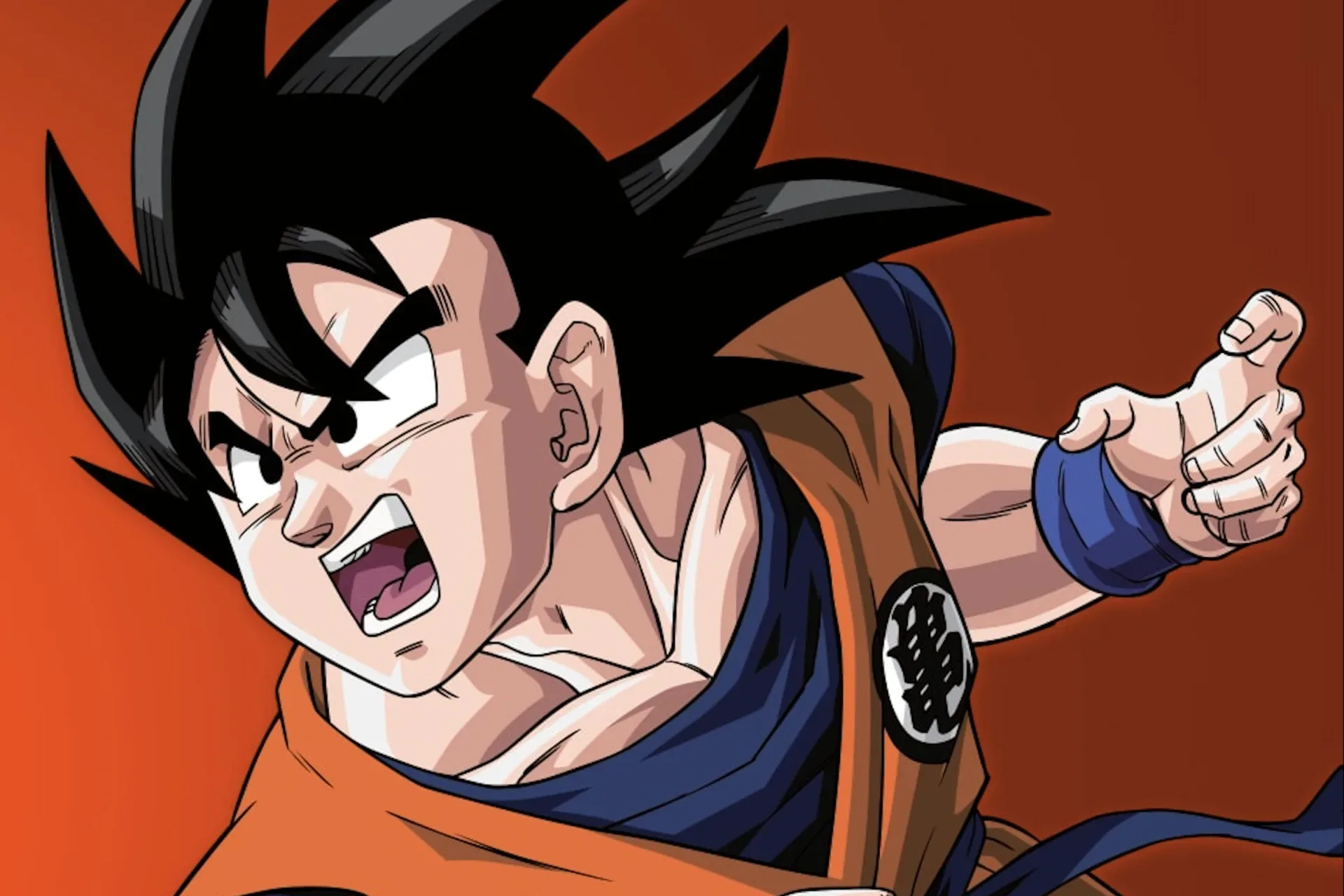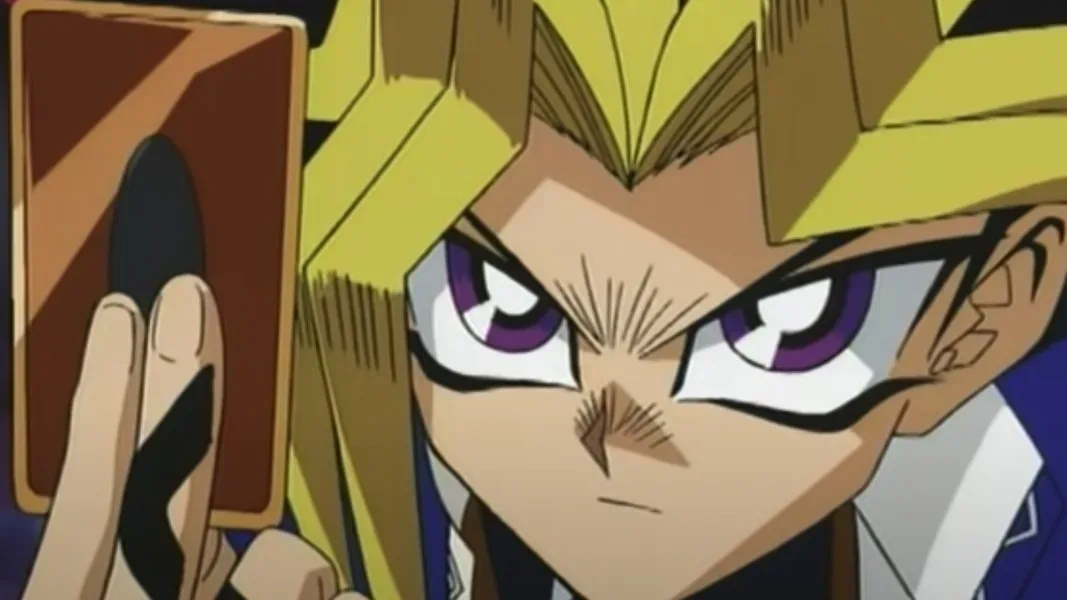
Before Yu-Gi-Oh! Duel Monsters became the version of the franchise recognized around the world, its animated future appears to have hinged on a contentious rights meeting and an exceptionally valuable piece of leverage: Dragon Ball.
Yoshiro Kataoka, a production planner whose credits include Hunter x Hunter and Gunslinger Girl, has recalled a 1999 dispute involving Shueisha, Toei Animation, and the stalled prospects for another Yu-Gi-Oh! television series. His account paints a striking picture of how a manga’s growing momentum, an underperforming initial adaptation, and the practical value of secondary licensing rights can collide.
The result, in broad terms, is familiar: Yu-Gi-Oh! Duel Monsters, produced for TV Tokyo, became the television incarnation that defined the property for a huge audience. But the route to that point was not simply a case of a hit manga receiving an obvious second chance on television. The earlier Toei Animation series had been cancelled, while the company reportedly did not want to make a follow-up and also did not want to release its hold over the anime rights.
The first Yu-Gi-Oh! anime came before Duel Monsters
Kazuki Takahashi’s Yu-Gi-Oh! manga began serialization in Weekly Shonen Jump in 1996. It had enough readership to reach animation quickly, receiving a 27-episode adaptation in 1998 from TV Asahi and Toei Animation. Yet the series did not establish itself as a major success in that form.
There are no concrete audience figures attached to the account, so claims about exactly how poorly it performed should be treated cautiously. What is clear from the reported sequence of events is that Toei cancelled the series. At the same time, the manga itself was gaining momentum. That created a mismatch between two versions of the same property: the existing television adaptation was over, but the underlying print work had become increasingly important to its publisher.
This distinction matters. A franchise is not one indivisible asset; it is a bundle of creative work, contracts, permissions, and commercial opportunities. Manga serialization, television production, international distribution, character merchandise, and other forms of exploitation can all involve different stakeholders and rights arrangements. Success in one area does not automatically compel success in another. Equally, a weak adaptation does not necessarily mean that the source material has lost value.
For Shueisha, the growing readership of Yu-Gi-Oh! apparently made a new animated effort desirable. The problem was that the company which had produced the first series still held rights relevant to making an anime, despite no longer wanting to continue the show itself.
What “secondary usage rights” mean in this dispute
Kataoka’s recollection centers on what he describes as secondary usage rights for Dragon Ball. In straightforward terms, secondary usage refers to the licensed use of a work beyond its core publication or original broadcast context. The precise contractual scope is not laid out in the account, so it would be wrong to assume every specific use covered by Toei’s agreement. The key point is simpler: these were rights valuable enough that losing them would represent a serious threat to the company.
That leverage mattered because Dragon Ball was an enormously consequential property. At the time of the 1999 meeting recalled by Kataoka, Dragon Ball Z was also in the middle of its long English-dubbed run in the United States. The FUNimation dub began airing on September 13, 1996, and concluded in April 2003. The franchise’s international profile made its rights far more than a theoretical bargaining chip.
Kataoka says that Toei, during the 1999 meeting, made it clear that it would not hand the Yu-Gi-Oh! anime rights back. Kazuhiko Torishima, then editor-in-chief of Weekly Shonen Jump, responded with an ultimatum. In Kataoka’s recollection, Torishima asked whether Toei was sure of that position, then said he would revoke all secondary usage rights for Dragon Ball.
“If that’s how you want to play ball, then here’s my trump card: I’ll revoke all secondary usage rights for Dragon Ball.”
It is a memorable line, but it is also worth preserving the level of certainty around it. This is a retrospective account from Kataoka, not a published contract or a transcript of the meeting. The claim is significant because of the people and companies involved, yet the exact wording and complete legal circumstances cannot be established from the recollection alone.
Why the standoff mattered for the franchise
The reported outcome was that Toei relented. That opened the door for the TV Tokyo-produced Yu-Gi-Oh! Duel Monsters anime—the version that would become central to the franchise’s identity.
For viewers, it can be tempting to frame this only as trivia about an obscure predecessor sometimes called “Season 0.” For the industry, though, the episode illustrates a more consequential point: rights control can determine whether a creative property reaches the version of itself that ultimately breaks through.
There was already evidence of audience interest in Yu-Gi-Oh! through the manga. But interest alone was not the final obstacle. The initial anime had ended, and a rights impasse reportedly prevented another studio from moving ahead freely. The threat involving Dragon Ball suggests that negotiations did not turn on artistic preference alone. They turned on the comparative value of two major properties and on the ability of one rights holder to change the terms under which another could benefit.
That is a useful lens for following modern entertainment disputes as well. A popular game, comic, show, or card property can be commercially active while its next adaptation or expansion remains uncertain because the relevant rights are fragmented or controlled by parties with different priorities. The visible question—“Why isn’t there another season?” or “Why can’t another company make it?”—often has an invisible contractual answer.
For a broader example of how business structures can shape the creative ecosystem around games and pop culture, see our coverage of a fan-funded Mass Effect billboard campaign and the industry pressures surrounding it.
The legacy of the 1998 series
The first Toei series has a complicated place in the franchise’s history. It ran for 27 episodes and was not given an English-language dub. Fans commonly call it Yu-Gi-Oh! Season 0, a label that helps distinguish it from Duel Monsters but is not presented here as an official title.
Its reputation also rests partly on contrast. The 1998 adaptation is frequently characterized as darker and stranger than the later television series. That difference tracks with its position in the property’s development: it is an earlier take on the manga rather than a continuation of the TV Tokyo production. Calling it an “alternate” version can be a helpful shorthand for audiences, provided it does not obscure the basic chronology. It came first, it ended after 27 episodes, and the later Duel Monsters anime emerged after the reported rights dispute.
The full run has been freely available on YouTube for close to a decade, making it unusually accessible for a show that never received an English dub. Its availability offers fans a direct way to compare the franchise’s two major early anime paths: the cancelled 1998 adaptation and the later production that became the better-known standard.
What the Dragon Ball threat reveals
The most revealing aspect of Kataoka’s account is not merely that executives argued forcefully. It is that the disagreement was reportedly resolved by connecting two separate franchises. Yu-Gi-Oh! had immediate potential because its manga readership was rising. Dragon Ball supplied leverage because its secondary rights carried enormous commercial weight.
That arrangement underscores how publishers and animation companies can be linked through portfolios rather than one project at a time. A negotiation over an adaptation may be affected by arrangements elsewhere in the relationship. In this case, Torishima’s alleged threat was powerful specifically because it addressed something Toei had strong reason to keep.
It also complicates the tidy story that successful entertainment properties rise solely because audiences immediately recognize their potential. Yu-Gi-Oh! did have a manga that was gaining traction, but that was not enough to guarantee an unobstructed anime future. The first show had been cancelled. A company reportedly retained rights without wanting to pursue another season. The franchise’s next step depended on a business confrontation in which Dragon Ball became the decisive pressure point.
For fans of anime, manga, and the trading-card phenomenon that Duel Monsters helped anchor, the anecdote reframes the series’ origin story. The familiar anime was not just a second attempt after an earlier show failed to connect. It was, by this account, the product of a hard-fought resolution to a rights deadlock—one where the stakes reached well beyond Yugi and the Millennium Puzzle.