A wave of online jokes followed claims that Jensen Huang had resigned from Nvidia. The posts moved quickly through familiar internet shorthand: puns built around Nvidia’s name, jokes about Huang’s leather jackets, references to old sitcom-style misunderstandings, and pointed digs at the wider AI boom.
There is an important catch. The supplied material presents serious allegations alongside the reported resignation, but does not include an Nvidia statement, a board statement, regulatory filing, direct evidence, or other independent confirmation. Those allegations should not be repeated as established fact. The comedy circulating around them may be fast, but that does not make the underlying premise verified.
That distinction is not an attempt to drain the joke out of the room. It is the basic line between reporting an observable social-media reaction and treating an unverified, potentially consequential claim about a real person as settled news. Here, the observable thing is clear: people saw the claims, then turned Nvidia’s branding and Huang’s public image into a shared punchline almost immediately.
The meme template was already waiting
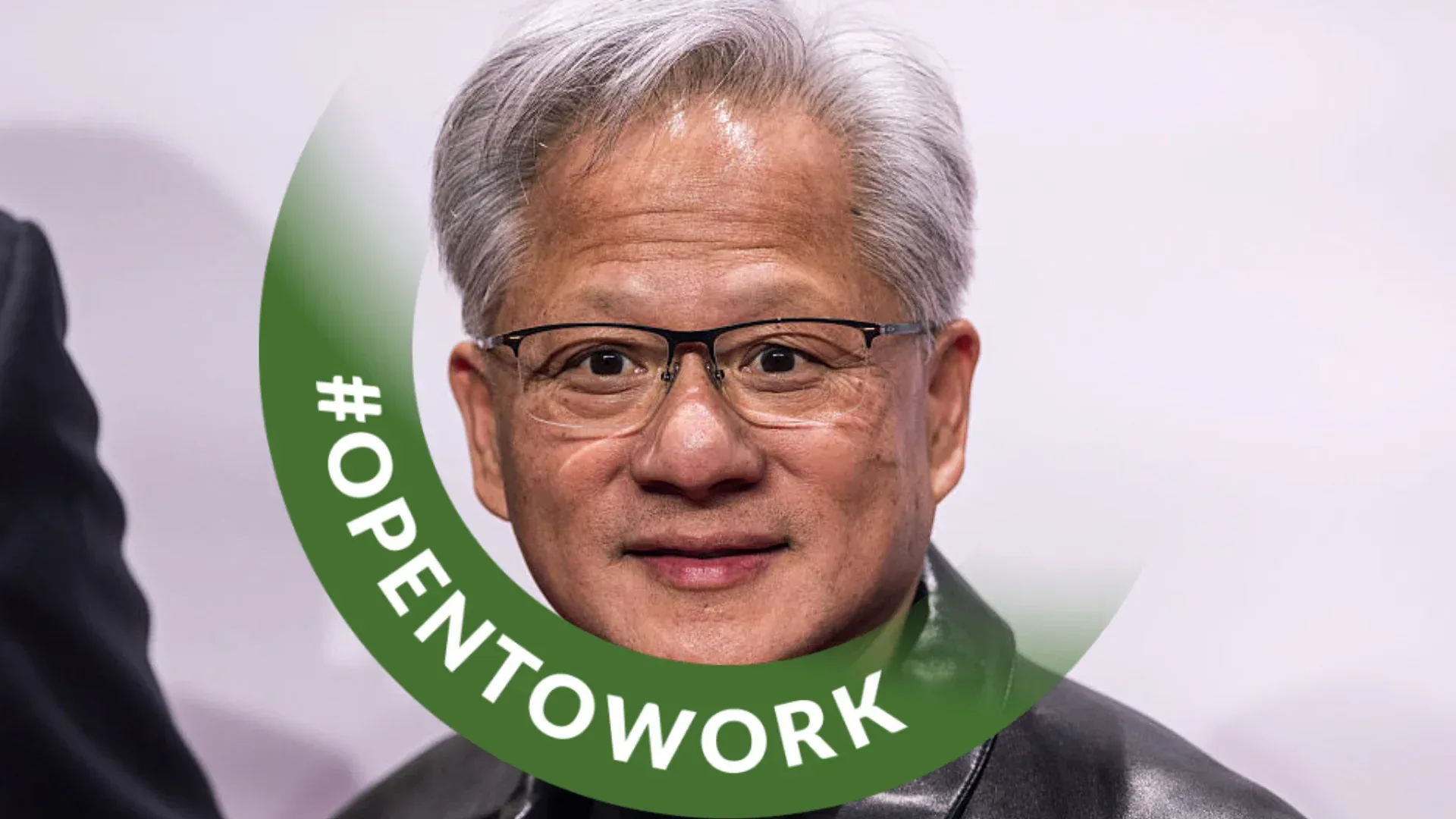
Huang has an unusually recognizable executive persona for someone who runs a chip company. That public recognition gives internet users raw material: the visual shorthand of the leather jacket, the company name, and Nvidia’s central place in discussions about artificial intelligence. When a major tech figure becomes the subject of a viral claim, those well-known markers make a meme cycle remarkably easy to assemble.
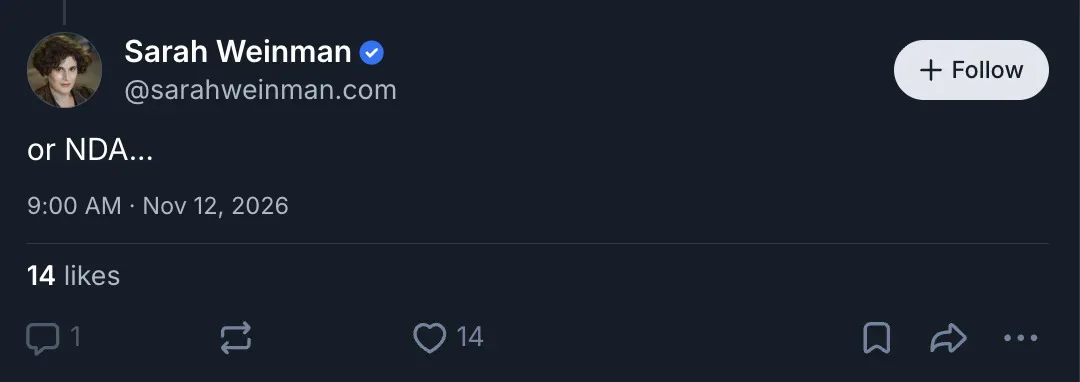
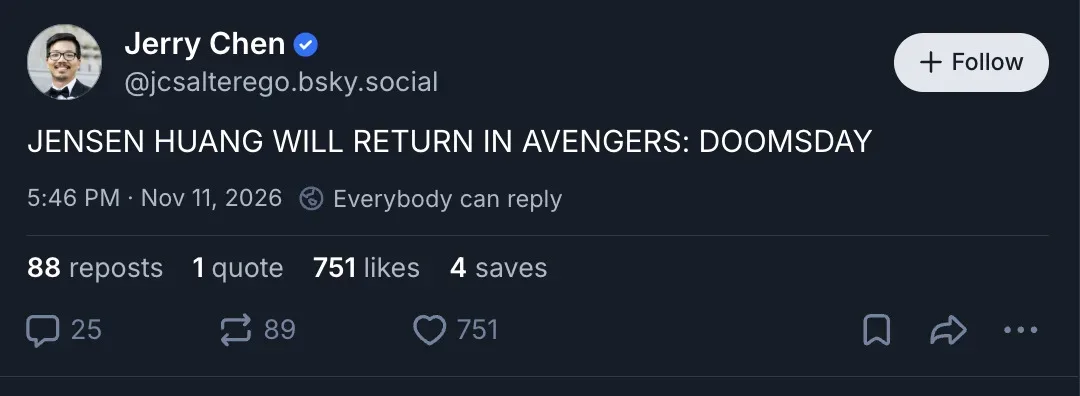
Several reactions described in the supplied material depend less on specific alleged details than on this shorthand. One post made a simple “Nvidia” and “diva” wordplay joke. Another imagined a farcical scene in which the executive would have to repeatedly swap leather jackets. Others reached for pop-culture language that needs little setup, including a Street Fighter reference to Guile’s “family man” line.
That is how these cycles typically operate: an event or alleged event becomes a prompt, while recognizable visual and cultural cues do most of the distribution work. A post does not need to explain semiconductor manufacturing, corporate governance, or Nvidia’s role in AI computing to be legible. It just needs a corporate logo, a jacket reference, or a familiar quote.
AI hype became part of the punchline
Not every reaction was about the reported departure itself. Some posts converted the language of AI evangelism into satire. One mocked the breathless competitive framing often associated with technology adoption by recasting it as pressure to imitate the alleged behavior: everyone else is doing it, so falling behind is supposedly not an option.
The joke works because it takes the rhetoric of technological urgency and applies it somewhere absurd and inappropriate. In business discussions, phrases such as “you cannot afford to be left behind” are used to create a sense that adoption is mandatory. In satire, that same language exposes how hollow or coercive it can sound when detached from its intended subject.
Related coverage includes Online Reactions Swarm Nvidia After Jensen Huang Resigns.
Another post used the language of replaceable hardware parts to joke about replacing a company leader. That is a particularly Nvidia-shaped bit of humor: it borrows the idea of a component swap and turns it into commentary on executive turnover. It is not a serious explanation of how a company can or should handle leadership change, but it shows how strongly a company’s product vocabulary can seep into popular online commentary.
What “AI evangelism” means in this context
AI evangelism is a term for vigorous public advocacy of artificial intelligence tools and infrastructure. It can refer to presentations, business messaging, investment arguments, or claims that companies and consumers need to adopt AI quickly. The supplied material portrays some online reactions as pushing back against that culture, using the reported situation as an opening to criticize AI hype more broadly.
That criticism is separate from the truth of any claim about Huang personally. People can object to the tone of AI marketing or Nvidia’s prominence in the AI conversation without using unverified personal allegations as proof of anything. Keeping those two ideas apart is both fairer and more useful.
Not everyone joined the joke
The response was not entirely comedic. The supplied material identifies Epic Games CEO Tim Sweeney as one of the voices lamenting the reported resignation, calling it a sad day for America. It also notes a terse market-focused post consisting of Nvidia’s stock ticker, $NVDA.
A ticker symbol is the short label investors use to identify a publicly traded company in market discussions. Posting one in reaction to leadership news is a compact way to signal concern about potential financial consequences, even when the post does not spell out a prediction. That is a different register from the memes: rather than riffing on image or culture, it points toward uncertainty about investors, retirement accounts, and corporate continuity.
Still, it is crucial not to read a one-word ticker post as evidence that a market event occurred or that a particular financial outcome is inevitable. The material provides no share-price data, no details of trading activity, and no confirmation of the leadership claim. The practical concern is understandable; the evidentiary record in the supplied material remains thin.
Why leadership rumors travel differently in gaming and PC circles
Nvidia is not merely a distant corporate name for many gaming audiences. It is associated with the hardware and technical ecosystem that PC players routinely discuss, from graphics performance to the broader overlap between gaming technology and AI. That proximity means rumors involving its most recognizable leader can jump rapidly from finance and technology feeds into gaming-adjacent communities.
For readers following PC games, the useful question is not whether a viral executive meme is funny. It is whether there is confirmed information that changes anything tangible: product support, software updates, game compatibility, platform policies, announced hardware, or a company’s formal direction. None of that is established by the supplied material.
That is why it makes sense to separate this meme-driven episode from routine PC game reporting, such as coverage of an upcoming Steam demo with specific player-facing settings. The latter concerns concrete features that players can evaluate. Viral executive claims, by contrast, require confirmation before anyone should infer downstream consequences for games or hardware.
The real story is the speed of the reaction
The supplied posts illustrate how rapidly online communities can build an entire comic language around a high-profile claim. There were puns, image-led jokes, references aimed at different generations of players and TV viewers, and criticism of AI culture—all appearing within a short window. The response became a kind of collaborative improvisation, where each participant added a new angle rather than simply repeating the first joke.
But high-speed reaction is not high-quality verification. The more dramatic the allegation and the more recognizable the target, the more incentive there is to pause before treating the viral frame as the factual frame. A reaction round-up can accurately describe the jokes people are making while also refusing to certify the premise that made those jokes possible.
For now, the responsible reading is narrow: social media users reacted to claims of a major Nvidia leadership change with humor, AI-industry satire, and some investment-oriented anxiety. Anything beyond that—including the reported resignation and the personal allegations attached to it—needs reliable confirmation that is not present in the material provided.