The China Film Pavilion returned to Los Angeles for the 47th American Film Market, running from November 10 through 15, with a straightforward objective: put Chinese films, companies and potential partners in the same room as the international buyers, distributors, sales agents and producers who can move projects across borders.
Guided by the China Film Administration and organized by the China Film Co-Production Corporation, the pavilion assembled a delegation of 70 Chinese production studios, international sales companies and industry institutions. Its participants included China Film Group Corporation, CMC Pictures, Lianray Pictures, China Film Archive, China Film Foundation and the Shanghai International Film Festival.
That is the pavilion’s fourth consecutive appearance at AFM. The repeat presence matters because a film market is not chiefly a public-facing premiere circuit. It is a business setting: a place for rights conversations, introductions, screenings pitched to industry attendees and the longer negotiations that may determine where a film is released, who promotes it and whether a project is remade or co-produced.
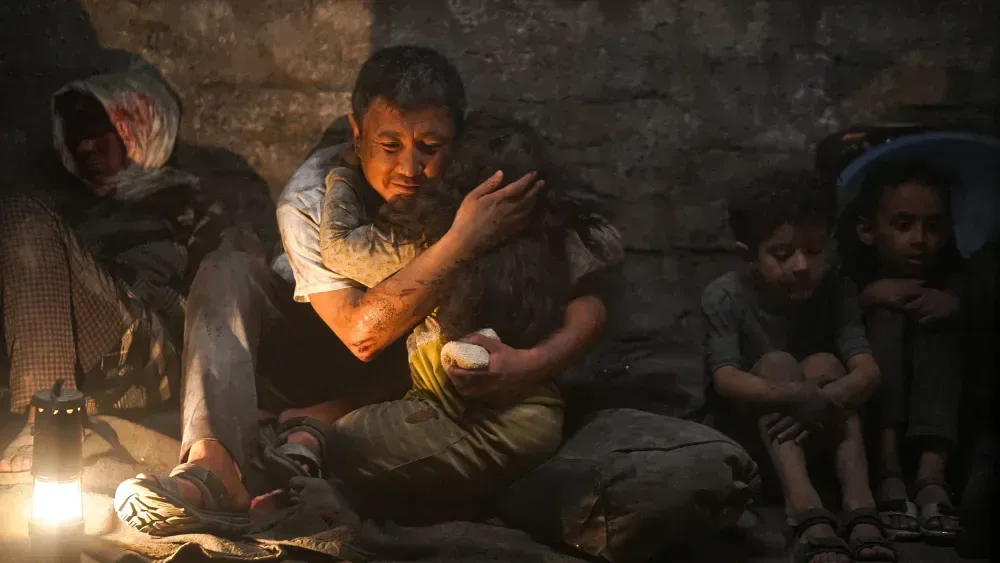
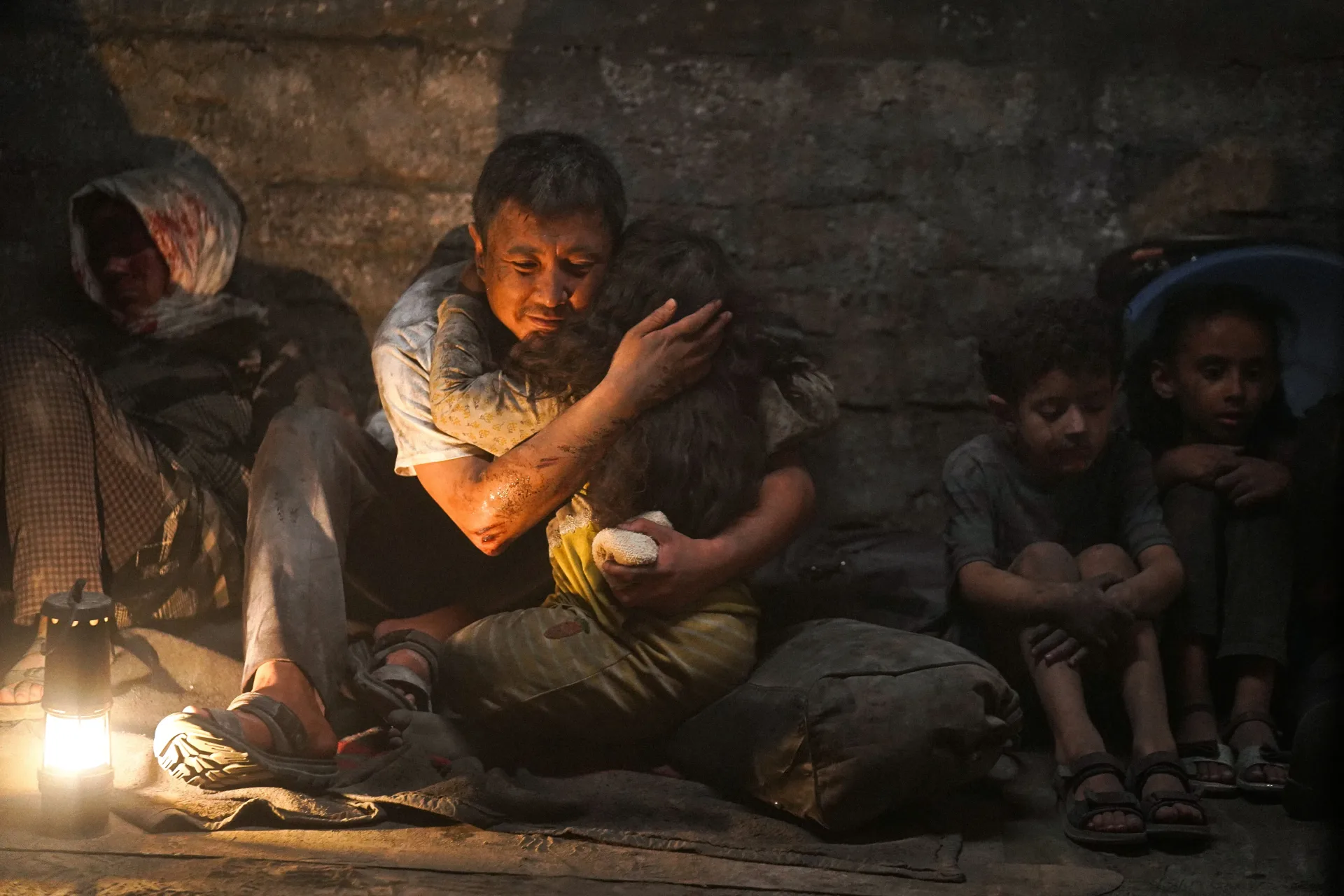
More than 200 Chinese films were presented across the six-day market. The slate included The Wandering Earth III, Brotherhood of Blades III, Once Upon a Time in the Middle East, Dear You and All Wishes Come True!. A continuously running showreel also highlighted recent Chinese box-office results and technical work, while pavilion companies fielded inquiries involving distribution rights and prospective partnerships.
A market floor built for deals, not just attention
The biggest practical distinction in the pavilion’s work is between showcasing a film and selling one. A market screening or promotional reel can introduce a title’s tone, genre and apparent production scale. But a distribution transaction is about the commercial rights that let another company bring that title to a particular territory or platform. Those terms were not disclosed here, and interest should not be mistaken for completed sales. Still, the reported acquisition inquiries and meetings show why a central pavilion can be useful: it reduces the distance between a large catalog and the people seeking films for international release.
Its services went beyond title promotion. The pavilion distributed material on the Chinese film market, provided guidance on Chinese import regulations and co-production policies, and connected overseas filmmakers with potential Chinese collaborators.
That policy-facing role is significant. A co-production generally refers to a project made through partners in more than one country, who may share financing, creative resources, production responsibilities or distribution ambitions. In practice, a meeting about a co-production can involve more than deciding whether two companies like the same script. It can also involve how a project is financed, which creative personnel and facilities are used, how it will be positioned for audiences, and which regulatory rules apply. The pavilion was explicitly positioned as a venue for those early discussions as well as rights transactions.
For buyers, the diverse slate offered several ways into contemporary Chinese cinema rather than a single genre pitch. The dedicated market screenings included family drama Dear You, wartime story Once Upon a Time in the Middle East, animation Boonie Bears: The Hidden Protector and documentary Daughter of the River. That selection matters because international distributors tend to assess not only a film’s creative identity but its likely audience and route to market.
Animation’s inclusion is especially notable in a program built around variety. Animated features can sit in a family-entertainment lane, but they remain distinct projects with their own distribution, localization and audience questions. Joking Joystick recently covered another animation-centered project in a look at “Lilo & Scratch” and its mix of 2D and CG work; the AFM lineup similarly illustrates how animation can be presented alongside drama, nonfiction and historical narratives rather than treated as an afterthought.
Four issues at the center of the co-production panel
On November 11, the China Film Co-Production Corporation and the Golden Screen Awards held an industry panel called Beyond Co-Production: New Models for Financing, Creating and Distributing Global Screen IP. Belle Avery, founder of Apelles Entertainment, and Rance Pow, founder and CEO of cinema consultancy Artisan Gateway, were among the experienced industry figures participating.
The discussion centered on four questions that define much of the international film business, even when the details differ title by title.
- Pooling resources across countries: The panel considered how financing, talent and production resources can be combined internationally. This is the operational core of a cross-border project: partners must work out what each brings and what each expects in return.
- Considering distribution from the start: Participants examined the value of factoring global distribution and audiences into a project’s earliest planning. In plain terms, this means thinking about who may see a film and how it may travel before production decisions are locked.
- Using AI without flattening creative identity: The panel addressed AI as a possible means of reducing production costs while maintaining creators’ distinctive styles. The framing is important: cost reduction was discussed alongside, not instead of, the need to preserve artistic authorship.
- Redeveloping established films and IP across cultures: The group also explored cross-cultural redevelopment of classic films and existing intellectual property. IP, short for intellectual property, can encompass recognized stories, characters, titles or franchises. A redevelopment is not simply a translation; it calls for decisions about how an established work should be adapted for another cultural setting.
The panel’s themes reflect the reality that distribution, finance and creative planning increasingly overlap. A title can be artistically ambitious and still require a clear explanation of its market, audience and rights strategy. Conversely, a recognizable property can have commercial appeal while raising difficult creative questions if it is being reworked for a new setting. The value of a market panel is not that it solves those questions in an hour, but that it puts them on the agenda before agreements become harder to revise.
New titles, varied forms of Chinese storytelling
Following the panel, the China Film Co-Production Corporation hosted the China’s New Film Trends Mixer. Representatives discussed recent developments in the Chinese theatrical market, while participating companies promoted forthcoming work including The Caged Butterfly, Secret in the Box, Boonie Bears: The Hidden Protector and Daughter of the River.
The combination of a mixer and screenings gave prospective buyers two distinct forms of access. A presentation can outline a project’s intended commercial positioning, while a screening gives industry guests the chance to evaluate the work itself. Neither automatically produces a release agreement, but together they support the questions a buyer needs to answer: Is there a definable audience? Does the film fit a distributor’s catalog? Is there a practical route to releasing it internationally? And is there interest in a wider relationship with the company behind it?
Attendees reportedly engaged in discussions around Chinese-film acquisition, and overseas distributors and sales agents expressed interest in learning more about the films and possible future collaboration. A U.S. distributor described the event as evidence of substantial creativity and content from China, while pointing to the potential for deeper Chinese-American cooperation. Those are expressions of interest, not announcements of individual completed deals. The distinction is worth preserving in an industry where negotiations can develop over long periods and not every conversation results in a finished transaction.
What this AFM presence signals
The China Film Pavilion’s program made a broad argument through its structure. It was not only a booth for displaying finished movies. It functioned as a meeting point for sales activity, regulatory guidance, producer matchmaking, policy discussion and screenings. That mix recognizes that bringing films into global circulation requires more than publicity.
It also emphasized range. The publicized titles span science fiction, action, family drama, wartime storytelling, animation and documentary. For international partners, that breadth creates more potential points of entry than a narrowly themed showcase. For Chinese companies, it creates opportunities to discuss individual films while also describing a wider pipeline and potential production relationships.
The pavilion’s representatives said the long-term aim is to facilitate international film transactions, strengthen Sino-foreign cinema partnerships and encourage cultural appreciation through the global film industry. AFM’s value to that plan lies in sustained contact. A fourth straight year does not guarantee any particular outcome, but it establishes continuity in the marketplace: returning companies are easier to find, ongoing conversations have a place to resume, and new projects can be introduced alongside relationships already in progress.
For audiences, the most immediate takeaway is not a confirmed release calendar. None was provided. It is that a substantial group of Chinese companies used the market to place a broad selection of films in front of international decision-makers, while openly discussing the practical hurdles of financing, rights, regulation, technology and cultural adaptation. That is the less glamorous but essential machinery behind whether a film remains local to one market or eventually finds viewers far beyond it.