For someone whose Valve credits include Half-Life 2, both Portal games, Team Fortress 2, Left 4 Dead, and Counter-Strike: Global Offensive, Chet Faliszek’s most persistent professional regret is strikingly small in scale. It was not an abandoned level, an unpublished story beat, or a feature that missed its window. It was a joke.
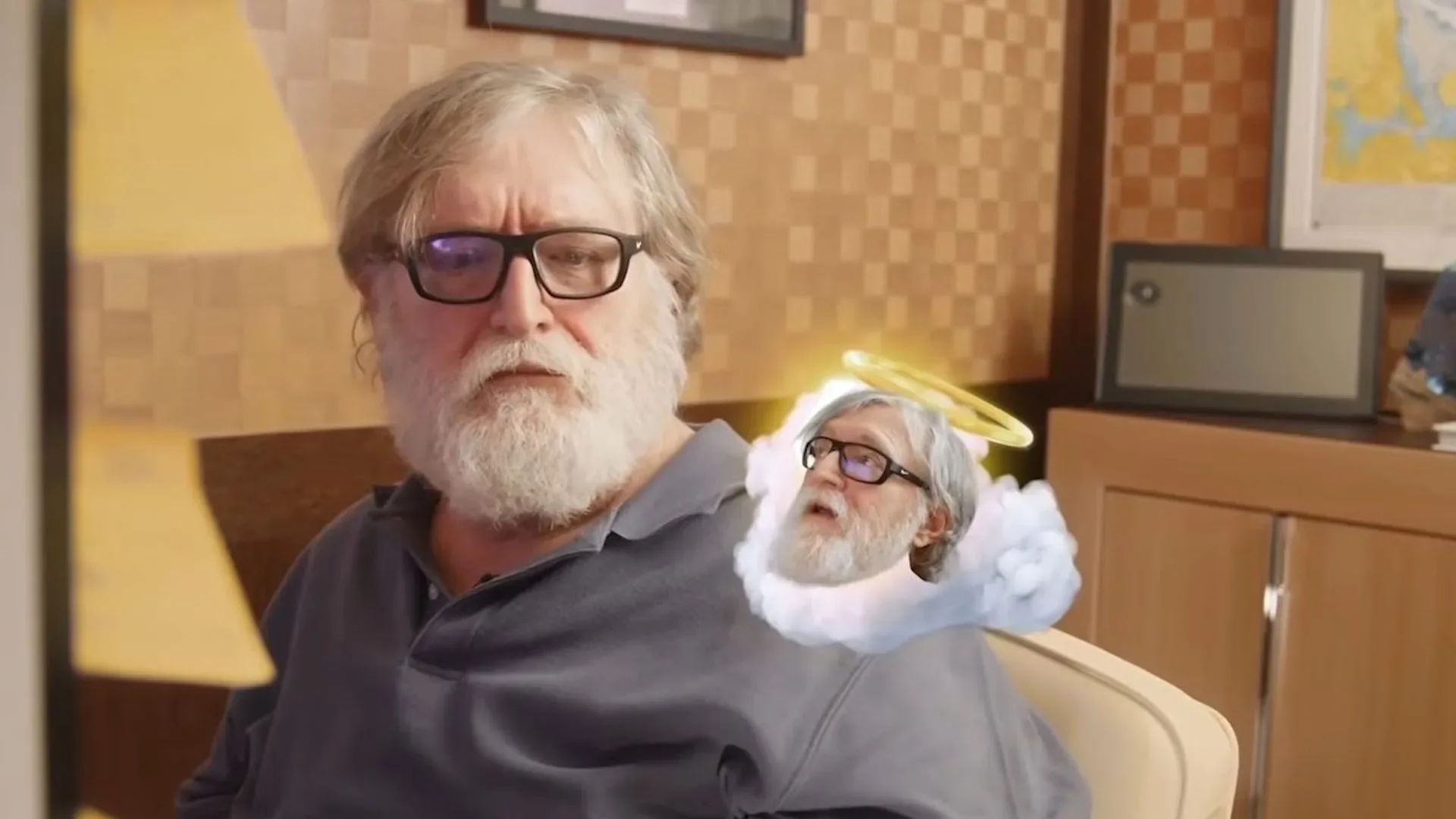
Faliszek, who spent 12 years at Valve, has revisited one particular missed chance in a recent YouTube short: a planned introduction for Gabe Newell during a Steam Dev Days event. The punchline concerned Newell’s famously familiar polo-shirt look. Faliszek had the bit prepared, believed Newell would have played along, and then decided not to say it.
That decision, he says, has stuck with him. The comedy was not meant as a devastating roast, nor was it a grand corporate spectacle. It was a simple, situational observation designed for the precise moment Newell walked onstage in a black polo: “And here’s Gabe Newell modeling the latest in polo.” The follow-up was “polo after dark.”
It is the kind of joke whose whole power rests on timing. Said afterward, it is an anecdote. Said when the person in question enters a room wearing the exact outfit being described, it becomes an introduction with an instant visual payoff. Faliszek’s regret is less about the wording than the vanished one-time opportunity to make it land.
From a difficult talk to hosting the event
The backstory also makes the missed line more understandable. Faliszek recalled speaking at an earlier Steam Dev Days event and feeling that it went badly. He described being visibly nervous and shaking, then taking that experience as a reason to improve at public speaking.
When the next Steam Dev Days came around, he volunteered to help and was selected as host. That progression matters. Hosting is a different assignment from giving a presentation: rather than only delivering prepared information, a host has to manage transitions, establish the room’s energy and put other speakers at ease. A short, friendly opener can be useful precisely because it signals that an event has personality rather than running as a sequence of formal introductions.
But that role also raises the perceived stakes. A joke aimed at the company’s co-founder, even a light one, can feel riskier in the seconds before it is delivered than it does years later. Faliszek has said that he often finds himself silently enjoying jokes he decides may be pushing things too far. In this case, restraint won in the moment.
“I regret that. I should have said that joke. That was a good joke.”
Related coverage includes Chet Faliszek Says His Biggest Valve Regret Was a Gabe Newell Polo Shirt Joke Left Untold.
His retelling makes clear that he does not frame the decision as a serious workplace conflict or claim that Newell would have reacted badly. Quite the opposite: Faliszek believed Newell would have leaned into the bit. The missed opportunity is funny because it was so low-risk in retrospect—and because the joke was tailored to a detail Newell was already associated with.
Why the joke has endured
Most creative work involves choices that cannot be easily replayed. A line may be rewritten, an asset may be replaced, and a presentation can be refined for the next event. Live timing is different. Once an entrance has happened and the next speaker has begun, the moment is gone. That is why a modest gag can become more memorable than a larger decision: it remains perfectly preserved in the mind as a version of the event that never occurred.
Faliszek’s story is also a reminder that career retrospectives do not always center on the biggest release or the most consequential project. His body of work is tied to games with major places in PC gaming, yet the anecdote he returns to involves a black polo shirt and a sentence he kept to himself. There is something especially human in that contrast. People can be proud of substantial accomplishments while still replaying an unspoken aside that might have made a room laugh.
The phrase “polo after dark” is deliberately modest wordplay. It does not need elaborate explanation, which is a strength in a live introduction. The audience only has to see the black shirt, recognize the mock fashion-show framing and catch the escalation from “latest in polo” to a supposed evening edition. A host usually has little time to earn a laugh before moving on, and brevity gives the speaker a chance to recover cleanly whether the room erupts or merely chuckles.
That simplicity may be part of why Faliszek remains convinced it would have worked. The material did not depend on obscure internal knowledge, a lengthy setup, or embarrassment. It was a visual observation about a recognizable wardrobe habit, positioned as affectionate teasing rather than a personal attack.
A tiny anecdote from a notable game-making career
Faliszek’s credits supply the wider context. Half-Life 2, Portal, Portal 2, Team Fortress 2, Left 4 Dead, and Counter-Strike: Global Offensive represent an unusually wide range of Valve’s games, from single-player science-fiction storytelling and puzzle comedy to competitive multiplayer and cooperative action. The polo anecdote does not revise that legacy, but it gives it a less polished, more personal edge.
It also illustrates the difference between writing for a game and speaking live. In game development, dialogue and narrative material are generally shaped through iteration: drafts, feedback, revisions and implementation. An onstage introduction has no comparable safety net. A host must decide whether to use the prepared line, judge the room in real time and then live with the choice. Faliszek’s experience at the earlier event had already made public-speaking pressure tangible, even as he was actively trying to get better at it.
That does not mean the lesson is simply “always tell the joke.” Context matters, and a speaker’s own comfort level matters too. The more useful takeaway is that light material works best when it serves a clear purpose: acknowledge what the audience can already see, make the subject part of the moment rather than its target, and move on before the introduction becomes the main event. By Faliszek’s account, this bit had those qualities. He just never put it to the test.
For game-industry audiences, the story lands partly because it is so far removed from the normal language of announcements and development lore. There is no product roadmap, technical reveal or release-window promise attached to it. It is simply a former developer looking back at a fleeting event-hosting moment and deciding that his restraint was unnecessary.
Steam Dev Days was the setting, but the account should not be mistaken for a new Valve project reveal or a fresh detail about any of the games Faliszek worked on. The news here is the anecdote itself: after 12 years at Valve, the regret he chose to spotlight is an untold introduction for Newell, not an unfinished piece of software.
Valve, Steam and the appeal of candid developer stories
Developer recollections can be valuable even when they do not contain a headline-sized announcement. They show the informal side of an industry often discussed only through games, platforms and business decisions. In this case, the details are unusually specific: one nervous early speaking appearance, a later hosting role, a black polo, and a joke that remained internal.
That specificity is why the story feels more memorable than a generic claim about wishing one had been bolder. Faliszek can identify the sentence, the setting and the reason the timing mattered. He can also laugh at the fact that the regret is not particularly weighty. Calling it his biggest regret gives the anecdote its comic shape, especially considering the scale of the projects on his résumé.
There is a practical side to the humor as well. Nervous presenters often assume every line must justify its risk. A benign, relevant opener may feel like a major gamble from the stage, while an audience is likely to process it as a momentary beat before returning attention to the event. Faliszek’s own account does not establish a universal rule for public speaking, but it does show how strongly a self-censored line can linger when its intended target was likely receptive.
His story arrives amid continuing interest in Steam and the people who helped shape Valve’s games and platform culture. For readers following newer PC releases and activity around Steam, Wizdom Academy’s move out of Early Access on Steam offers a separate look at the storefront’s ongoing role for developers.
As for Faliszek’s long-delayed punchline, it now exists in the form of a remembered almost-joke rather than an event clip. Newell never got the formal “polo after dark” introduction at that Steam Dev Days appearance. Still, the line has finally reached an audience—just years later, and without the black-polo entrance that Faliszek believes would have made it perfect.