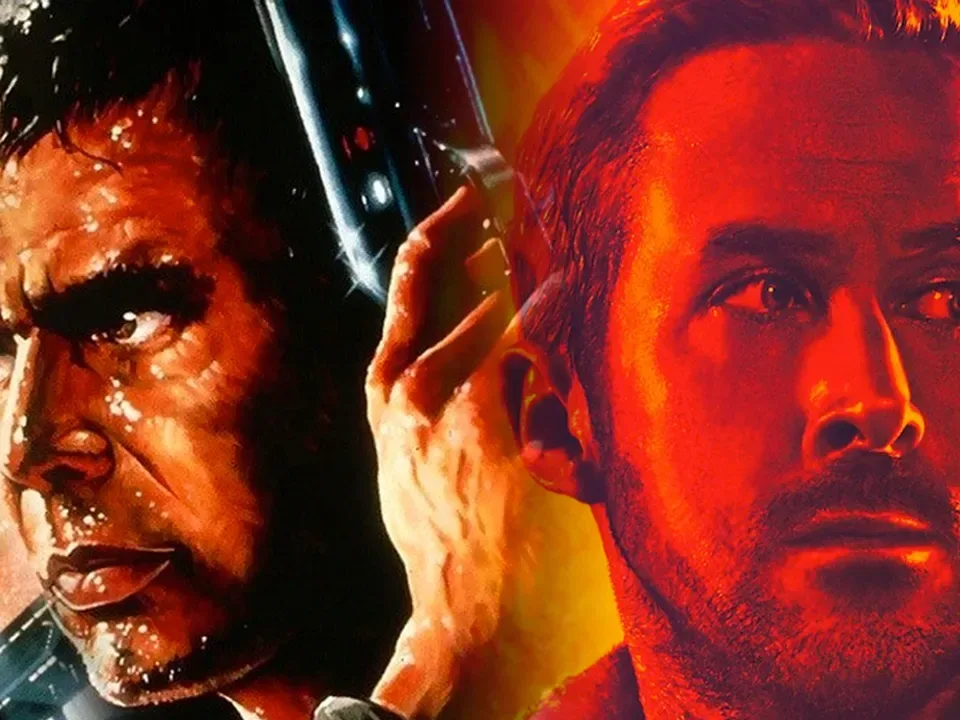
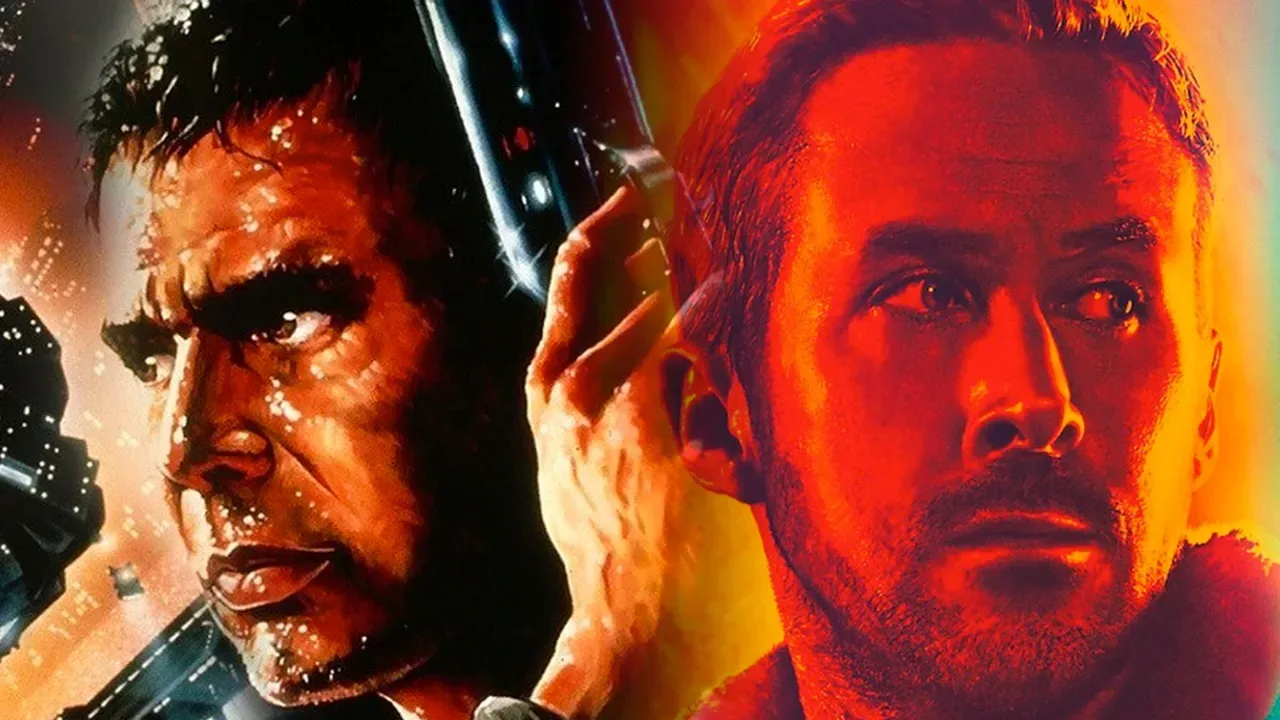
Blade Runner may be headed back to games on a far larger scale, though it is still very early. Andrew Kosove and Broderick Johnson, the co-CEOs of Alcon Entertainment and executive producers of Blade Runner 2099, have confirmed that discussions are underway for a potential AAA video game based on the science-fiction franchise.
The confirmation is meaningful, but it is not a game announcement in the usual sense. There is no named developer, publisher, platform list, release date, setting, protagonist, genre or indication that a project has entered full production. The clearest public signal so far is that the rights holders are considering a high-budget game and place particular value on letting players interact with Blade Runner’s world.
That distinction matters. A discussion can lead to many outcomes: a partnership with a studio, an internal development plan, a licensing arrangement, or ultimately no released game at all. For now, the prospect should be treated as a confirmed conversation rather than a confirmed product.
What “AAA” means here—and what it does not
In games, AAA is an industry shorthand for a project with substantial resources, typically involving a large team, high production ambitions and significant commercial expectations. It is not a formal quality rating, a promised review score, or a specific genre. It also does not automatically mean an open-world role-playing game, even if that is the format many players may associate with a richly detailed cyberpunk setting.
Kosove’s emphasis on the term suggests that the franchise owners are not merely contemplating a modest tie-in or a small experimental release. Yet AAA is still a broad label. A Blade Runner game could theoretically be an investigation-driven adventure, an action game, an immersive simulation, a narrative mystery, or something that blends several of those approaches. Nothing public establishes which direction, if any, is being pursued.
The other notable element is the focus on interactivity. That word is easy to overread, but it gets to a central challenge of adapting Blade Runner. The property’s appeal is not only its visual mood; it is the act of navigating uncertainty in a dense world of human and artificial identities, competing interests and difficult judgments. A game needs systems that give the player meaningful participation in that world rather than simply using its rain-swept neon backdrop.
Interactivity can mean exploring spaces, conducting investigations, speaking with characters, making choices, or dealing with the consequences of incomplete information. It can also mean smaller things: how clues are interpreted, how locations are revisited, or whether a player’s approach affects what they learn. None of those mechanics have been confirmed for this potential project. They simply illustrate why the rights holders’ stated priority is a useful clue about the kind of adaptation Blade Runner could support.
A franchise with a surprisingly thin game catalogue
Blade Runner’s gaming history is much smaller than its cultural footprint might suggest. The franchise has had licensed games and related projects, but it has not maintained the regular, major-release presence enjoyed by some other long-running science-fiction properties.
Related coverage includes Blade Runner Owners Confirm Talks for a Potential AAA Game.
An early game arrived in 1985 for the Commodore 64, published by CRL Group PLC. Players pursued “replidroids” for bounty money. It was not a direct adaptation of Ridley Scott’s 1982 film, in part because of the costs associated with movie rights, and it was described as taking inspiration from the film’s Vangelis music rather than directly using the film as its basis. It was also not well received.
The enduring landmark is the 1997 Blade Runner adventure game from Westwood Studios, published by Virgin Interactive. It earned much warmer critical recognition and remains widely remembered as a classic. Technically, it was among the early games to use 3D character models alongside real-time environments. Its point-and-click adventure structure put investigation and conversation at the center, a natural fit for a universe where observation and interpretation carry real weight. A remake followed in 2022.
That history is important because it shows Blade Runner has already worked especially well when it prioritizes player inquiry over simple imitation of film imagery. The 1997 game’s reputation does not prescribe what a modern adaptation must be, and it should not be taken as evidence of the format now under discussion. But it does demonstrate that the property has a strong legacy in a form where players piece together a case and confront ambiguity.
More recently, Blade Runner 2033: Labyrinth was announced in 2023 under Annapurna Interactive. The project is now generally regarded as cancelled after being delisted from Steam and removed from Annapurna’s website. Meanwhile, 2017’s Blade Runner 2049: Replicant Pursuit was a brief virtual-reality tie-in connected to the second film rather than a full-scale official game.
The result is a conspicuous gap: Blade Runner has remained a major reference point for cyberpunk fiction while lacking a modern, full-budget game of its own. That is why even a preliminary confirmation of AAA discussions will draw attention.
Why the setting is a strong fit for a modern game
Blade Runner is often reduced to a look: towering cityscapes, relentless rain, advertising screens and futuristic streets crowded with technology. Those elements are useful for atmosphere, but the stronger opportunity is thematic. The world is built around questions of identity, memory, authority and empathy. A player-driven story could make those questions active rather than merely decorative.
For an investigation game, that might mean following leads that point in conflicting directions. For a choice-based narrative, it could mean decisions made without certainty about who is being harmed or protected. For an action-oriented game, the challenge would be ensuring that combat does not flatten a setting whose tension often comes from doubt and consequence. These are analyses of the adaptation challenge, not reported features.
There is also an important design tension between freedom and authored storytelling. A larger game gives players more room to wander and shape their own route through a city. But Blade Runner’s strongest stories often depend on controlled pacing, close observation and personal stakes. A successful AAA interpretation would likely need to decide how much agency serves the story and where limits make the mystery sharper. The old question of whether a game should build a vast world or a deliberately focused one remains relevant; as our case for Majora’s Mask argues in another context, a tightly structured setting can produce its own distinctive kind of player involvement.
What fans should not assume yet
It is tempting to fill in the blanks when a beloved property is linked to AAA ambitions. At this stage, however, the blanks are almost the entire project. There is no evidence that the game will resemble any particular modern cyberpunk release, use a specific camera perspective, feature a known character, connect directly to Blade Runner 2099, or launch on any particular console, PC storefront or subscription service.
There is likewise no announced development partner. That absence is especially significant: the studio ultimately chosen, if one is chosen, would have a major influence on the game’s genre, technical scope and storytelling approach. Until an agreement or production plan is made public, predicting those elements would be speculation.
Players should also be wary of treating the phrase “AAA” as a guarantee that the finished game, if it happens, will be huge in every possible way. Scope is not synonymous with depth, and Blade Runner’s most distinctive qualities may depend more on carefully designed interaction than sheer map size. The rights holders’ comments point to ambition, not a finished design document.
Blade Runner 2099 arrives first
The immediate new Blade Runner release is Blade Runner 2099, which is scheduled to debut on Prime Video on November 25. Kosove and Johnson are executive producers on the series as well as leaders of Alcon Entertainment, the company that owns the franchise.
The show’s arrival gives the property a new screen presence while the game conversations remain at an exploratory stage. Whether those two efforts will have any direct creative connection has not been stated. For now, the practical takeaway is straightforward: Blade Runner’s owners have acknowledged talks around a potential AAA game and an interest in a more interactive use of the world, but every concrete detail that would define the project is still to come.