
Black Friday lands on November 27, but the shopping pressure arrives much earlier. Retailers including Amazon and Best Buy run promotions well ahead of the date, creating a long stretch of flash sales, countdown timers and giant percentage-off labels. For players looking at a GPU, gaming console, RAM upgrade or peripherals, that can turn a needed purchase into a hurried one.
The useful rule is simple: a discount is a comparison, not a verdict. A product can be advertised as hundreds off a reference price and still cost more than it did earlier in the year. Separately, a deal can appear inexpensive because it is not a deal at all: it may be a fraudulent storefront, a deceptive listing or a phishing message designed to collect card details.
Those are different problems, and they call for different checks. Price history helps determine whether a genuine retailer’s sale is genuinely competitive. Seller verification and cautious payment choices help reduce the risk of paying a scammer. Doing both is especially important when sought-after gaming hardware is involved, because a supposedly limited bargain on a GPU or console is exactly the kind of offer that can encourage an impulsive click.
The percentage off is the least useful number on the page
A sale badge generally presents a current price against a previous or reference price. What it does not automatically reveal is whether that reference price reflects what shoppers were routinely paying. The distinction matters. A large nominal discount may be based on a price that was only in effect for a short time, while the item may have been cheaper at other points outside the sale season.
One consumer-price study followed 175 products at eight retailers, including Amazon, between May 2024 and May 2025. It found that 83% of the tracked items had been available for the same price or less at least once outside the four-week Black Friday sale period. That finding does not establish that retailers deliberately inflated prices. It does establish a more practical point: the number printed next to “was” or “save” cannot, by itself, tell a shopper whether now is a particularly good time to buy.
A robot vacuum example illustrates the issue. The Samsung Jet Bot was promoted by a UK retailer during Black Friday 2024 at £350, presented as reduced from £500. Its recorded price history showed it had sold for £299 on 29 days during May and June, while the £500 figure had only appeared from October. The advertised reduction was real in a narrow mathematical sense, but the £350 promotion was not the best observed price in the period examined.
For game hardware, the lesson is not that every November offer is bad. It is that the current price deserves to be compared with the product’s own pattern. A good price on a particular SSD, headset, controller or graphics card is more meaningful than a huge percentage based on a number shoppers rarely encountered.
Use price history to judge the actual deal
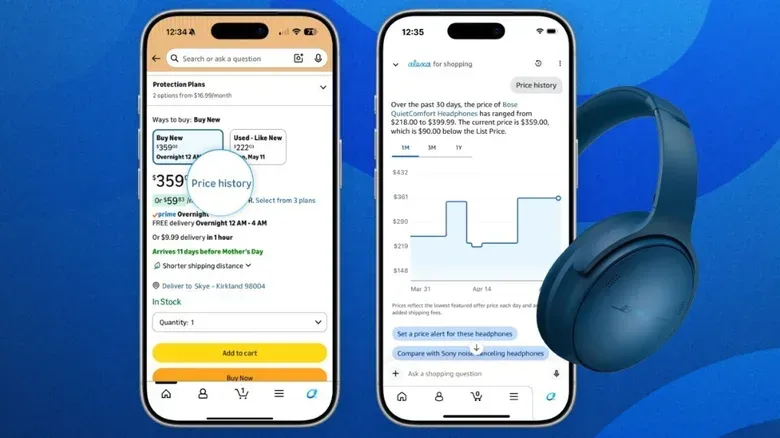
Price history is a record of an item’s past listed prices over time. It gives the sale tag context. If the current figure is close to the item’s recurring lower range, it may be a sensible time to buy. If the chart shows a sharp rise immediately before a November promotion, pause and investigate rather than assuming the crossed-out number represents normal value.
Related coverage includes How to Spot Fake Black Friday Tech Deals Before You Buy.
For Amazon listings, shoppers can copy the item URL into price-tracking services such as CamelCamelCamel or Keepa. Amazon’s Alexa for Shopping assistant, previously called Rufus, can also show up to 365 days of pricing for eligible products without a Prime membership. Google Shopping can compare offers across retailers and, for shoppers in the US, characterize a price as high, low or typical for the product.
Each tool answers a slightly different question:
- Price trackers focus on how one listing has moved over time. They are best for testing whether a claimed reduction is unusual or routine.
- Retailer comparison checks whether another seller has the same item for less right now. This can matter even if the first retailer’s sale is legitimate.
- Deal-community discussion can be useful for learning about earlier promotions or coupon conditions, but comments are not verified price records. Treat them as leads, not proof.
Make sure the products being compared are actually the same. A familiar product name can cover different capacities, bundles, colors, revisions or included accessories. In PC components, memory capacity and configuration can meaningfully change the item; a listing for one RAM kit should not be used to validate the price of a different kit. That broader memory market is worth watching as well: RAM prices are expected to remain high through 2030, which means older historical lows may not be realistic targets. A price chart is evidence, not a promise that a previous low will return.
There is also a checkout test that price charts cannot perform. Before treating an offer as final, check delivery charges and any coupon requirements. A deal that depends on entering a code, reaching a minimum order value or paying for shipping may be less attractive once the full basket total appears. The relevant question is the final amount for the exact product, not the headline price alone.
That is particularly timely for PC builders, where memory supply is already a factor in the wider hardware conversation. Memory supply is also shaping attention around newer devices and component costs, so waiting solely for a dramatic return to an old RAM low may not be a sound plan. The better decision is based on your budget, the present market and a verified historical range—not a guarantee that a price will become better later.
Do not let price research become false confidence
Finding a good historical price does not confirm that the seller is trustworthy. This is the crucial boundary between deal hunting and security. A legitimate retailer might offer an average discount; an unknown seller might advertise an impossible one. The latter can use familiar retailer logos, copied product descriptions and professional-looking pages to make a fraudulent shop seem convincing.
Fraudulent sellers may be trying to obtain financial information, send counterfeit goods or simply take payment and stop communicating. The visual quality of a storefront is not sufficient evidence that it is legitimate. A polished page can be copied more easily than a valid fulfillment process, responsive customer service or a meaningful return policy.
For that reason, avoid entering a retailer through links in unsolicited email or through questionable sponsored ads. Instead, open the retailer’s site yourself and search for the item there. This reduces the chance that a promotion link leads to an imitation of the retailer rather than its actual website.
Phishing is a message-based scam that impersonates a familiar company to push someone toward a fake page or to persuade them to reveal information. Black Friday-themed phishing can take the form of fake Amazon coupons or promotional messages apparently sent by recognizable retailers. In one analysis of Black Friday-related spam between October 1 and November 10, 2025, scams accounted for 53% of the material examined. During a high-volume sales period, familiarity with a brand name is not enough to make a message safe.
A practical verification routine for gaming hardware
Before placing an order, slow the process down into checks that can be completed without relying on the promotion’s urgency:
- Go directly to the retailer. Type the known retailer address or use a trusted bookmark rather than following an unwanted email or a dubious ad.
- Inspect the full web address. Look beyond the shop name shown in a message or search result. The complete address is what identifies where the page is actually hosted.
- Match the exact configuration. Confirm the GPU model, console version, RAM capacity, storage size, bundle contents and any included accessories before comparing prices.
- Check price history and current alternatives. Use a tracker for the listing where available, then compare current prices across retailers.
- Calculate the checkout total. Include shipping and determine whether an advertised price requires a coupon or another condition.
- Read seller reviews and the return policy. These are not a substitute for all other checks, but they are important when a retailer or marketplace seller is unfamiliar.
- Use a payment method with dispute options when possible. Credit-card payments can provide a route to dispute charges for goods that never arrive.
- Leave if the payment demand is abnormal. Gift cards, wire transfers and cryptocurrency are major warning signs for an ordinary retail purchase.
The wording of a marketplace listing deserves special attention. On Amazon, “Ships from Amazon” does not necessarily mean Amazon is the seller. The party responsible for selling the item is displayed under “Sold by.” Check that field before assuming a familiar shipping label means you are purchasing from the familiar retailer itself.
Urgency is not evidence
November promotions are designed to feel time-sensitive, and sometimes an offer really does expire. But urgency should change how quickly you verify a purchase, not whether you verify it. A tiny stock counter, a last-chance banner or a dramatic discount is still just marketing until the product, price, seller and final total pass basic checks.
For a gamer, that approach has a practical payoff beyond avoiding scams. It can prevent buying the wrong hardware variant, discovering unexpected costs at checkout or spending more than necessary because a reference price made an ordinary offer look extraordinary. If the seller is legitimate and the price is near the product’s documented low range, the purchase may be a strong one. If the offer needs a suspicious link, opaque seller details or an irreversible payment method, the safest deal is the one you do not take.