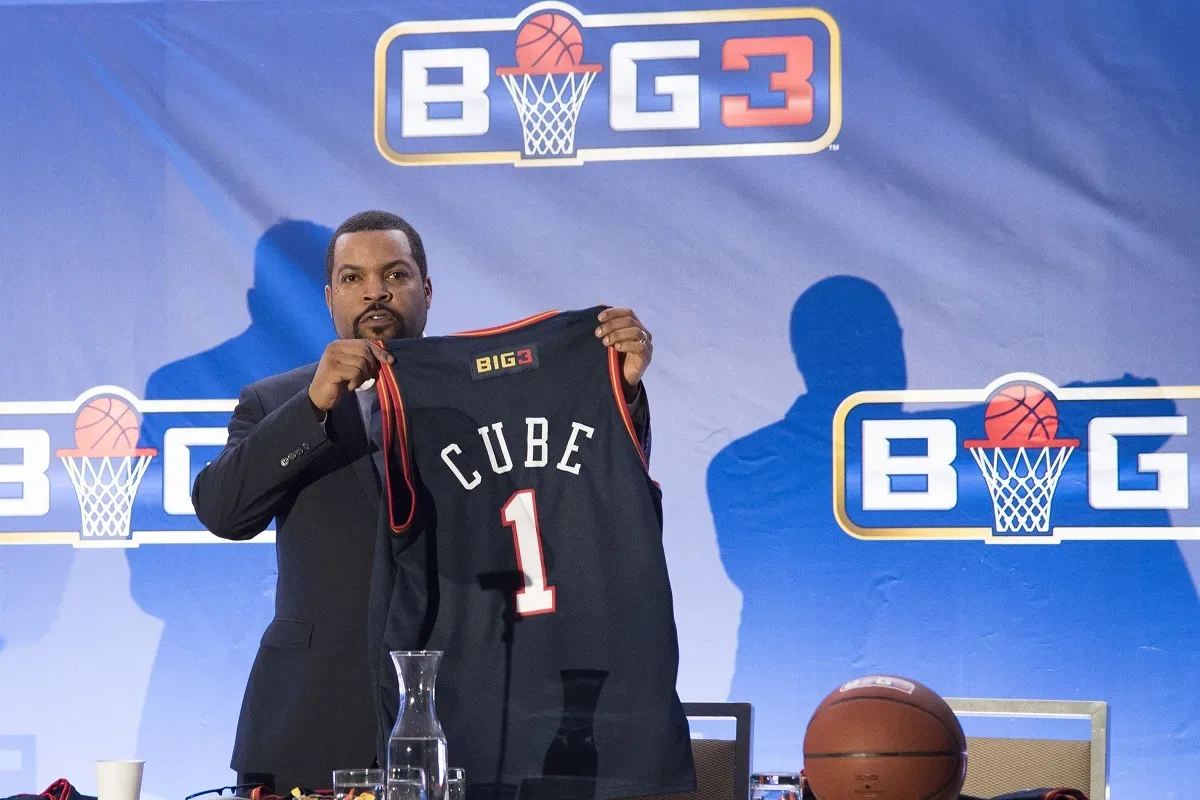
BIG3 is making a deliberate push to turn its basketball league into a broader media and live-entertainment business. The 3-on-3 competition has appointed Adam Harter as president of business operations, putting a veteran of PepsiCo and LIV Golf in a role spanning partnerships, marketing, live events, media strategy and expansion into new markets.
Harter began the job on November 12 and reports to BIG3 co-founders Ice Cube and Jeff Kwatinetz. He will work alongside Sean Bannon, whose separate role as president of league operations keeps the league’s operational leadership distinct from Harter’s business-focused mandate.
The key word in the appointment is media. BIG3 says it wants to explore documentaries and unscripted programming. That is an important qualification: the league has expressed an interest in developing formats, but it has not announced a completed series, a distribution partner, a release date or a buyer. For fans, that means this is a strategy move rather than confirmation that a BIG3 show is imminent.
For more on the appointment, see the BIG3 executive announcement coverage.
For more context, explore The Most Valuable 1950s Baseball Rookie Cards in PSA 7—and Why the Number Isn’t Everything.
A business role built around more than games
Harter’s title, president of business operations, covers the commercial side of a sports property: the systems that connect competition to sponsors, audiences, events and potential programming. In practice, his listed responsibilities—partnerships, marketing, live events, media strategy and new markets—suggest BIG3 is treating these pieces as connected rather than as isolated projects.
Partnerships generally means relationships with brands and other commercial collaborators. Marketing concerns how the league presents its teams, players, events and identity to audiences. Live events involves the in-person experience surrounding games. Media strategy, meanwhile, is the plan for how a league’s stories and programming might travel beyond the court.
That last category can be especially consequential for a league with recognizable former NBA talent and a city-based franchise rollout. Sports programming can use games as its central subject, but it can also create stories around player careers, coaches, team-building, travel, rivalries and the logistics of running a young competition. The potential is not a guarantee of a show; it simply explains why BIG3’s stated interest in documentaries and unscripted work fits this particular executive hire.
“Nine seasons in, the BIG3 has never been bigger,” Ice Cube said, pointing to eight cities, a global footprint and 3-on-3’s place on the Olympic stage as the league approaches its 10th season.
Ice Cube also framed the hire as an effort to build a business that matches the momentum he sees on the court. The timing matters because the league is approaching that 10th-season milestone while it is also pursuing a planned corporate transaction.
Why Harter’s background fits the assignment
Harter brings more than 22 years of PepsiCo experience, plus a stint as chief marketing officer at LIV Golf. His PepsiCo background included branded entertainment work on Uncle Drew, the feature film associated with a basketball-centered advertising character.
That résumé is relevant because BIG3’s stated ambitions sit at the intersection of sports sponsorship and entertainment production. Branded entertainment is content made with a brand’s involvement or support, designed to engage an audience while also serving commercial goals. It is different from a conventional commercial: the entertainment itself is the primary product viewers are expected to watch.
A league considering documentary or unscripted projects needs more than an appealing premise. It needs a clear editorial concept, access to compelling people and events, a credible production approach, and a plan for where the finished work could be shown. Harter’s experience does not mean those pieces are already in place. It does mean his career includes work across the areas BIG3 has identified as priorities: sponsorship, marketing and entertainment-facing production.
His LIV Golf role adds another sports-business perspective. BIG3 did not spell out how that experience will be applied, but the broader assignment is clear: Harter is expected to help create growth opportunities around the league, not merely promote an existing game schedule.
Documentary ambitions have been discussed before
This is not BIG3’s first public connection to a television project. In 2023, Ice Cube was attached to star in and produce a docuseries about the league. That concept was set to follow a team’s pursuit of a championship, while also examining the effort to establish the league and its dispute with Qatari investors.
The prior project was described through comparisons to sports-organization series such as Welcome to Wrexham and Cheer. Those comparisons indicated the intended style of storytelling: access-driven, personality-led and concerned with the stakes around a sporting organization as much as with competition itself.
But the earlier concept and the current announcement should not be treated as the same production. The new business announcement identifies documentaries and unscripted programming as areas to explore. It does not say that the 2023 project is moving forward, that it has been revived, or that BIG3 has reached a new agreement for a series.
That distinction is useful in an era when “content plans” can sound more final than they are. Development is the process of shaping an idea into a project that may be made. A greenlight is the decision to move ahead with production. No greenlight, platform, premiere date or finished program was named here.
Eight markets, prominent coaches and familiar players
BIG3’s June rollout identified franchises in Los Angeles, Houston, Dallas, Chicago, Detroit, Boston, Miami and the Washington-area DMV. “DMV” refers to the District of Columbia, Maryland and Virginia region. Those locations give the league eight city or regional identities around which it can build local events, team narratives and sponsorship opportunities.
The league’s coaching group includes Nancy Lieberman, Gary Payton and Julius Erving. Its competitors include former NBA players Dwight Howard and Michael Beasley. That combination is commercially meaningful: established basketball figures can offer ready-made points of recognition as BIG3 seeks to package stories for audiences beyond dedicated 3-on-3 viewers.
Still, recognizable names are only one part of a lasting media strategy. A sports league also needs a reason for viewers to return between games. In documentary and unscripted terms, that may mean following the pressures of a season, the changing dynamics of a roster or the effort required to create a franchise identity. BIG3 has not specified what stories it intends to tell, so any particular series format remains open.
The Graf Global transaction remains pending
Harter’s arrival also comes while BIG3’s planned merger with Graf Global remains unfinished. The transaction was announced in June at a $290 million valuation before new funding. Under the announced terms, existing BIG3 equity and equity-linked interests would convert into shares of the combined company when the deal closes.
An equity-linked interest is a financial interest whose value or eventual conversion is tied to company ownership. The proposed conversion language describes what is intended to happen at closing; it does not mean the transaction has already closed or that BIG3 has already completed a public-market debut.
The transaction still requires shareholder and regulatory approvals, an exchange listing and at least $50 million in net cash proceeds. Net cash proceeds refers to cash remaining from the financing or transaction after applicable costs and obligations are accounted for. These are material conditions, not technical footnotes, because a deal subject to them remains pending.
That uncertainty is why the most accurate reading is straightforward: BIG3 is preparing its business and media leadership for a major growth phase while the Graf Global merger works through its remaining requirements. Harter’s appointment does not resolve those conditions, but it places an executive with sponsorship, marketing and branded-entertainment experience in charge of the commercial areas that could matter most if the league expands its audience and programming slate.
What fans should watch next
The immediate, confirmed change is organizational. Harter is now in place, reporting to Ice Cube and Kwatinetz, with a portfolio that includes media strategy. The next meaningful signals will be more concrete: any announced production partner, talent attachment, format, platform, live-event initiative or new-market plan.
Until then, BIG3’s documentary and unscripted ambitions should be viewed as an exploration tied to a broader business buildout. The league has nine seasons behind it, eight identified franchise markets, and a 10th season ahead. Its newest executive hire indicates that it wants the business around the games—stories, partnerships, events and audience reach—to grow with the basketball itself.