Arc Raiders has had the kind of early momentum many live-service games chase: a large launch audience, regular updates, routine patches and a player base that has remained engaged as the game approaches its first anniversary. But Embark Studios is now describing the less visible cost of sustaining that pace.
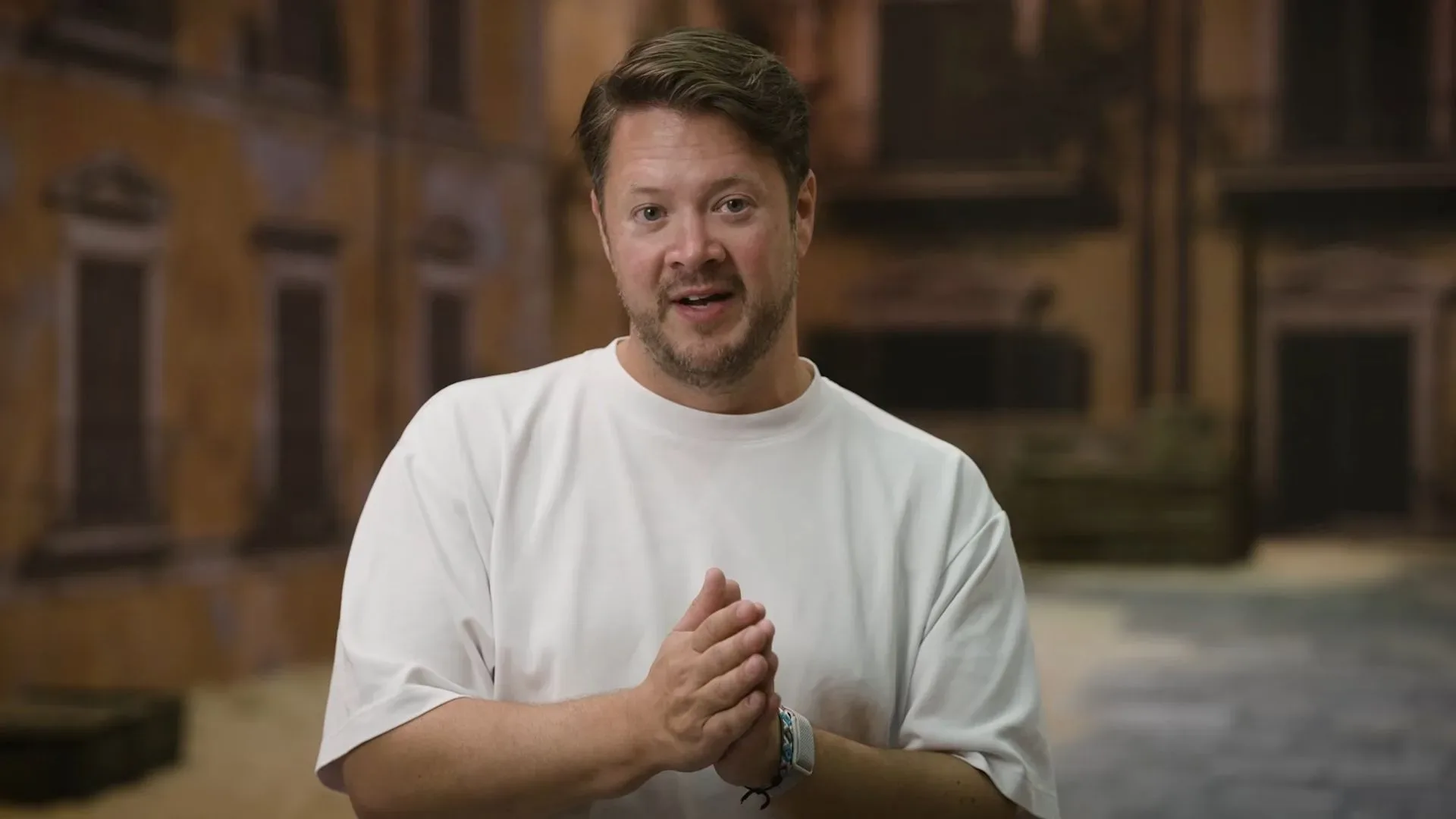
Aleksander Grøndal, Arc Raiders’ executive producer, has said the studio’s transition into a fully live-service operation proved tougher than he expected, even with prior warning. The result was a stretch in which the team was “super tired” and “super unhappy,” while players were also dissatisfied with what was arriving and how quickly it was arriving.
Embark’s response is not to abandon support for the shooter. Instead, the studio has slowed the cadence of new additions and is aiming for larger releases of features rather than continually trying to meet the expectations created by a monthly-update rhythm. That is a meaningful operational change for a game whose community has become used to frequent movement.
The hidden workload behind a live-service game
Live service describes a game built to operate and evolve after launch through ongoing patches, balance changes, events, content and technical maintenance. It is not simply a game with online modes. The essential distinction is continuity: players expect the game to be actively operated over time, and the developer has to keep responding while also planning what comes next.
That creates two kinds of work happening at once. The first is visible work, such as new features and updates meant to give players fresh reasons to return. The second is maintenance work: correcting bugs, addressing exploits and dealing with other constraints that can disrupt plans. Grøndal said this ongoing maintenance carried substantial cost for Arc Raiders, with the team repeatedly working beyond its capacity.
An exploit is an unintended way to gain an advantage or bypass intended rules, usually through a bug or a quirk in a system. For a continuously supported online game, exploits can demand attention quickly because they may affect fairness, progression or the broader player experience. Fixing them is necessary work, but it competes directly with the development time available for new content.
That competition helps explain why a visible schedule can become misleading. A regular update plan may look like a clean sequence of content drops from the outside, but the team behind it can be handling urgent fixes and unexpected issues between every planned milestone. When those unplanned jobs accumulate, schedules become harder to predict and the work needed to fulfill them can grow beyond what a team can sustainably deliver.
Grøndal described exactly that problem: Arc Raiders was constantly exceeding its available capacity, leaving little time for planning. The studio was putting out content quickly, he said, but it was not enough for player expectations and perhaps was not always interesting enough either. That is a notably candid acknowledgement that speed is not the same as impact.
Related coverage includes Arc Raiders Team Shifts Update Strategy After Live-Service Workload Takes Its Toll.
Why a slower cadence can mean bigger updates
Embark’s revised direction is toward slower but bigger releases for new features. For players, “slower” is naturally the part that will draw the most immediate attention. Communities built around online games frequently judge a title by the regularity of its updates. A gap can invite concerns that support is fading, even when the opposite is true: a studio may be trying to create enough space to make a more substantial update while keeping its developers healthy.
The trade-off is straightforward, even if it is difficult. Smaller and more frequent updates can make a game feel constantly active, but they divide planning, development and testing across a rapid series of deadlines. Bigger rollouts may take longer to reach players, yet can give a team more room to assemble features into a coherent release and avoid a permanent emergency pace.
There is no promise in the available information that every future Arc Raiders update will satisfy every part of its audience. Nor does a change in cadence automatically solve the operational pressures of maintaining an online game. But it does establish an important priority: Embark is treating the workload itself as a design and production problem that needs changing, not merely something the team should endure.
That distinction matters. It is easy to discuss game roadmaps as if they are only lists of player-facing additions. In practice, a roadmap is also a commitment of people and time. If it cannot accommodate bug fixes, exploit responses and the ordinary complications of operating a popular online game, the schedule can turn into a mechanism for repeated overwork.
Embark’s leadership is tying the shift to staff wellbeing
Grøndal’s comments go beyond a standard explanation for delayed or restructured updates. He directly connected the new approach to the need to protect the people making Arc Raiders.
Before Embark, Grøndal worked on major releases at EA, including Battlefield and Star Wars: Battlefront installments. Those series have online components, but he contrasted that experience with the demands of a fully live-service game. A traditional release still has significant post-launch responsibilities, especially for multiplayer titles, but a game designed around persistent operation asks its team to answer to players continuously.
Grøndal also shared that he experienced burnout after a Battlefield release, pushing himself until he took five months of sick leave. His stated aim at Embark is to build a working framework that makes space for creativity and a healthy work-life balance.
Burnout is not just ordinary tiredness after a busy period. In this context, it refers to the severe strain that can follow sustained excessive work, to the point that a person’s health and ability to continue working are affected. Grøndal’s personal account gives added weight to the studio’s decision to step away from a pace that left its current team exhausted.
This is also why the story should not be reduced to a simple content-calendar adjustment. A developer can make more patches or more events in the short term by compressing time and asking more of its staff. But a rapid cadence that causes people to become unhappy and worn down carries its own risks: less room for careful planning, less capacity to respond to new problems and less sustainable creative work over the long term.
What Arc Raiders players should take from the change
The immediate practical implication is that Arc Raiders players should expect Embark to prioritize larger feature rollouts over the game’s initial rapid rhythm of monthly updates. Routine maintenance still remains part of operating the game, and nothing in the studio’s comments suggests bugs or exploits will stop needing attention. Rather, Embark is acknowledging that maintenance must be accounted for honestly instead of being squeezed around an unrealistic stream of new work.
For players deciding how to interpret quieter stretches, the key distinction is between less frequent and less supported. Embark’s stated strategy is the former: fewer release beats, with more substantial additions when they arrive. Whether that approach improves player sentiment will depend on the quality and usefulness of those larger rollouts, but the reason for the shift is clearly rooted in capacity and team wellbeing.
There is also a separate, early signal that the studio is listening to gameplay data. Arc Raiders has indicated it will run a “limited test” of PvE co-op, saying it cannot ignore what the data is showing. PvE, or player versus environment, generally means players working against computer-controlled enemies or systems rather than competing only against other players. The available details do not establish the test’s duration, full rules or whether it will become a permanent option, so players should treat it as a limited experiment rather than a confirmed long-term mode.
The co-op test and the update-cadence adjustment point to the same broader challenge. Embark has to make decisions in response to an active audience while avoiding the trap of treating every request, metric or immediate frustration as something that can be solved instantly. A live-service game needs responsiveness, but it also needs enough planning capacity to make changes responsibly.
A useful correction to the idea of a “dream” launch
Commercial and community momentum can conceal the pressure that follows. Arc Raiders launched strongly and retained players while Embark delivered patches and updates, but Grøndal’s account makes clear that success did not make the work easy. In one respect, it may have intensified the challenge: millions of players mean millions of ongoing expectations, feedback points and reasons for the team to feel that its output is never quite sufficient.
That is not an argument that players should stop giving feedback or lower all expectations. Feedback is part of the relationship between a live game and its community. It is, however, a reminder that “more, faster” is not always a sustainable answer—particularly when the necessary background work includes fixing problems that players may never notice because they were resolved before becoming widespread.
The strongest part of Embark’s position is its willingness to identify the human impact plainly. Saying the team was unhappy is more revealing than the familiar language of a roadmap being “adjusted.” It identifies why the production strategy is changing and puts the studio’s stated values alongside its scheduling choices.
For the wider industry, the situation is a clear illustration of why launching an online game is only the beginning of the job. A successful live-service title must continuously balance new content, operational fixes, audience expectations and the health of the people doing the work. The conversation around sustainable development is also increasingly central to the industry, as reflected in discussions such as how games communities and industry figures are approaching shared challenges.
Embark has set a direction rather than offered a magic fix: slow down, make larger additions, and create a framework that does not sacrifice staff wellbeing to keep an impossible pace. Arc Raiders’ next releases will show how that strategy lands with players. For now, the studio’s message is that a healthy long-term service requires a pace its team can actually sustain.