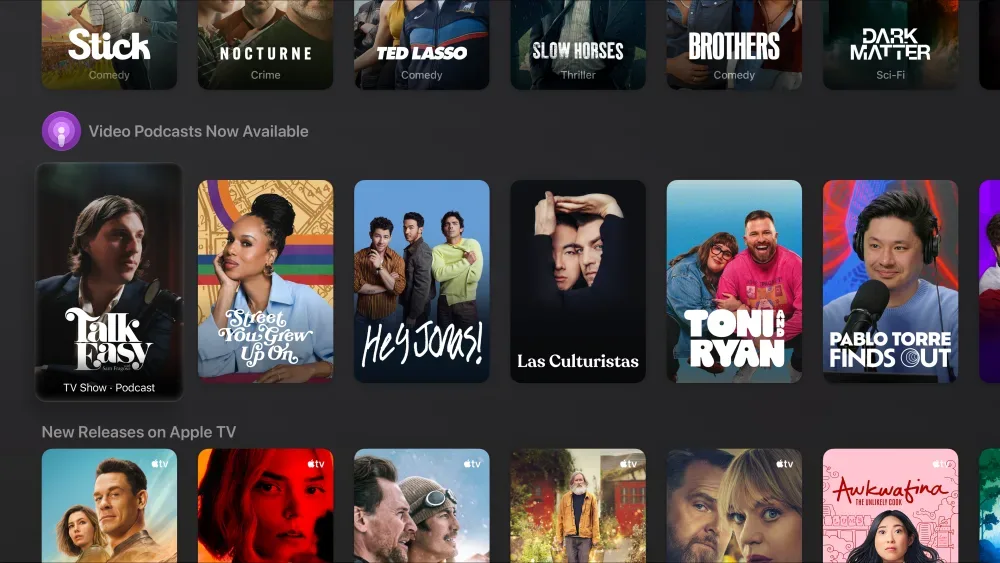
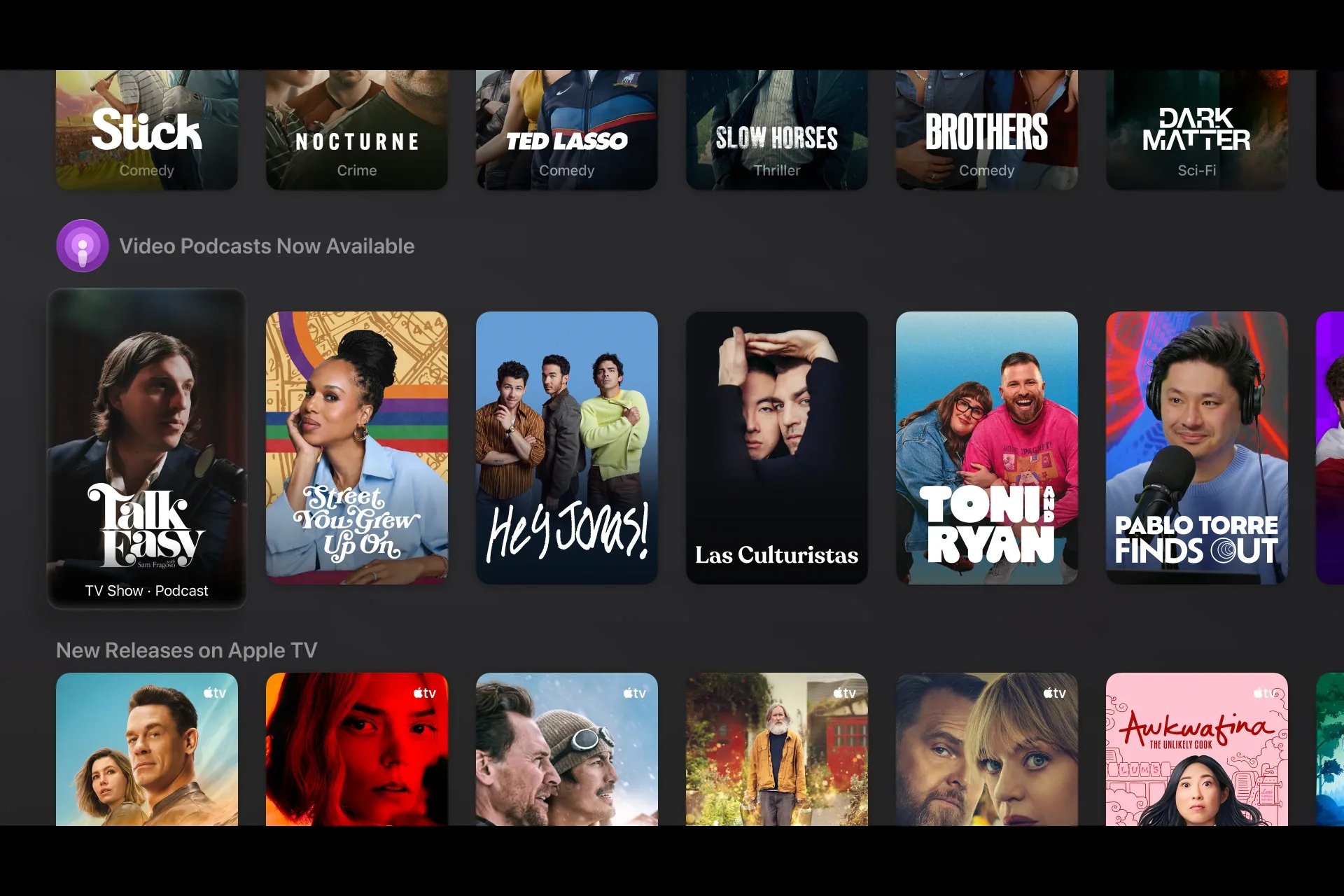
Apple is preparing to put video podcasts from Apple Podcasts inside the Apple TV app, a shift that could make the service more visible on the living-room screens where long conversations, video interviews and panel-style shows increasingly compete for attention. The company says the feature is coming soon and will extend across the Apple TV set-top box, Roku, Amazon Fire TV devices, smart TVs and other supported platforms.
The change does not mean podcasts suddenly become television series, and it does not require every listener to watch. Its practical value is simpler: a person who follows a video-capable podcast through Apple Podcasts will have another place to play it, particularly when the biggest screen in the house is the preferred screen. Apple says playback will sync between Apple Podcasts and the Apple TV app, allowing users to stop on one device and continue from the same point on another.
For the wider podcast business, the move acknowledges how much video has become part of the format’s mainstream distribution picture. YouTube is already a major destination for podcasts, while Spotify has spent several years pursuing video podcasts. Apple’s new placement makes the Apple TV app a more direct part of that competition for attention, discovery and viewing time.
What is arriving, and where it will work
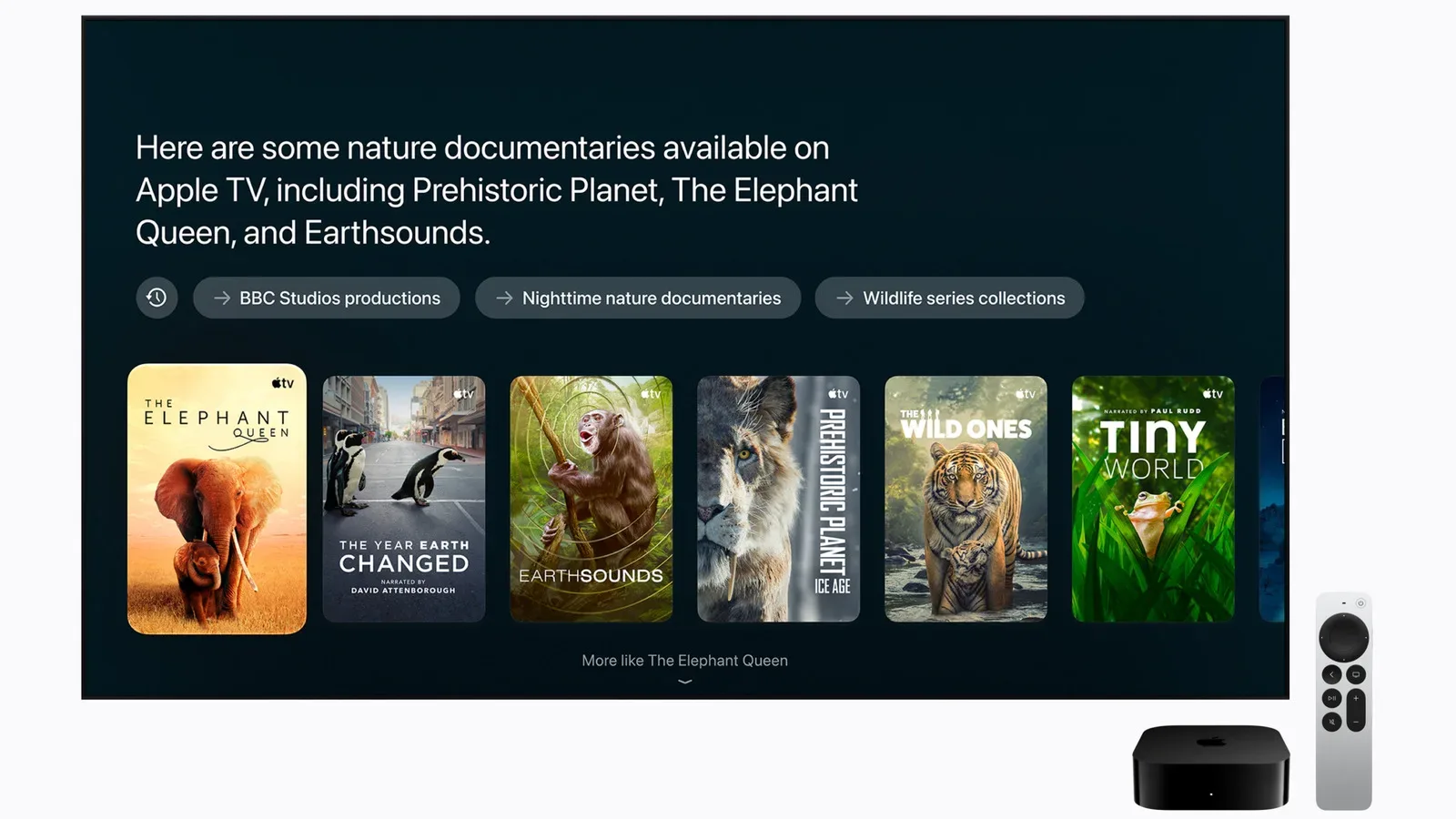
Apple says video podcasts from Apple Podcasts will be available in the Apple TV app on Apple hardware and supported third-party devices. The announced device list specifically includes Apple TV, Roku, Amazon Fire TV and smart TVs. That matters because the Apple TV app is not confined to one piece of Apple hardware; it is a cross-device viewing destination.
Testing is set to begin in the latest 27.3 developer beta of the Apple TV app. A developer beta is pre-release software made available for testing before a broad public rollout. It can reveal the direction and mechanics of an upcoming feature, but it should not be treated as the same thing as final availability for every user or every device. Apple’s public timing remains “soon,” rather than a fixed launch date.
The addition also sits alongside other podcast-focused software changes. Apple says video podcast availability is coming to macOS and tvOS devices this year. In iOS 27.1, Apple Podcasts is receiving a redesigned home screen with new-episode cards, a continue-playing option, recommendations and a New tab designed to mirror the iOS experience. Apple’s CarPlay support is part of the broader expansion as well, although a video feature naturally should not be confused with an invitation to watch while driving.
For people who routinely move between a phone, a computer and a TV, sync is the most immediately understandable feature. Start an episode while listening away from the television, then resume it in the Apple TV app rather than manually hunting for the point where the discussion left off. The reverse can work too: stop a show on a TV and carry on later in Apple Podcasts.
That familiar continuity is especially relevant to podcast episodes that run long or are watched in pieces. The company has not detailed every playback behavior, interface choice or eligibility rule in the information available so far, so viewers should avoid assuming that every podcast in a library will immediately have a video edition or that all app versions will receive the feature at precisely the same time.
Related coverage includes Apple TV App Will Add Video Podcasts From Apple Podcasts.
Video podcasting is not new to Apple, but the delivery model has changed
Apple Podcasts has supported video formats since 2005. The important change is not the invention of video podcasts, but the way they are delivered and presented across Apple’s ecosystem.
Until earlier this year, video podcasts in Apple Podcasts were distributed through RSS. RSS, short for Really Simple Syndication, is the feed-based publishing system long associated with podcasts. A feed lets podcast apps learn about a show’s episodes and retrieve its media. Under the earlier arrangement described by Apple, creators who wanted to offer audio-only and video editions had to use two separate show entries. In practice, that could split a program’s presence into parallel versions rather than keeping listening and watching under one unified show identity.
Apple has now moved video podcast delivery to HTTP Live Streaming, or HLS, a protocol Apple developed. At a high level, HLS is a way to deliver streaming video over the web. Its relevance here is that Apple is building its video-podcast experience around a streaming format rather than the prior RSS video setup.
That technical shift is meaningful because it supports the broader product direction: video podcasts can be treated more naturally as content that travels between Apple Podcasts and the Apple TV app. Apple describes the HLS experience as early, so the announcement should be read as an expansion in progress rather than a claim that every aspect of video podcast distribution is finished or settled.
For creators, the streamlined model may reduce a longstanding structural awkwardness. If a program has both a listenable edition and a watchable edition, maintaining separate show entries can complicate how an audience finds and follows it. Apple’s stated goal is to create more opportunities to reach new audiences while allowing creators to retain control over their content and monetization.
That last point deserves a careful reading. Apple is describing an opportunity and an intent, not publishing a universal revenue outcome for every show. A larger screen footprint can improve the chances that people encounter a video podcast, but discovery, audience habits and creator business models remain different from show to show.
Why the television screen matters for podcasts
Podcasting has historically been built around audio: a format suited to commutes, chores, walks and any moment where looking at a screen is unnecessary. Video does not replace that strength. Instead, it offers a second way to engage with shows where facial reactions, demonstrations, guests, studio dynamics or visual context contribute to the experience.
The Apple TV app gives those shows a more deliberate place in the living room. A podcast can remain an audio companion on one occasion and become something watched with full attention on another. The ability to choose is central to Apple’s framing: audiences can watch or listen.
It also places video podcasts beside the kinds of on-demand viewing people already expect to access through TV-oriented apps. That does not guarantee that podcasts will be surfaced like premium dramas or films, nor has Apple outlined a specific discovery layout for them. But it makes the format available in a location where users are already accustomed to browsing and playing video.
Anyone considering how they watch live and recorded creator content on a television may also find our guide to watching Twitch on a TV through apps, casting, consoles and HDMI useful. The basic viewing question is similar even though Twitch and podcasts are distinct formats: the device, app support and handoff between screens can strongly shape the experience.
Apple points to rapid growth in video publishing
Apple says the number of shows publishing video on Apple Podcasts has more than doubled over the past three months. The company also says its catalog of video episodes has nearly tripled in that period. Those figures indicate that more creators are supplying video versions as Apple develops the underlying infrastructure and expands where the content can be viewed.
The company further says that leading podcasts which introduced video experienced average total-show audience growth of more than 20%. That is an Apple-provided aggregate claim, not a promise that video will produce the same gain for every podcast. It also refers to total audience growth for the identified group, not necessarily growth caused solely by the presence of video. Still, it helps explain why Apple sees enough momentum to bring the format into the TV app.
The phrase “top podcasts” is important. Prominent shows often have resources, existing audiences and guest-driven appeal that smaller productions may not share. Video can create new creative and production demands, from cameras and editing to visual presentation. Apple’s announcement focuses on distribution and reach, not on claiming that every audio-first creator needs to adopt video.
For listeners and viewers, the benefit is variety. Audio-first fans can keep listening through Apple Podcasts. People who prefer a couch-and-TV session can use the Apple TV app when video is available. And users who shift devices mid-episode have the prospect of a synchronized place in the conversation.
What to expect next
There are two distinct milestones to watch. First is developer-beta testing through the latest 27.3 Apple TV app beta, which gives developers early access to the feature. Second is the broader arrival Apple has described only as coming soon. Until the public release reaches individual device platforms, users should not assume the feature is already enabled everywhere.
Creators and viewers should also keep their expectations tied to the stated scope. This is an expansion of video podcasts from Apple Podcasts into the Apple TV app, not an indication that all podcasts will become video shows. Video availability depends on whether a show publishes video, and Apple has not said that its catalog will become universally visual overnight.
Even so, the direction is clear. Apple is linking its podcast service more closely with its TV viewing ecosystem, using HLS-based video delivery, synchronized progress and availability across a range of screens. As podcasting continues to accommodate both listeners and viewers, the Apple TV app is set to become another place where a saved episode can move from background audio to a full-screen watch.