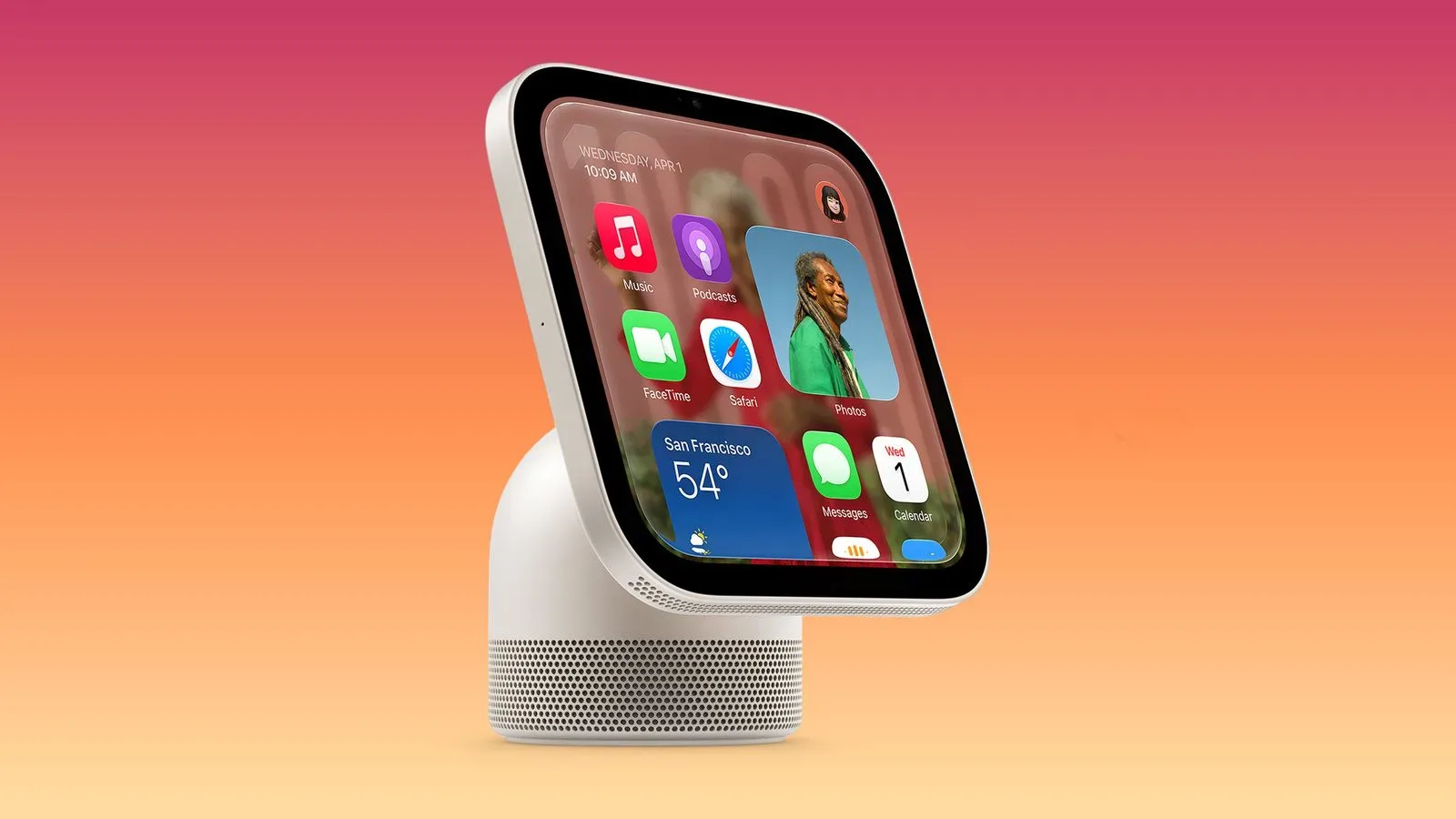

Apple’s new HomeView smart-home display is becoming substantially harder to get in its tabletop form through the company’s U.S. online store. New orders now carry estimated delivery windows beginning in mid-December and, for one color, extending into January. The wall-mounted HomeView, meanwhile, is still listed for next-day delivery.
The divergence makes a straightforward purchase unexpectedly complicated. Buyers who want the tabletop version may need to decide whether a particular color is worth waiting for, whether a wall installation fits their space, or whether it is worth checking physical stores and select resellers instead. Both versions cost $299 in the U.S.; mounts are sold separately starting at $59.95.
Current tabletop HomeView delivery windows
HomeView orders opened on October 13, with customer deliveries beginning November 13. The current U.S. shipping estimates for tabletop units vary noticeably by finish:
- Silver: December 16 to December 23
- Space Gray: December 16 to December 23
- Starlight: December 23 to January 5
- Rose Pink: January 5 to January 12
That means Rose Pink has the longest quoted wait, while Silver and Space Gray have the earliest stated delivery range. Starlight sits between those options. These are estimates rather than promised arrival dates, so they can move as order volume and product availability change.
What the different estimates do—and do not—tell us
A longer delivery window is often described as evidence that a product is “selling out,” but the more precise interpretation is narrower: Apple’s store is currently forecasting that new online orders will be fulfilled later. Shipping estimates are shaped by supply and demand together. Without figures for production, inventory, sales, or allocations by color, it is not possible to determine whether demand is unusually high, stock is limited, or both factors are involved.
The color split is useful for shoppers, but it should not be treated as a popularity ranking. It tells customers which configuration has the earliest or latest projected shipment at the time they check out. It does not establish why that is the case.
There is also an important product-form factor. The tabletop and wall-mounted models may share the HomeView name and $299 price, yet their online availability is sharply different right now. The tabletop unit has multiweek estimates; the wall-mounted version remains available for next-day delivery. For anyone who mainly wants HomeView soon rather than a specific physical setup, the wall model is the clearest route to a faster online delivery based on the available listings.
The tabletop versus wall decision is more than a shipping question
The tabletop HomeView is the natural choice for a room where a display needs to sit on a counter, desk, shelf, or other surface. A wall-mounted unit instead requires a suitable location and an additional mount. Apple’s mounting options begin at $59.95, so the installed approach can cost more than the $299 headline device price.
Before switching versions just to avoid a wait, buyers should consider whether a wall location is genuinely appropriate. A smart-home display benefits from being somewhere people will actually see and use it, while still fitting the practical constraints of the room. That can include where household members tend to pass through, whether the display will be comfortably viewable, and whether the chosen position works with the rest of the home setup.
Placement can also matter for a broader connected-home system. Devices that act as a central point in a smart-home arrangement should not be treated as decorative objects alone: physical positioning can affect how useful the setup is day to day. Readers weighing a fixed installation may find this guide to choosing a better spot for a smart-home hub’s signal helpful context before committing to a location.
Availability is especially relevant because HomeView has reported bugs
The extended tabletop wait arrives while HomeView has several reported bugs. No specific issue, scope, or timeline for fixes is established here, so prospective owners should be careful not to assume that a delayed shipment will necessarily arrive after any particular software change. A delivery estimate is a logistics forecast, not a published update roadmap.
That distinction matters for two types of buyer. Someone who needs a display promptly may reasonably prioritize the wall-mounted model’s next-day availability or seek local stock. Someone who is cautious about a newly released device with known bugs may decide not to chase the fastest option at all. Neither choice requires reading too much into the wait time; the shipping delay itself does not explain the state of the software.
Practical options for buyers who want a tabletop HomeView
For shoppers set on the tabletop design, there are a few grounded options:
- Choose based on the delivery date you can accept. Silver and Space Gray currently have the earliest stated window. Starlight and Rose Pink require progressively longer waits.
- Check Apple retail locations. A store may have inventory even when online delivery dates are extended. Local availability can differ from online fulfillment availability.
- Look at select resellers. Best Buy is among the retailers that may have tabletop stock. That possibility is not a guarantee, and shoppers should verify the exact model and color before relying on it.
- Consider the wall-mounted version only if it suits the intended room. It can arrive sooner through Apple’s online store, but it is a different installation proposition and the mount is an extra expense.
- Recheck estimates before completing an order. The quoted ranges reflect a particular moment and can change with incoming supply or new orders.
How to read Apple’s quoted delivery ranges
It is worth separating two terms that can sound similar in store listings. Delivery estimate is the expected period when an order reaches the customer. Availability is the broader condition of whether a product can be obtained through a channel at a given time. A tabletop HomeView can be available to order but still have a long delivery estimate. Likewise, a nearby shop may have a unit available even though Apple’s online store quotes a later arrival.
That distinction is why the tabletop situation is inconvenient rather than a simple yes-or-no stockout. The device can still be ordered, but the projected wait is substantial—and it varies by color. A customer with flexibility has meaningful choices; a customer who wants Rose Pink by a particular December date may not.
What shoppers should budget
At $299, the tabletop and wall-mounted HomeView models have the same U.S. device price. The difference comes from accessories and installation needs. Apple sells mounts separately starting at $59.95, so buyers considering the wall route should include that in their comparison. The available information does not establish the cost of any other accessories or any installation service, so those should not be assumed.
For a shopper simply looking for the lowest stated device cost, the two versions begin at the same $299. For a shopper trying to receive a HomeView as quickly as possible from Apple online, the wall-mounted model presently has the advantage. For a shopper committed to a tabletop setup, Silver and Space Gray offer the earliest published estimates, while the other finishes ask for more patience.
The central takeaway is modest but useful: HomeView’s tabletop ordering window has moved well beyond immediate delivery, with color now playing a real role in how long buyers may wait. The wall-mounted model remains the faster online option, but its form factor and separately priced mount make it a decision about the home, not merely a workaround for shipping delays.