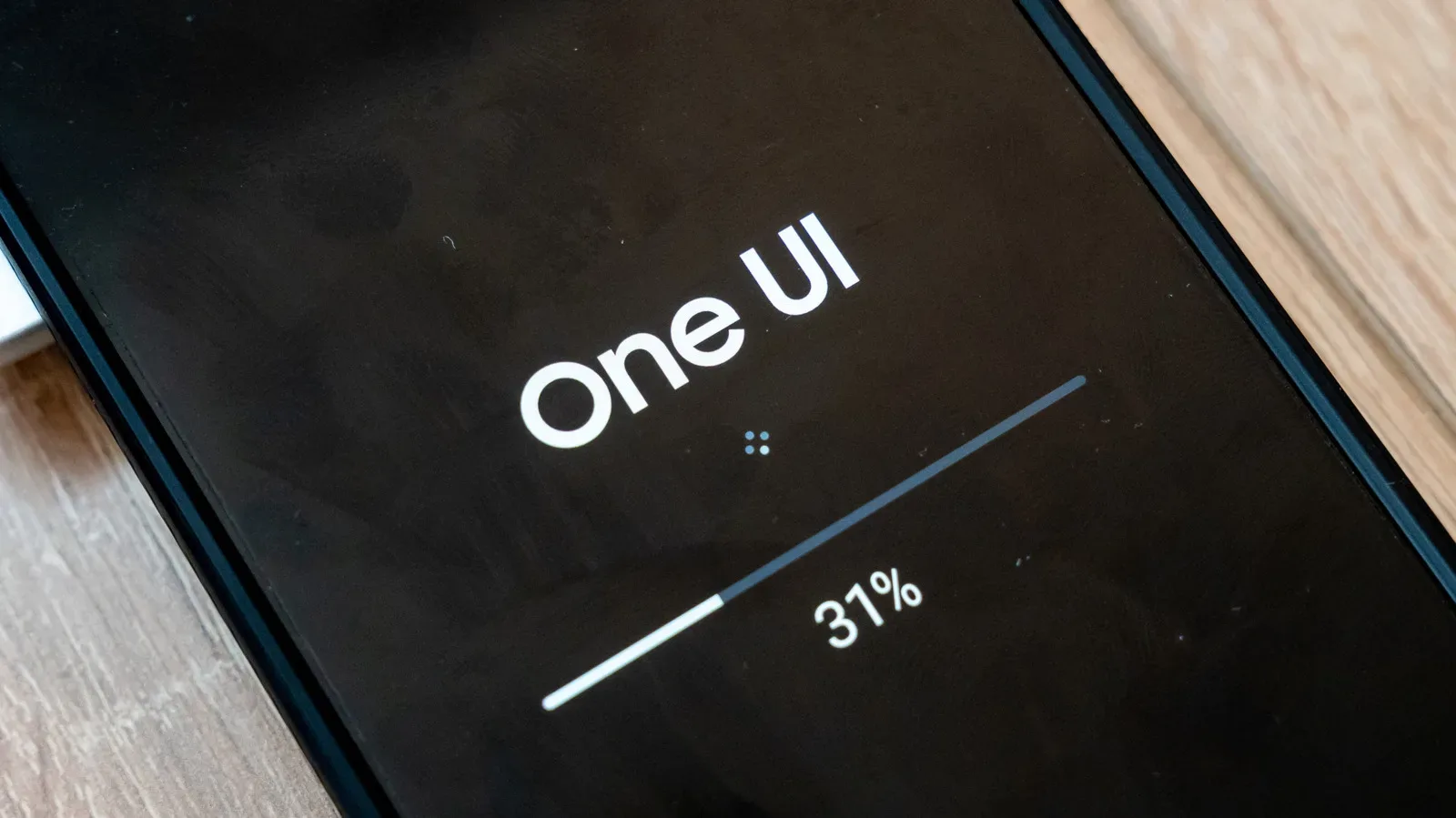
Xiaomi’s HyperOS 4 rollout has begun in China, bringing a translucent new visual style, performance claims and expanded AI ambitions to the company’s current hardware. But as is often the case with major mobile software, the more revealing part of the rollout is not only who gets the new coat of glassy paint. It is who does not.
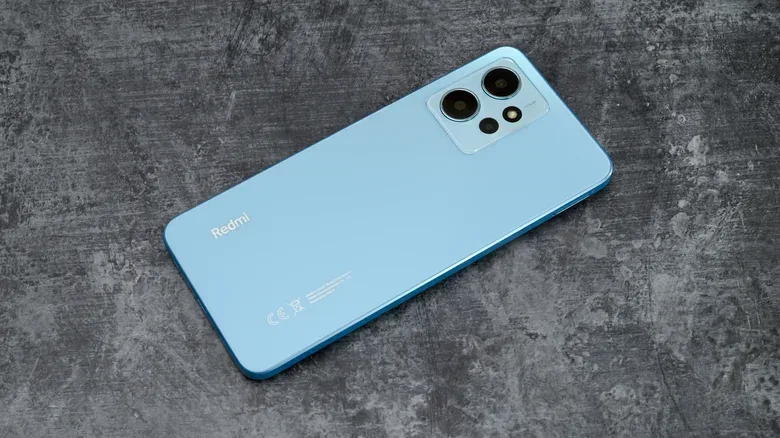
The Xiaomi 17 series is among the first devices receiving HyperOS 4 after the China rollout began on October 15, 2026. Xiaomi’s published schedule extends across 57 phones and 15 tablets in waves through January 2027. At the same time, owners of several older Xiaomi, Redmi and Poco phones are now at the point where operating-system upgrades and security patches stop altogether.
That difference matters more than whether a lock-screen clock can be made larger. A major OS release can bring interface changes and new features, while security support concerns fixes for vulnerabilities discovered after a phone ships. A device can miss a big visual update and remain safe to use for a time if it continues to receive patches. Once support ends entirely, though, the decision becomes less about chasing new software and more about managing a device that will no longer receive either kind of update.
HyperOS 4’s China schedule is substantial, but it is not a global promise
Xiaomi’s China roadmap starts with the Xiaomi 17 line, Redmi K100 and K90 series, and Xiaomi Pad 8. More models are scheduled in stages. The Xiaomi 17 Max, 17T and 17T Pro, Redmi K90 Max, and Redmi Turbo 5 series were slated by October 31. The Xiaomi 15 range, MIX Flip 2, Civi 5 Pro and Redmi K80 series follow by November 15, while Redmi Note 17 and Redmi Note 15 models are scheduled by November 30.
December is the busiest portion of the phone rollout. It is set to include the Xiaomi 14 and Xiaomi 13 series, MIX Fold 3 and MIX Fold 4, Redmi K70 series, plus Redmi Note 14 Pro and Redmi Note 14 5G devices. January 2027 is reserved for TVs and wearables.
That list is useful, but it needs to be read precisely. It is a schedule for China firmware. It does not establish a release date for every region, carrier configuration or related brand. Xiaomi has run a global beta since September 2026 for the Xiaomi 17, 17 Ultra and Leica Leitzphone, later adding the 17T, 17T Pro, Xiaomi 15 and Xiaomi 15 Ultra. A general global release timetable, including a timetable for India, has not been confirmed.
Poco devices present an extra wrinkle. They are not sold in China and do not appear on the China schedule, so their absence there is not, by itself, proof that they are excluded from a future international rollout. For owners outside China, a China list is best treated as a strong indicator of Xiaomi’s current priorities rather than a final answer for their exact model.
What a staged rollout actually means
A staged rollout means eligible products receive the software in groups instead of every supported device downloading it on the same day. The schedule indicates intended rollout windows; it does not mean every unit will have the update at the opening bell. Region, model variant and Xiaomi’s own release process can affect when an update becomes visible.
Related coverage includes HyperOS 4 Rollout Leaves Several Xiaomi and Redmi Phones Behind.
It also means there are three distinct questions owners should avoid merging into one: whether a phone is still supported, whether HyperOS 4 is planned for it, and whether the update has reached that phone’s particular market. A “yes” to one of those questions does not automatically answer the other two.
The confirmed end-of-support group
Xiaomi publishes end-of-support information through its security center. Devices reaching that status cease receiving both operating-system upgrades and security patches. For 2026, the affected models include a number of familiar Xiaomi, Redmi and Poco names.
- Xiaomi 12 and Xiaomi 12 Pro, Redmi Note 12 5G, Redmi 12C, Redmi A2 and Redmi A2+ reached end of support in March.
- Poco F5 and Poco F5 Pro reached end of support in May.
- Xiaomi 12T and Xiaomi 12T Pro reached end of support in October.
- Redmi 13C and Poco C65 are due to reach that point in November.
For the Xiaomi 12T and 12T Pro, the practical result is clear: HyperOS 4 is not on the way, and neither are future security patches. The Xiaomi 12 and 12 Pro are also absent from the HyperOS 4 schedule after their support ended earlier in the year. Redmi Note 12 5G, Redmi 12C, Redmi A2 and A2+, Poco F5 and F5 Pro sit in the same broader position.
That is a different situation from merely receiving a simplified version of a visual effect. A phone at end of support has exhausted its manufacturer-provided update path. Owners can still decide how long to keep using it, but they should do so knowing that new vulnerabilities will not be addressed through Xiaomi’s regular security updates.
Security patches versus feature upgrades
It is worth separating the terms because update discussions often compress them into the same complaint. An OS upgrade is a major platform release, generally associated with a new Android generation or a large Xiaomi software revision. A security patch is maintenance work intended to correct known weaknesses. The former is often desirable; the latter is the more important baseline for a phone handling accounts, messages, payments and personal data.
For someone with a device that will miss HyperOS 4 but still receives security patches, there is no immediate reason to equate “no new glass effect” with “unsafe.” For someone whose phone has reached Xiaomi’s end-of-support list, the more sensible next step is to verify the model’s status, install any remaining available update, and plan around the absence of future patches.
Six phones are in a watch-this-space category, not a confirmed exclusion list
Firmware tracking has identified six models with no observed HyperOS 4 test builds: Redmi Note 13 Pro 4G, Redmi Note 14S, Redmi A5 4G, Poco C71, Poco M6 Pro 4G and Poco X6 5G. The reported common factor is an Android 16 ceiling.
That is meaningful evidence of uncertainty, but it is not an official denial from Xiaomi. Some of these phones retain years of security-update coverage. Their owners should not treat a lack of spotted testing as confirmation that the phones have been abandoned. Conversely, remaining inside a security-support window does not guarantee the next major HyperOS version.
If Xiaomi does not bring HyperOS 4 to these models, they would remain on HyperOS 3. The important nuance is that a phone can be supported without receiving every major feature release. Manufacturers set support policies around both duration and the number of promised OS upgrades; the two do not always line up neatly with a product’s age or price tier.
For buyers, this is the durable lesson: check the promised Android-version ceiling and security-patch duration separately. A remaining security window is valuable, but it does not tell the whole story if access to upcoming platform features is a priority.
The Xiaomi 13 series is the rollout’s most interesting open question
The Xiaomi 13 series is scheduled for HyperOS 4 in December, despite an earlier commitment of three major Android updates that pointed to Android 16 as its endpoint. Xiaomi has not clarified whether the HyperOS 4 release for the series will move it to Android 17 or instead provide HyperOS 4 on an Android 16 base.
This distinction is technical, but not trivial. HyperOS is Xiaomi’s software layer and product ecosystem branding; Android is the underlying operating-system platform. They often move together, yet they do not have to be identical milestones. A manufacturer can deliver aspects of its own interface and service layer without necessarily advancing the underlying Android version in the way consumers might assume from the headline version number.
The Xiaomi 13’s position also underlines why software support should be considered before a purchase, not only when an update list arrives. Its four-year security-patch promise from the early 2023 global launch places it among devices in their final year of coverage. HyperOS 4 could still be a meaningful update for the series, but Xiaomi has not answered the Android 17 question.
Newer commitments are longer. Xiaomi has promised the Xiaomi 15 four OS updates and six years of security patches. That remains below the seven years of support now offered by Samsung and Google on their flagship phones, but it is an improvement over Xiaomi’s older commitments.
What HyperOS 4 adds—and where the fine print lives
The most visible change is Xiaomi’s new Soft Light Glass design language. Xiaomi describes it as a translucent material whose transparency changes according to the colors and content behind it. The lock-screen clock can also be resized, repositioned and restyled. The resulting visual direction has invited comparisons to Apple’s Liquid Glass approach. Readers following Apple’s own software changes may also be interested in the latest iPadOS visual-intelligence beta details, which reflect the same wider industry push to make software interfaces and AI features more prominent.
Not every supported Xiaomi phone will render Soft Light Glass in the same way. Xiaomi says the full version requires a Snapdragon 8 Elite, Dimensity 9500, Xiaomi XRING O1 or newer chip. Other models on the HyperOS 4 list receive a simplified edition. That is a sensible hardware divide to understand before treating an eligibility list as a guarantee of identical functionality.
Xiaomi has also made performance claims: 27.2% more memory left free after eight hours of use and apps opening 17.5% faster after extended sessions. These are company figures, not a universal promise for every workload, model or user setup. They nonetheless signal that HyperOS 4 is intended as more than a design refresh.
On the AI side, Super XiaoAI 2.0 uses Xiaomi’s MiMo AI model and introduces an Expert Mode intended to carry out multi-step tasks across applications. Many of those AI features are currently limited to China, making regional availability just as important as phone compatibility. AI labels can make an update sound universal, but the practical feature set may depend on market, language and supported services.
HyperOS 4 is reported to be based on Android 17. Xiaomi’s newest phones had already received Android 17 through an interim HyperOS 3.3 release in July 2026, another reason the HyperOS and Android version numbers should not be read as interchangeable shorthand.
A practical checklist for Xiaomi, Redmi and Poco owners
- Identify the exact model. Product families can contain 4G, 5G, Pro and regional variants with different schedules and support outcomes.
- Check end-of-support status first. If the phone is listed, no future OS upgrades or security patches should be expected.
- Separate China-roadmap news from local availability. A listed China model may still await a global schedule, while a Poco phone’s absence from that list is not conclusive.
- Distinguish confirmed facts from tracker evidence. No visible test build is a reason to watch for updates, not a substitute for Xiaomi confirmation.
- Check chip-related feature limits. Eligibility for HyperOS 4 does not necessarily mean the full Soft Light Glass treatment or every AI feature will be available.
- Prioritize security support in upgrade decisions. Missing a design overhaul is frustrating; losing patches is the more consequential turning point.
HyperOS 4’s rollout is therefore a mixed picture. It is broad on paper, with dozens of phones and tablets included, but it also marks a hard cutoff for aging devices and leaves several still-supported budget and midrange models in limbo. Xiaomi owners should resist both assumptions: that every device with remaining support will receive HyperOS 4, and that every model missing the first China list has been definitively ruled out. The schedule answers many questions; the Android 16-capped group, global rollout dates and Xiaomi 13’s Android base still need clearer answers.