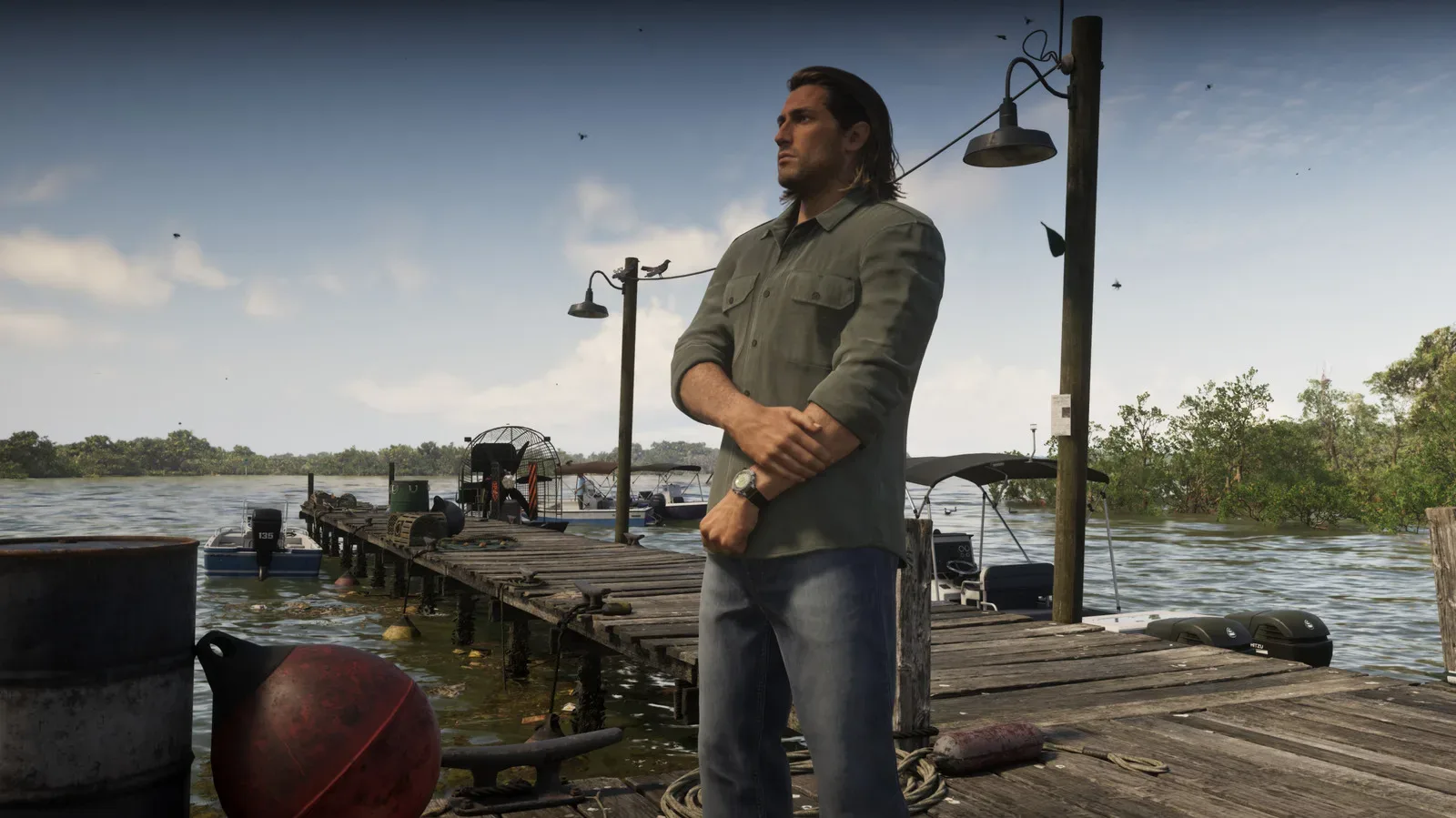
Grand Theft Auto 6 has barely had time to settle into its console launch window, yet the familiar PC question is already producing a familiar answer from parts of the community: if an official version is not here, somebody will try to make one. Unofficial recompilation projects are reportedly attempting to get the game running on PC hardware, while console owners are experimenting with methods intended to make the 30-frames-per-second presentation look smoother. The reported activity is striking, but it should not be mistaken for a finished port, a reliable performance upgrade, or a substitute for a supported release.
At present, a confirmed timetable for an official PC edition remains unknown. Rumors have pointed to early next year, but rumors are not a release plan. That uncertainty is helping explain the interest around several community efforts that aim to translate the game’s console-oriented code for PC execution. At the same time, Rockstar has said that a native 60 fps console mode is not planned, citing CPU limits when simulating the game’s complex environment at a higher frame rate.
What the reported PC projects have actually achieved
One group, known as Leonida, reportedly got GTA 6 to boot on PC before its Discord server was taken down. That is a notable technical milestone, but booting a game and delivering a playable, stable release are vastly different things. A title can reach an opening screen, load some assets, or begin a game session while still lacking acceptable input behavior, stable performance, audio, rendering accuracy, saved progress, or broad hardware compatibility.
A separate tracker, Port Watch VI, is following multiple recompilation efforts. Its leading listed project is said to have loaded the game and allowed movement and conversations with NPCs, albeit “very slowly.” In practical terms, that description is evidence of early execution rather than proof that GTA 6 is playable on PC in any normal sense. Severe slowdowns can come from incomplete code translation, inefficient rendering, missing optimization, synchronization problems, or other bottlenecks. The report does not establish which of those is responsible.
There are reports that files from the Xbox build, along with an executable that may help recompilation work, have been dumped by the hacking group Cyberleek. If accurate, that could lower the barrier for technically capable developers to investigate the game’s console build. It does not guarantee that a functioning PC release will result, and it does not turn an unofficial build into an authorized one.
Rockstar has already acted against the Leonida community space, and further enforcement against projects built from protected game material would be unsurprising. There is also an important practical distinction for players: a project being discussed publicly, shown loading, or listed on a tracker does not establish that its files are legitimate, safe, complete, or legal to distribute. Claims around unofficial builds deserve substantial caution, particularly where downloads, executables, leaked materials, or account credentials are involved.
Recompilation is not the same thing as emulation
The discussion becomes clearer when separating two technical approaches that are often grouped together. Emulation generally means recreating enough of a console’s hardware and software environment for console code to run elsewhere. That can be computationally demanding because the host PC is effectively impersonating systems and behaviors expected by the original game.
Recompilation, by contrast, aims to convert or adapt software so it can execute on a different target platform—here, a PC—without necessarily reproducing an entire console environment. The stated appeal is straightforward: rather than emulate every relevant console layer, developers try to make the game work with PC hardware more directly. Modern AI coding tools are also described as helping some recompilation efforts, potentially accelerating portions of the analysis and code-conversion workload.
That description should not be read as a shortcut to a commercial-quality release. A large game is not merely a collection of instructions that can be translated once and forgotten. A usable PC version must contend with graphics behavior across different GPUs, input support, display settings, memory management, audio, operating-system differences, asset streaming, crashes, and performance on a wide range of systems. The supplied reporting only indicates very early signs of execution, not solutions to those broader issues.
For an official version, those concerns are part of the expected product. A legitimate PC port ordinarily needs the developer’s own testing, support, patching, and distribution infrastructure. That is why an unofficial project appearing earlier than a formal release—while possible in theory—would not by itself settle what PC players actually want: a dependable, supported version built for their hardware.
Why 30 fps has become its own GTA 6 debate
The push for a PC build overlaps with a separate frustration: GTA 6’s 30 fps cap on consoles. Frame rate is the number of distinct frames presented each second. At 30 fps, each frame remains on screen for roughly 33 milliseconds; at 60 fps, it is roughly 17 milliseconds. The higher cadence can make camera movement and fast motion appear smoother, while also reducing the visual spacing between consecutive positions.
That does not mean a higher number automatically fixes every aspect of responsiveness. Smoothness, controller response, display behavior, frame pacing, rendering quality, and network or streaming delay all affect how a game feels. But 30-to-60 is a readily noticeable leap for many players, which is why a title limited to 30 fps has prompted such an immediate search for alternatives.
Rockstar’s explanation is that the console CPUs are not powerful enough to simulate GTA 6’s environment at 60 fps. A CPU, or central processing unit, handles general computational tasks; in a densely simulated game, that can include coordinating systems for the world and its inhabitants. Raising the frame rate is not just a matter of drawing more pictures. If the game’s simulation must update more often, the processor may need to complete its work in less time per frame. That is the core constraint described here.
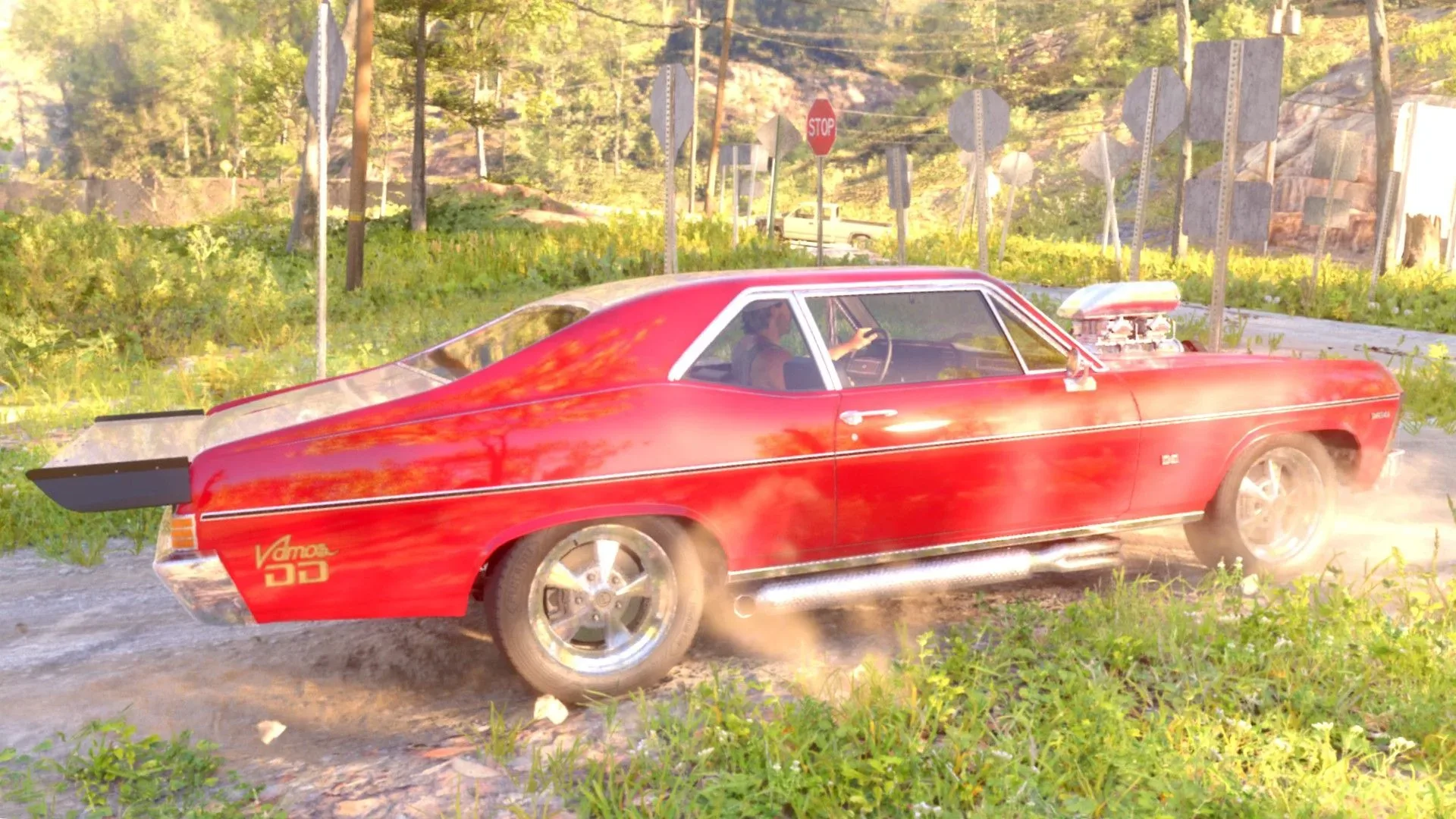
For GTA 6 players looking for game-specific help beyond the performance conversation, our Declasse Vamos garage code, location, and Moses side quest guide covers a separate in-game objective.
PS5 frame-generation attempts: smoother-looking, not necessarily faster-feeling
On PS5, modders have reportedly used the video-enhancement tool Veyra alongside NVIDIA DLSS 5 features to increase perceived smoothness beyond the game’s 30 fps limit. The setup involves passing the PS5 image through a 4K capture card, or using Sony’s Remote Play feature, so that the video can be processed outside the console.
The key phrase is perceived performance. Frame generation can create extra visual frames between frames rendered by the game. This can make motion look more fluid, but the generated images are not the same as the console itself rendering and simulating GTA 6 at a native higher frame rate. It is a display-side enhancement rather than confirmation of a newly unlocked 60 fps console mode.
It also comes with a major trade-off: latency. Latency is the time between an input or an event and its visible result. Capture hardware, processing, frame generation, and remote streaming can each add delay. Consequently, a video feed may look smoother while controls feel less immediate. The reports specifically warn that the combination introduces significant latency, making it an imperfect option for people who prioritize direct controller response.
There is another limitation worth keeping in mind. Such a chain depends on external equipment or Remote Play rather than a setting available within GTA 6’s normal console presentation. It is therefore best understood as an enthusiast workaround with compromises, not a broadly applicable replacement for native performance support.
An Xbox 40 fps glitch may be temporary
Xbox players have reportedly found a simple glitch that unlocks a 40 fps version. Moving from 30 fps to 40 fps is not equivalent to reaching 60 fps, but it can still produce visibly smoother motion. The timing helps explain why: 40 fps displays a new frame every 25 milliseconds, reducing the interval compared with 30 fps’s roughly 33 milliseconds.
However, the method is described as a glitch, not an official mode. Its availability is uncertain and could disappear in a future update. The reporting does not provide a durable guarantee, and it would be unwise to treat any workaround as permanent. Players should also be wary of unverified instructions, software, or claimed fixes that go beyond ordinary game settings, especially when an unofficial PC build and leaked materials are part of the wider discussion.
What this activity means—and what it does not
The early rush says more about the intensity of demand than it does about the readiness of any alternative. Players want two things that are not currently confirmed in a supported form: a real PC release and a higher native console frame-rate option. Recompilation groups are exploring the first demand; capture-and-processing experiments and glitches are probing the second.
Neither route currently changes the central facts. The unofficial PC work reported so far appears preliminary, its legal and technical future is uncertain, and rights-holder action has already occurred. The PS5 enhancement route can add visual smoothness but also significant latency. The Xbox option is an unstable glitch rather than an announced feature. Meanwhile, Rockstar’s stated position is that 60 fps on existing consoles is constrained by the CPU demands of simulating GTA 6’s world.
For now, the sensible reading is measured rather than sensational: the community has begun testing the boundaries quickly, but a game booting, moving slowly, or receiving post-process frames is not the same thing as GTA 6 gaining an official, native, high-performance PC or console path.