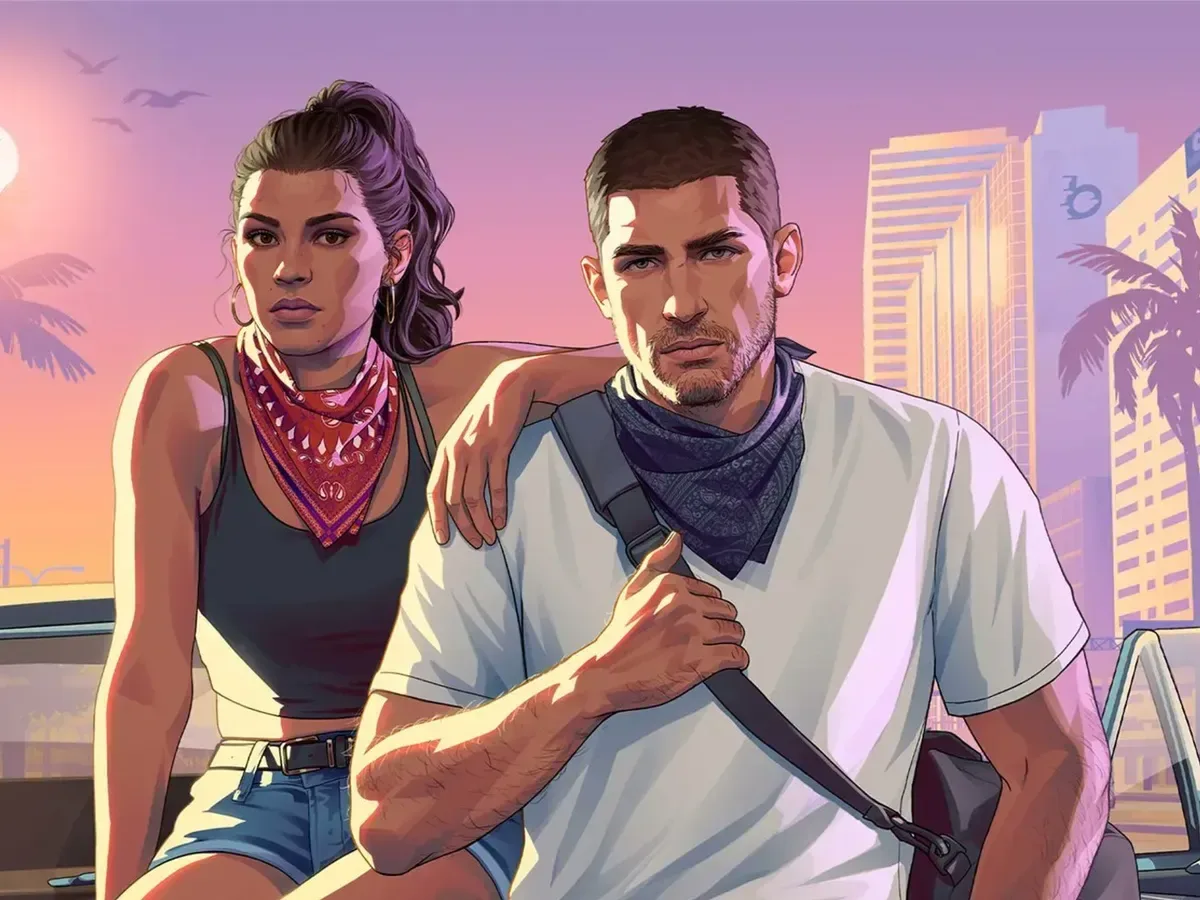
Take-Two Interactive has reportedly begun issuing takedowns against online videos and social-media posts containing material alleged to have been stolen from Rockstar Games. The removals concern recently circulated Grand Theft Auto V files as well as an extremely early map build associated with Grand Theft Auto VI.
The key distinction is important: the material in question was not formally released by Rockstar and was not presented as ordinary data mined from files made available to players. It is said to stem from the 2022 security breach that previously led to the first widely seen footage of GTA VI appearing online. That context helps explain why posts using the images, footage, or even clips of leaked audio may face copyright claims or strikes.
What the newly circulated material reportedly contains
The batch of GTA V files that surfaced publicly includes cut dialogue and apparent traces of ideas that did not make the shipped game. Some of that dialogue has prompted speculation about alternative story directions, including a substantially darker potential outcome for Franklin.
Two claims have drawn the most attention: details relating to a cancelled Liberty City expansion for GTA V, and an early version of the GTA VI map. Neither should be treated as a final design document, a promise of future content, or a clear depiction of what players will encounter in a finished Rockstar release.
Game development generates an enormous amount of work that never reaches the public. Dialogue is recorded and rewritten. Missions change order or disappear. Locations can be prototyped, cut, rebuilt, or retained only as references. An early map is especially vulnerable to misreading because it may represent a planning tool rather than a meaningful snapshot of final scale, activities, boundaries, or progression.
Cancelled content is not a roadmap
For fans, the suggestion of a Liberty City expansion naturally raises questions about what could have been added to GTA V. But “scrapped” is the operative word. It describes work that did not become an official product, not a feature awaiting confirmation or revival.
That is also why leaked development assets make for poor evidence when predicting a future game. A file can establish that an idea existed at some point; it cannot, by itself, establish why it was removed, how close it came to release, or whether its underlying concept was used elsewhere. Online discussion often converts fragments into certainty much faster than the material warrants.
Why Take-Two is targeting the posts
A copyright takedown is a request, often sent through a platform’s reporting systems, to remove material that allegedly infringes the rightsholder’s copyrighted work. On major video platforms, repeated successful claims or strikes can carry serious consequences for a creator’s channel. The immediate practical lesson is straightforward: reposting leaked clips, screenshots, map imagery, or audio can put an account at risk.
Related coverage includes Take-Two Begins Removing Leaked GTA 5 DLC Material and Early GTA 6 Map Content.
The reported enforcement does not appear to be identical in scale to the earlier response to the initial GTA VI footage leak. Still, the removal of multiple uploads and posts indicates that the company is actively attempting to limit distribution of this newer wave of material.
That approach is unsurprising when the assets are alleged to have been obtained through an unlawful intrusion. A publisher has incentives beyond avoiding spoilers: leaked work can spread incomplete or misleading impressions of a game, expose internal material without context, and force staff to spend time responding to copies that multiply across platforms.
Early, cut, and unapproved assets are not the same thing as a finished game—or an official announcement.
What it means for GTA fans and content creators
For players who want to go into the next game with as little prior knowledge as possible, the safest route is to avoid unlabelled videos, thumbnails, short-form clips, and social threads claiming to show maps, dialogue, or “cut content.” Even posts framed as analysis can incorporate visual or audio elements originating from the leaked files.
Creators face a different calculation. Reporting that a takedown campaign is occurring is separate from redistributing the underlying copyrighted assets. But showing the images, playing audio clips, mirroring videos, or directing audiences to copies of the alleged hacked material creates a much clearer exposure to enforcement. Text-only discussion still benefits from care: claims about unreleased development work should be labelled as unverified or historical rather than presented as confirmed current plans.
- Do not mistake prototypes for final content. Development materials can be old, incomplete, abandoned, or misleading without surrounding context.
- Do not rely on reposts staying online. A video or post remaining visible briefly does not mean it is authorised.
- Watch for spoiler spillover. A headline about a map or deleted dialogue may reveal more than someone wants to know ahead of release.
- Be careful with downloads. Files circulated as “leaks” may be mislabeled, altered, or bundled with other unwanted material.
Heightened attention close to GTA VI’s reported launch window
The reported takedowns arrive with GTA VI described as being two months from release. That proximity increases the value of keeping unofficial material from spreading, particularly following several years in which Rockstar has been affected by leaks.
There is one practical factor that may reduce a traditional route for pre-release leaks: the reported absence of physical copies. Without boxed discs moving through retail and distribution channels ahead of launch, there may be fewer opportunities for someone to access and capture a near-final retail build early. That does not eliminate risk. The recent circulation of substantial material shows that security concerns do not begin and end with physical stock.
The broader industry conversation around development pressure and the scale of modern productions remains relevant here. As noted in a recent discussion of the challenges created by giant game teams, large projects accumulate complicated workflows and a large volume of work-in-progress material. That observation does not explain this particular breach, nor does it assign responsibility. It does, however, underline why unfinished assets can be plentiful and easy to misinterpret once they escape their intended environment.
How to read the claims responsibly
There are three separate questions that can become blurred together when a major leak emerges. First, is the asset genuine? Second, if it is genuine, when was it created? Third, what does it actually prove? A seemingly authentic early map may answer the first question without answering the other two.
The same standard applies to cut dialogue. It may demonstrate that writers explored a line or scenario, but it does not establish that the scenario was complete, approved, playable, or representative of the final intended narrative. Development involves iteration; removal can be a normal result of that process rather than evidence of a hidden finished storyline.
For now, the firmest development is the reported enforcement itself: Take-Two is moving to remove posts that display the alleged hacked GTA V and GTA VI material. Fans looking for reliable information about Rockstar’s plans should give greater weight to official releases than to fragments extracted from an old breach and circulated without full context.