Grand Theft Auto 6 is set to run at 30 frames per second at launch across PlayStation 5, Xbox Series X/S and PS5 Pro. That detail has turned into one of the loudest debates around the game—not because 30 fps is new to Rockstar’s catalogue, but because console expectations have shifted sharply since Red Dead Redemption 2 arrived in 2018.
Many current-generation games offer a choice between a quality-focused mode and a performance mode. The usual arrangement is straightforward: one setting prioritizes visual detail, while another reduces some graphical demands in pursuit of 60 fps. For players accustomed to that trade-off, the prospect of GTA 6 launching without a 60 fps option feels less like a stylistic choice and more like a missing feature.
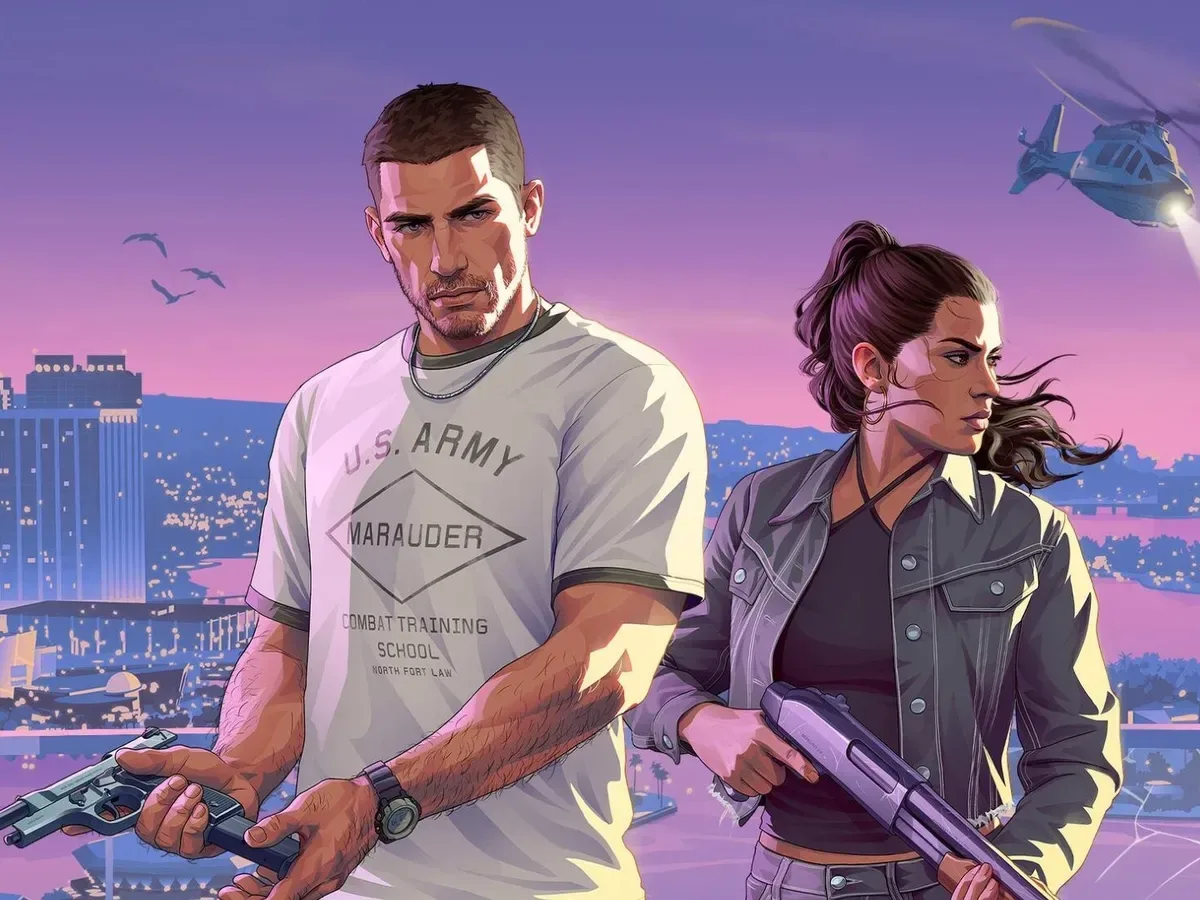
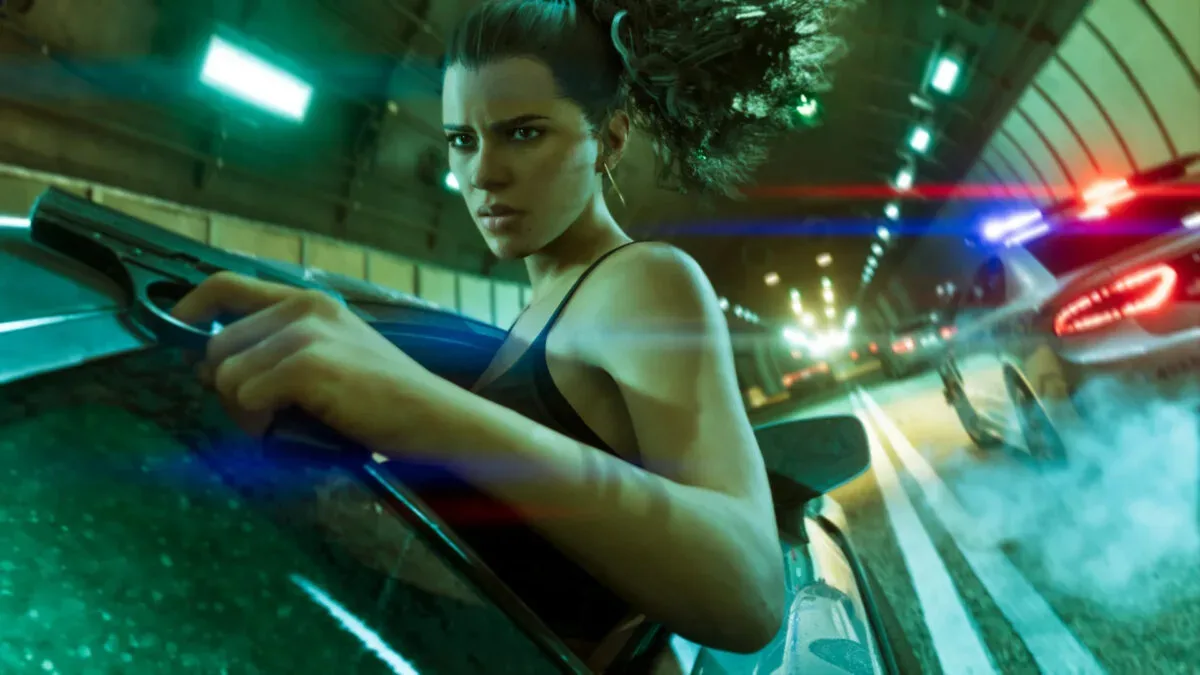
Other players see it differently. GTA 6 is being positioned as a detailed, narrative-led open-world crime story following a couple in a fictionalized Miami-like setting. Its driving, shooting and diversions matter, but its appeal is also tied to the density and believability of the world around them. If a fixed 30 fps enables a substantially more ambitious simulation or visual presentation, some players will accept that bargain without much hesitation.
The important word, then, is bargain. The argument is not simply whether 30 fps is good or bad. It is about which compromises players believe a massive open-world game should make, and who gets to make that call.
What 30 fps and 60 fps actually change
Frame rate, measured in frames per second (fps), is the number of complete images a game displays each second. At 30 fps, the game presents 30 images every second. At 60 fps, it presents twice as many. That does not automatically make one version prettier than the other, but it significantly changes how movement is perceived.
At 60 fps, camera turns, character animation, traffic movement and driving generally appear smoother because the time between each displayed frame is shorter. In the simplest terms, a 30 fps game produces a new frame roughly every 33 milliseconds, while 60 fps cuts that interval to roughly 17 milliseconds. The latter can make controls feel more immediate because visual feedback is updated more frequently.
That is why the term “buttery smooth” gets used so often, even if it has become a bit of gaming vocabulary wallpaper. The difference can be conspicuous when players swap directly between modes, especially in fast camera movement, aiming, racing and action-heavy encounters. For others, it is far less noticeable after a short adjustment period. Individual sensitivity, display setup and the kinds of games someone usually plays all affect the experience.
A higher frame rate also does not mean a game is more responsive in every possible sense. Input responsiveness depends on numerous parts of the system, including controller handling, game logic and display latency. Still, frame rate is an obvious and meaningful piece of the overall response chain. It is reasonable for players who favor shooting, high-speed driving or quick camera work to care about it intensely.
Related coverage includes GTA 6's Reported 30 FPS Cap Sparks Debate Over Fidelity, Smoothness, and Console Expectations.
Conversely, 30 fps can be a deliberate cap rather than evidence of a game failing to run properly. A fixed target gives developers a consistent performance baseline and allows them to budget hardware resources around it. The unresolved question for GTA 6 is exactly what Rockstar is prioritizing with that budget. The available information establishes the 30 fps target, but does not establish whether the decision is principally an artistic preference, a technical necessity, or—as is often the case with complex games—some combination of both.
Why PS5 Pro has become part of the backlash
The reaction is particularly sharp around PS5 Pro. A more capable version of a console naturally creates an expectation that demanding games will use the extra power for higher frame rates, not solely for improved image quality or graphical features. Players who considered the hardware with GTA 6 in mind are therefore asking a blunt question: if the upgraded system does not unlock 60 fps, what does the upgrade change for this specific game?
That question is fair, though the source material does not detail GTA 6’s PS5 Pro enhancements or explain Rockstar’s technical approach. A stronger console does not automatically double a game’s frame rate. Modern games can be limited by different workloads at different moments—visual rendering, world simulation, CPU tasks, streaming a large environment, or combinations of those demands. Without technical specifics from the developer, declaring a single bottleneck would be guesswork.
What can be said is that a 30 fps target on all launch platforms makes the anticipated performance gap less clear to consumers. For an upgrade-minded player, the practical response is not necessarily anger or a rushed purchase decision. It is to wait for concrete information: supported modes, visual differences, image-quality details and whether the game’s launch build offers any platform-specific benefits that matter to them.
The performance-mode expectation did not appear from nowhere
PS5 and Xbox Series X/S helped normalize console graphics options that previously felt more niche. A performance mode generally lowers selected visual settings—or otherwise changes the rendering workload—to aim for smoother motion. A fidelity or quality mode instead spends more of the available power on the image and world presentation. The exact trade-offs vary from game to game, which is why a label alone never tells the whole story.
As those choices have become more familiar, players increasingly treat a 60 fps mode as a baseline expectation rather than a bonus. That is especially true when a release is framed as one of the generation’s defining technical showcases. GTA 6 is perhaps uniquely exposed to this standard: it has an enormous audience, unusually high anticipation and a history that encourages fans to expect long-term support.
There is also a consistency problem in the discourse. Starfield faced sustained criticism for its original 30 fps cap, despite a stated emphasis on visual fidelity. It later received a 60 fps mode. That history has prompted plenty of players to ask whether GTA 6 will receive the same scrutiny—or whether Rockstar’s status and the sheer scale of enthusiasm around the game will change the response.
Neither comparison automatically settles the GTA 6 debate. Games have different designs, technology, workloads and priorities. But it does expose the standard many players now hold: if a game launches at 30 fps, developers should clearly explain the trade-off and, where feasible, provide a choice. GTA 6 currently has the first half of that conversation—a reported target—but not the detailed technical breakdown that would answer the follow-up questions.
Rockstar’s history matters, but only up to a point
No modern Rockstar game launched at 60 fps, and Red Dead Redemption 2 predates the current console generation. That context explains why a 30 fps launch target is not an abrupt break from Rockstar’s past approach. Updated versions of older Rockstar releases for newer systems have supported higher frame rates, however, and players have naturally applied that experience to the studio’s next major new game.
There is a major difference between an improved port of an existing title and a huge new release built around a particular generation of hardware. The fact that an older game can later run at a higher frame rate does not prove that a new game with different ambitions can do so under every desired visual setting. At the same time, it helps explain why the public conversation has moved beyond “Rockstar games have always been 30.” Past precedent may set expectations, but it does not prevent those expectations from changing.
The studio’s development head, Rob Nelson, had reportedly indicated to content creators around the August extended gameplay reveal that the game was running at 30 fps. He did not rule out a 60 fps option at a later date, but no such mode was promised for launch. That distinction deserves care: a possible future option is not a confirmed plan, and it should not be treated as one when deciding whether the launch version meets a player’s needs.
“Filmic” is an explanation, not a universal answer
Developers have long discussed the visual character of 30 fps. In 2014, The Order: 1886 game director Dana Jan described a preference for a filmic aesthetic while acknowledging that 60 fps felt highly responsive. His explanation captured a recurring design view: 30 fps can sit closer to the motion cadence people associate with cinema while remaining more playable than 24 fps.
That perspective is useful context, but it should not be used to dismiss the opposing preference. “Filmic” is not an objective upgrade. It describes an aesthetic goal, and many players would rather have the clarity and fluidity of 60 fps, particularly when they are steering vehicles at speed or aiming a weapon. A cinematic presentation and a higher frame rate are not inherently incompatible; they are simply competing priorities when hardware resources are finite.
GTA 6’s premise complicates the usual genre argument. It is not a precision duel built entirely around split-second parries and dodges, where visual immediacy may carry exceptional weight. Yet it is also not a passive cinematic experience. Driving, shooting and minigames are central parts of the game. A player’s tolerance for 30 fps may therefore vary dramatically by activity: someone may be content soaking in a dense city at that target, while another may feel the limitation most acutely during pursuits and gunfights.
What players should watch for next
Until Rockstar shares fuller performance details, the useful facts remain narrow: GTA 6 is targeting 30 fps at launch on its announced current-generation console platforms, including PS5 Pro, and there is no promised 60 fps launch mode. Everything beyond that—including the possibility of a later update—remains uncertain.
For prospective players, the most meaningful information will be practical rather than rhetorical:
- Whether the 30 fps target is consistently maintained in demanding gameplay.
- What visual settings or presentation benefits the fixed target enables.
- How PS5 Pro differs from the standard PS5 version.
- Whether future updates add graphics or performance choices.
- How the game looks in ordinary driving, shooting and camera movement, not only carefully selected showcase footage.
Frame-rate arguments can become tribal remarkably quickly, but the eventual answer will be personal. Some players will notice 30 fps immediately and reasonably decide to wait. Others will adjust within minutes and prioritize the world, characters and open-ended chaos that define the series. A 30 fps cap is not a verdict on GTA 6’s quality before release. It is, however, a real launch limitation for anyone who considers 60 fps essential.
The broader effect may be to sharpen scrutiny of every future console blockbuster. Once performance modes become familiar, the absence of one needs a persuasive case. GTA 6 will not settle that debate, but its scale ensures that the debate will be impossible to ignore. For another illustration of how technical targets can define the conversation around a game project, see our coverage of a Super Mario 64 Virtual Boy fan demo targeting 50 fps on original hardware.