
Grand Theft Auto 6 preloads are now available in New Zealand ahead of the game’s November 19 launch, and the first wave of file inspection has produced a few meaningful clues—along with a much larger pile of speculation. The most practical detail is already clear: Rockstar says GTA 6 can require up to 212GB, depending on the device. One reported audio package is 22GB on its own.
That is a serious storage commitment, even before players begin considering future patches or any eventual multiplayer component. It also makes the structure of the preload unusually interesting. Encrypted files prevent the public from reading story material or pulling out reliable gameplay details, but file names, package boundaries, and technical labels can still show how the build has been organized.
That distinction matters. A preload can reveal that a file exists, how large it is, or what an internal system may be called. It does not automatically establish what a feature does, when it will be available, or whether it will remain in the final live version. For GTA 6, the available clues concern three particularly important questions: installation size, the likely future of GTA Online, and the potential role of the PlayStation 5 Pro.
A 212GB ceiling makes storage planning part of launch prep
Rockstar’s stated maximum of 212GB gives players the clearest reason to check free space now. The wording “depending on your device” is important: it indicates that the precise installation footprint may vary by platform or version, rather than guaranteeing that every system will use exactly 212GB.
Still, even the upper estimate alone places GTA 6 among games where storage housekeeping can be a necessary pre-launch chore. Players with consoles carrying a number of large current games may need to remove titles or move compatible content before installation. The reported 22GB audio file also illustrates why the total can climb so high. Spoken dialogue, ambient sound, licensed music, effects, and multiple audio configurations can occupy substantial space, particularly in a game designed around a large, densely detailed world.
It would be a mistake, however, to treat the audio number as a full technical breakdown of the game. A single package’s size cannot tell us how much room is assigned to graphics, world data, animations, cinematics, or other systems. Nor does it confirm final download requirements, patch sizes, or how much spare space a platform could require during installation.
The immediate takeaway is simpler: the preload suggests GTA 6 will be a large install by any ordinary standard, and the official “up to 212GB” figure is the number worth planning around until platform-specific requirements are detailed.
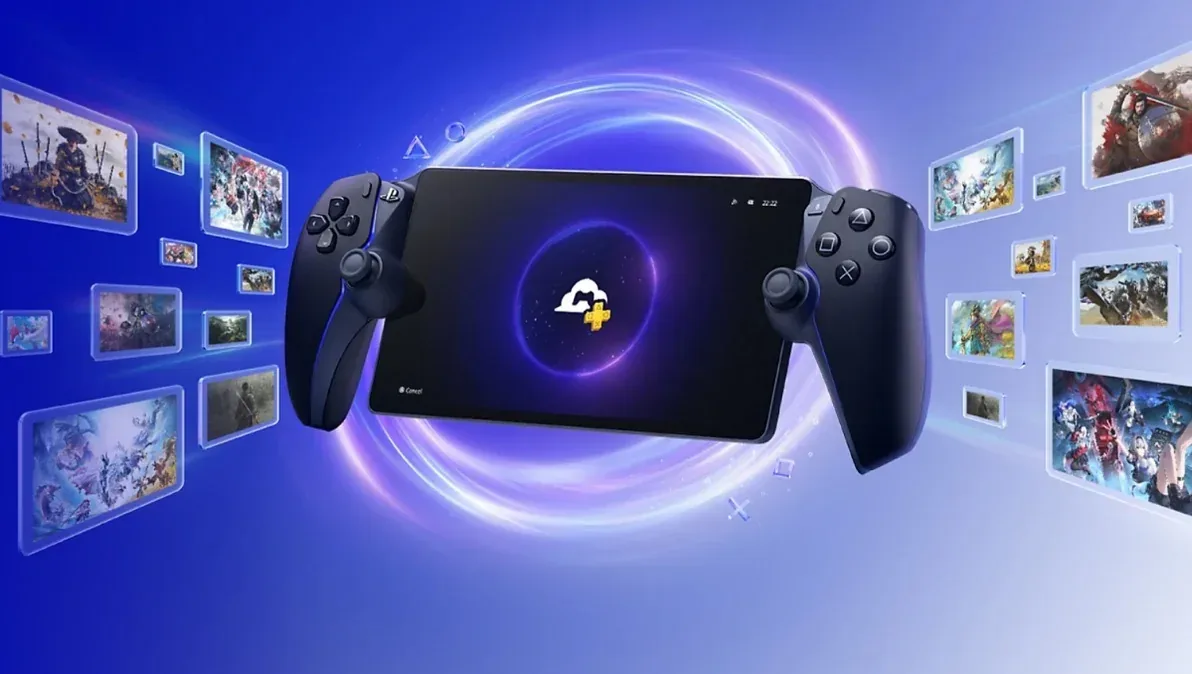
Storage is increasingly a hardware consideration rather than a background inconvenience. That is also why platform storage developments draw so much attention, including Sony’s unexplained internal-storage addition for a Japan-only Portal model, covered in this report on the PlayStation Portal’s new storage hardware. For GTA 6 players, though, the relevant question is more immediate: how much local console space will be free when the download begins?
Related coverage includes GTA 6 Preload Files Spark Early Questions About Storage, Online Plans, and PS5 Pro Ray Tracing.
Separate Story Mode and Online installs are plausible, not confirmed
File organization has also led to speculation that GTA 6’s story content is separated from the core game files. One interpretation is that Rockstar may eventually divide the single-player experience and the next iteration of GTA Online into separately installable pieces.
That would be a practical approach for a game of this scale. A player focused entirely on the campaign might prefer not to keep multiplayer assets installed, while a dedicated Online player could potentially avoid retaining story-specific files after finishing the narrative. If implemented, such an arrangement could make an enormous installation more manageable over the long term.
But the word doing the most work here is if. Separate packages in a preload do not prove a player-facing installation menu exists. Developers often split content internally for reasons that are invisible to users: patching workflows, permissions, regional versions, platform delivery systems, shared dependencies, or quality assurance. There is no announced promise that GTA 6 Story Mode and Online will be individually selectable downloads.
There is a second clue: a reported internal label reading intentType: launchMultiplayerActivity. At a basic level, “multiplayer activity” describes an intent for the platform or game to start a multiplayer-related experience. It is a strong sign that multiplayer functionality is contemplated somewhere in the software’s framework. It is not a complete product announcement.
Rockstar has not formally detailed a GTA Online successor for GTA 6. Given the long-running importance of GTA 5’s online component, a future online offering is a reasonable expectation, but expectations are not specifications. The preload does not answer the questions players would most want answered: whether this would be a launch feature, how it relates to existing GTA Online, what modes it would contain, or whether it would require its own download.
The cautious interpretation is therefore the useful one. The preload contains evidence consistent with multiplayer support and a modular content structure. It does not yet establish the final form, timing, or install options for GTA Online on GTA 6.
One missing file is not evidence of regional cuts
Another observation concerns a file reportedly called core_restofworld001, which appears to be absent from the Australia and New Zealand version. That has sparked suggestions that regional content may have been removed.
At present, that theory is far too tentative to treat as a finding. A missing package name can arise from ordinary differences in how a build is assembled or distributed. The name itself does not explain what content it contains, whether another package replaces it, or whether it affects what players will see. Since the game data is encrypted, outside observers cannot use the filename alone to establish a content difference.
Regional variation is a tempting explanation because it sounds dramatic, but the available evidence does not demonstrate censorship, cuts, or any particular change. Until Rockstar clarifies the discrepancy—or until the game’s released versions can be compared in a meaningful, lawful, and functional way—the sensible status is unresolved.
BVH8 is a notable PS5 Pro clue, but it does not reveal performance targets
The most technical discovery is the reported reference to BVH8. This matters because the term is associated with ray tracing on PlayStation 5 Pro, and it could help explain why GTA 6 carries official “PS5 Pro Enhanced Support” branding.
A bounding volume hierarchy, or BVH, is a method for organizing objects in a scene so that ray-tracing calculations can more efficiently determine what a ray intersects. Ray tracing is a rendering technique used to model interactions of light, including effects such as reflections and shadows. It can be demanding because a game needs to calculate many possible paths through a complex 3D environment.
The key benefit of a more efficient BVH arrangement is not that it magically creates higher image quality by itself. Rather, it can reduce the work required for ray-tracing tasks. That saved processing time may give developers more flexibility: they might pursue more ambitious ray-traced effects, improve image stability, target a better resolution, or allocate resources elsewhere. The final choice depends on how the game is built.
Ubisoft previously described BVH8 support on PS5 Pro as speeding up GPU work involving hardware ray tracing by roughly 300% in its implementation of Assassin’s Creed Shadows. That figure should not be transplanted directly onto GTA 6. Different games have different worlds, lighting models, workloads, optimizations, and rendering goals. It shows why BVH8 can be technically significant, not what GTA 6 will achieve.
What is officially known is limited: Sony has confirmed PS5 Pro Enhanced Support for GTA 6. Neither Rockstar nor Sony has publicly set out the game’s PS5 Pro resolution, frame-rate options, ray-tracing settings, or visual-mode differences. BVH8’s apparent presence is therefore an encouraging indication that the upgraded hardware’s ray-tracing capabilities may be used, but it is not a mode list.
Do not turn a ray-tracing clue into a 60fps promise
Frame rate is where preload analysis most easily gets ahead of itself. Some technical observers have suggested GTA 6 may not exceed 30 frames per second on any platform because ray tracing and extensive physics simulation can impose heavy CPU and GPU demands. That is an assessment, not an announced target.
Frames per second, usually written as fps, measures how many complete images a game displays each second. A 30fps target provides a new frame every one-thirtieth of a second; 60fps doubles that cadence. Higher frame rates can improve perceived motion smoothness and controller response, but maintaining them depends on every major part of a game’s workload staying within budget—not merely the graphics processor.
Open-world games can be especially challenging because they must continuously simulate and stream a broad environment while managing vehicles, pedestrians, physics, animation, audio, lighting, and other systems. Faster ray-tracing work on PS5 Pro may help one part of that equation without removing a different bottleneck. That is why an apparent BVH8 reference cannot confirm 60fps, 30fps, or any particular resolution.
Players choosing hardware primarily for GTA 6 should wait for Rockstar’s actual platform specifications. “PS5 Pro Enhanced” establishes support, but it does not communicate how that support is expressed. Until developers identify the rendering modes and their targets, claims about performance should be regarded as informed forecasting rather than settled fact.
What the preload genuinely tells players
There are real takeaways from the early files, provided they are kept in proportion. GTA 6 can demand up to 212GB of storage, and a reported 22GB audio package helps illustrate the scale of its data. There are signs consistent with a multiplayer pathway and possibly modular content organization. PS5 Pro-related BVH8 support could be meaningful for ray-tracing efficiency.
Just as importantly, the preload does not reveal the contents of the encrypted game, confirm separated consumer installs for Story Mode and Online, prove regional content changes, or provide definitive frame-rate and resolution information. Encryption is doing exactly what it is supposed to do: allowing preload delivery without turning the game into a pre-release archive of confirmed spoilers and feature lists.
With launch set for November 19, Rockstar’s own technical details remain the benchmark. Until then, fans can reasonably prepare storage space and keep an eye on official platform guidance. Everything else—from Online’s delivery model to PS5 Pro’s precise gains—needs to remain labeled as a clue, a possibility, or a question rather than a promise.