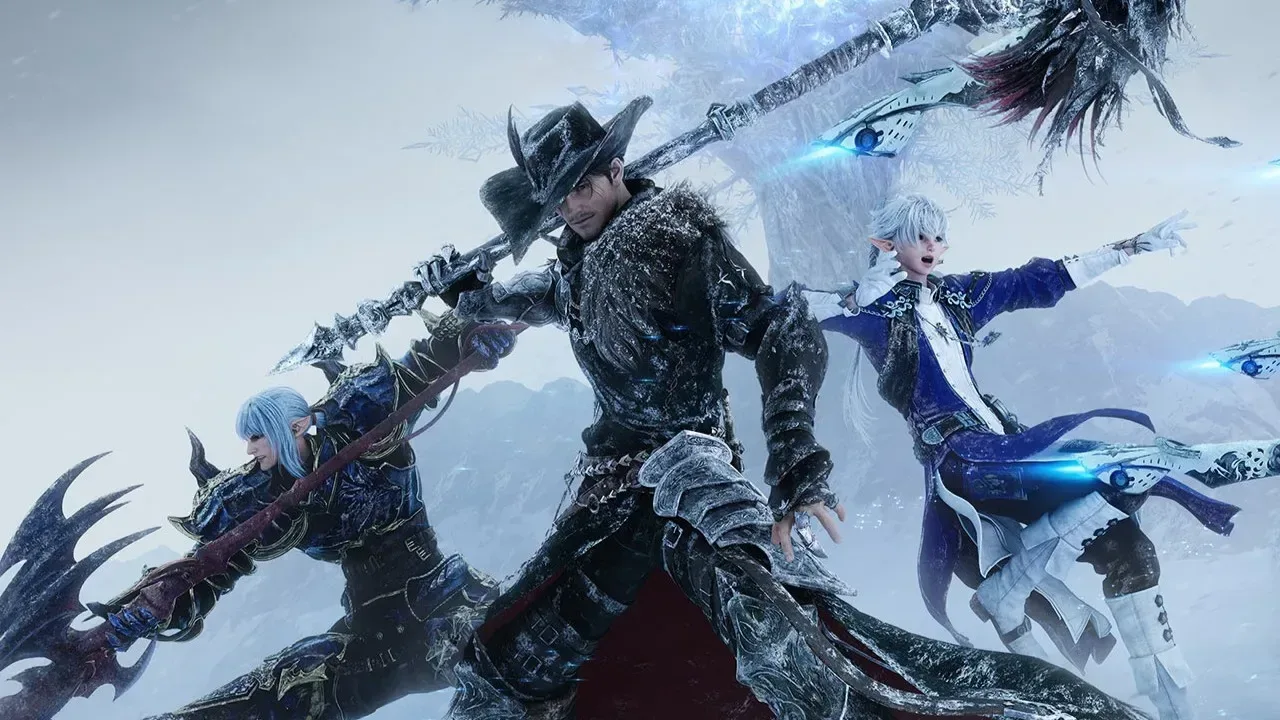

Final Fantasy XIV is preparing for the delayed arrival of Evercold with Road to Evercold, a return-player initiative built around the game’s longest Free Login Campaign to date and a new optional paid story skip. The campaign arrives as the next expansion’s release window has moved by four weeks into February 2027, creating a slightly longer runway for players who stepped away from Eorzea to get caught up—or decide that catching up is exactly what they would prefer not to do.
The headline offering is the Free Login Campaign, described as the longest the MMORPG has run. Exact eligibility rules and duration were not detailed here, so returning players should wait for the campaign’s official terms before assuming their account qualifies. Still, the purpose is unusually clear: lower the friction of reopening an inactive account before the expansion arrives, rather than asking every lapsed player to commit to another paid subscription month sight unseen.
Alongside it is Tales of Adventure: Winter’s Prelude, a new optional Mog Station item priced at $10. It skips main-scenario content beginning with Patch 6.1’s Newfound Adventure and continuing through Patch 7.4’s Into the Mist. The item is available only to players at level 90 or higher. That restriction matters. This is not presented as a way for a complete newcomer to leap blindly into the latest chapter; it is aimed at players who have already completed the game’s first saga and have enough combat and matchmaking experience to re-enter current content without starting from square one.
A return campaign shaped by an expansion delay
A four-week move is modest in the wider world of game delays, but the timing has particular weight in a subscription MMO. Major expansions commonly function as a natural point for lapsed players to return: there is a new narrative, new systems, a fresh set of activities, and a communal moment when friends and free companies are more likely to be active. Moving that moment to February 2027 means the existing wait is longer, even if only by a month.
Road to Evercold is designed to fill that gap without disguising the reason it exists. Director and producer Naoki Yoshida has said player retention is especially important in MMORPGs with monthly fees, while also stressing that the team does not want to use “heavy-handed” game-design tactics to keep people logged in. His framing is notable because it acknowledges the basic business reality of a subscription service while arguing for a softer kind of prompt: promotions, accessibility measures, and a reason to sample the game again before a major release.
In practical terms, the campaign makes two different pitches. The free-login component says, “Come see what you missed before deciding whether to pay again.” Winter’s Prelude says, “If the backlog itself is why you stayed away, there is an official shortcut.” Neither is a promise that every returning player will enjoy the current game or the upcoming expansion. They are tools intended to reduce the time, money, and narrative commitment needed to find out.
That distinction is important in an MMO, where “returning” can mean several very different things. One player may have only paused for a patch or two and need a refresher. Another may have finished the first saga, then stopped before the post-6.0 story began. Another may still enjoy dungeons, raids, crafting, or social play but have no desire to work through a long stack of main-scenario quests. A single free-login window cannot solve every one of those cases. A story skip cannot either. Together, though, they address two of the most common barriers: account access and accumulated narrative progression.
What Winter’s Prelude actually skips
The key word in the new item’s description is main scenario. Final Fantasy XIV’s Main Scenario Quest, often shortened by players to MSQ, is the central chain of story quests that gates much of the game’s expansion progression. Winter’s Prelude covers that chain from Patch 6.1 through Patch 7.4. It does not, based on the details available, claim to complete every optional piece of content a player may have missed, nor does it replace the need to meet whatever requirements apply to future content.
Related coverage includes Final Fantasy XIV Launches Road to Evercold With Its Longest Free Login Campaign Yet.
There is also a significant narrative trade-off. Skipping the post-6.0 story means giving up a direct first playthrough of the material that bridges the completed first saga and the point at which the skip ends. For players who value plot continuity, character moments, or the gradual context of each patch, the item is not a neutral convenience purchase. It is a decision to exchange that journey for speed.
For others, that exchange may be exactly the point. The promotion explicitly targets people who completed the first saga but are now on a break. A level-90 prerequisite signals that the intended buyer already knows the basics of playing Final Fantasy XIV: how combat works at a higher level, how to use the matching system, and how to participate in group content. “Matching” here refers to the systems that assemble players for applicable multiplayer duties. Yoshida’s stated rationale is that purchasers should be familiar with it and experienced in battle.
This is a more limited proposition than a broad “skip to Evercold” button. By setting the bar at level 90 and completed first-saga players, the game is attempting to preserve a minimum baseline of familiarity. Whether that is enough preparation for someone who has been absent for a long time will vary by player, job, and how much the game has changed during their break. A returning player should not mistake progression access for instant confidence.
Who should consider the skip—and who probably should not
- It may make sense for: level-90 players who have finished the first saga, understand their job and multiplayer duties, and chiefly want to be present for Evercold without spending the intervening period on Patch 6.1 through 7.4 MSQ.
- It may be less appealing for: players who care about experiencing story developments in sequence, want to revisit the game at a slower pace during the free-login period, or are uncertain whether they will continue playing after the campaign.
- It is not a newcomer shortcut: the level-90 requirement alone rules that out. New players still need to build the familiarity the restriction is intended to ensure.
The cautious route, where eligibility permits it, is to use the Free Login Campaign first. That gives a returning player room to assess their character, check where their quest log stands, reacquaint themselves with combat and interface settings, and decide whether the remaining story is a burden or a welcome return. The paid option remains there if the answer is the former.
Retention without the hard sell?
Yoshida’s comments put Road to Evercold in a broader conversation about how live-service games ask players to stay. Retention is the industry term for keeping people engaged over time. In a subscription MMO, it has a straightforward financial dimension: active subscribers support the game. But it also has a social dimension. A massively multiplayer game works best when there are players available for duties, communities to join, and friends whose schedules overlap.
His stated philosophy is to avoid designing retention through coercive pressure. That does not mean the game lacks systems with time-sensitive consequences. Housing auto-demolition, for instance, has been a point of discussion, but Yoshida characterizes it as a symptom of issues surrounding housing plots rather than a deliberate retention mechanism. The distinction being drawn is between a system intended to manage limited plots and a system built to make a player fear they will fall behind or lose out unless they log in continuously.
Road to Evercold fits the alternative approach Yoshida describes: an invitation rather than an ultimatum. Free access for a time and an optional paid catch-up tool are still efforts to bring players back. They are not altruism. Yet they give players choices about how to engage, including the choice to return temporarily and leave again. That matters for an audience with limited time, especially when the next major release is still months away.
The approach also responds to a real perception problem. Dawntrail spent a considerable period with a “Mostly Negative” Steam review label, and criticism around that expansion has been part of the backdrop to the Evercold wait. This does not prove a single reason every player left, nor does it establish that a story skip will change anyone’s view. It does explain why a catch-up campaign is not only about making an already-happy audience more convenient to serve. It is also an attempt to reopen the door for players whose momentum was broken.
Evercold’s promise: evolution, not simply another chapter
Road to Evercold is being paired with a larger promise for the expansion itself. Yoshida has described Evercold’s theme as “evolution,” saying the team is expanding and adjusting systems, user interfaces, and content in ways it has not previously attempted. That wording is broad, and it should be treated as broad until specific changes are outlined. It does, however, establish that the expansion is meant to do more than continue the MSQ.
A user interface, or UI, is the set of menus, controls, indicators, and on-screen tools players use to navigate a game. System changes generally refer to underlying rules or features that affect how players interact with progression, activities, or other parts of the MMO. Content, in this context, can cover the playable material itself. The three categories are related but not identical: an interface improvement can make an existing activity easier to navigate without changing the activity’s rules, while a system adjustment may alter the structure around it.
For lapsed players, that makes the free-login campaign useful beyond a simple nostalgia visit. It could be a low-commitment opportunity to see whether Final Fantasy XIV’s current rhythm still appeals before Evercold’s more substantial changes arrive. For current subscribers, the campaign may help rebuild a larger pool of active players ahead of the expansion. In an MMO, that is not merely a marketing metric; more returning players can mean more potential teammates and more activity across the game’s social spaces.
It is also worth keeping expectations proportionate. The promotion does not confirm every Evercold feature, resolve every concern about Dawntrail, or substitute for the expansion itself. It is a bridge to February 2027. A relatively generous bridge, perhaps, but still a bridge.
What players can do now
- Check Free Login Campaign eligibility when the rules are published. “Longest” describes the campaign’s scale, not whether every former subscriber is automatically included.
- Identify your current MSQ position. Winter’s Prelude is specifically described as covering Patch 6.1 through Patch 7.4, so knowing where you stopped is essential before considering it.
- Consider the story cost as carefully as the $10 price. The purchase saves time, but it also bypasses narrative material.
- Refresh core play before committing to current group activities. The level-90 condition is designed around existing familiarity, not a guarantee that a long-absent player will immediately feel comfortable.
- Watch for more detail on Evercold’s system and UI changes. The expansion’s “evolution” theme is a direction, not yet a full feature list.
Road to Evercold ultimately makes a measured case for returning now: try the game without immediately resubscribing if eligible, play through the backlog if that sounds worthwhile, or pay to move past a defined portion of it if it does not. It is a pragmatic response to a delayed expansion and to the uneven reception around Dawntrail, while remaining consistent with Yoshida’s stated preference for incentives over pressure. For a broader view of the business pressures shaping games and studios, see this report on a veteran developer affected by industry layoffs.