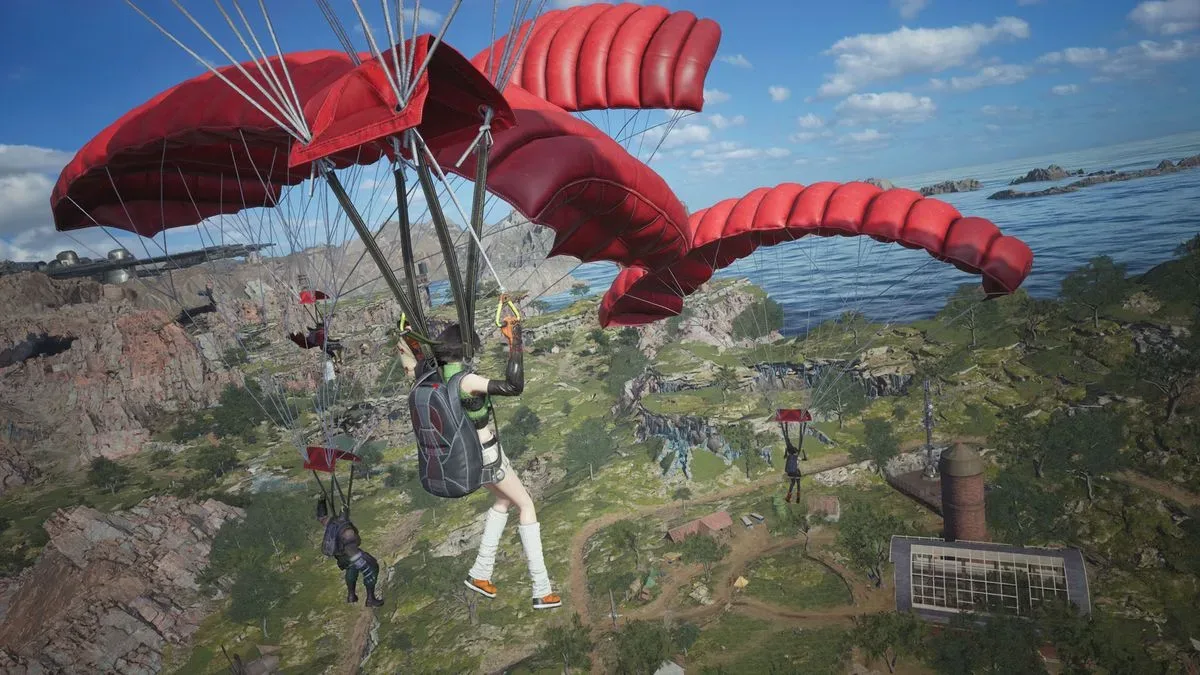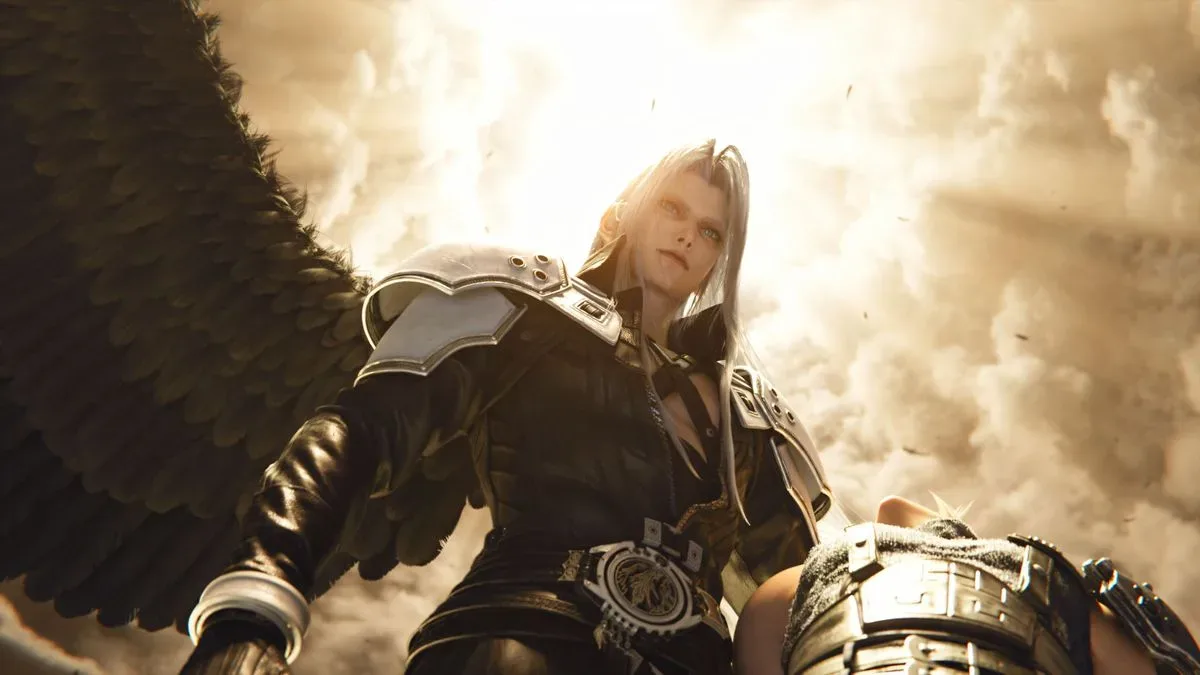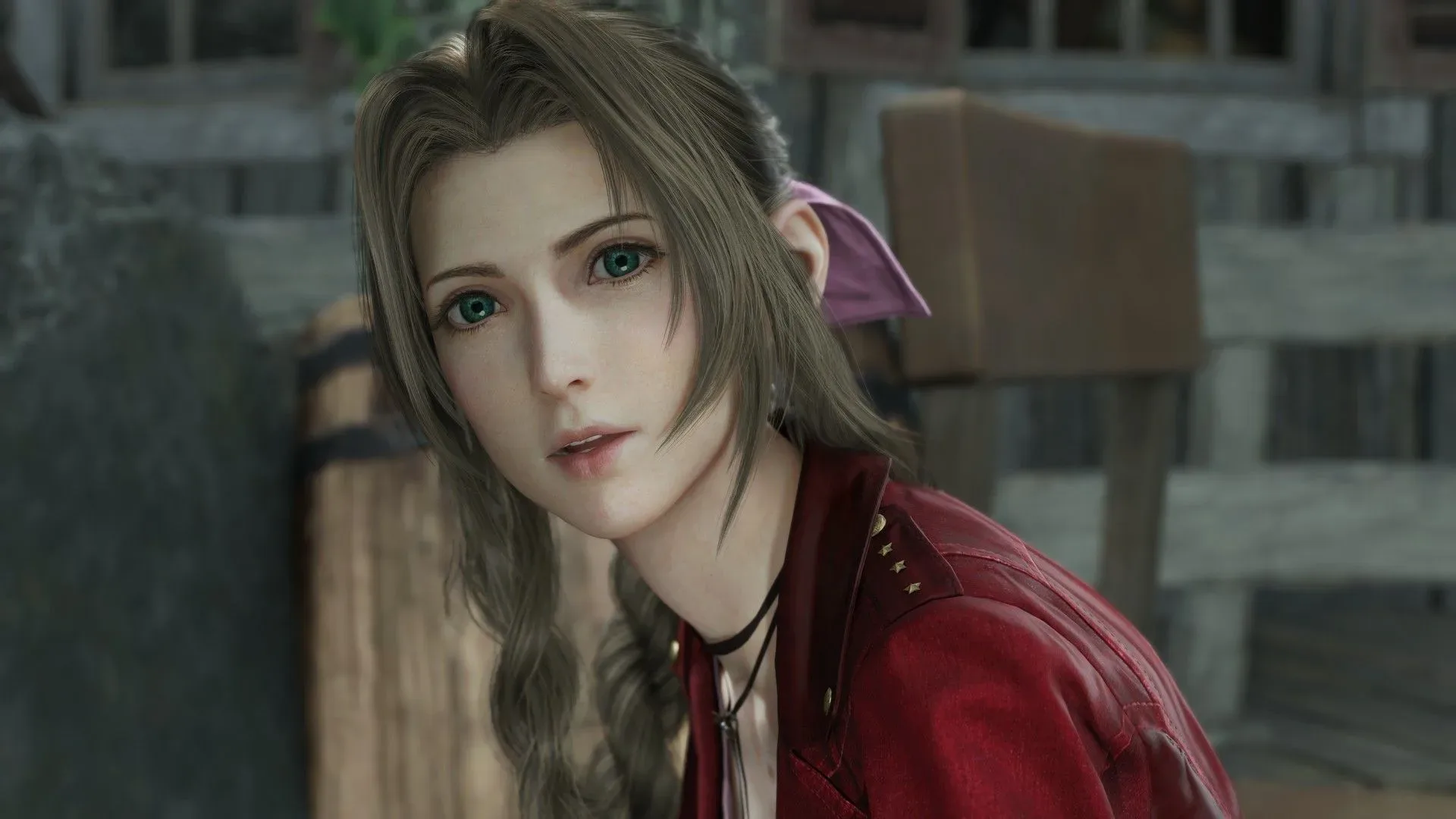

Final Fantasy 7 Revelation is bringing back two very different pieces of Final Fantasy 7’s personality: downhill snowboarding and the strategically minded card game Queen’s Blood. Director Naoki Hamaguchi has described the snowboarding minigame as essential to the identity of Final Fantasy 7, while confirming that Queen’s Blood returns after the strong player response it received in Final Fantasy 7 Rebirth.
The details matter because they point to a broader approach for the final entry in the remake trilogy. Revelation is not treating its side activities as disposable nostalgia, nor is it merely reusing them as checkpoints between major plot scenes. Snowboarding will be tied into the main story, while Queen’s Blood is set to receive a fresh narrative thread, new rules and mechanics, and a reward structure intended to make its optional nature clearer.
It is a useful distinction. Minigames can help a massive role-playing game feel like a lived-in world, but they can also create friction when players believe they must master activities they do not enjoy to earn meaningful progression rewards. Revelation’s plans suggest an attempt to keep the exuberance of Final Fantasy 7’s diversions while giving players more control over how deeply they engage with them.
Snowboarding is returning, but not only as a Gold Saucer attraction
Hamaguchi called snowboarding “essential” to Final Fantasy 7 and said it is something the team knows fans expect. More notably, he confirmed the activity will not simply be a minigame accessed through the Gold Saucer. It will be part of Revelation’s main story.
That leaves the precise circumstances deliberately unclear. The original game’s snowboarding sequence is memorable partly because of its tonal contrast: a dramatic adventure can suddenly pause for a stylized descent down a mountain. That kind of pivot is a major part of the original game’s character. Its world was never only about battles, exposition and looming catastrophe; it also made space for odd contests, local entertainment and detours that gave its locations personality.
In a remake project that presents the world at a more detailed scale, rebuilding an activity like snowboarding creates a design question: is it a nostalgic reference, a fully fledged sport-like mode, a cinematic set piece, or some combination of all three? The confirmation that it serves the story rules out the simplest version of the answer. At minimum, players should expect snowboarding to have a narrative role rather than existing solely as a menu selection or optional score chase.
The director did not reveal where in Revelation it occurs. That uncertainty is significant because the remake trilogy has preserved many broad story landmarks while also changing or expanding their context. A familiar activity may still arrive in an unfamiliar situation. Until more is shown, it would be speculation to assume the new sequence follows the original game’s placement or structure exactly.
Why a minigame can be part of the main event
“Minigame” often describes a compact activity with mechanics separate from an RPG’s central combat and exploration systems. In Final Fantasy 7, however, the word does not necessarily mean insignificant. These activities can establish a location’s atmosphere, create a memorable change of pace, or turn a story beat into something players actively perform rather than simply watch.
Related coverage includes Final Fantasy 7 Revelation Confirms Snowboarding and Queen's Blood Return.
Making snowboarding part of the main story could let Revelation use it as a piece of pacing: a high-speed sequence between dialogue-heavy or combat-intensive portions of the game. It could also make the mountainside descent a more authored moment than a standalone arcade challenge. None of those implementation details have been confirmed, but the story integration alone makes clear that snowboarding has a larger role than a purely optional callback.
That approach fits the trilogy’s interest in broadening smaller elements of the 1997 game. The original’s towns, attractions and diversions helped make the planet feel populated rather than functioning as a string of battle arenas. Revelation is expected to expand the trilogy’s scale further, including exploration via the Highwind airship across a planet-sized open world. In that setting, activities are not just ornamental. They can be part of how the game gives individual places and characters texture.
Queen’s Blood was too popular to leave behind
Queen’s Blood, introduced in Final Fantasy 7 Rebirth, will return in Revelation because the development team saw strong enthusiasm for it after Rebirth’s launch. Players asked whether it might become a standalone game and whether it would carry into the trilogy’s third entry. Hamaguchi said its inclusion in Part Three became a given early on.
The game is a lane-based card activity: rather than simply comparing card values, players build positions across a board and play monster cards to contest territory and score points. “Lane-based” here refers to the board’s structured rows and spaces, which make placement as important as the individual cards in a deck. Deckbuilding, meanwhile, is the process of assembling a set of cards whose costs, placement requirements and effects support a strategy.
Queen’s Blood has already been used for more than isolated matches. Rebirth tied it to opponents, a tournament setting and a mystery-driven thread. Revelation will develop that story material further with Red XIII at the center of a new Queen’s Blood narrative. That choice builds on his prior connection to the game as an enigmatic challenger.
Giving a party member the lead in an optional activity can do two things at once. It gives the activity a character hook beyond pure competition, and it potentially lets a side system tell a smaller, focused story without interrupting the larger plot. Exactly how extensive Red XIII’s storyline is remains unknown, but the confirmation establishes that Queen’s Blood is being treated as a meaningful returning feature, not merely a repeatable diversion.
New rules and balance work aim to prevent a straight rehash
The team believes the underlying Queen’s Blood gameplay was in a good state in Rebirth, but has not left it untouched. Revelation will add new rules and mechanics, alongside further polishing and extensive balance adjustments.
In a competitive or strategy-focused card game, balance means the ongoing effort to prevent a small number of cards, strategies or combinations from becoming so efficient that they crowd out other viable approaches. A balanced system does not require every card to be equally powerful in every scenario. Instead, it should give players credible alternatives, meaningful trade-offs and reasons to adapt their decks to different opponents or board states.
That is particularly important for a single-player card mode embedded in a large RPG. If a dominant deck trivializes every opponent, deckbuilding stops being an interesting decision. If the rules are too opaque or the difficulty spikes too sharply, players who arrived for the main adventure may disengage. Hamaguchi’s emphasis on adjustments suggests the developers are conscious of both sides of that problem: retaining what players liked while giving returning competitors a reason to learn something new.
There are no confirmed specifics yet about the incoming rules, cards or mechanics. Players should therefore be wary of assuming that any particular Rebirth strategy will transfer unchanged. The clearest confirmed takeaway is that Revelation’s Queen’s Blood is intended to show another side of the system, rather than simply recreate the prior version with new opponents.
Optional rewards could make the card game easier to skip
Perhaps the most practical part of the update concerns rewards. The new Queen’s Blood storyline is described as a self-contained activity whose rewards feed back into deckbuilding. In other words, success in the card game appears to primarily earn benefits for playing more of the card game.
That is a notable direction for an RPG packed with side content. When a minigame gives major combat equipment, story-critical progression or other broadly useful rewards, players who dislike that mode can feel pressured to complete it anyway. A self-contained reward loop reduces that pressure. Enthusiasts can pursue stronger decks and deeper card-game progression, while players focused on combat, exploration or the principal narrative are less likely to feel as though they are leaving core advancement behind.
Hamaguchi also stressed clear communication: players should be able to readily see what they will receive from a given piece of content. That is a modest but important interface and design principle. Clear reward communication lets players decide whether an activity matches their goals before they invest time in it.
It does not mean every player will want to skip Queen’s Blood. Its return is driven by evident demand, and its narrative expansion gives fans an added reason to revisit the table. But optionality works best when it is legible. A player who wants a card-focused challenge should know where it leads; a player who does not should understand that they can move on without silently compromising their preferred build or playstyle.
Revelation’s activities appear to be part of its identity, not a distraction from it
Final Fantasy 7 Revelation is scheduled to close the remake trilogy in early 2027. Its promised open-world scope and Highwind exploration naturally raise expectations for a substantial range of side content. Snowboarding and Queen’s Blood show two different ways the game is approaching that scale.
Snowboarding is being folded into the story, making a classic change-of-pace activity part of the central adventure. Queen’s Blood is receiving a dedicated Red XIII storyline and mechanical updates, while also being structured so its rewards remain largely within its own deckbuilding ecosystem. One is a returning spectacle with narrative relevance; the other is a strategy system being expanded for those who want to stay with it.
The plan also speaks to a continuing discussion around how major games balance ambition, focus and player choice. That question is not limited to RPGs, as seen in debates over technical targets and player expectations around what a new-generation console game owes its audience. In Revelation’s case, the issue is less about frame rate than scope: a huge adventure can offer many kinds of play, but it needs to make those experiences feel purposeful rather than compulsory.
For now, the confirmed picture is appealingly specific. Cloud will snowboard again, and the run will matter to the story. Red XIII will take the spotlight in Queen’s Blood, which will evolve through new rules, mechanics and balance work. And players who would rather not become card experts should have a clearer path around that optional pursuit. For a finale built around revisiting a beloved world, that balance between affection, expansion and freedom may be as important as any single minigame.