Black Friday is usually framed as a hunt for cheaper hardware, games and subscriptions. A discounted gift card is a slightly different kind of deal: the purchase is not an item with a temporary price cut, but spending power with a fixed face value that costs less upfront.
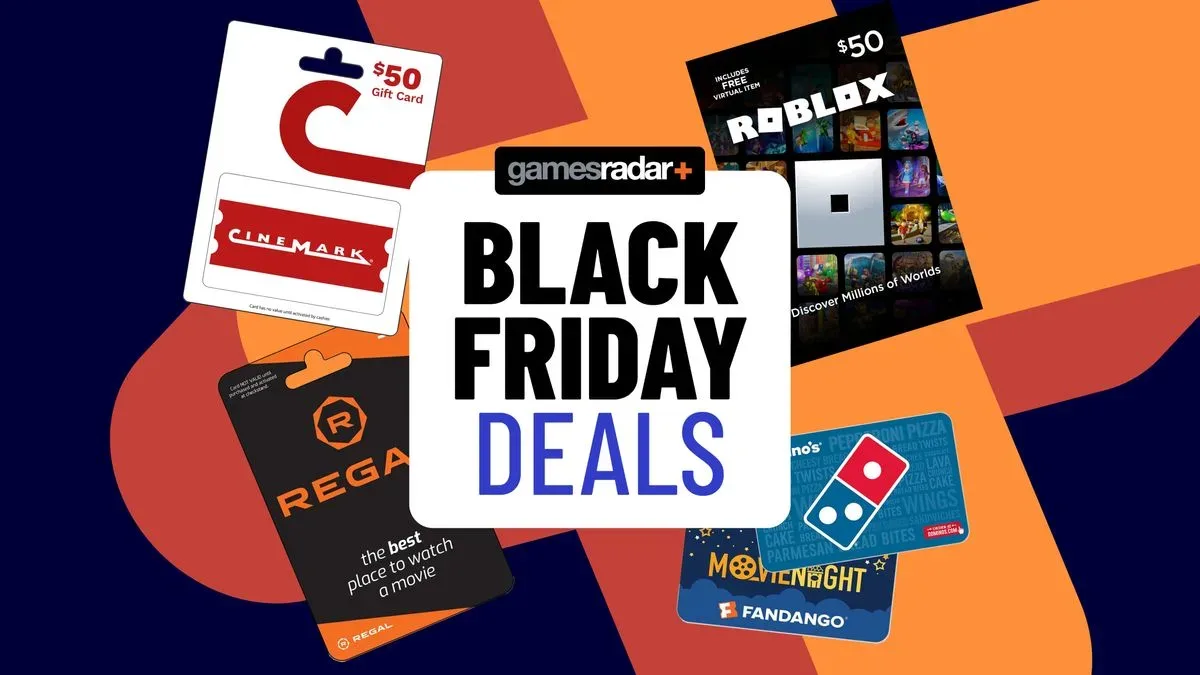
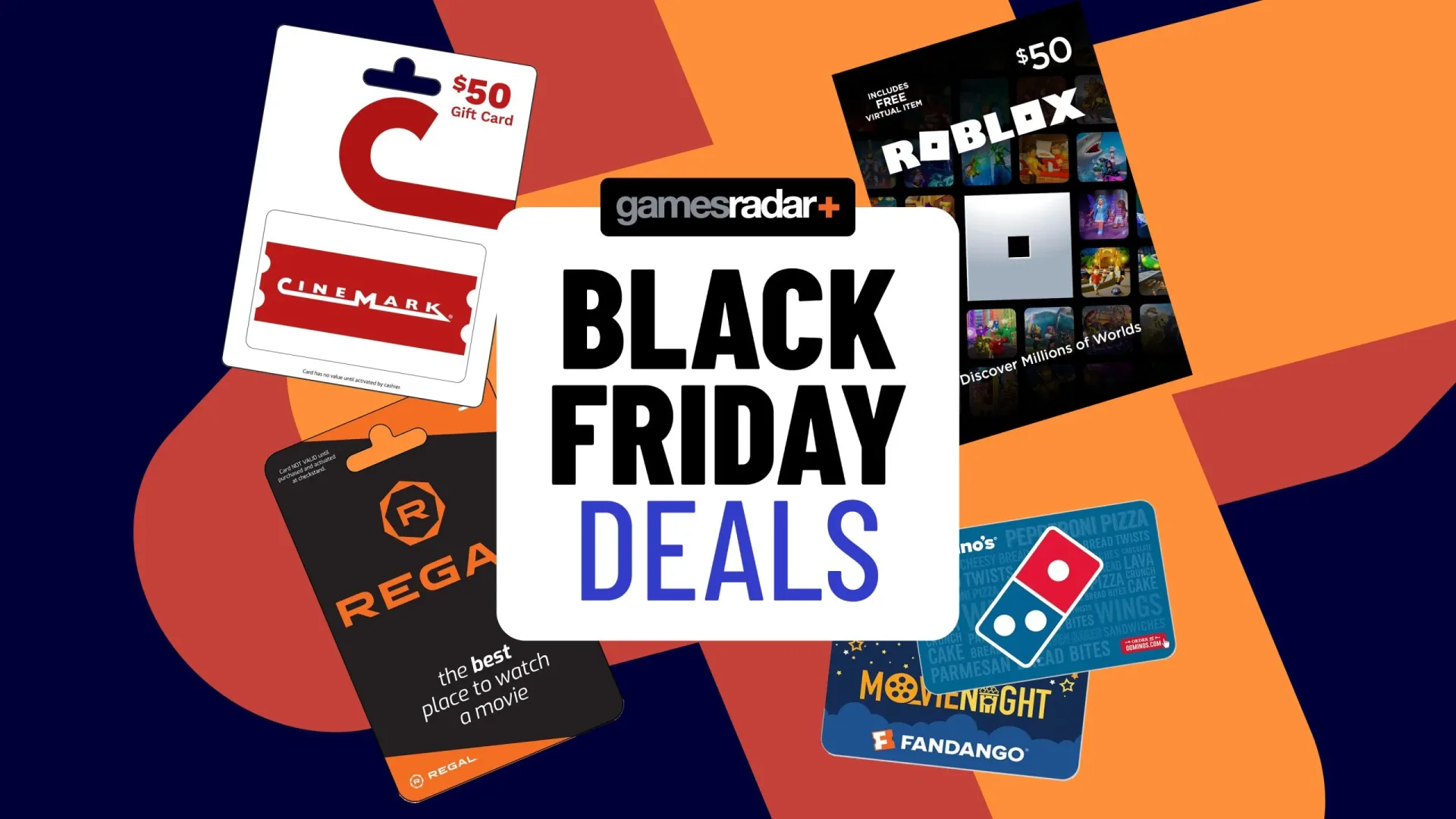
Amazon’s current selection includes a gaming-specific option for Roblox players. The eligible Roblox gift card is discounted by 15%, reducing the cost of funds that can be redeemed for Robux and providing extra in-game perks on redemption. The range is otherwise broader than gaming, with selected gift cards for Domino’s, Cinemark, Regal, Taco Bell and Panera Bread also reduced.
That makes these offers potentially useful for a player’s Robux budget, a gift, or simply the real-world food and cinema side of a game night. But gift-card promotions are unusually dependent on fine print. The headline percentage alone is not enough: buyers need to verify the denomination, card design where applicable, delivery format, redemption location and the terms of the retailer whose card they are buying.
Roblox is the direct gaming deal
The Roblox gift card is the clearest option for game spending in this group. It is listed at 15% off and can be redeemed for Robux, Roblox’s virtual currency. Robux are used across the platform, so a reduced card lowers the real-money cost of that virtual spending. The card also includes extra Roblox perks when redeemed.
That distinction matters. A gift card is not itself a discount on every individual in-game purchase; it is a reduction on the cost of the stored value before it is added to an account. Once redeemed, the holder has the card’s face value to use under Roblox’s own rules.
For someone already intending to purchase Robux, the arithmetic is straightforward: a 15% reduction means keeping 15% of the card’s face-value cost in their pocket at checkout. It is most useful when the recipient already plays Roblox and can redeem the card on the appropriate account. It is less useful as an impulse buy merely because the percentage looks attractive.
Shoppers weighing that card against larger gaming purchases may also want to separate immediate savings from relevance. A discounted gift card offers a fixed benefit on spending that is already planned, while a product bundle has to be judged by whether its included hardware or services will actually be used. For an example of the latter calculation, see this look at a Switch 2 Black Friday bundle and its included online membership.
Other cards can support a game-night budget
The surrounding offers do not add money directly to a gaming wallet, but they could reduce the cost of activities often paired with games. The important caveat is that the reductions apply to particular versions rather than every value on each brand’s card page.
Related coverage includes Amazon Black Friday gift card deals: Roblox, Regal and more.
- Domino’s: The $50 card is 15% off. The reduction is limited to that denomination.
- Cinemark: The applicable card can be used for cinema tickets as well as the chain’s cafes and restaurants.
- Regal: A 20% reduction applies to the theater group’s gift card, potentially covering tickets or concessions under the card’s terms.
- Taco Bell: The $50 eGift card is 15% off, but it must be redeemed through the brand’s app rather than in person.
- Panera Bread: The physical $50 card is 20% off. The $25 and $75 alternatives are not reduced.
There is also a selected $50 gift-card deal where the discount applies only to certain designs. That is an easy detail to miss when comparing visually similar listings. The design restriction does not change the card’s intended value, but it does change whether the reduced price appears in the cart.
For Regal and Panera, 20% is the biggest stated percentage in this set. That does not automatically make either the best purchase. A larger discount on money that will sit unused is worse than a smaller discount on something the buyer was already going to use. A card’s practical value is tied to its likelihood of being redeemed in full.
Why a reduced gift card can work alongside another promotion
The appeal is not only the lower purchase price. Gift cards often function as a payment method, whereas a pizza coupon, ticket offer or other advertised deal is a promotion tied to the purchase itself. In many cases, paying with a gift card bought at a discount does not stop a customer from using an eligible offer at the restaurant or cinema.
That can create two layers of savings. First, the buyer receives the full face value of a card for less than its stated value. Later, that card may be used to pay for an order that is independently discounted. For example, a restaurant could have several menu offers, and the customer may still be able to choose the most useful one while paying with the previously discounted card.
This is a possibility, not a blanket guarantee. Businesses frequently limit which offers can be combined, and the relevant restrictions may appear in the gift-card listing, the brand’s app, a rewards program, or the terms of the later promotion. A discounted card should not be treated as a universal coupon stack.
“Stacking” is the casual term for combining separate savings mechanisms on one purchase. Here, the first saving happens when acquiring the gift card and the second would happen when making the eventual order. Whether they can coexist depends on the terms attached to both stages. Checking those terms before buying is more reliable than assuming that a payment method will always be invisible to a promotion.
Check the denomination, design and delivery method before paying
These offers demonstrate why gift-card shopping requires more attention than a standard sale. A product page can contain several denominations, yet only one is discounted. The $50 denomination is specifically important across several of the listed offers. A buyer who selects $25, $75 or another available amount may find that the price reduction disappears.
Format is just as important. Some cards are physical, while others are digital or carry app-based redemption conditions. A physical card may be intended for use at a brand’s locations. An eGift card may be delivered and redeemed digitally, but could be restricted to a particular ordering route. Taco Bell’s offer, for instance, is for app redemption and not an in-person redemption method.
The buyer should therefore confirm all of the following on the individual listing:
- That the selected dollar value is the version receiving the advertised discount.
- That the selected design is eligible if the offer is design-specific.
- Whether the card is physical or digital, and whether that suits the recipient.
- Where and how the balance can be redeemed: in a branch, online, in an app, or through another defined channel.
- Whether the brand’s current promotion terms permit the intended purchase and any hoped-for additional offer.
These checks are particularly important for gifts. A Roblox card needs to go to someone who uses Roblox; a theater card is useful only if the recipient can visit the relevant chain; and an app-limited food card may be inconvenient for someone who normally orders at a counter. A discount does not remove those practical limitations.
What not to expect from the offers
There is one tempting scheme that is explicitly off the table: gift cards cannot be used to purchase more gift cards. That rule prevents repeated purchases from turning one discount into a self-perpetuating loop. The reduced card is intended to pay for the participating brand’s products and services, not to finance a new layer of stored-value cards.
Nor should shoppers assume the cards provide an unlimited discount on everything sold by the relevant brand. The card retains its defined balance, and the applicable brand’s normal rules still determine what can be purchased with it. In the Roblox case, it translates into Robux and redemption perks; for a cinema it can apply to eligible tickets, cafes and restaurants; for food chains it supports applicable orders under their individual redemption instructions.
The sensible approach is modest: start with spending that is already likely to happen, select the qualifying version of the card, and read the terms before checkout. For Roblox players, the 15% card reduction is the direct game-related saving in this group. For everyone else, the discounted dining and theater cards may be a way to make a planned outing, delivery order or shared movie night cost less—provided the exact card can actually be used where and how intended.
Shop the products
Check current price, model and availability at the retailer.