Death Stranding has always treated equipment as part of its visual language: labels, tape, cargo markings and carefully engineered containers carry as much personality as a conventional character logo. A new Casetify collaboration with Hideo Kojima and art director Yoji Shinkawa takes that language out of the game world and onto the things people carry every day.
The range is built around Death Stranding 2 imagery and extends far beyond phone cases. Its products include iPhone 18 Pro and iPhone 18 Pro Max cases, AirPods accessories, a 2-in-1 charging stand, crossbody bags, a keychain and a 21-inch carry-on suitcase. It is a substantial licensed-accessory offering, but it is also firmly positioned as premium merchandise: listed prices run from $32 for an earbuds pouch to $799 for the carry-on.
For players who enjoy the series’ industrial-futurist look but do not need an entire travel system in matching cargo decals, the collection is best understood as a menu of entry points. A small accessory can provide the visual nod; cases offer the broadest selection; and bags or luggage turn fandom into a far more conspicuous commitment.
Eleven design families draw from Death Stranding’s visual vocabulary
The collaboration is divided into 11 collections: Fragile Express, DHV Magellan, Ghost Mech, Ludens Emblem, Yoji Shinkawa Art Editions, Drawbridge, Bridges, Neon Signs, Cargo ID, Damage Sensor and Design Patch.
- Fragile Express
- DHV Magellan
- Ghost Mech
- Ludens Emblem
- Yoji Shinkawa Art Editions
- Drawbridge
- Bridges
- Neon Signs
- Cargo ID
- Damage Sensor
- Design Patch
That breadth matters because it avoids treating the collaboration as one logo applied repeatedly. Some names point to institutional branding and iconography, including Bridges, Drawbridge and Ludens Emblem. Others are oriented around packaging and transport motifs, such as Cargo ID, Damage Sensor and Fragile Express. The Shinkawa Art Editions are the most explicitly art-led branch of the list, while Neon Signs implies a more graphic presentation.
Design language is the term for the set of recurring visual choices that makes an object instantly feel connected to a particular world. Here, tape, warning-style labeling, shipping identifiers and equipment-like shells are as central to the theme as recognizable characters or emblems. That is an especially natural fit for accessories. A phone case, pouch or suitcase is already a protective object, so cargo-inspired graphics do not have to work as a purely decorative overlay.
There is a useful distinction, though, between merchandise that references a game and merchandise that is compatible with the game’s aesthetic. This range appears designed to pursue the latter. A Cargo ID suitcase, for example, uses crossed tape and a large shipping-label treatment—visuals that suit the form of luggage itself rather than simply placing an illustration on an unrelated object.
Phone cases are the center of the range
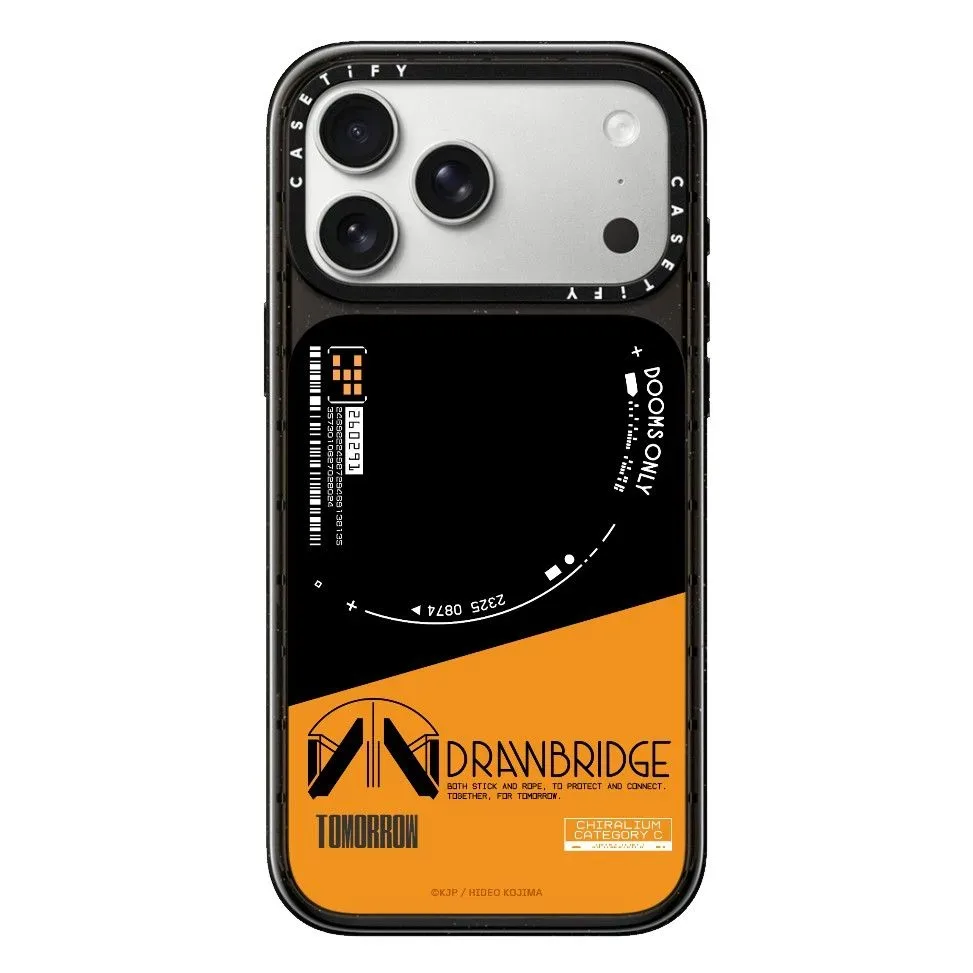
iPhone 18 Pro and iPhone 18 Pro Max cases make up the largest portion of the collection, with both Casetify Impact and Ultra Impact configurations participating. On the iPhone 18 Pro Max side, prices range from $64 to $84. Certain options can also include personalized text.
Related coverage includes Death Stranding 2 Gets a Huge Casetify Collection, From Phone Cases to $799 Luggage.
Compatibility deserves attention before design. “iPhone 18 Pro” and “iPhone 18 Pro Max” refer to different handset sizes, so a case selected for one is not automatically appropriate for the other. Likewise, an Impact or Ultra Impact configuration is not just a naming difference; they are separate case configurations within the collection. Anyone drawn to a particular graphic should first confirm the exact phone model and case version attached to that listing, then check whether text customization is available for that specific combination.
The timing also puts the line in the orbit of Apple’s newest hardware cycle. For readers following that wider context, Apple’s current hardware discussion shows how quickly product categories and accessory ecosystems can shift. In practical terms, a phone case is the most device-specific purchase in this collaboration. It is potentially the easiest way into the collection, but also the least transferable if someone changes phones.
That makes the cases a sensible option for an owner of a compatible device who wants daily use from their fandom purchase. They are less compelling as a design object alone if the buyer does not own one of the supported models.
The BB Pod AirPods case is the standout, and its standalone listing is sold out
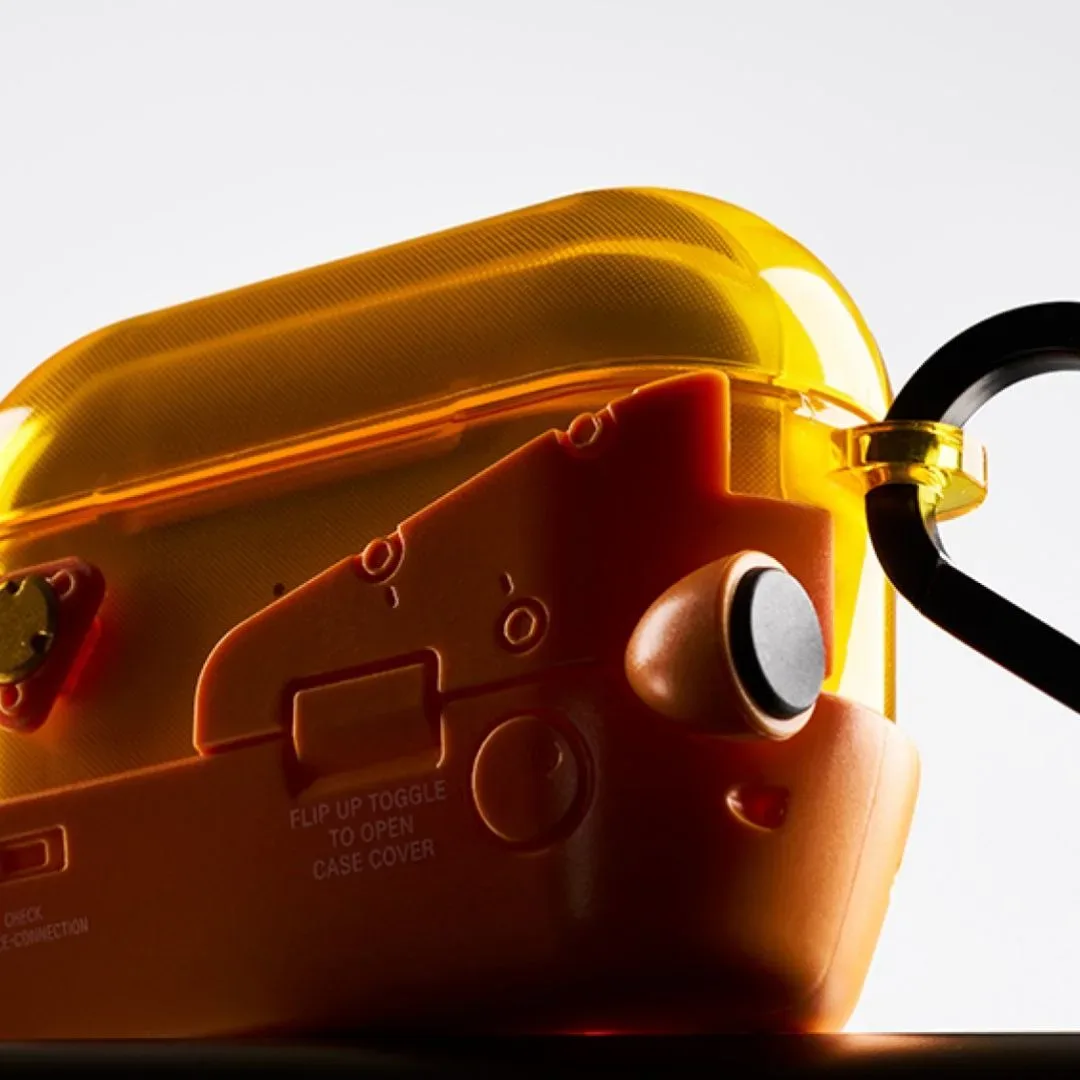
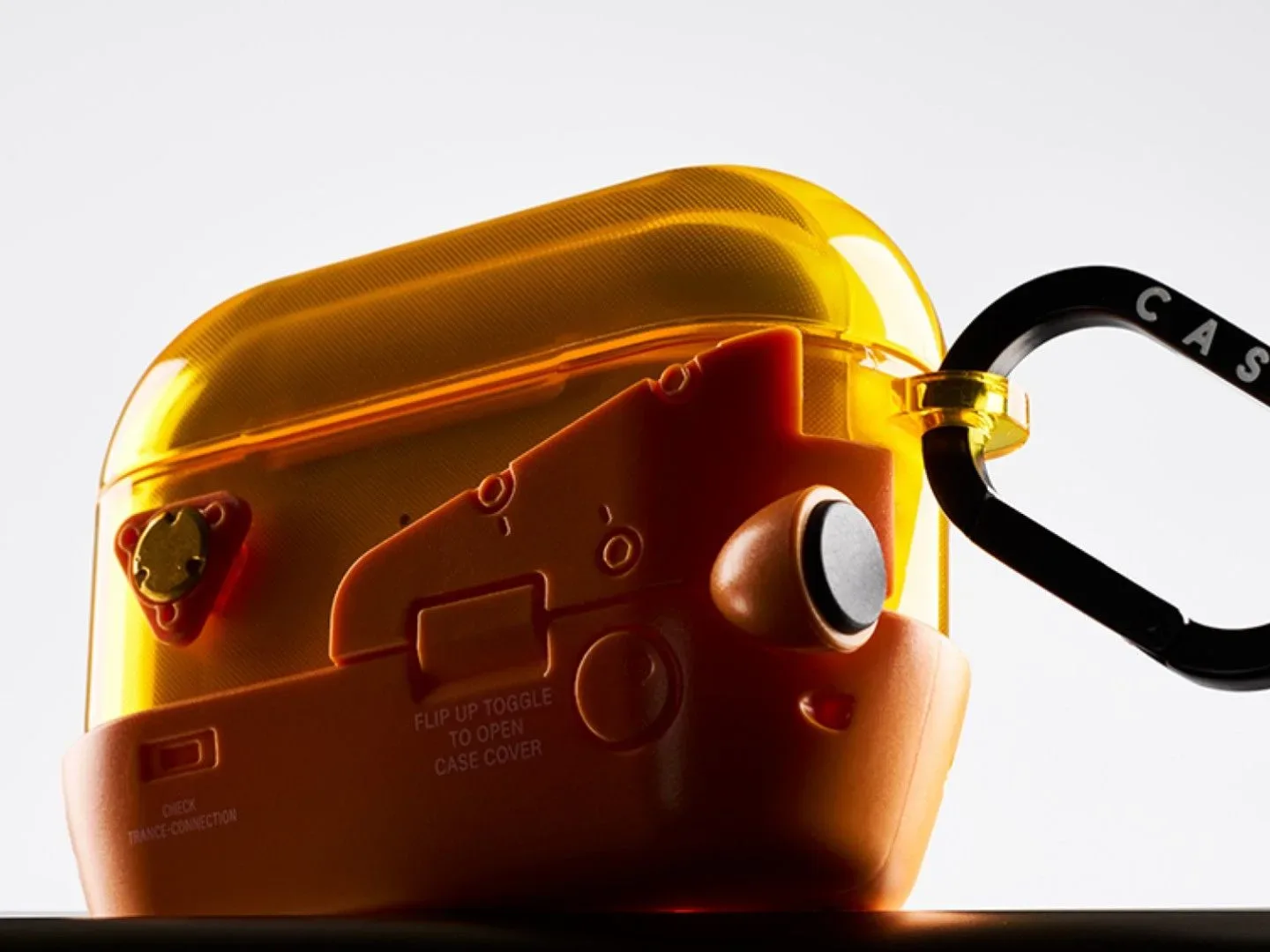
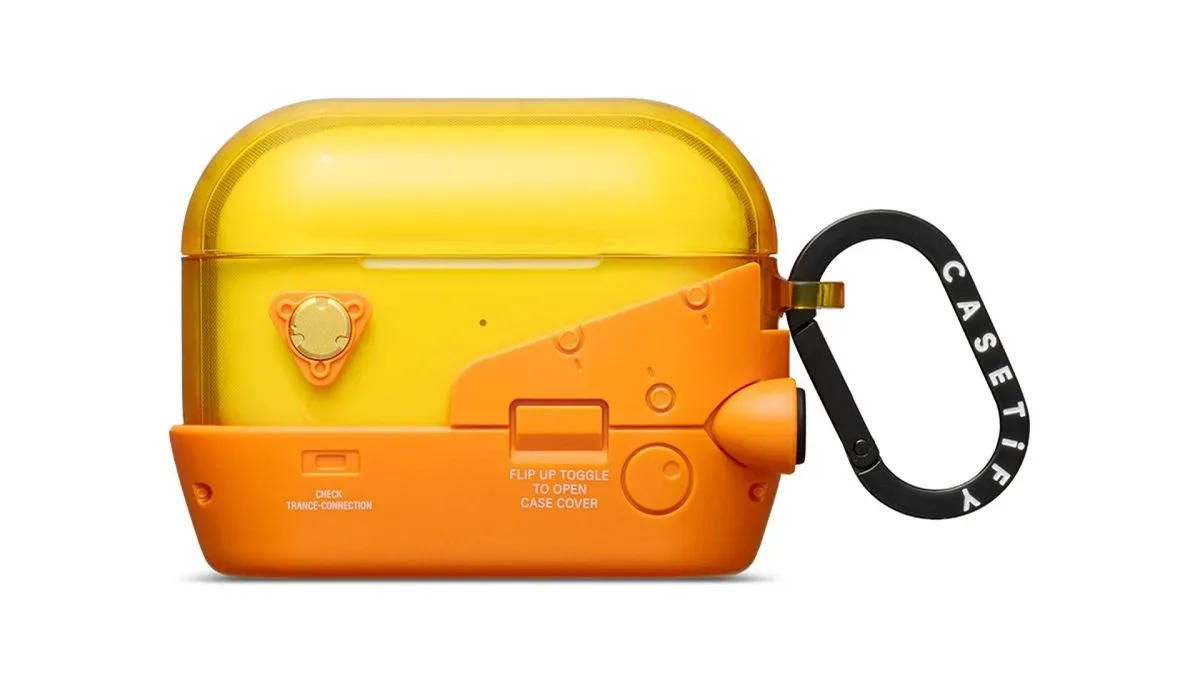
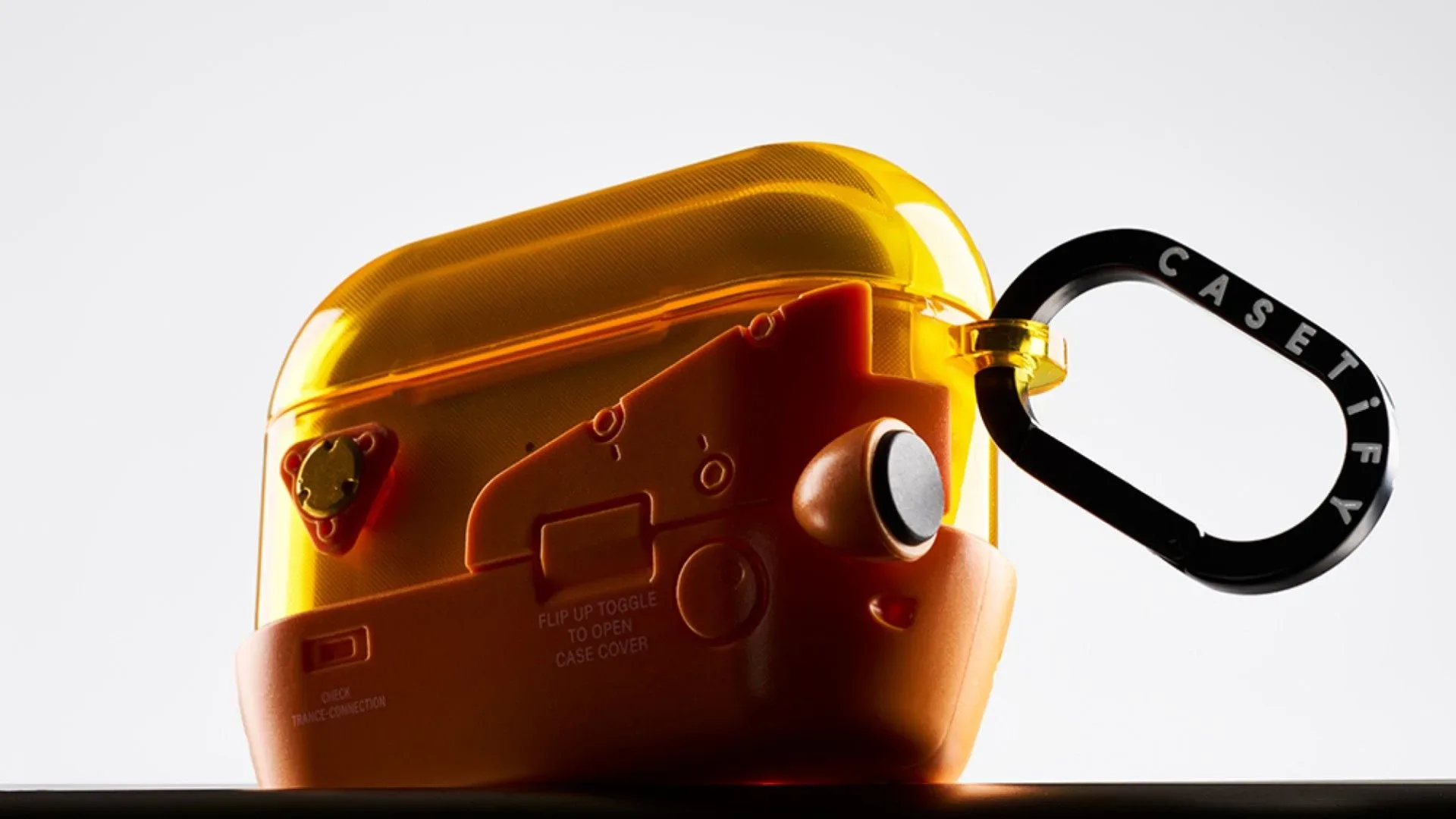
The most distinctive item is the BB Pod AirPods case. It encloses an AirPods charging case in an orange-glowing, pod-inspired shell with detailed Death Stranding styling. At a standalone price of $56, it occupies an interesting middle ground in the collection: more expensive than a decorative pouch, but considerably less than a bag or suitcase while offering a much more specific interpretation of the series.
Its standalone version is already sold out. It remains included in the $170 Dollman Plush Set, but that is a very different proposition from buying the case individually. A sold-out status is a snapshot, not a promise that the item is gone permanently, and interested buyers should treat it as a prompt to verify the current product page rather than assume either a restock or permanent scarcity.
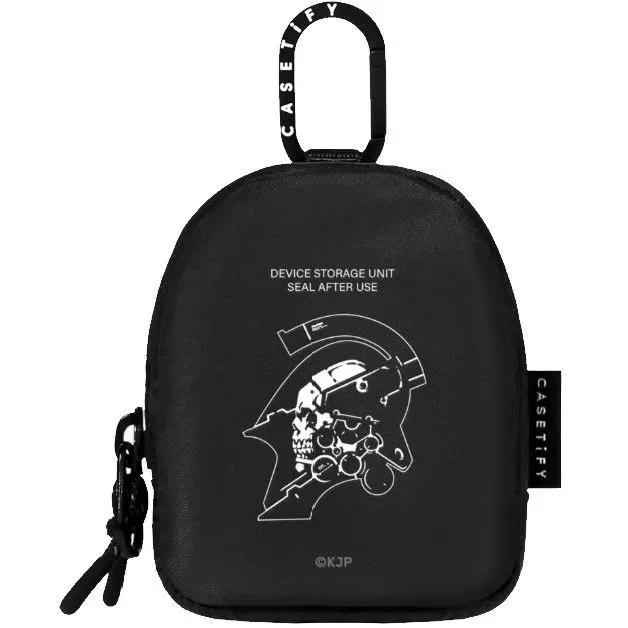
The less expensive alternative is the $32 KJP Earbuds Pouch. It is intended to attach to a belt or bag loop and uses Ludens iconography. It does not recreate the pod-like visual identity of the BB case, but it serves a more straightforward purpose: adding a portable themed holder to an existing earbud setup.
AirPods charging case compatibility is another detail worth checking. The collection describes cases and pouches around AirPods equipment, but a themed shell is only useful if it is made for the particular charging case a buyer owns. The supplied details establish the product category, not every compatible AirPods generation. Checking that information is more important than choosing between an orange glow and a Ludens symbol.
Charging, carrying and traveling: where the costs rise quickly
Casetify’s 2-in-1 charging stand is offered in Ludens Emblem and Damage Sensor Tape designs for $92. It holds a phone and a compatible AirPods charging case, combining two charging positions in one accessory. The Damage Sensor version brings “void if tampered” tape across its base, a detail that translates a utilitarian in-game-adjacent visual cue to a piece of desktop hardware.
A 2-in-1 charging stand means one stand serves two devices rather than requiring separate phone and earbud chargers. That convenience is the practical case for the item. The Death Stranding treatment is the emotional case for it. At $92, the design is plainly a large part of what is being purchased; buyers focused solely on multi-device charging can find MagSafe chargers for less, while buyers focused on matching a themed desk setup may value the specific art direction more highly.
The crossbody bags move the collection beyond $100, with limited-edition versions priced at $169. The Design Patch model is one of the more appropriate uses of the collaboration’s material, while the Bounce model uses a hard-shell form factor and is intended to hold everyday essentials. This is the point where the real-world utility can be more important than device ownership: unlike an iPhone case, a bag can remain useful through several phone upgrades.
The top-end object is the $799 Bounce Suitcase in the Cargo ID design. It is a 21-inch carry-on hard-shell suitcase designed to fit in overhead lockers. Its price makes it the clearest example of the collection’s luxury-fandom positioning. The cargo-label graphics and taped treatment may be thematically ideal for a suitcase, but the asking price means practical travelers will reasonably compare it with luggage from specialist makers before choosing it for the licensed artwork.
How to decide which item, if any, makes sense
There is no single “best” item because the products perform different jobs. The right choice depends on whether the priority is affordability, daily utility, a visual statement or collecting a particularly faithful design.
- Start with compatibility. Confirm an iPhone model before considering a case and confirm an AirPods charging-case fit before choosing an enclosure.
- Separate the product from the art. Ask whether the charging stand, bag or suitcase would still meet the practical need without Death Stranding branding. If the answer is no, the purchase is primarily a display of fandom, which is perfectly valid but useful to acknowledge at these prices.
- Use price tiers to narrow the field. The $32 earbuds pouch is the accessible option; phone cases sit at $64–$84 for compatible iPhones; the charging stand reaches $92; bags begin at $169; and the suitcase is $799.
- Check live stock and bundles. The BB Pod AirPods case’s standalone sellout demonstrates that availability can differ between individual products and sets. A bundle may preserve access to one desired item, but it also raises the total cost substantially.
The collection’s strongest idea is not that every object needs a Death Stranding logo. It is that the world’s labeling, containers, symbols and protective equipment can make ordinary technology look like it belongs in the same design universe. That premise is most convincing on the BB Pod case, the Damage Sensor charging stand and the Cargo ID luggage. Whether that visual coherence is worth the premium will depend on how much utility a buyer needs from the object—and how much they want their everyday carry to look ready for a very stylish delivery mission.