One LEGO set, two distant fictional galaxies, and apparently enough gray parts to make a very convincing case for the Millennium Falcon: a fan builder using the name Minute_Food_2881 has shared an alternate model that reworks LEGO Sauron’s Helmet into Han Solo’s famously battered ship.
The especially impressive limitation is the one that matters most to alternate-build fans. The model uses no pieces beyond those included with the Sauron’s Helmet set. It is not a Falcon made with a few leftovers from a parts bin, nor an official crossover release. It is a rebuild that asks whether the elements in a display helmet can be rearranged into another pop-culture icon—and answers with a surprisingly persuasive “yes.”
That premise is inherently funny. Sauron is built around Middle-earth’s menace; the Millennium Falcon is one of science fiction’s most celebrated heaps of bolts. Yet the two subjects share enough visual language at this scale for the transformation to work: a mostly gray palette, sharp structural forms, rounded assemblies, and lots of small pieces that can suggest mechanical surface detail.
From a Dark Lord display piece to a battered freighter
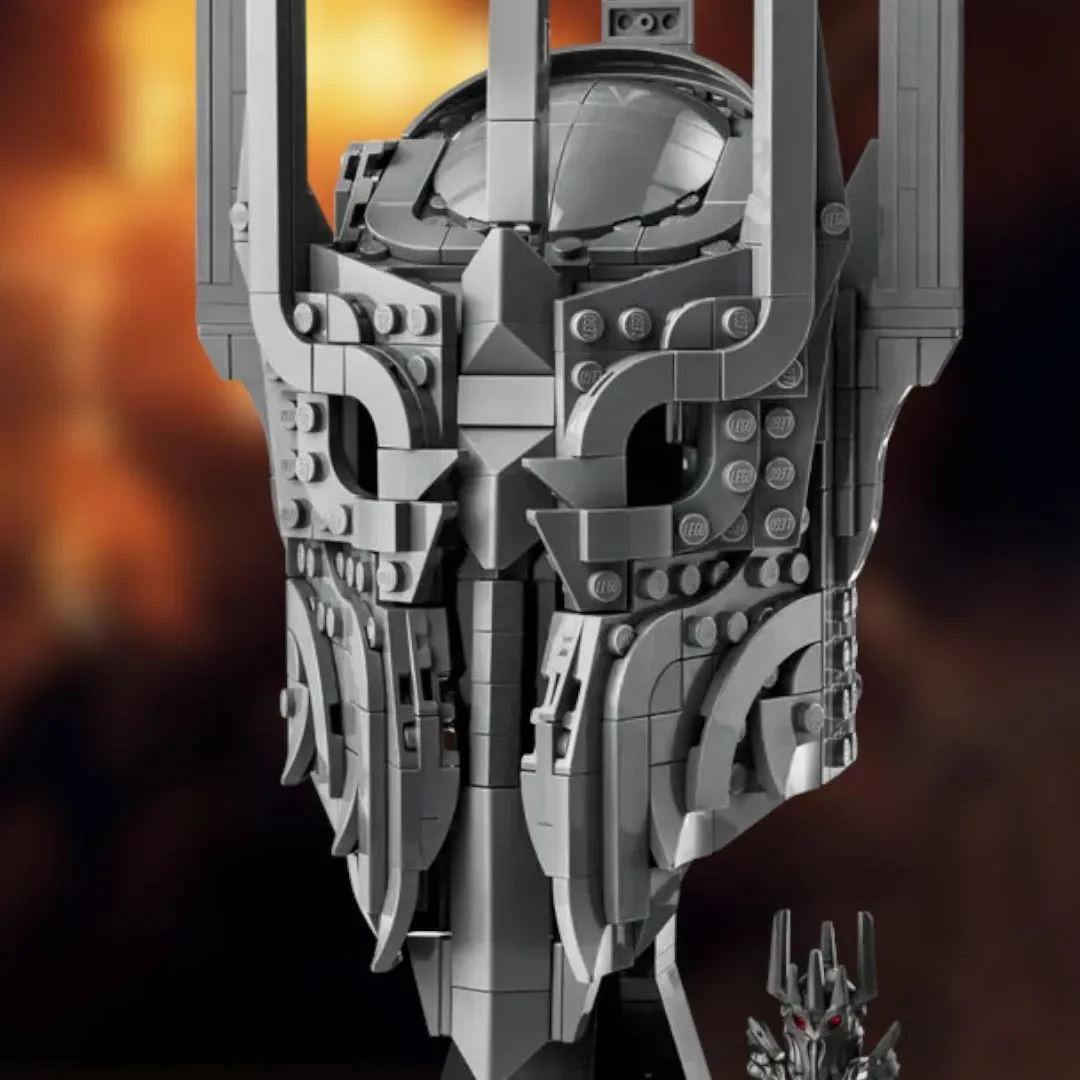
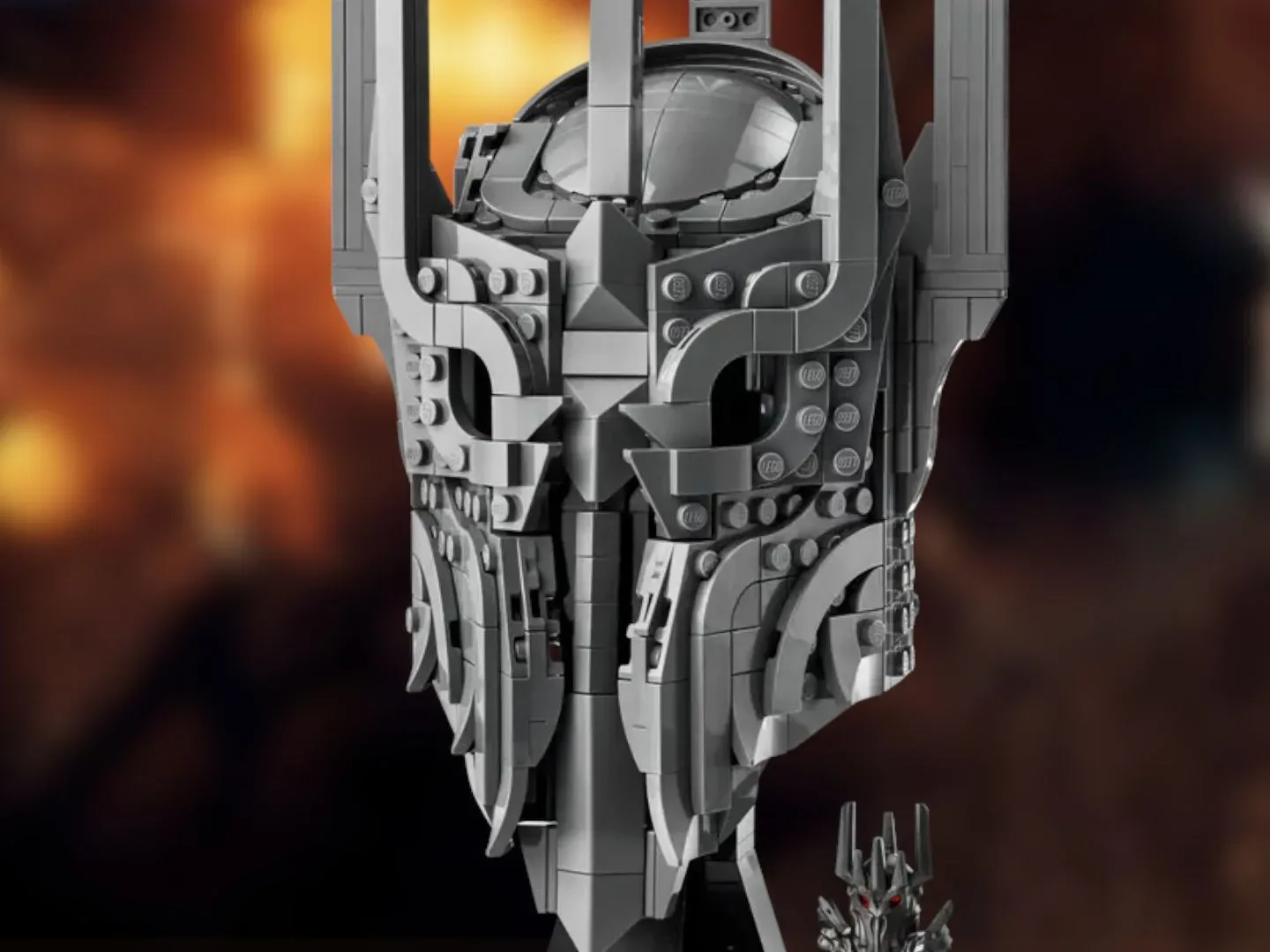
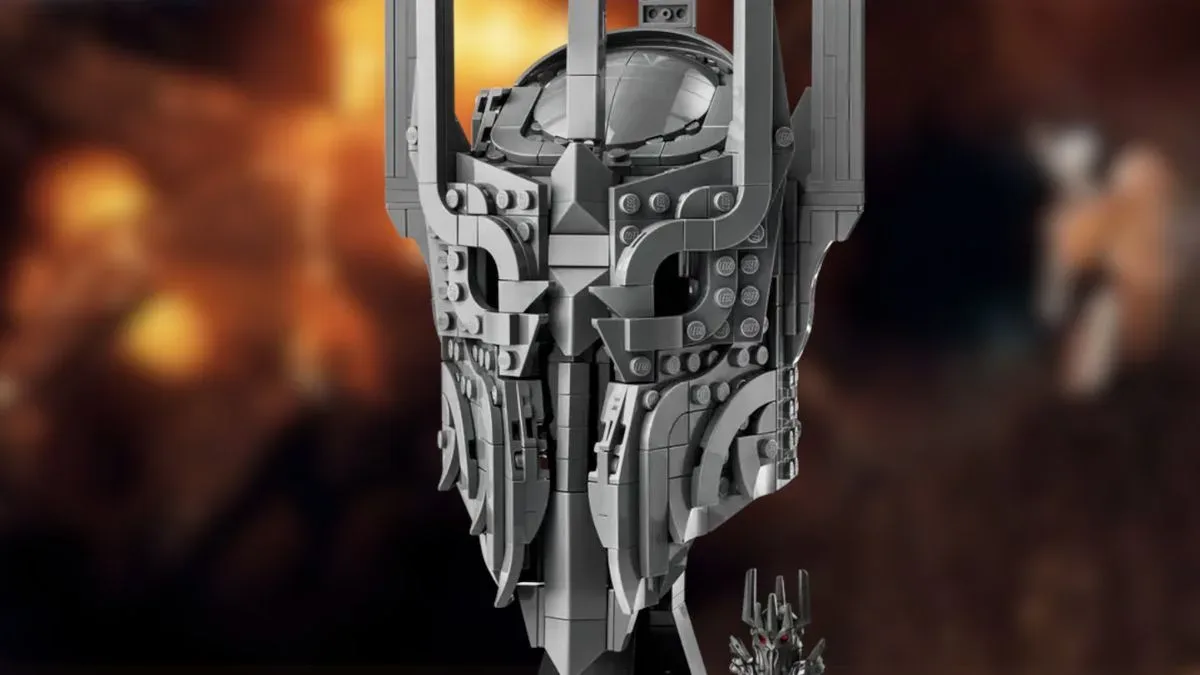
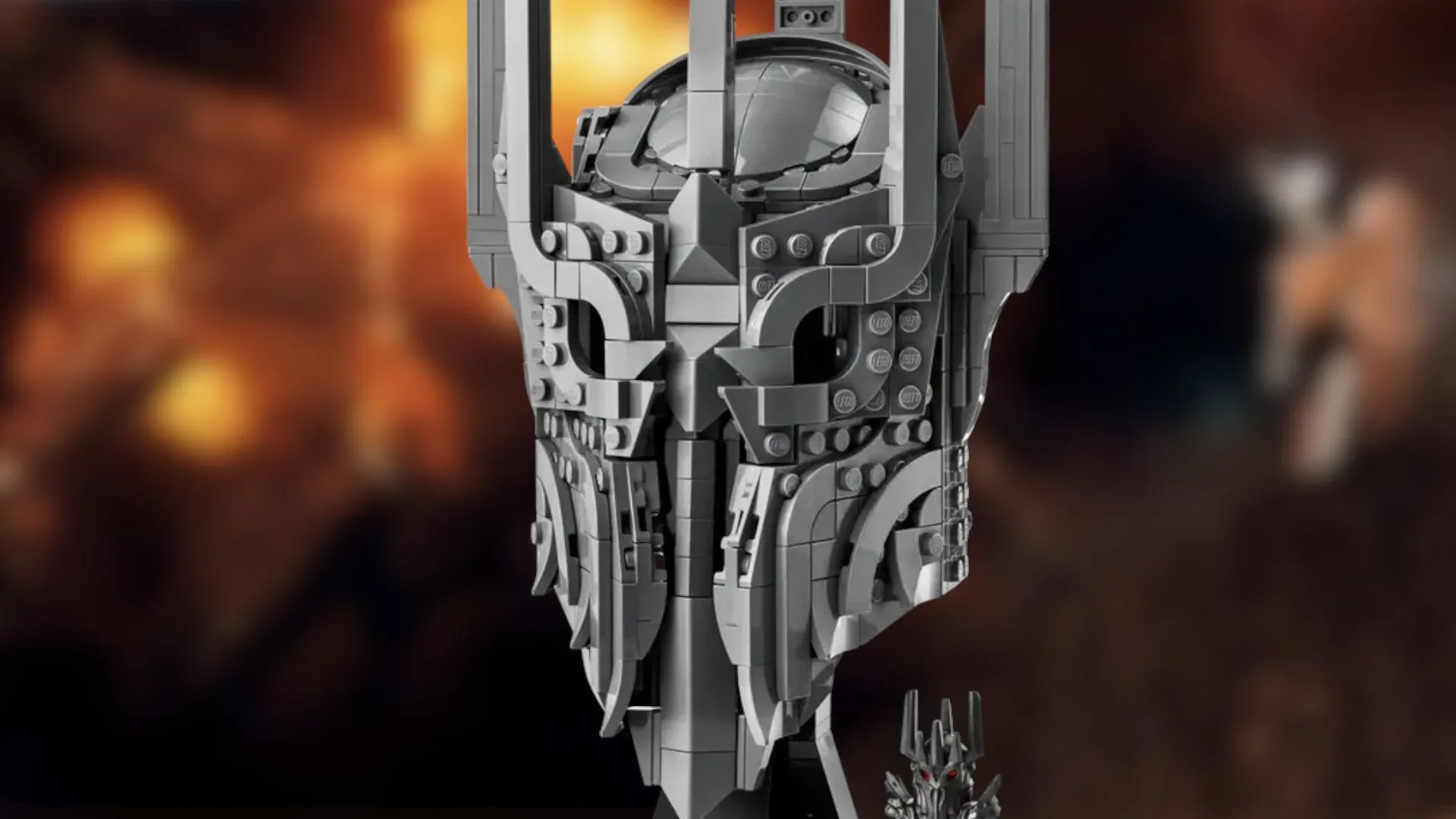
LEGO Sauron’s Helmet is a 538-piece display-oriented set measuring 13 inches tall. Its normal form is a sculpted representation of the character’s distinctive armor, with pointed geometry and a helmet profile intended for shelf display. The alternate model abandons that vertical silhouette altogether, redistributing the same inventory into a low, broad spacecraft shape.
That difference is what makes the result notable. An alternate build, sometimes called an alternate model or alt build, repurposes the pieces supplied in a single set to make something new. Builders can set their own rules, but a “no extra pieces” build is a particularly clean challenge. Every wedge, plate, tile, connector, and structural element must come from the original box.
In this case, the constraint is also part of the joke. A helmet is not an obvious starting point for the Millennium Falcon, whose most familiar traits include its flattened body, circular overall footprint, offset cockpit, and a heavily worked exterior. But the design shared by Minute_Food_2881 captures enough of that outline to be immediately legible as the Corellian freighter rather than merely a generic gray spaceship.
The Sauron model’s gray elements do much of the visual work. Gray is central to the Falcon’s weathered industrial look, while the helmet set’s mix of angular and curved forms gives the builder a useful range of shapes. The resulting ship also evokes LEGO’s official midi-scale Millennium Falcon, a smaller display-focused interpretation rather than a minifigure-scale playset.
Why recognition matters more than exact scale
No alternate model made from a radically different set needs to duplicate every contour of its target. Its success instead comes down to whether it preserves the cues people recognize at a glance. For the Millennium Falcon, that means a saucer-like body, an asymmetrical front section, and surface texture that reads as machinery rather than smooth hull plating.
Related coverage includes LEGO Sauron Helmet Rebuilt Into a Surprisingly Convincing Millennium Falcon.
The fan design appears to lean into those priorities. It is not trying to turn a 538-piece helmet inventory into a definitive replica with the scope of a large dedicated Falcon set. It is translating the ship’s identity into the available vocabulary of parts. That distinction is important for anyone evaluating fan creations: an alternate build can be accurate in silhouette and character without matching the engineering, internal structure, scale, or play features of an official set designed specifically for the subject.
It also makes the build a neat demonstration of how LEGO models communicate form. A relatively modest number of pieces can establish an iconic vehicle if their colors and angles are used strategically. Familiar shapes do a great deal of storytelling. The Falcon does not need a full cast of minifigures or a screen-accurate interior to be recognizable.
The “Can it Falcon?” challenge continues
Turning unlikely objects into the Millennium Falcon has become a recurring community gag, often summarized as “Can it Falcon?” The appeal lies in the ship’s unusually adaptable visual formula. Its broad circular mass and patchwork mechanical exterior can be suggested by all sorts of gray—or gray-adjacent—building palettes.
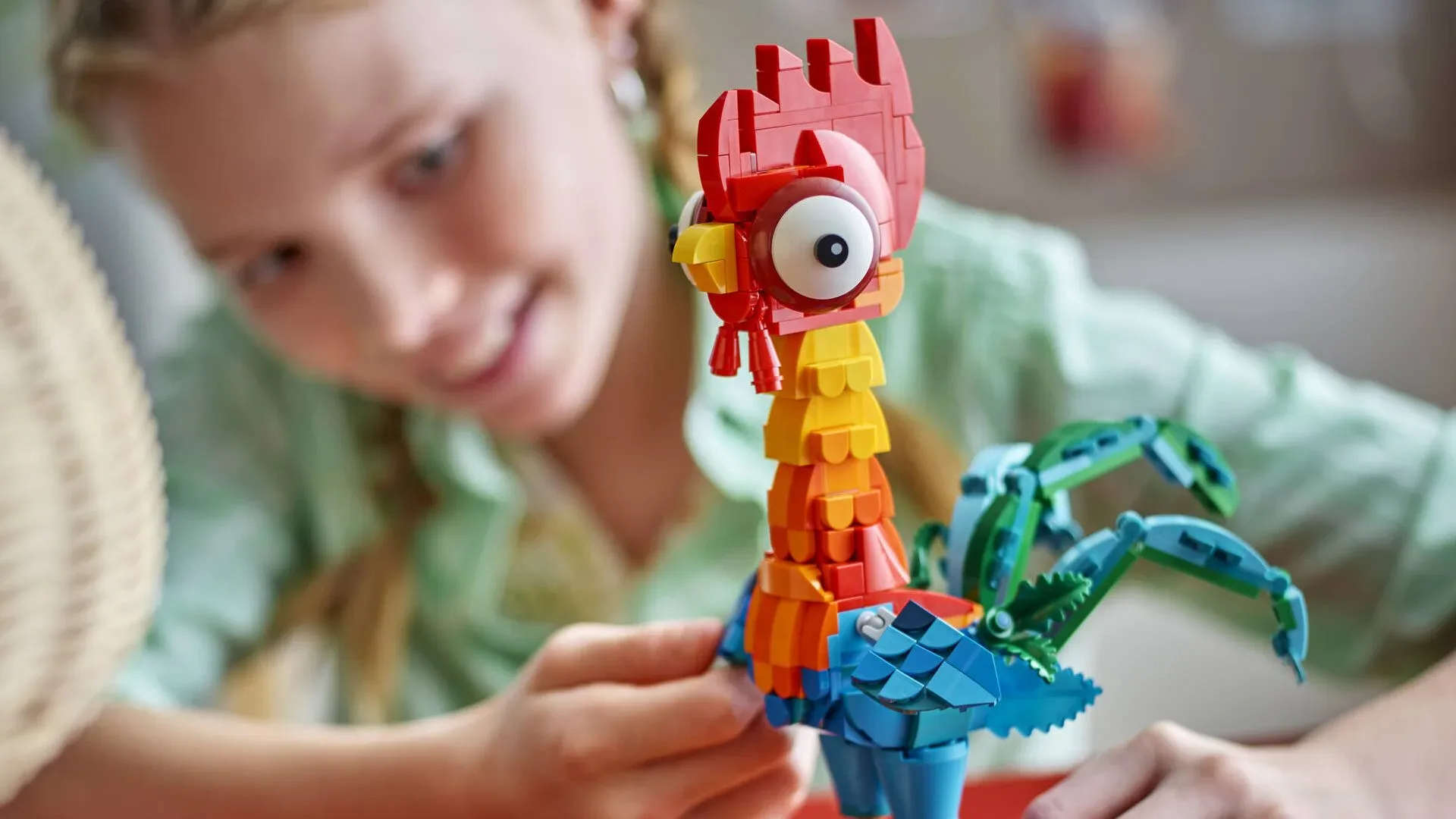
Previous examples have included a LEGO pumpkin converted into the freighter and, more recently, a version built from a chicken-themed kit. The Sauron’s Helmet conversion may be one of the better fits on a basic design level, however. Unlike a brightly colored novelty model, the helmet begins with a palette and surface treatment that already feel compatible with Star Wars hardware.
That is not evidence that every set can become a Falcon. It does illustrate why constraints can produce clever results. A builder cannot simply order the exact elements required for a conventional design; they must identify which parts in the donor set can perform new jobs. Pieces that once created eye slits, armor ridges, or the helmet’s internal support may become hull plating, greebling, or structure in the ship.
Greebling is a useful technical term here. In model-making and brick building, it refers to the clusters of small details used to make a surface look mechanically complex. The Millennium Falcon is a natural showcase for it: its hull is known for panels, vents, and seemingly functional machinery. A donor set filled with textural gray pieces has a better chance of selling that quality than a collection made primarily from large, clean, brightly colored elements.
What collectors and builders should take from it
The Sauron’s Helmet set has a stated price of $69.97 at Amazon, placing it below many larger Lord of the Rings-branded LEGO products. That price and 538-piece count make it a comparatively approachable candidate for a rebuild experiment, though prospective builders should remember that the set remains an official Sauron display model first. The Millennium Falcon design is an unofficial fan creation.
For collectors, that distinction is practical. Rebuilding a set means disassembling the intended model and changing its display purpose. Anyone who prefers to keep an official build intact may want to document the steps carefully before taking it apart, sort the pieces while building, and retain the original instructions. The appeal of a no-extra-parts alternate design is that the original set can, in principle, be restored later because no replacement pieces are inherently required.
For builders, the project highlights what to inspect in a prospective donor set: color distribution, the balance between curved and angular parts, the number of small detailing elements, and whether there are enough structural pieces to create a stable base. Piece count alone does not guarantee an effective alternate model. A 538-piece inventory packed with the right shades and shapes can be more useful for a compact gray starship than a higher-count set built around a completely different visual language.
There is also a crossover appeal that official product lines do not always provide. Fans of Middle-earth and Star Wars can appreciate the absurdity without needing the brands to formally meet. That matters for the LEGO community, where reinterpretation is often as compelling as collecting the finished set exactly as shown on the box.
Fans following the screen side of Middle-earth can also find more on The Rings of Power’s planned early theatrical episode. The helmet-to-Falcon project, meanwhile, is a reminder that a display model’s life need not end with its official instructions. Sometimes a Dark Lord’s armor is only a few strategic rearrangements away from a scruffy-looking spaceship.
An unofficial crossover that works because the limitations are visible
The charm of this model is not that it erases its origin completely. It works because viewers can see the ingenuity behind the conversion: a limited assortment of parts associated with Sauron, made to read as a machine associated with Han Solo. The builder has not created a new official Falcon set; they have demonstrated that the visual DNA of the ship is strong enough to emerge from an unexpected collection of bricks.
With Star Wars approaching its 50th anniversary in 2027, official LEGO Star Wars releases and collectible minifigures based on original concept art are also on the horizon. This Sauron conversion occupies a different lane from those releases. It is playful, unofficial, and driven by the constraints of a set made for another franchise entirely. That is precisely why it stands out.
Shop the products
Check current price, model and availability at the retailer.