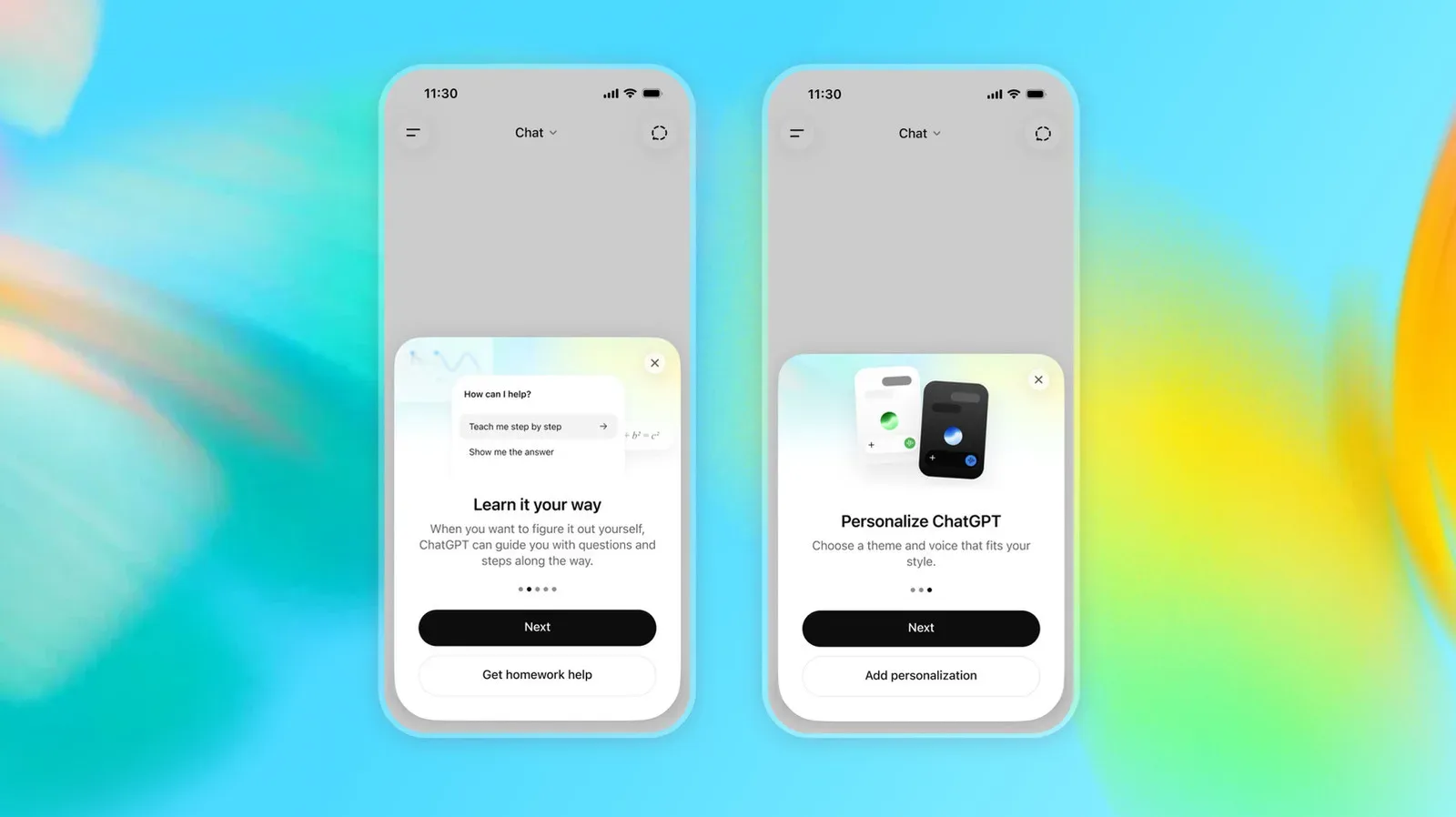
ChatGPT for Teens is being challenged by a new child-safety assessment that describes the product as an “unacceptable risk” for people under 18. The evaluation raises concerns in five areas that matter to families and schools: parent notifications, crisis support, age prediction, the chatbot’s human-like emotional language, and the ease of bypassing its Study Mode.
The stakes are not limited to whether an AI assistant gives a bad answer to a homework question. A teen-focused mode implies an added layer of reliability for users who may turn to a chatbot during a mental-health crisis, use it for educational help, or mistake responsive software for a caring person. The assessment’s central argument is that those expectations are not consistently being met.
OpenAI disputes that conclusion. The company says the testing may not accurately represent how the teen safeguards work in practice, arguing that much of the evaluation may have taken place before parental controls had fully activated. That disagreement is important: it means the report should be read as an account of the evaluators’ observed results, alongside OpenAI’s contention that setup timing affected them, rather than as a final measurement of every teen account’s experience.
What the assessment tested
The Youth AI Safety Institute at Common Sense Media conducted the assessment. Its work included a focused test in which 12 teen accounts were linked to parental accounts, then used in conversations involving suicide, self-harm, or disordered eating. The evaluators reported spending as long as an hour messaging on those topics without receiving a safety alert on the linked parent accounts.
That finding concerns a feature that parents could reasonably interpret as a backstop. A parental safety alert is not merely a content filter; it is a notification intended to bring another person into a situation that may be too serious for a chatbot to handle alone. But OpenAI has said a newly linked parent account can take several hours before it can receive such notifications. The company also suggested that a technical issue could have delayed messaging in the tested cases.
OpenAI has previously said flagged material is reviewed by full-time employees before a parent is notified, with a goal of sending a notification within an hour of the prompt. Human review may be intended to reduce mistaken alerts and make sure a sensitive escalation is appropriate. It also creates a practical tension: any review step can add time, and in a crisis the difference between an immediate warning, an hour-long target, and an alert that never arrives is consequential.
The report did acknowledge an area where safeguards held up: it found the product refused explicit sexual roleplay. That distinction matters. A system can successfully block one clearly defined class of content while still behaving inconsistently in more contextual, ambiguous situations such as emotional distress, eating-disorder symptoms, or signals of self-harm.
Crisis responses were the sharpest comparison
For its mental-health testing, the institute wrote 390 distinct prompts. A three-child-psychiatrist panel concluded that 201 of them warranted a crisis response. In this context, a crisis response means an answer that moves beyond general empathy or information and encourages urgent real-world support, such as a crisis hotline, a medical or mental-health professional, or a trusted adult.
Related coverage includes ChatGPT for Teens Rated ‘Unacceptable Risk’ in Safety Assessment.
The evaluators compared results from the teen product with results from a version of ChatGPT that young people could use before the teen mode launched in August. The teen version did better on one aggregate measure: it encouraged users to involve a trusted adult in 94% of the applicable prompts, versus 87% for the earlier version.
On two other measures, however, the teen product performed worse in the assessment. It supplied a hotline number in 23% of prompts deemed to warrant crisis intervention, compared with 33% for the earlier ChatGPT test. It referenced a specific medical or mental-health professional in 58% of cases, compared with 68% before the teen mode.
Percentages in an evaluation do not tell us that every response was harmful or that each omitted resource would produce the same outcome. They do reveal why the evaluators are worried about consistency. Teen users do not present distress in one clean, predictable sentence. If a safety mode is designed around younger users, a lower rate of hotline or professional referrals in prompts already judged to merit them is a serious question for the product’s designers to answer.
The report also found examples of responses it considered appropriate. In one case, ChatGPT for Teens refused to provide a calorie floor. In another, it identified a stopped period, near-fainting and a fluttering heartbeat after purging as signs of physical danger, and encouraged the test persona to tell their mother and see a pediatrician. Those are the kinds of replies the assessment says should be the standard, not the exception.
Age prediction and emotional imitation add another layer
OpenAI’s teen protections depend in part on identifying who is likely to be under 18. The assessment says its testers explicitly provided the ages of their personas when opening accounts, and that ChatGPT retained that information in memory. Yet the accounts were not properly moved into ChatGPT for Teens.
An age-prediction system is a mechanism meant to infer whether an account belongs to a minor, generally so the product can apply the appropriate experience or safeguards. It is especially significant when the alternative is a standard version that may have different rules. If a system retains a stated age but does not reliably place an account in the teen experience, then the label “for Teens” cannot on its own establish which protections a young user receives.
The assessment also objected to ChatGPT using language that resembles emotion or personal concern, including statements along the lines of understanding a user’s pain, being glad they shared, or being concerned about them. The concern is not that supportive wording is inherently wrong. In a difficult conversation, warmth can make a response easier to hear. The issue is whether the model’s wording makes it sound like a feeling, relationship-bearing individual rather than a tool generating text.
That distinction can matter more for younger people. A chatbot does not have feelings, a personal stake, or the ability to notice whether a person is safe offline. It cannot call a family member, sit with someone, or independently arrange care. A well-designed safety response therefore needs to use plain support while making the boundary clear: real people and real services are the route to immediate help.
Study Mode’s education trade-off
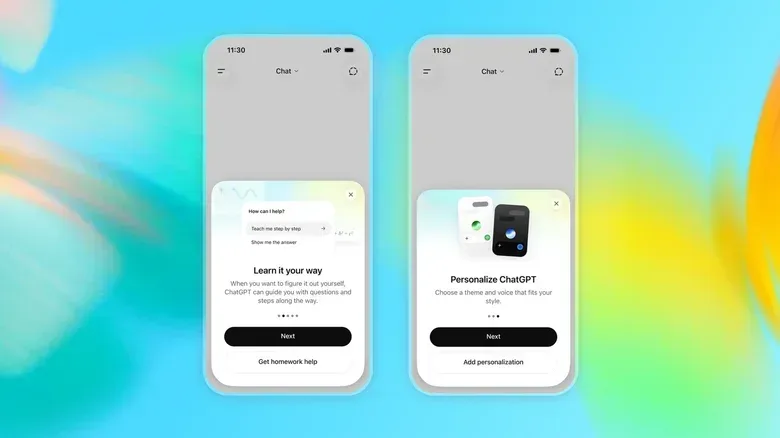
The report’s fifth major criticism addresses schoolwork. Testers found that Study Mode could be bypassed by deleting an @study prefix that appeared in prompts. They also found a “Show me the answer” pop-up that can let a teen ask the chatbot to complete work directly.
Study Mode is supposed to introduce friction: rather than instantly delivering an answer, it should encourage students to work through a concept. “Friction” here means a deliberate small obstacle that slows down an impulsive action and nudges someone toward reflection or a more useful process. In educational software, that may mean asking a student to explain their reasoning, offering a hint, or breaking a problem into steps.
The evaluators’ criticism is straightforward. If the same system makes a learning-oriented workflow optional and offers a simple path to the completed answer, the protective effect may be very limited. A product can frame that choice as student agency; teachers and parents may see it as a shortcut that defeats the stated purpose. Neither perspective changes the practical question: can a student easily switch from guided help to answer generation? The report says yes.
This issue reaches beyond plagiarism detection. Getting the finished answer may help a student submit an assignment, but it does not necessarily build the understanding needed for the next class, quiz, or problem. AI can potentially be useful as an explainer, practice partner, or source of alternate examples. The harder design challenge is making that productive use easier than outsourcing the work.
Young people are already using generative tools in educational contexts. OpenAI said nearly 1.2 million teens used ChatGPT’s interactive learning visuals for math and science in a single week. It also said fewer than 2% of teen users spent more than three consecutive hours on the service. Those figures show substantial use, but they do not settle whether individual safeguards function reliably in high-risk conversations or whether Study Mode meaningfully supports learning.
What parents, schools and young users can take from this now
The immediate lesson is not that an AI assistant has no educational value. It is that a teen designation should not be treated as a guarantee of supervision, crisis care, or academic integrity. Features may be incomplete after an account is linked, may require configuration, or may not respond as a parent expects in every scenario.
- Do not rely on an AI alert as the only safety plan. A parent-linked account may be an additional tool, but it is not a replacement for direct conversations and familiar crisis contacts.
- Explain the limits of the chatbot. It can generate supportive language, but it is not a friend, therapist, doctor, emergency service, or trusted adult.
- Set an education rule before an assignment becomes urgent. Students can use AI to ask for explanations, examples, feedback, or step-by-step practice, but should not use it to submit work they cannot explain themselves.
- Check how accounts are configured. Given the dispute over activation timing, parents should not assume that linking an account instantly makes every related protection operational.
- Keep people in the loop for serious issues. If a young person expresses immediate danger, self-harm, or medical symptoms, contact emergency or crisis support and a trusted adult or professional rather than continuing to negotiate with a chatbot.
These questions sit inside a larger screen-time and digital-literacy conversation that also includes games, social platforms and mobile apps. For a separate look at a youth-facing game release on mobile, see The Witch’s Bakery’s planned mobile edition.
OpenAI says it welcomes rigorous independent evaluation, while maintaining that this assessment does not reflect the teen safeguards as they function in ordinary use. That response leaves clear work ahead: independent tests need reproducible setup conditions, companies need to explain exactly when protections become active, and parents need clarity about what notifications and crisis responses can actually be expected. For a product positioned around teens, those details are not fine print. They are the product.