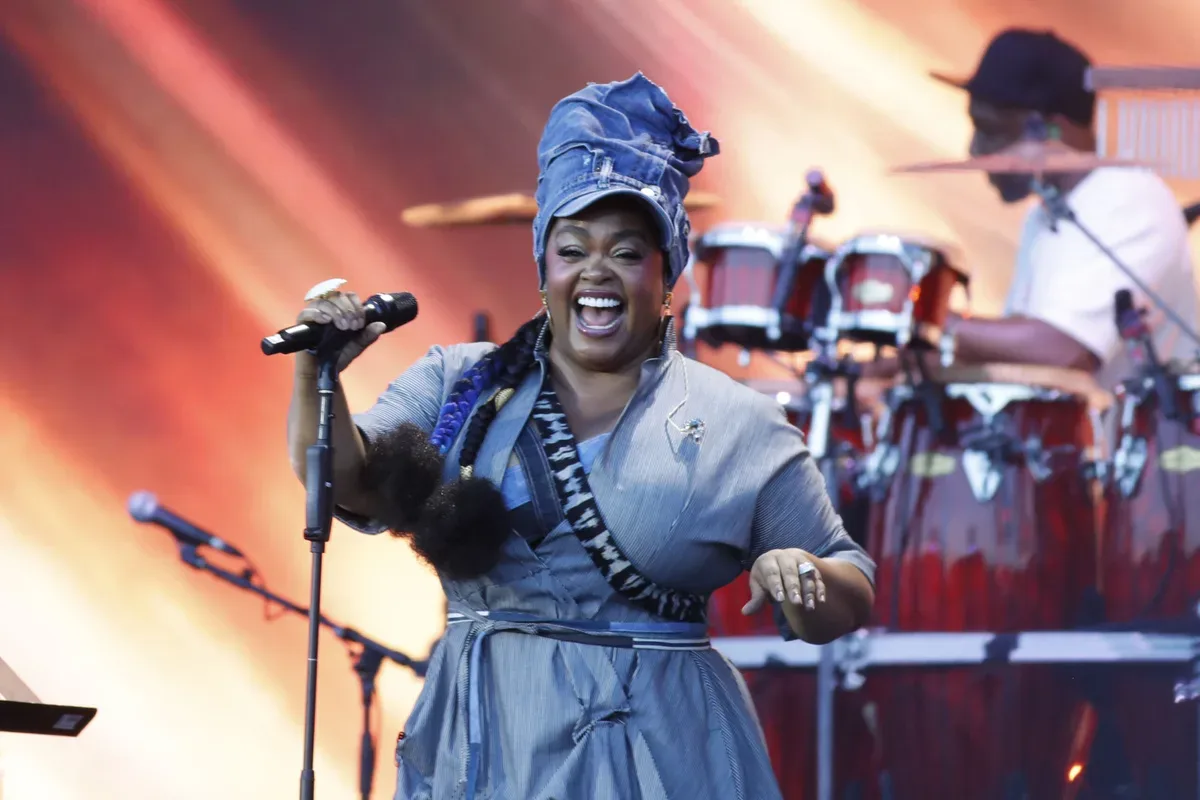
Jeezy’s sixth annual Sno Ball in Atlanta generated $248,962 for the Street Dreamz Foundation, combining the familiar theater of live and silent auctions with a more direct route for guests to support defined community programs.
The November 10 gala, hosted by Bill Bellamy, introduced the foundation’s first Fund a Need drive. Rather than requiring every donor to pursue an auction prize, the format let attendees raise bid cards for a particular purpose and complete a contribution by scanning a QR code at their tables. That distinction matters: auction bidding and program-specific giving can serve different motivations at the same event.
Some guests could compete for high-value lots, while others could direct money toward tangible needs without buying an experience or collectible item. The result was a fundraising night built around both spectacle and allocation—an approach that makes it easier to explain what a gift is intended to do.
“Tonight was a reminder of what happens when a community decides to show up,” Jeezy said.
What the Fund a Need levels were designed to support
Street Dreamz Foundation outlined several giving levels during the gala, attaching each to a particular outcome. A $5,000 contribution was described as enough to supply laptops and instruction for five students. That is a concrete education-focused target: the money is not presented merely as a general donation, but as support for access to hardware alongside guidance on using it.
The other levels spread across financial literacy, basic household support and entrepreneurship:
- $1,000: financial education and the opening of an investment account for one student.
- $500: food for a family through the end of the year.
- $2,500: startup costs for a student entrepreneur.
In fundraising terms, a Fund a Need drive is a direct-appeal model. Donors are asked to fund a stated mission or operational need rather than bid against one another for ownership of an item. The appeal can sit alongside an auction, as it did at Sno Ball, but it answers a different question. An auction asks, “What will this lot sell for?” A program-specific drive asks, “Which result does this contribution help make possible?”
The stated levels also gave attendees a way to understand the scale of their donations. A donor who could not or did not want to chase a premium auction package still had an identified route to fund meals, a student business, financial education or technology access. Equally, the menu of amounts made clear that the foundation’s efforts range from immediate family support to longer-term student development.
Related coverage includes Jeezy’s Sixth Sno Ball Raises $248,962 for Street Dreamz Foundation.
Auctions remained a central part of the night
Direct giving did not replace the gala’s auction component. Live and silent auction offerings included a dental makeover valued at more than $25,000 and a package connected to Jeezy’s New Year’s Eve show in Las Vegas, valued at $35,000.
Those lots demonstrate why auctions can still be useful at charitable events. A distinctive experience or premium service can concentrate competitive interest among guests willing to bid at a higher level. But their appeal is inherently selective: only one winning bidder takes home a given lot. The new direct-giving component broadened participation by allowing more people to contribute toward named programs even when they did not win—or never entered—an auction.
It is not possible from the available information to separate the $248,962 total into auction proceeds, Fund a Need donations and any other gala revenue. Nor is there a stated breakdown showing how much was designated for each program. What is clear is the event’s structure: conventional auction fundraising ran in parallel with a QR-enabled appeal tied to specific needs.
That combination reflects a practical distinction for event organizers and guests alike. Auction value often depends on scarcity, prestige and the desirability of the lot. Direct giving value is communicated through the planned impact of the money. At Sno Ball, one format featured items such as the dental makeover and Las Vegas package; the other gave attendees a way to select a community-facing purpose for their contribution.
Student entrepreneurship is part of the foundation’s focus
The entrepreneurial component is not limited to the $2,500 startup-cost pledge level. Street Dreamz Foundation said 70 students are competing in a business pitch competition it is holding with the Urban League.
The Urban League’s Young CEO Program places aspiring business owners in a 12-week sequence of workshops, projects and mentoring before they deliver their pitches. A pitch competition generally asks participants to communicate a business idea clearly and persuasively, but the available details do not specify the competition’s prizes, judging process or how startup support will be awarded. What has been established is the program’s broader educational pathway: students work through structured preparation before presenting their ideas.
That context helps explain why startup-cost support appeared among the gala’s designated giving options. The foundation’s approach connects several stages of student opportunity: instruction, technology access, financial education, mentorship, project work and an opportunity to present a business concept. Those are related but separate needs, and the Fund a Need framework gave guests a visible way to support several of them.
Financial education and investment-account access are similarly framed as more than a one-time transaction. The foundation set $1,000 as the level to cover financial education and open an investment account for one student. The information does not identify the financial curriculum, account type or provider, so those details should not be assumed. Still, the stated purpose puts financial knowledge and asset-building access within the foundation’s youth-oriented agenda.
Community recognition and an earlier art collaboration
The gala also honored Dr. Fahamu Pécou with its Community Dreamz Award. Pécou founded the African Diaspora Art Museum of Atlanta and previously collaborated with Jeezy on School of Hard Knocks, a portrait of the rapper that was sold at auction.
The museum said proceeds from that earlier sale were split with Street Dreamz Foundation. The connection gives the award an additional layer of context: it recognizes a figure whose work with Jeezy had already produced financial support for the foundation.
Art auctions, like the gala’s other auction offerings, use a sale format that can convert cultural work into philanthropic funding. But the available account does not disclose the portrait’s sale price or the amount received by either the museum or the foundation. The documented point is the arrangement itself: proceeds were shared rather than retained by one side.
Why the QR-code element changes the event’s participation model
A QR code is a machine-readable visual code that can open a webpage or digital payment flow when scanned with a phone. At Sno Ball, the codes placed at tables supported the direct-giving process. In practical terms, that reduced the gap between hearing a call for support and acting on it.
For a gala audience, that can make program-specific giving more immediate. A guest can hear that $5,000 supports laptops and instruction for five students, or that $500 helps feed a family through year’s end, then use the table-based route to donate. The technology does not determine the charitable impact by itself; the important part is the connection between the payment method and the clearly described program options.
It also allowed the event to accommodate people whose charitable priorities differed. One attendee might be drawn to student entrepreneurship, another to a family food need, and another to educational technology. Rather than funneling every contribution through a winning auction bid, the Fund a Need model created multiple entry points.
Jeezy thanked those who gave, bid, attended and supported the foundation, describing the proceeds as a way to invest back into communities, young people and future leaders. The $248,962 total is the headline figure, but the event’s notable development is its dual design: auction lots generated excitement, while direct pledges gave the room a defined way to support programs without needing to leave with a prize.
For related coverage of artists and the wider entertainment business, read Jill Scott’s independent artist-group signing and multiplatform year.