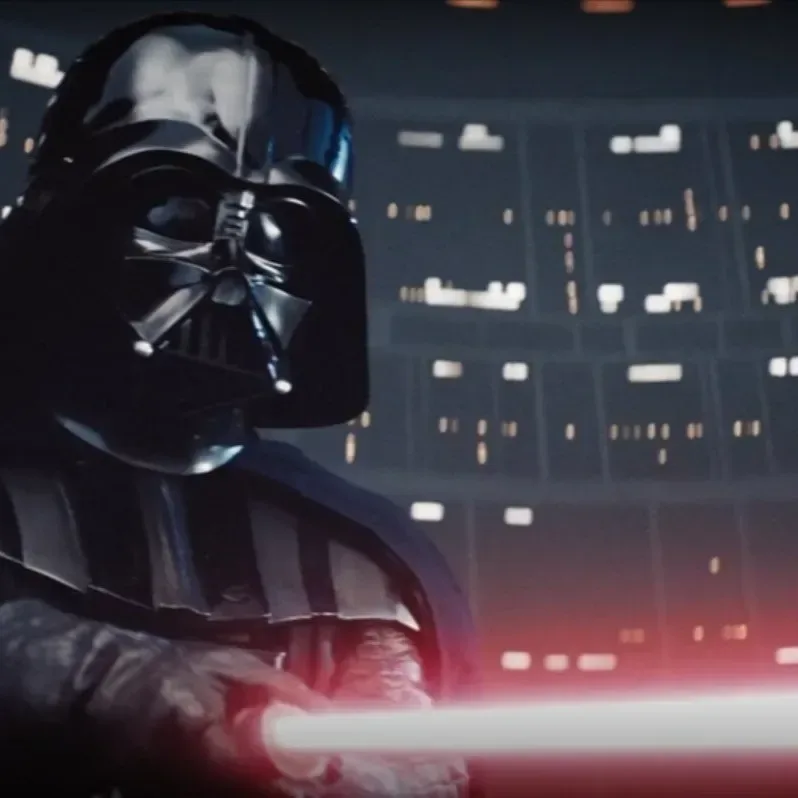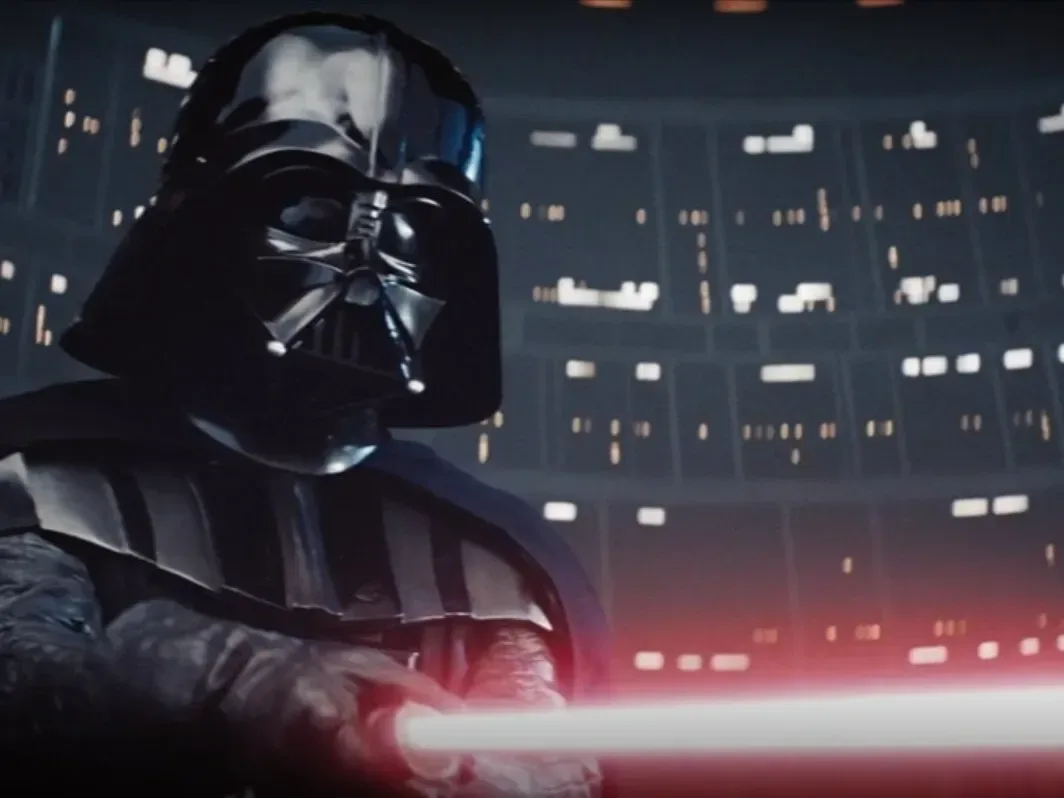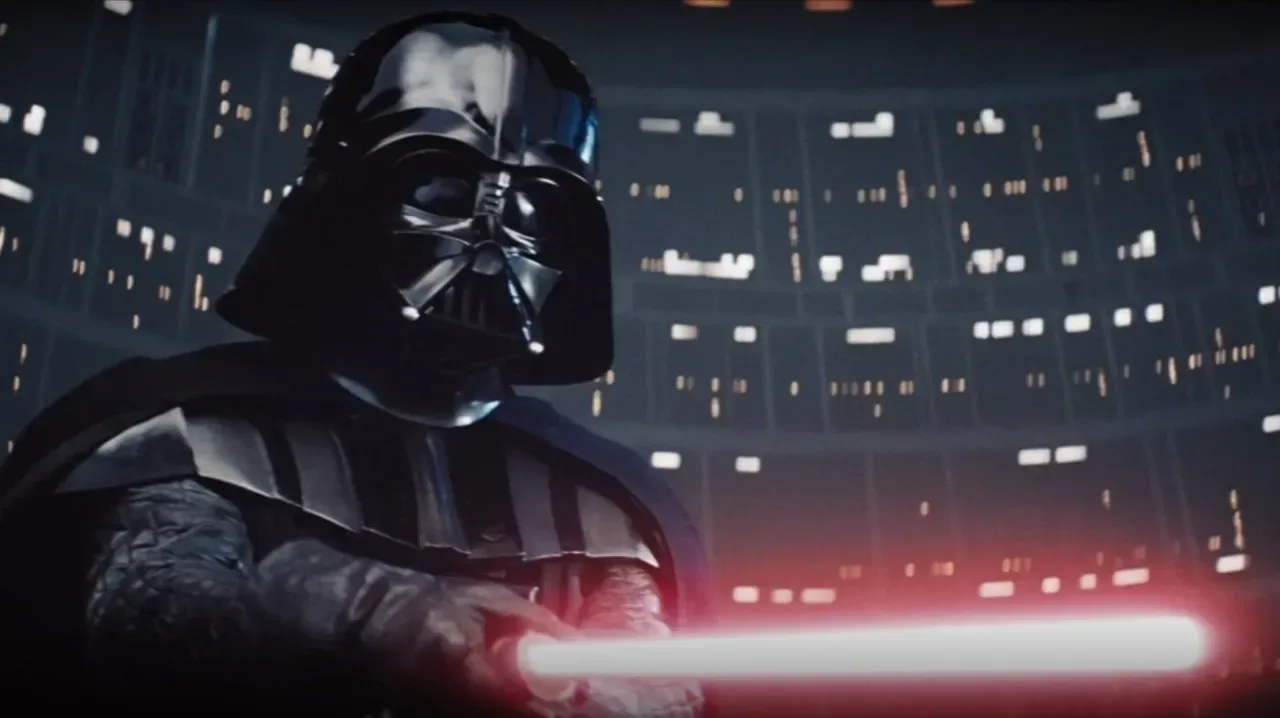
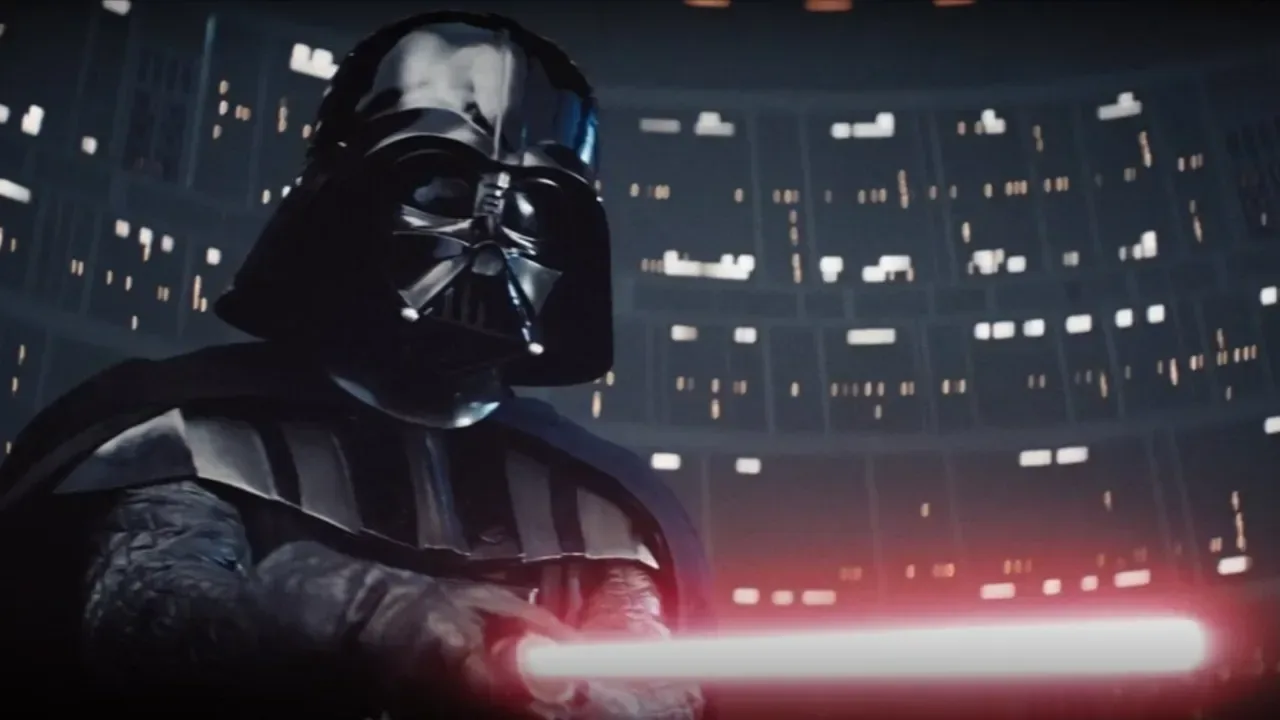
A screen-used Darth Vader lightsaber from The Empire Strikes Back and Return of the Jedi has sold for $4.875 million at auction, establishing a new high-water mark for a Star Wars prop.
The result is notable on two levels. It is the largest sum reported for any Star Wars item at auction, and it also moves past the previous record for a screen-used object from the series. That earlier screen-used-prop record was $3.75 million, paid for Luke Skywalker’s lightsaber and severed-hand effects rig on July 15, 2026.
This was not simply a display piece made to resemble Vader’s weapon. The sold item is described as the version used for shots in which the lightsaber appears to ignite. It includes mounting bolts used to attach a wooden blade during filming; the glowing blade was added later in post-production. That physical production detail ties the prop directly to how the effects were achieved on set, and it gives the object a more specific role than a general-purpose costume or promotional replica.
Its credited use also spans both David Prowse, who generally wore Vader’s costume, and Bob Anderson, who handled fight and stunt work. Most importantly for the auction result, the prop was used in the Bespin duel between Darth Vader and Luke Skywalker in The Empire Strikes Back.
Why this particular Vader prop commanded so much attention
Movie memorabilia values can turn on several distinct questions: what an item is, whether it can be connected to a production, how directly it appeared on screen, and whether it is associated with a defining sequence. This lightsaber checks each of those boxes based on its item description.
“Screen-used” is a particularly meaningful term in this context. It refers to a prop used during filming rather than an item merely created for the production, used behind the scenes, or made afterward as a replica. The sale’s documentation goes further than a broad screen-use claim by identifying the practical configuration of the prop: a handle fitted with bolts for a wooden blade, which would then receive its luminous appearance through editing.
That matters because it preserves a trace of the filmmaking method. On screen, Vader’s lightsaber is a fantasy weapon defined by its red glow and sound. Off screen, the version sold is also a working component in an effects process. The bolts are not ornamental lore details; they are evidence of the physical setup used to create the illusion before post-production completed it.
The item’s connection to the Bespin confrontation adds the other major element: narrative importance. Vader and Luke’s duel is among the saga’s most consequential sequences, making a prop from that encounter especially desirable compared with an object that appeared only briefly or without a clear scene association. A buyer is acquiring an original production artifact, but also an object linked to a pivotal moment in the films.
The new record, in context
The $4.875 million price clears the previous overall Star Wars auction record of $3.875 million. That earlier result was achieved by Tom Jung’s original half-sheet key poster painting for Star Wars: Episode IV – A New Hope.
It also exceeds the $3.75 million paid for Luke Skywalker’s lightsaber and severed-hand effects rig. The distinction between those records is useful: a poster painting represents foundational visual art used to market a film, while the Luke lot and Vader lightsaber are objects used in creating scenes themselves. All three have unusually direct connections to the original film cycle, but the Vader saber’s combination of character, on-screen action, and practical-effects construction pushed it to the top.
The $1.125 million gap between the Vader result and the prior overall record is substantial. It suggests that the market placed a premium not only on Star Wars provenance, but on a prop attached to Vader and an especially prominent duel. It would be a mistake to treat that as a universal price guide for every franchise artifact, however. The specific use, condition, documentation, character association, and scene connection are all central to why one item can stand apart from other props in the same sale.
“Vader’s lightsaber is an artifact from the very heart of the saga, and its result led a historic auction,” said Joe Maddalena, executive vice president at Heritage Auctions.
A practical-effects artifact beneath the sci-fi iconography
The sale is also a reminder that iconic screen objects often exist in several forms. Productions can use different versions of a prop for different needs: a close-up, a stunt, an effect, or a static scene can require different construction. In this case, the reported mounting hardware identifies the sold saber as an “ignited” version, built to carry a wooden blade that could be transformed into a lightsaber effect later.
That specificity is important for collectors evaluating production-used memorabilia. The strongest identification is rarely just a character name or a familiar silhouette. It is a chain of details that helps establish an object’s precise purpose: the physical build, the people who handled it, and the scenes for which it was used. Here, the production role is reinforced by the association with both Prowse and Anderson and by the reported Bespin use.
For fans, the wooden-blade detail also makes the finished movie magic easier to appreciate. The final films make the weapons feel weightless, bright, and dangerous. The auctioned artifact reveals one part of the practical foundation beneath that image: a physical blade attached to a prop handle, later transformed by editing into something audiences read instantly as a lightsaber.
Original-trilogy interest remains central
The sale arrives while attention is returning to the earliest Star Wars film. A documentary, The Hero Awakens, is set to arrive on Disney+ on May 4 next year. The film will examine the making of A New Hope through archival production footage and is directed by Academy Award-nominated filmmaker R.J. Cutler.
It follows a theatrical re-release of the rarely seen original 1977 version of Star Wars on February 19. Together, those plans place renewed emphasis on the production history and legacy of the first film as the franchise approaches its 50th anniversary.
That broader context does not explain an auction record by itself, nor does it make every original-trilogy item equally valuable. But it helps show why production history can be as compelling to collectors as the finished movie. A prop such as Vader’s lightsaber sits at the intersection of both: it is instantly recognizable within the fictional universe, while its construction points back to the technicians and performers who made the scene possible.
The auction also included blasters, figurines, and script drafts, yet none matched the interest around the lightsabers. That difference underscores the unusual cultural position of the weapon. It is visually simple, central to the franchise’s mythology, and inseparable from Vader as a character. In this instance, it is also traceable to an on-screen confrontation that continues to define the original trilogy’s dramatic stakes.
With a $4.875 million result, Vader’s screen-used lightsaber now stands as the benchmark for Star Wars auction memorabilia. The sale’s significance is not just that a famous prop sold for an enormous amount. It is that a practical-effects object from a specific, landmark scene has become the franchise’s most expensive auction artifact to date.
For more on a different way major film franchises are being presented at home, see how Disney+ is bringing 3D movies to Meta Quest 3 and 3S.