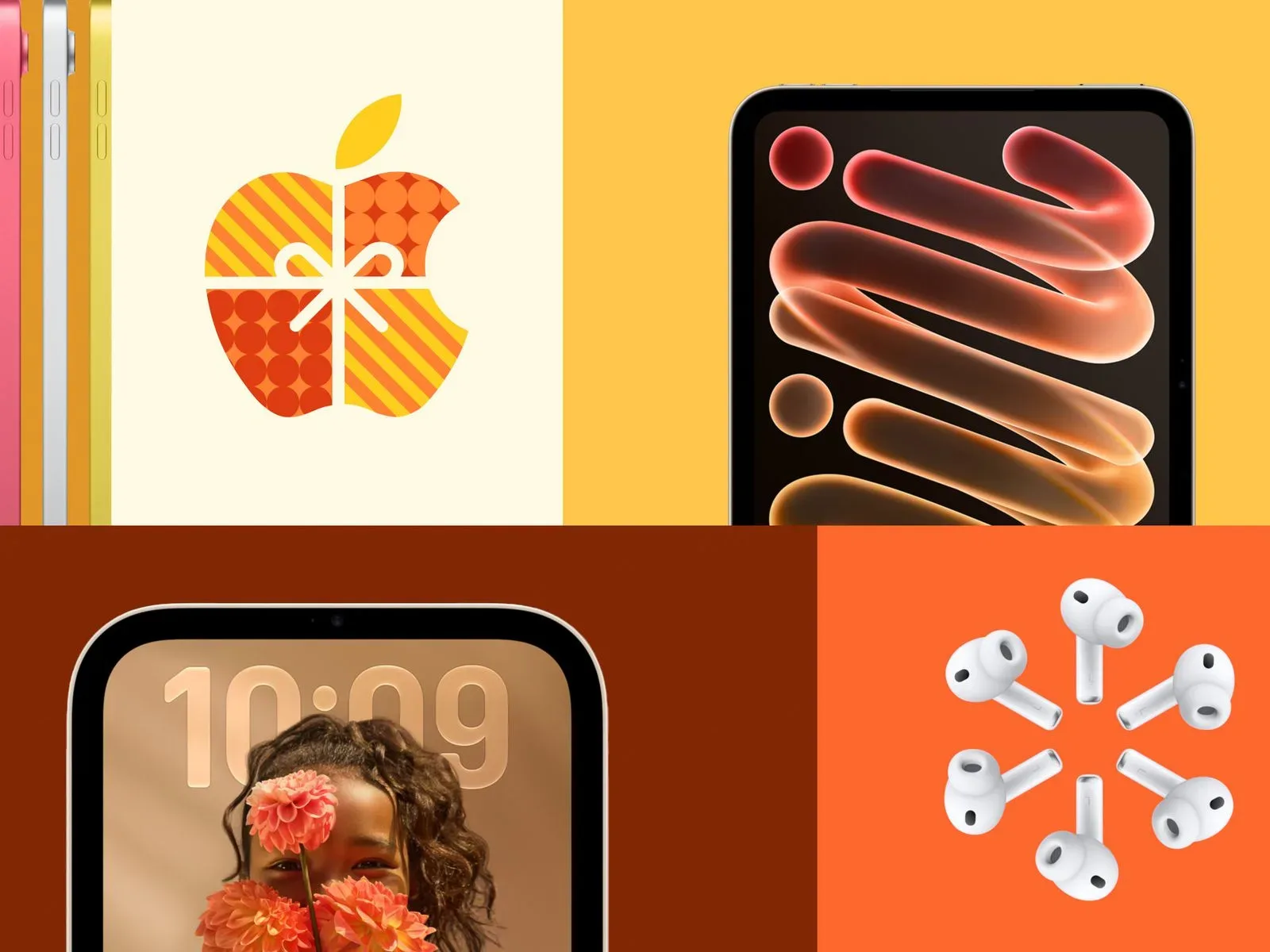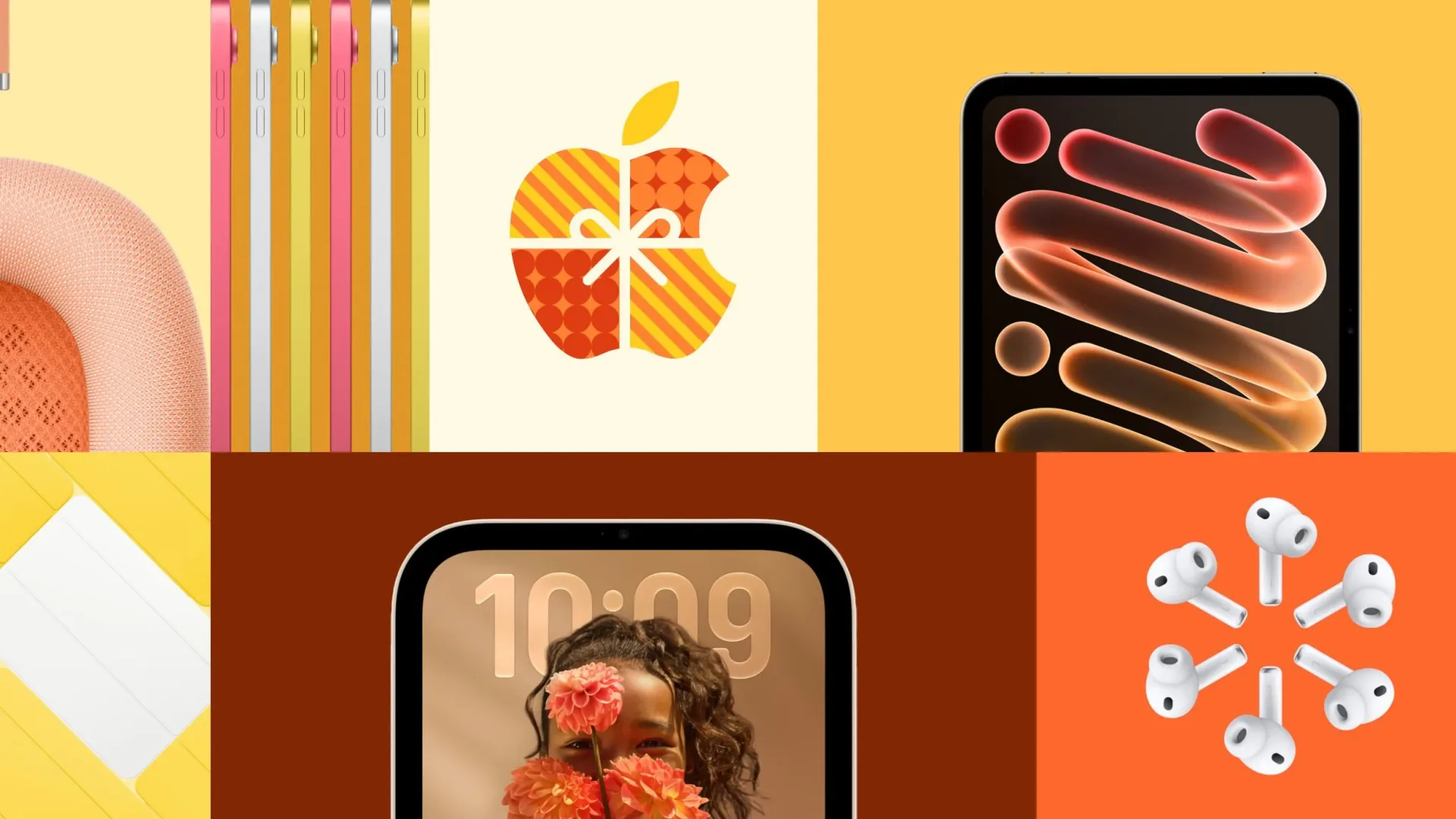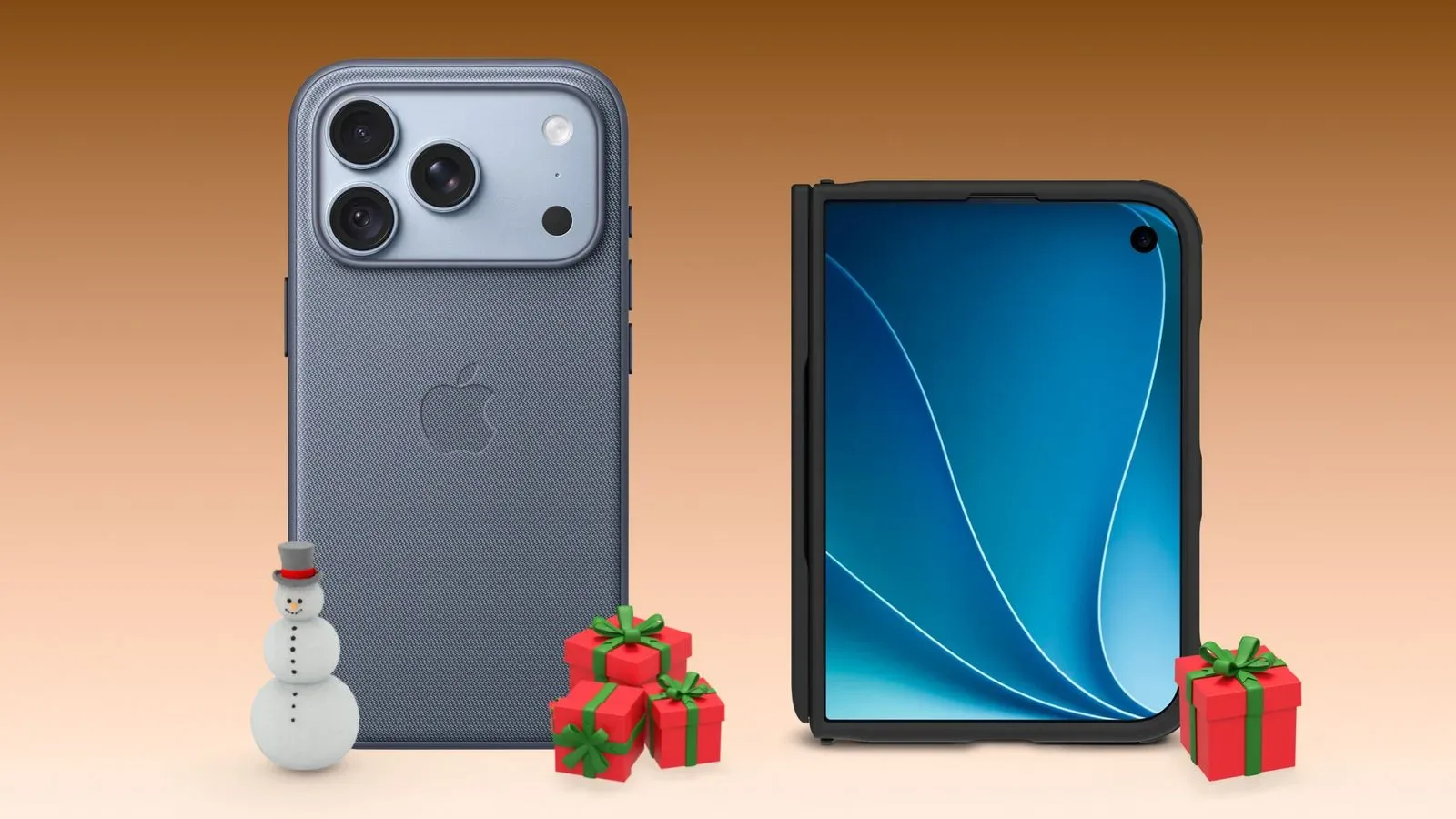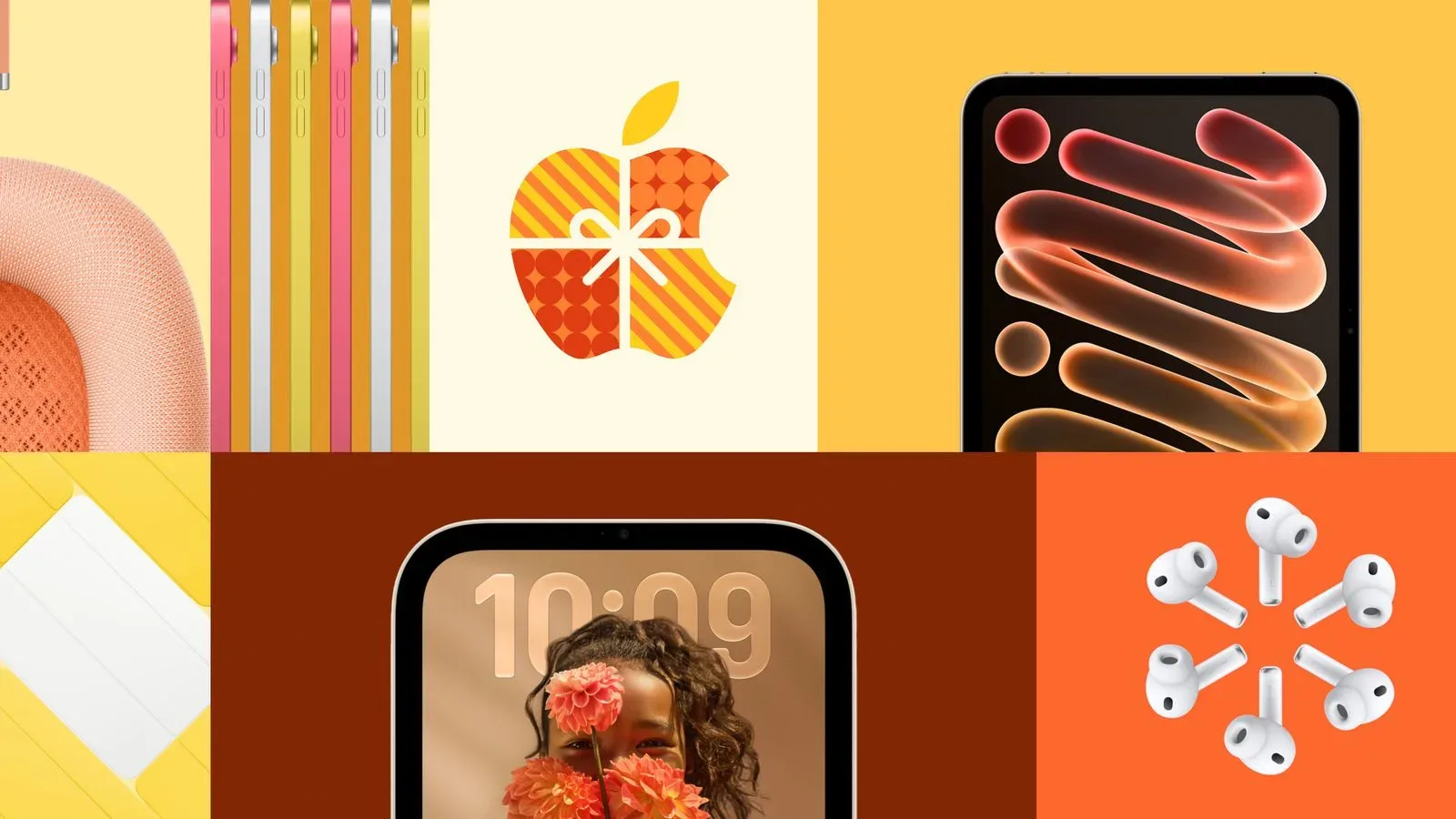
Apple has shifted its storefront into holiday-shopping mode, refreshing its homepage in the United States and other countries with festive device imagery and gift suggestions. The pitch is familiar—find something for a friend or loved one—but this year’s highlighted list makes the company’s current hardware hierarchy unusually clear. At the top sit premium phones, laptops, watches and a new home-oriented product, while a separate personalization push steers buyers toward engraving, custom watch pairings and configurable Macs.
For shoppers, the more consequential detail may be timing rather than tinsel: an extended return period began last Friday, with most eligible items bought through Apple Stores or the online Apple Store remaining returnable in January. That takes some pressure out of early gift purchases, though buyers should still confirm the eligibility of the particular product they intend to order.
The products Apple is putting forward
The guide foregrounds eight newer Apple devices, spanning a $299 entry point to a $2,899 high-end laptop. These are the listed starting prices:
- iPhone 18 Pro: $1,199
- Apple Watch Series 12: $399
- MacBook Pro: $1,999
- Apple HomeView: $299
- iPad mini: $699
- iPhone Duo: $1,999
- Apple Watch Ultra 4: $799
- PROLED MacBook Pro: $2,899
That selection is worth reading as a retail framing rather than a universal buying recommendation. A holiday guide is designed to simplify a catalog into easily recognizable gift tiers. The HomeView is the lowest-priced headline device, followed by the Apple Watch Series 12. At the opposite end, the PROLED MacBook Pro is positioned as the most expensive featured option, while iPhone Duo and the standard MacBook Pro also clearly inhabit premium territory.
The $1,199 iPhone 18 Pro and $1,999 iPhone Duo are particularly prominent in the lineup. Apple has not treated its seasonal page as a bargain list; it is largely a showcase for current, high-value hardware. That matters for a buyer making a budget. “Featured” means Apple wants attention on a product, not necessarily that it is the right fit for every recipient.
Personalization is the other half of the pitch
Hardware specifications can be difficult to buy for someone else. Apple’s holiday presentation attempts to make that less intimidating by emphasizing choices that feel more personal than a plain boxed device.
AirPods Pro 3, AirTags and iPad are presented as items that can be engraved. Engraving is a permanent personalization decision, so it works best when the giver is confident about spelling, preferred name and the recipient’s taste. It changes a retail item into a more individual gift, but it is not a substitute for checking that the device itself suits the person receiving it.
The company is also encouraging shoppers to select an Apple Watch and band combination that matches the recipient’s style. In practical terms, that separates the wearable decision into two questions: which watch is appropriate, and which band appearance feels right. The guide does not make either answer for the buyer, but it highlights that the band can be a meaningful part of the gift rather than an afterthought.
Mac customization is framed differently. Buyers can select the chip, memory, storage and color. Those terms deserve a quick distinction. The chip is the central silicon component that handles the computer’s processing work. Memory is the working capacity available while programs and tasks are active. Storage is the longer-term space for files, apps and other saved material. Color, meanwhile, is an aesthetic choice. A custom Mac therefore combines technical decisions with one visibly personal one, and the technical choices are best made with at least a basic sense of how the recipient uses a computer.
That is an important boundary in gift buying: personalization is most helpful when it reflects information the buyer actually knows. A favored color or a well-known need for more saved space is useful. Guessing at a recipient’s preferred configuration simply because more options exist can make a seemingly thoughtful purchase more complicated.
Holiday color extends beyond the hardware
Apple is also promoting new accessories in pink, navy, gray, purple, light blue and yellow. Apple calls the yellow option green. The blue, yellow and pink accessory colors are presented as matches for the low-cost MacBook Neo, giving buyers a straightforward visual route for building a coordinated gift.
The accessories come from recurring Apple collaborators Tech21, Herschel, Mophie and Belkin. This is a notable part of the holiday strategy because accessories often operate as either a lower-commitment present or an addition to a larger device gift. Someone may not be ready to choose a phone or laptop for another person, but may know enough about their color preference to choose an accessory. Conversely, a matching accessory can help make a major purchase feel less generic.
Color matching is not the same as technical compatibility, however. The guide’s palette offers an aesthetic cue, not a blanket assurance that any accessory suits every model or need. Shoppers should distinguish appearance from fit and function before checking out.
What the extended return window changes
Apple says its extended return policy began last Friday, allowing gift purchases now while preserving a January return opportunity for the recipient on most products sold through Apple Stores and the online Apple Store. The practical benefit is simple: a buyer can shop before the final holiday rush without forcing the recipient to keep an unsuitable item merely because the ordinary return deadline has passed.
It is still wise to treat “most products” exactly as written. It signals that exceptions exist. Before purchasing, shoppers should review the applicable terms for the exact product and sales channel, especially when the gift involves an engraved item, a configured Mac, a third-party accessory or another purchase with details that may affect its return treatment.
There is also a useful consumer distinction between a return window and a product guarantee. A return period concerns the time and terms under which a purchase can be sent back. It does not, by itself, tell a buyer everything about support, damage, compatibility or a recipient’s eventual preferences. The extended window reduces one particular kind of gifting risk: choosing something the recipient does not want or cannot use.
A sensible way to read the guide
Apple’s holiday collection can be navigated by starting with the recipient instead of the headline device. For someone who needs a modestly priced Apple-branded present, the $299 HomeView or personalization-oriented items may deserve consideration. For a person who values a wearable, the $399 Apple Watch Series 12 and $799 Apple Watch Ultra 4 establish two distinct price points. The iPad mini at $699 occupies a middle ground between those accessories and the expensive phone and laptop choices.
For larger budgets, the decision becomes less about whether a product is “newest” and more about whether its category is actually wanted. A $1,999 iPhone Duo, $1,999 MacBook Pro or $2,899 PROLED MacBook Pro may be highly visible in the campaign, but each is a consequential gift where preferences matter. Buyers who know the recipient’s existing setup, usage habits and desired color or configuration will be in a stronger position than those choosing solely from a seasonal hero list.
The broader message is that the guide is selling a mix of flagship hardware, flexible personalization and visual coordination. It gives shoppers a useful view of Apple’s current priorities, but it does not erase the usual work of selecting technology for somebody else: establish a budget, identify the product category the recipient will genuinely use, check customization carefully, and verify return conditions before ordering.
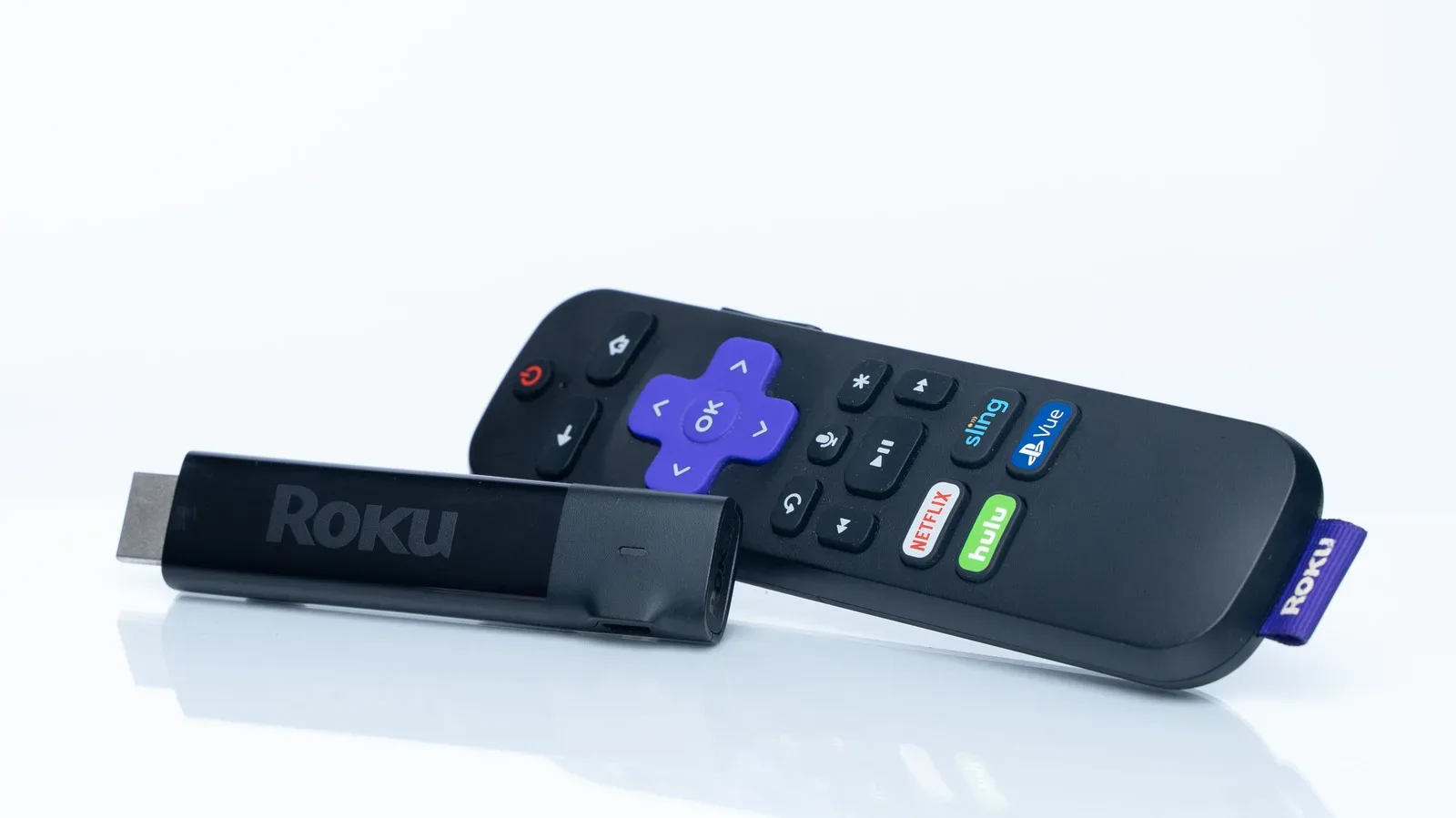
Anyone expanding a home-entertainment gift list may also find it helpful to consider the TV connection rather than just the device itself. Our guide to choosing the right HDMI port for Roku, HDR and audio explains why that small setup detail can affect the experience after the wrapping paper is gone.