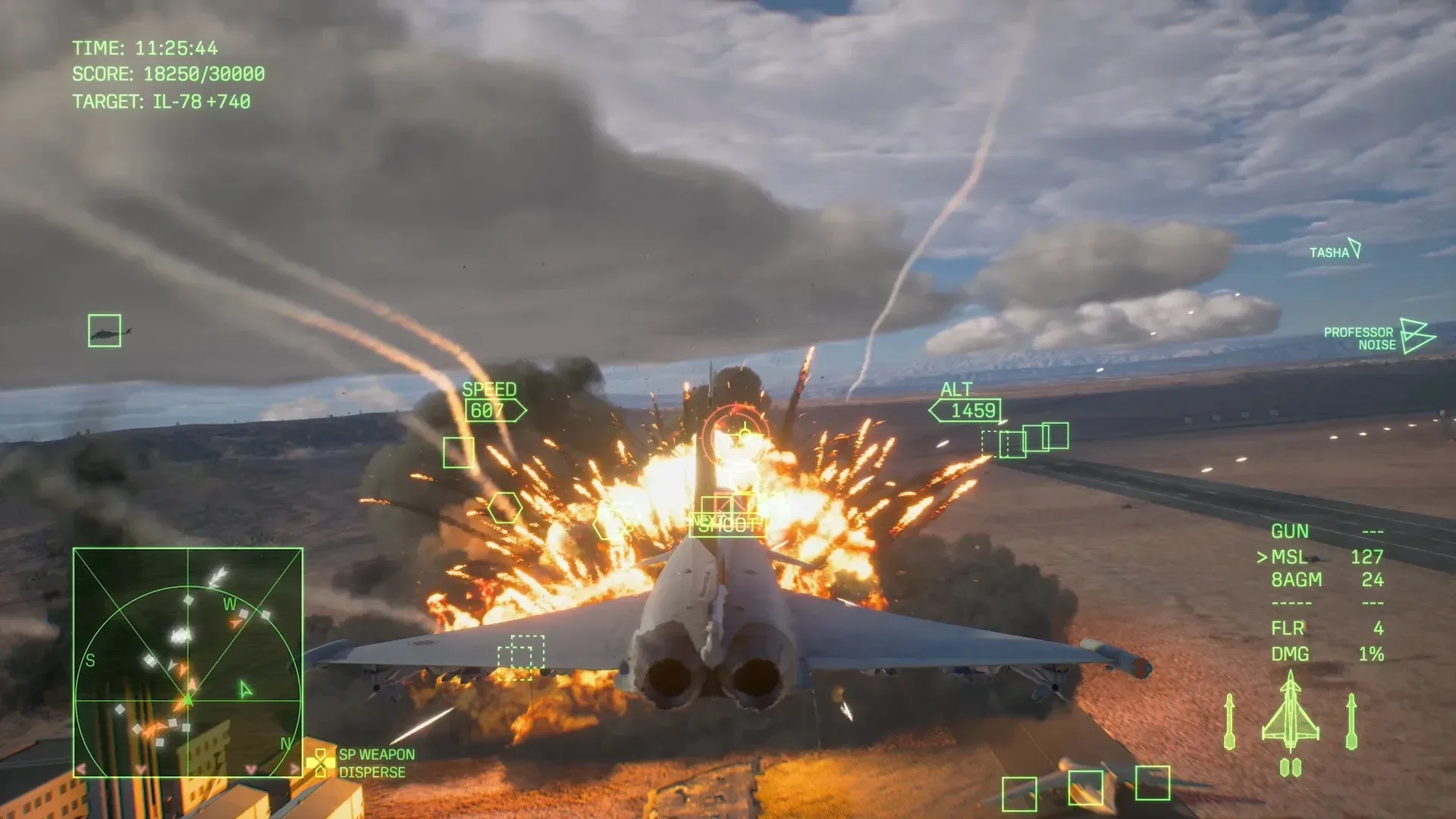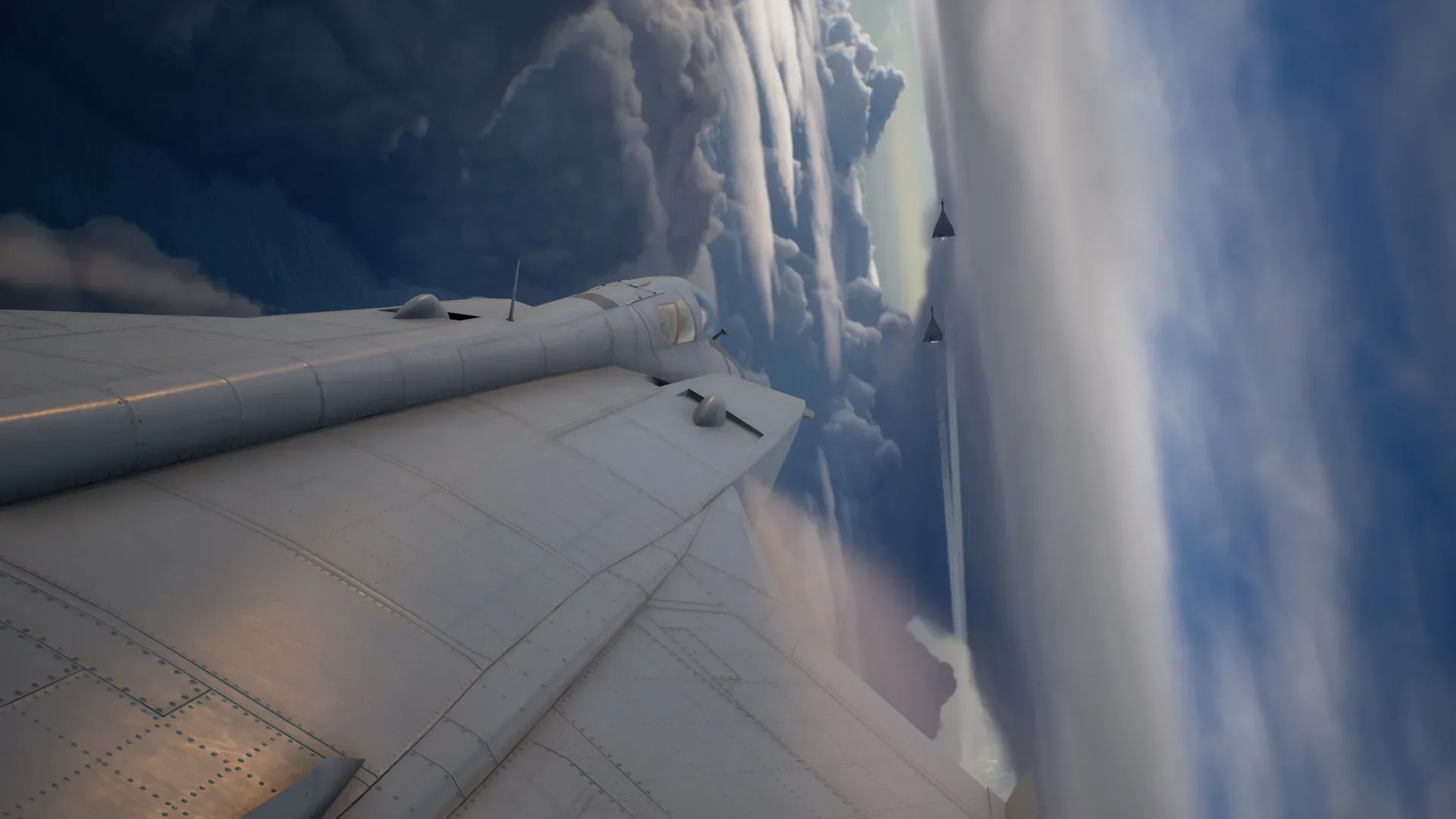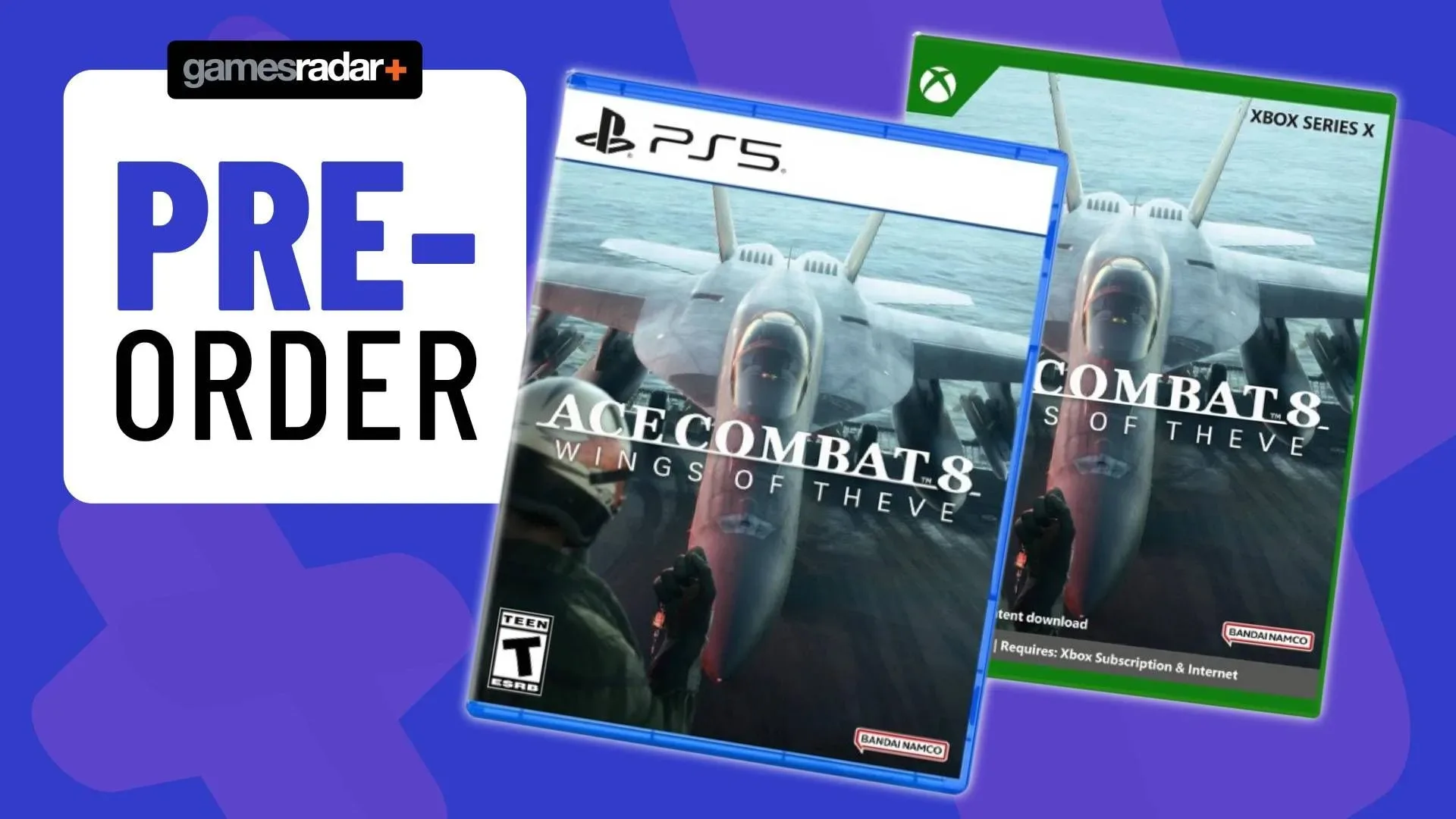
Ace Combat 8: Wings of Theve is scheduled to launch on October 2, positioning its single-player campaign as a more welcoming entry point while also making the series’ most substantial push into multiplayer. The new game retains the essentials people expect from Ace Combat—high-speed dogfights, target locks, missiles and dramatic flights through dense cloud cover—but pairs them with pre-mission tactical decisions, a first-person campaign hub and online modes built around both competition and cooperation.
That combination gives the eighth mainline entry a difficult balancing act. It needs to make the immediate thrill of steering a jet through a chaotic aerial battle understandable to newcomers, without flattening the tactical choices that long-time players value. It also needs to establish a dependable single-player identity while expanding into seasons, a battle pass, co-op missions and lobbies that can host 100 players.
Three early missions are designed to get new pilots airborne
The first three missions of Wings of Theve form an extended tutorial, with the fourth described as the campaign’s first full mission. That structure is a deliberate accessibility effort. Rather than throwing a new player straight into a crowded combat scenario and assuming familiarity with the series’ systems, the opening appears intended to teach the fundamentals over time.
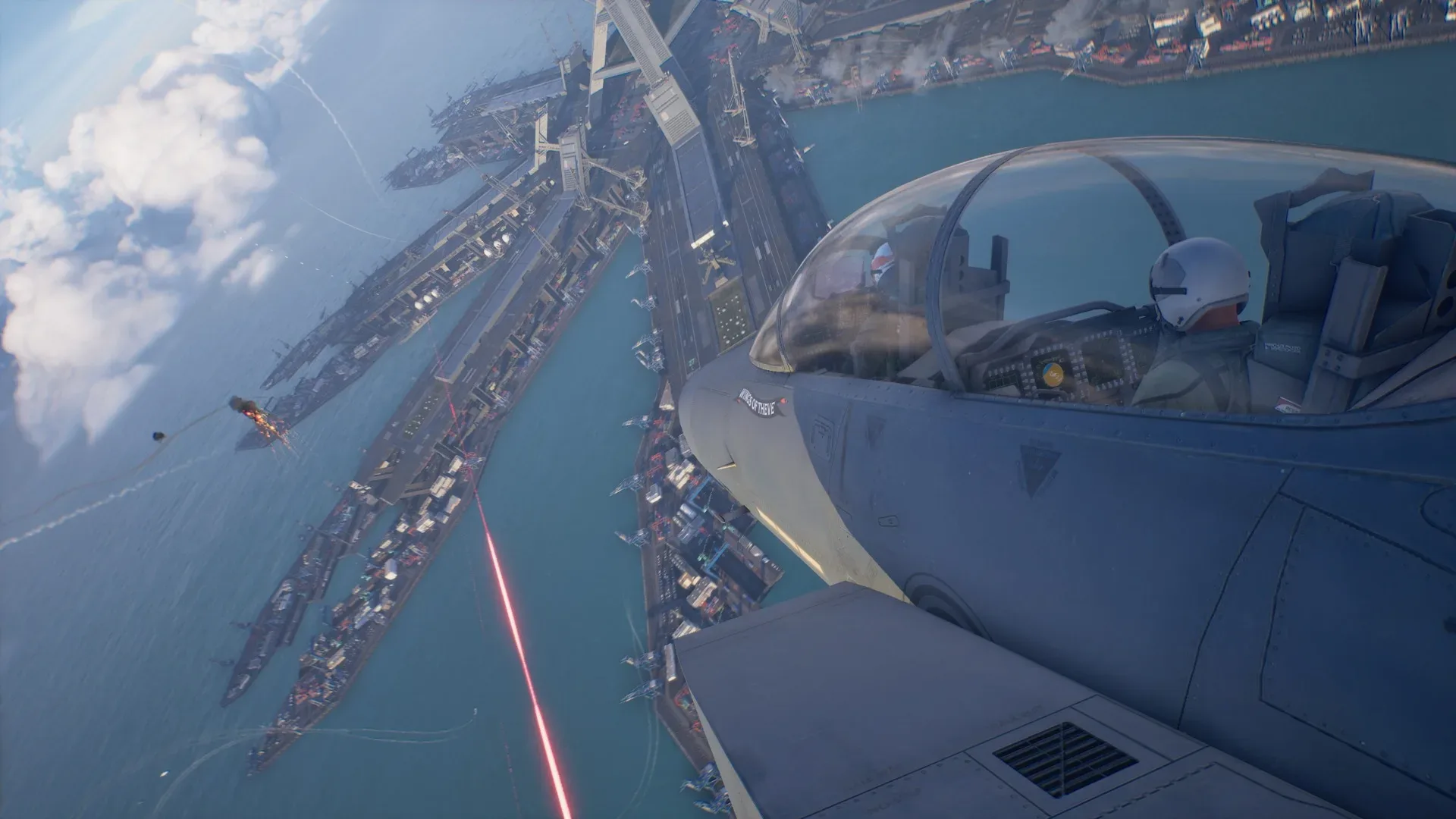
Those fundamentals include pursuit, target acquisition and missile strikes. A lock-on system is the targeting aid that tracks an opponent long enough for a guided weapon to have a viable target. In practice, the loop is simple to describe but demanding to execute: locate a hostile aircraft, maneuver behind or within range, maintain the lock, launch, then avoid becoming someone else’s target. Clouds complicate that loop by cutting sightlines and creating brief moments of uncertainty before an aircraft emerges.
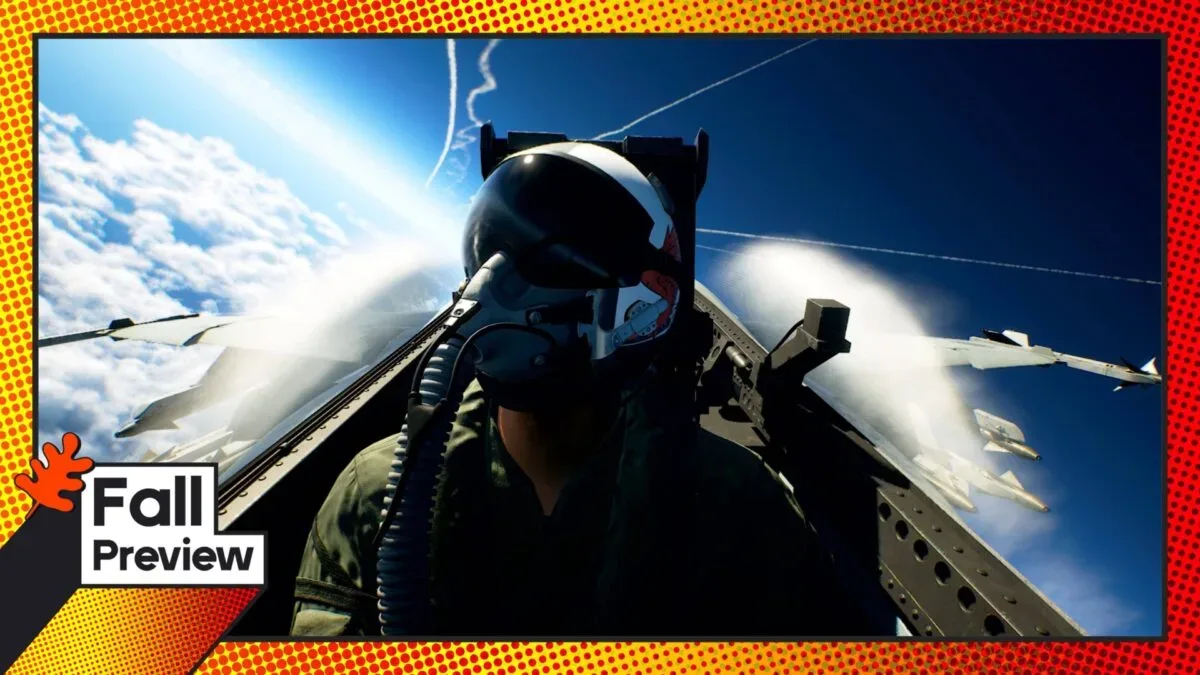
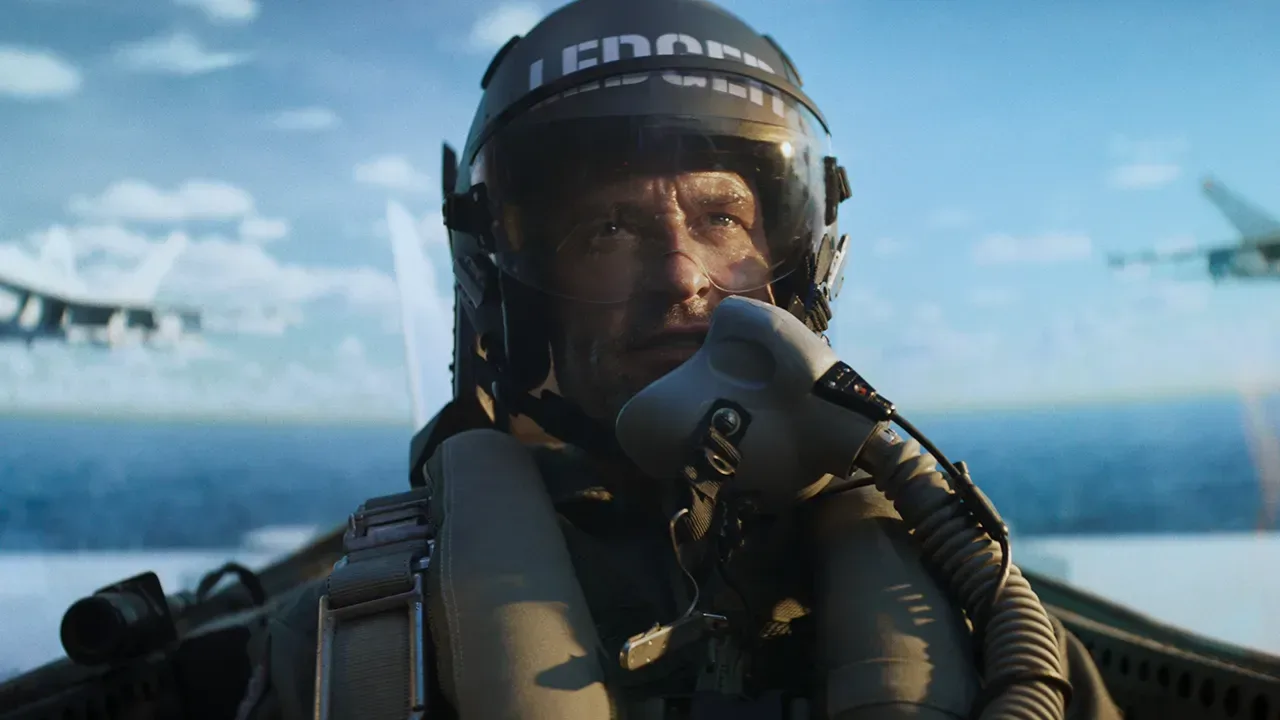
The campaign also seems built to encourage cockpit play. Its first-person view presents the interior of the selected jet, an option that can make altitude, speed and banking feel more immediate than an external camera. The game’s cloud effects are a central part of that presentation, with water droplets visible on the cockpit glass and thick formations that can obscure the sky beyond. The visual goal is not merely scenic: reduced visibility changes how a player approaches an encounter, even when the game’s lock-on and radar-like systems are doing some of the tracking work.
For a franchise about stylized, spectacular aviation combat rather than a purely literal simulation, that is an important distinction. The cockpit perspective and weather effects can sell the tension of flying into the unknown, while the familiar target-lock feedback keeps the action readable enough to support fast decisions. Accessibility, in this context, does not necessarily mean removing speed or intensity. It means teaching players how to interpret the noise before the mission demands they react to it.
Briefings and loadouts put strategy before the dogfight
Wings of Theve’s mission design is not framed solely around aerial duels. Briefings are meant to give players room to plan an approach, and the loadout phase supports that planning with choices covering jets, weapons and squadmate equipment.
That makes the campaign a blend of direct flying and objective preparation. A mission with naval targets, for example, may favor air-to-surface missiles rather than equipment intended strictly for fighter-versus-fighter combat. Air-to-surface missiles are weapons intended for ground or sea targets, as opposed to air-to-air missiles used against other aircraft. Selecting the appropriate tool before takeoff could make a major difference when a mission mixes ships, enemy pilots and other threats.
Related coverage includes Ace Combat 8: Wings of Theve Targets a Bigger, More Accessible Air War.
The ability to customize squadmate equipment suggests that planning could extend beyond the player’s own aircraft. The precise scope of those squadmate choices has not been detailed, so it remains unclear how much command players will have once the sortie begins. Still, the stated approach indicates that missions are intended to reward some consideration before the throttle opens.
That emphasis is useful for newcomers as well as veterans. A tutorial can explain how to fire a missile; a briefing and loadout screen can explain why a particular missile belongs on a particular mission. It is the difference between learning controls and learning a role within an operation.
A new campaign hub is promised, but its full shape remains unclear
Beyond the sorties themselves, the development team has discussed a first-person, hub-like campaign space where players will interact more directly with characters and the environment. It has not yet been fully shown in the available details, and there is no confirmed description of its location or full function.
The practical significance is that the game may give the player a place to exist between missions rather than moving solely from menu to briefing to launch. If the feature delivers on that premise, it could provide a more grounded counterpart to the extreme scale of combat in the sky. But this is still an area to watch rather than a confirmed strength: its activities, pacing and impact on the campaign have yet to be demonstrated in detail.
The campaign’s story places the player in the role of someone following a famous pilot and folk hero who has been killed in action. That setup supplies a clear arc for a player learning the ropes: the protagonist is not simply an already-established ace but someone attempting to earn that status. Specific story developments beyond that premise remain unknown.
Multiplayer ambitions are the game’s biggest unanswered question
Wings of Theve is also described as the studio’s most ambitious multiplayer project for the series. Planned offerings include 100-player lobbies, cooperative missions and multiple online modes. The broadest concept is a 100-player free-for-all in which participants begin as lower-level mercenaries and progress in ability and stature.
That is a substantial change in scale for a series historically associated with focused sorties and tightly framed aerial combat. A lobby of that size raises obvious design questions: how targets are distributed, how newcomers avoid being overwhelmed, how progression affects fairness, and whether the game can preserve the clarity of a traditional dogfight amid a far denser battlefield. The currently available information does not answer those questions, so the mode’s final structure should not be assumed.
Co-op may be the more immediately compelling prospect for players who would rather form a squadron than enter a free-for-all. Cooperative missions are expected to let players take different roles while tackling objectives and larger bosses. In gaming terms, co-op means players are working toward shared goals instead of facing one another as opponents; PvP, or player-versus-player, refers to competitive modes where other players are the primary opposition.
That division matters. A co-op mode can make the game’s loadout and role systems feel more meaningful, since a team may be able to divide responsibilities between air cover, anti-ship attacks or other mission priorities. It also offers an alternative for fans who enjoy coordinated action but do not want every match to be a contest of individual aerial reflexes. Co-op was absent from 2019’s Ace Combat 7: Skies Unknown, making its planned return notable.
Players interested in older flight-combat games getting another run at modern PCs may also want to see the return of ZeeWolf and ZeeWolf 2 in Wolf Duology, a separate project centered on Amiga-era gunship missions rather than Ace Combat’s jet-focused action.
Seasons and a battle pass bring live-service concerns alongside potential support
The multiplayer plan includes seasons of content every two months and a battle pass. A battle pass is typically a progression system that awards items as players complete gameplay goals during a defined season. The format can give an online game a recurring cadence and a reason for the developer to keep adding material after launch. It can also create pressure around progression, ongoing engagement and the quality of updates.
For Wings of Theve, the key issue is not that seasonal support exists, but whether it complements the core flight game. Regular updates could sustain the multiplayer population, provide new objectives and help co-op groups return. On the other hand, live-service plans are inherently more demanding than a self-contained campaign: they require continued content, technical maintenance and a community large enough to support matchmaking over time.
None of that makes the model a foregone problem or success. It simply means the game is asking to be judged on more than its first set of missions. The single-player campaign, the new hub, massive lobbies, co-op structure, progression and seasonal schedule all have to work together.
The appeal remains the fantasy of flight
Series brand director Kazutoki Kono has characterized the desire to fly freely through huge skies as something broadly shared across cultures. That idea captures why Ace Combat’s formula has endured even through uneven periods of popularity and reception. The series offers a heightened fantasy: not a quiet depiction of aviation, but a chance to chase fighters into sunlight, skim above the sea, break through cloud cover and turn a difficult pursuit into a successful strike.
Wings of Theve appears to be preserving that direct appeal while widening the runway. The lengthy opening is intended to help inexperienced pilots get comfortable. Mission planning and squadmate customization add tactical texture. The campaign hub could make its world more tangible. Co-op and 100-player modes could give its airspace more social possibilities than before.
There is still plenty that needs to be seen, particularly the hub and the final shape of multiplayer. But the announced direction is clear: Ace Combat 8: Wings of Theve wants to welcome people who have never touched the series while giving established fans more ways to fly together, fight together and keep returning to the skies.