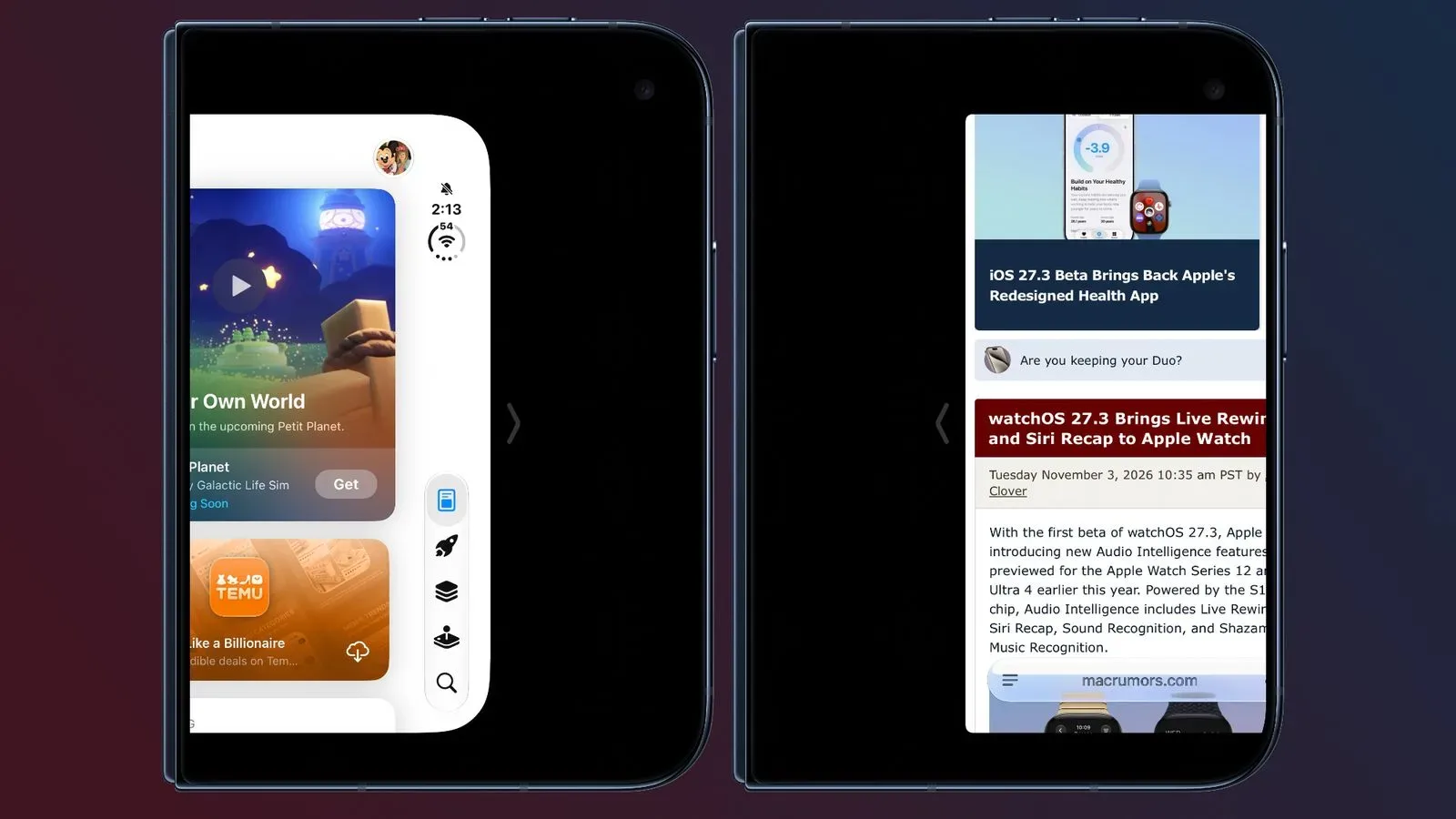

A new collection of free iPhone Duo app recommendations has been published, adding to two earlier rounds of picks for the platform. The latest roundup is presented as a selection of apps worth checking out, with demonstrations accompanying the recommendations.
That is the useful headline for iPhone Duo owners: there is another free-app shortlist to investigate. But the information presently available is unusually narrow. It does not name any of the 10 apps, describe what they do, explain their business models, or state whether they are games, utilities, creative tools, entertainment software, or something else entirely.
That absence matters. “Free” is a meaningful filter, but it is not a complete description of an app. It can mean an app is fully available at no charge, that it has optional purchases, that some functions are limited, or simply that it can be downloaded without an upfront payment. None of those possibilities can be confirmed here. Likewise, the “Duo” name identifies the device context used by the roundup, not a set of capabilities explained in the available material.
What is confirmed
- The roundup contains 10 free iPhone Duo app picks.
- It is the third collection in an ongoing series of iPhone Duo app recommendations.
- Two previous app lists are referenced: one focused on fun apps and another featuring additional titles.
- The recommendations are accompanied by demonstrations.
- Readers are being invited to suggest further iPhone Duo apps for consideration.
Those points establish a continuing effort to surface software for iPhone Duo users rather than a one-off directory. A recurring format can be valuable because app discovery is often the hard part of using a new platform or device category. Storefront rankings and search results may prioritize popularity, advertising, or broad download volume; a curated list instead signals that somebody has narrowed the field to a manageable group of candidates.
Still, a recommendation is not the same thing as a specification sheet. Users looking for a particular kind of software should treat the roundup as a starting point, then check each app’s current store listing for compatibility, account requirements, privacy disclosures, age ratings, and any purchase or subscription information before downloading. Those checks are especially important for free software, where the download price alone does not reveal the full experience.
Why the missing app names change the story
An app roundup usually answers three basic questions: what the apps are, what each one does, and why a given person might want it. Here, only the broad framing is available. The app names and demonstrations themselves are not included in the supplied material, so identifying individual picks would require guesswork. That would turn a simple app-discovery item into unsupported advice.
For the same reason, no claims can responsibly be made about performance, interface design, controller support, multiplayer functions, display layouts, accessibility, offline use, or compatibility with other Apple hardware. The provided description does not address those subjects. It also does not say whether any app is a game, so there is no basis for presenting this as a gaming-app recommendation list.
The most accurate reading is modest: iPhone Duo users have a newly highlighted set of 10 no-upfront-cost apps to explore, backed by demo material, while the actual software details need to be checked in the complete roundup and in the apps’ own listings.
A practical way to use a free-app roundup
When a curated list gives only a broad promise, a little screening can prevent a phone from becoming an abandoned-app graveyard. Start with the demo for the apps that appear closest to a real need or interest. A demonstration can reveal the basic interaction model much faster than a title or icon can: whether an app is built around quick sessions, ongoing organization, passive viewing, creation, or social participation.
Next, inspect the current app-store page before installing. “Compatibility” refers to the devices and operating-system versions an app supports. Because software listings can change after a roundup is published, that page is the best place to verify whether an app works with the iPhone Duo setup in question at the moment of download.
Then look beyond the word free. Check whether the listing mentions in-app purchases, subscriptions, advertising, sign-in, or data collection. This is not a claim that any of the featured apps use those systems; it is simply the sensible due-diligence step whenever an app’s pricing structure has not been detailed. Users may also want to glance at recent update notes and reviews to see whether an app is being actively maintained and whether recent feedback raises issues relevant to them.
Finally, install selectively. A list of 10 is small enough to explore, but users do not need to download all 10 at once. Trying one or two apps, deciding whether their use case is real, and removing the rest if they do not stick is a cleaner approach than treating every recommendation as a must-have.
What “free” can and cannot tell users
In app coverage, “free” generally describes the absence of an upfront download charge. It does not, by itself, establish long-term cost, feature completeness, or the handling of user information. Those distinctions are technical and practical rather than merely semantic.
A fully free app provides its advertised experience without payment. A freemium app can be downloaded for free but may reserve advanced functions, content, or convenience features for a purchase. A subscription-supported app may offer a trial or limited tier while requiring recurring payment for continued access to some capabilities. An ad-supported app can remain free in monetary terms while using advertisements as its revenue mechanism. The supplied material does not classify any of the 10 picks into these categories, so readers should not assume one model or another.
That does not diminish the appeal of the roundup. It simply puts the right boundary around it. A zero-price starting point lowers the risk of trying unfamiliar software, especially when a demonstration can help users decide where to begin. But the value of an app will still depend on what it does, how it fits someone’s routine, and what conditions accompany its free download.
An evolving iPhone Duo recommendation series
The reference to two prior collections suggests the iPhone Duo app library is being approached as an evolving space. The earlier entries divide broadly between a list of fun apps and a second assortment of more titles; the new installment narrows its immediate focus to free options. That structure is useful for readers who want discovery guidance without necessarily committing money before they know which kinds of apps make sense for them.
The invitation for additional suggestions is also notable because it leaves the series open-ended. App ecosystems change quickly: new software arrives, existing apps add features, and older apps can disappear or change their terms. Community suggestions do not guarantee inclusion or quality, but they can widen the pool from which later recommendations are drawn.
For now, the actionable takeaway is straightforward. There are 10 newly highlighted free iPhone Duo apps, presented with demos, plus two earlier recommendation collections for anyone who wants a broader scan of the platform’s software. The responsible next step is to review the individual entries rather than infer their functions from the roundup’s headline alone.
Users already invested in Apple accessories may also want to keep an eye on related platform maintenance, including the recent AirPods firmware rollout, while evaluating how their broader device setup fits together.