Vincent D’Onofrio entered a social-media argument about the reported God of War: Laufey in the most direct way possible: by praising Deborah Ann Woll, rejecting a call to boycott the game, and declining to let a stranger turn a co-star’s appearance into a culture-war talking point.
The exchange began when an X account criticized the reported project and its protagonist, Faye—also known as Laufey—because it objected to her character design. The account framed its complaint as evidence that Sony Santa Monica Studio had chosen “feminism” over attractive female characters, then urged followers to boycott the game.
There is an important distinction to keep in view: the discussion provided here concerns online claims about a game called God of War: Laufey, including Faye’s role and Woll’s involvement. The material does not provide an official announcement, release details, gameplay information, or independent confirmation of those production particulars. What is firmly established in the exchange is D’Onofrio’s response to the criticism directed at Woll.
D’Onofrio’s response focused on Woll, not the bait
D’Onofrio, Woll’s Daredevil co-star, replied that he did not agree with the boycott argument. He described Woll as beautiful, exceptionally talented, smart, kind and deeply nerdy, while also calling her a good friend. He added that he is a God of War fan and looks forward to playing the new game with his son.
“In no way do i agree with you,” D’Onofrio wrote, before praising Woll and saying he “cannot wait to play the new game with my son.”
It is a refreshingly plain answer to an argument built on provocation. D’Onofrio did not accept the premise that a performer’s or a character’s value can be reduced to whether an online faction finds a promotional image sufficiently sexualized. Nor did he make grand claims about the game’s commercial prospects, production choices, or the motives of a studio. He spoke about a colleague he knows and a series he enjoys.
That restraint matters. Online pile-ons frequently try to convert a narrow aesthetic complaint into a sweeping accusation about an entire game, company, or audience. Once that escalation starts, the conversation often becomes less about a specific work and more about manufacturing an enemy to fight. A friendly public defense of a colleague is considerably more grounded than that routine.
What the argument was actually about
The criticism centered on the claim that Faye was not designed to satisfy a particular expectation of female attractiveness. That is an opinion about fictional character design, and people are free to have opinions about character design. The leap from “I dislike this look” to “the game should be boycotted” is something else entirely.
Related coverage includes Vincent D'Onofrio Defends Deborah Ann Woll Amid God of War: Laufey Backlash.
A boycott is a coordinated refusal to buy or support a product in an effort to create pressure. It is not merely a negative reaction, and it normally depends on a clear demand and a credible factual basis. In this case, the supplied material presents a call to boycott rooted in an assertion about a character’s attractiveness rather than a documented issue with consumer treatment, working conditions, game quality, pricing, or access. That makes it a demand for a creative team to tailor its work to one group’s personal preferences—not a consumer-rights campaign.
The account replied to D’Onofrio by attempting to broaden the disagreement into claims about the #MeToo movement and the Dead or Alive series, accompanied by an unsubstantiated conspiracy-theory screencap. But bringing in an unrelated franchise does not substantiate claims about Woll, Faye, Santa Monica Studio, or the reported God of War project. It mostly illustrates how quickly these exchanges can be pulled away from verifiable facts.
The tactic: turn preference into a test of loyalty
There is a familiar pattern in social-media outrage. First comes a declarative claim that a creative work has betrayed “gamers.” Then comes a demand for a boycott. Finally, any disagreement is treated as proof that the dissenter has been fooled, compromised, or is simply not part of the “real” audience.
This is a useful engagement machine because it invites immediate conflict. It is not useful criticism. Good criticism explains what does not work and why, engages with the actual text or design where possible, and allows room for other people to disagree. It does not require a creator, performer, or fellow player to be treated as hostile merely because they do not share one narrowly defined standard of beauty.
The effect is especially unpleasant when the target is a real actor. A performer can be associated with a character, but they are not a character model sheet for a social-media faction to grade. D’Onofrio’s message put the focus back where it belonged: Woll is a person and an artist, as well as his friend. That should not be a controversial observation, though the reaction explains why it needed saying.
Why refusing prolonged engagement can be the smart move
After D’Onofrio’s initial response, the argument’s instigator tried to keep it going. D’Onofrio did not continue the debate. That was probably the wisest part of the exchange.
Not every public claim deserves a point-by-point rebuttal, especially when the response shifts into unrelated grievances and unsupported conspiracy material. Continued engagement can make a fringe post look more important than it is, reward the account with visibility, and force the person being targeted—or people defending them—to spend time answering an endlessly changing set of allegations.
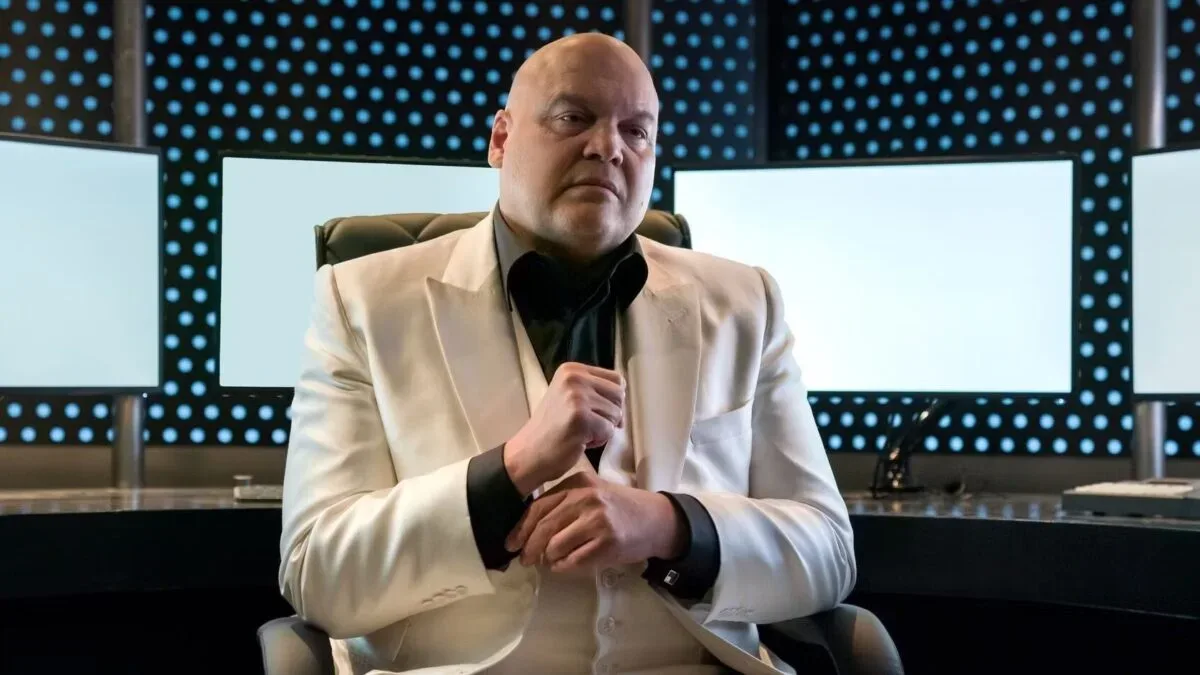
Instead, D’Onofrio made his position clear in a few sentences: he disagreed, he respected Woll, and he was excited for the game. The final jab in the replies—that the account had been “bodied by Kingpin”—gave the thread its inevitable comic-book punchline, referencing D’Onofrio’s well-known role. But the substantial point arrived before the joke: hostility toward a woman’s perceived attractiveness is not a meaningful measure of her ability or of a game’s worth.
What audiences can reasonably take from this
For fans trying to sort signal from noise, the practical rule is uncomplicated: separate confirmed information from social-media framing. A screenshot, an angry post, or a boycott slogan cannot establish a game’s story, content, quality, business outlook, or development decisions. Likewise, a performer’s public defense of a colleague is not a substitute for official project details—but it is a perfectly credible statement of support.
It is also worth resisting the temptation to treat the loudest online argument as representative of a whole fandom. Social platforms reward fast, categorical posts and conflict-heavy replies; they do not necessarily reflect broad audience interest. That dynamic has surfaced in other gaming-community disputes, including situations where official statements and viral claims have sharply diverged, as seen in a recent Halo community controversy.
For the people making games and playing them, the healthier standard is broader than this one incident. Characters can be heroic, strange, vulnerable, glamorous, weathered, funny, frightening, or any combination of those things. No single aesthetic preference gets to dictate the boundaries of an entire medium. A game should ultimately be discussed on the strength of what it actually is—when reliable details are available—not on whether it conforms to a demand engineered for outrage.
D’Onofrio’s reply did not need to settle every argument about games, character design, or social media. It did something more useful: it refused an insulting premise, offered genuine praise for Woll, and stopped there. In a thread designed to inflate grievance into spectacle, that was more than enough.