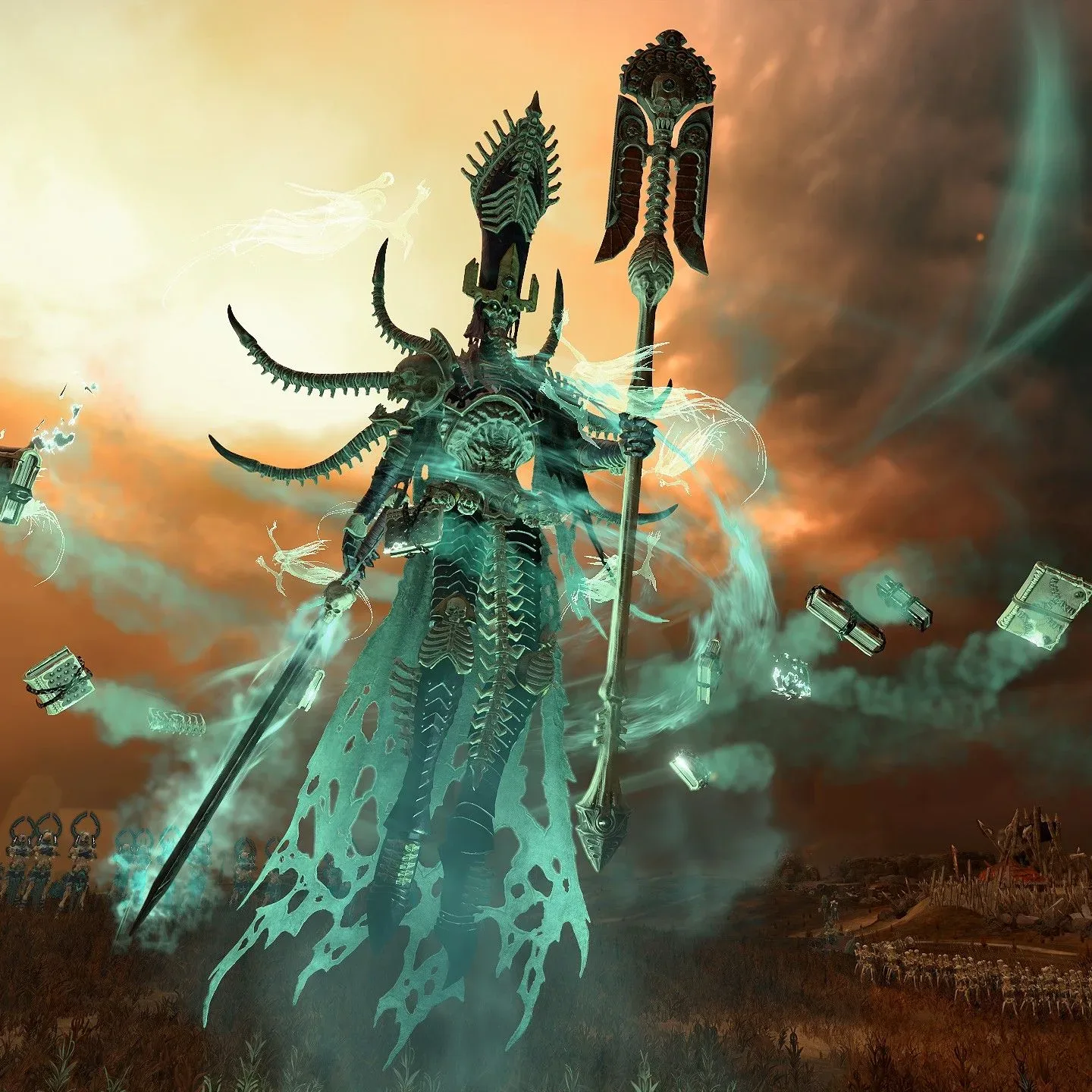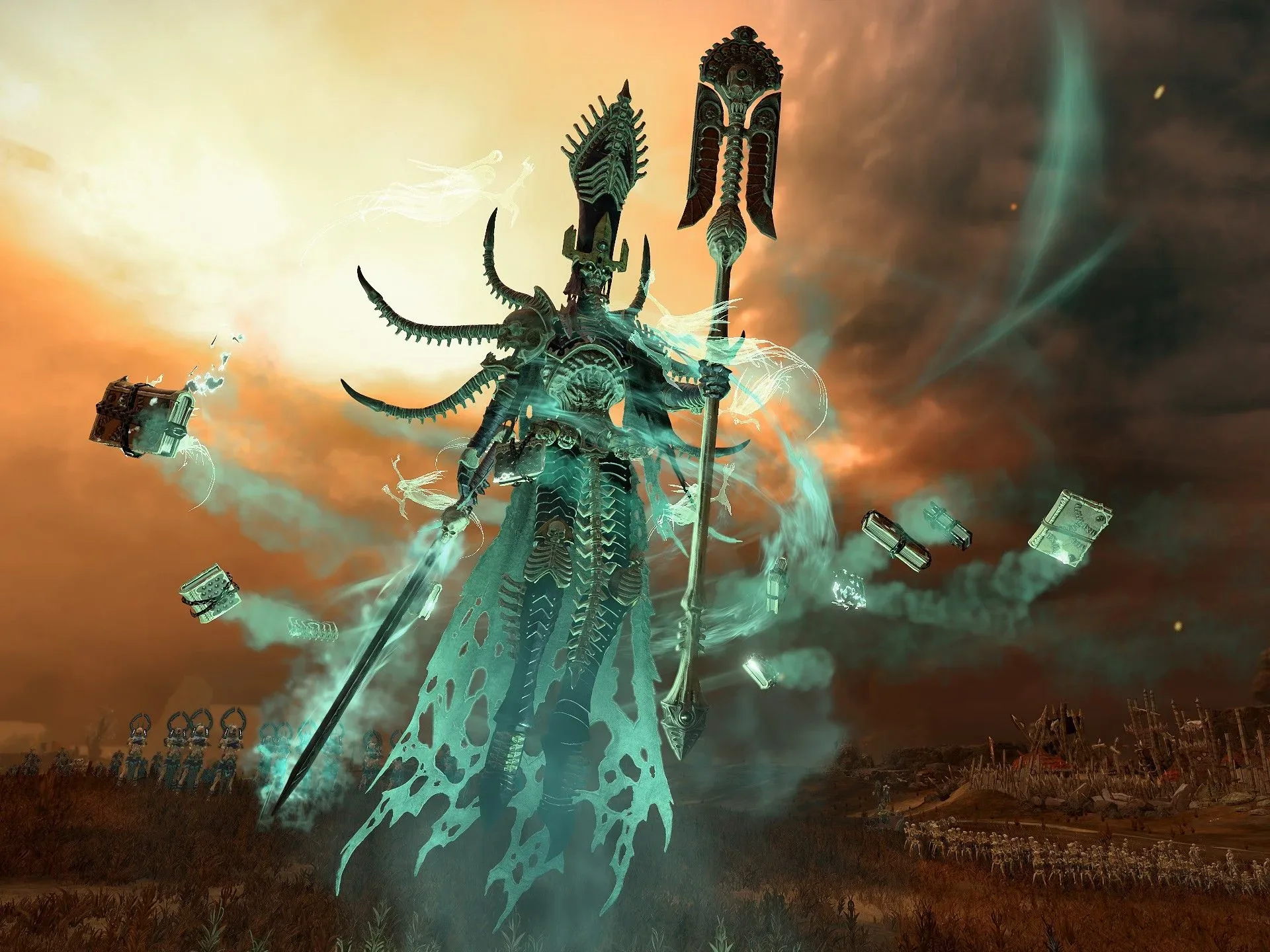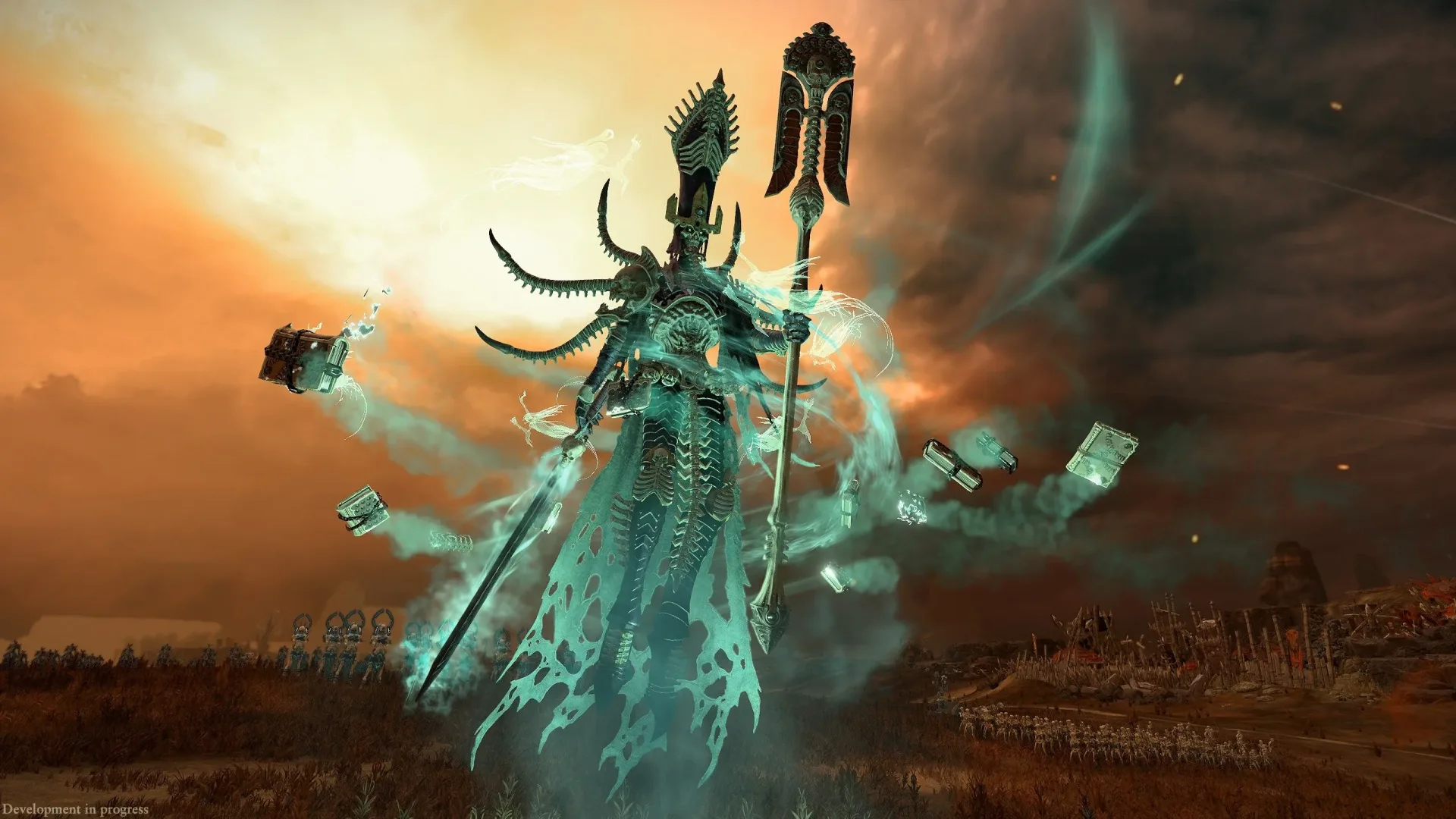
Total War: Warhammer 3’s Immortal Empires mode has gained a potent new reason to keep playing beyond the point where many grand-strategy campaigns normally lose momentum. Lords of the End Times, alongside update 9.0, puts Nagash at the center of a campaign built around a difficult opening, a globe-spanning hunt for power, and an End Times crisis that can tear the map apart before handing survivors a desperate new world to rebuild.
The appeal is not simply that Nagash is exceptionally powerful in battle. The more interesting idea is structural: the campaign’s priorities can be violently rewritten. A player can spend scores of turns building an undead empire and pursuing Nagash’s own objectives, only for Archaon’s invasion to turn that personal project into a fight for the survival of the entire world. Once the Chaos threat is beaten, the campaign shifts again into a contest over the ruins.
That is a meaningful change for a sandbox whose late stages can otherwise become a matter of expanding an already dominant empire. Here, power is not merely a bigger army or a larger border. It is the ability to survive catastrophe, seize the vacuum afterward, and decide what kind of world returns.
Nagash begins with power, but not control
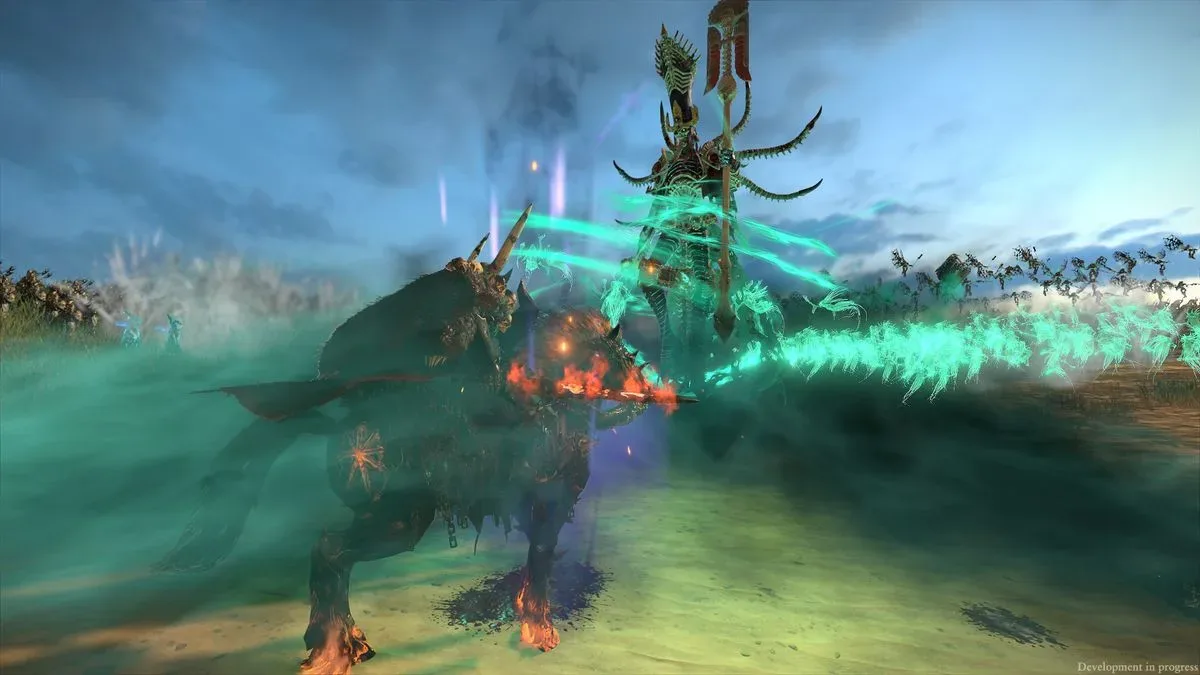
Nagash is presented as a formidable combatant, yet his campaign is not framed as an effortless march. His starting position places pressure on him from several directions: greater daemons of Chaos, Settra, and a hostile crusader are all nearby. Meanwhile, his nine books of power are spread across the world, and his Mortarch lieutenants begin outside his direct control.
That distinction matters. A starting position is more than geography in a Total War campaign. It determines which enemies can reach a faction early, how many fronts need defending, where expansion can realistically happen, and whether a faction leader can personally solve every emergency. Nagash may excel on the battlefield, but one character cannot be everywhere at once.
The campaign’s personal objectives reinforce that limitation. Retrieving the books and bringing Mortarchs into the fold asks the player to project influence far beyond a secure home territory. Even an early book can be lost in battle, making advancement vulnerable rather than automatic. The result is a fantasy of accumulating immense necromantic authority that has to be earned through logistics, territorial security, and repeated military commitments.
There is also a fitting friction between Nagash’s lore-driven stature and the practical demands of a strategy campaign. A supreme necromancer can lead an army to victory, but settlements still need protecting and hostile forces continue to probe weak points. Sending Arkhan out independently, for example, can leave him exposed to daemons of Tzeentch and put a collected book at risk. Taking Nagash north to confront Skaven can become a prolonged commitment while problems grow elsewhere.
In other words, the campaign creates tension by treating Nagash as the spearpoint rather than a universal solution. The player’s strongest instrument can be decisive on one front, while the empire remains threatened on several others.
Related coverage includes Total War: Warhammer 3's End Times Update Makes Nagash's Campaign Feel Like a True Apocalypse.
The End Times changes the question from conquest to survival
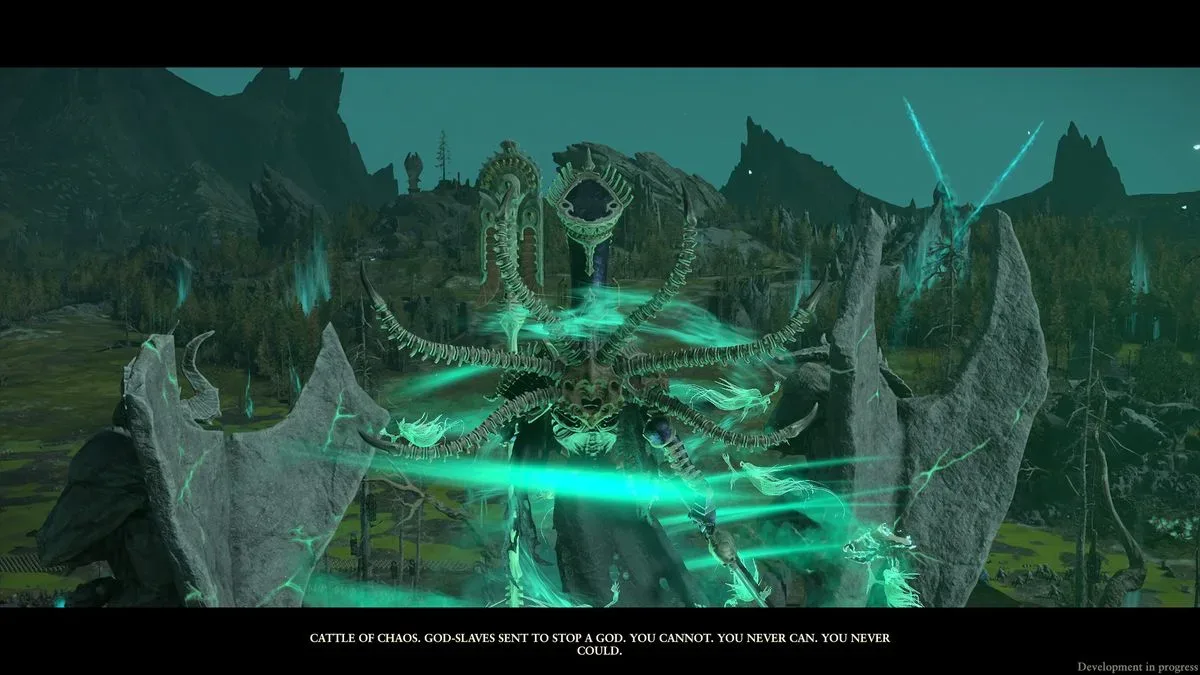
The defining interruption comes with the End Times, led by Archaon rather than Nagash. Chaos armies arrive in force, including landings on southern shores, while Archaon commands the invasion from behind the advancing armies.
Archaon is not simply another enemy lord to intercept. His apparent invulnerability is tied to the larger Chaos war machine: each Chaos army and unholy fortress grants him a share of protection. That turns the campaign objective into a staged operation. Before directly defeating the Everchosen, players must reduce the infrastructure and forces that make him so difficult to confront.
This is an important piece of design because it gives the invasion an intelligible military logic. It is not enough to locate the principal antagonist and throw one elite stack at him. The invasion must be blunted across the map, forcing choices about where to commit armies and which losses can be tolerated.
A ticking destruction measure adds another layer of urgency. Settlements razed during the crisis cannot be recolonized until the crisis is over, or if it is successfully ended. That rule has consequences beyond a dramatic visual of a burning map. Every razed settlement is temporarily removed from the normal cycle of expansion, defense, development, and recovery. It means the war against Chaos reshapes the strategic landscape even for factions that survive it.
It also creates an unusual diplomatic picture. Civilizations that might otherwise have little reason to cooperate can seek alliances with Nagash against the invading Chaos forces. Humans, dwarfs, elves, and Skaven can all end up looking to a figure identified with evil for help. The situation does not erase those rivalries; it suspends them under existential pressure.
That makes the temporary heroism especially entertaining. Nagash’s book hunt can be forced aside while he functions as a defender of a world that will probably regret needing him. The campaign supplies a rare Total War reversal: an undead conqueror becomes the necessary response to a threat even worse than himself.
A quest battle with real campaign weight
Beating Archaon involves both a battlefield victory and a climactic quest battle against the champions of Chaos before facing the Everchosen. A quest battle is a specially structured battle tied to a campaign objective rather than a routine clash over territory. In this case, its significance is heightened because it resolves a crisis that has changed what the world map can be used for.
By the time Archaon falls, as much as three quarters of the world may have been razed. That scale helps explain why victory does not read as a conventional end point. It instead opens the next phase of the game.
Rebuilding the ruins is the second campaign
After the End Times ends, the race is on to resettle the devastated world. This is where the system’s most intriguing effect emerges: a mature campaign can acquire the energy of a new start. Land that was formerly occupied, contested, or unavailable is suddenly open to reconstruction. Surviving powers can grow into areas they did not previously control, such as Kislev taking over territory once held by the Empire.
Nagash can use that opening in distinctly undead fashion. Mausoleums and burial chambers can be raised across Nehekhara, while the Ritual of the Dead transforms the landscape into a sickly wasteland. The effect is both strategic and thematic. The post-apocalyptic recovery is not a neutral restoration of what existed before; it is an opportunity to remake the map in Nagash’s image.
Former allies are also unlikely to remain comfortable with their bargain forever. Once Chaos is no longer the immediate danger, the fact that Nagash is still Nagash matters again. Alliances of necessity can fracture into new wars, keeping the diplomacy from settling into a permanent post-crisis peace.
This is where the End Times system appears to answer a longstanding sandbox problem: what makes the middle and late game feel different from an enlarged version of the opening? The answer here is a catastrophic event that does not wipe away the player’s work, but does destroy the assumptions under which that work was built. Borders, alliances, settlement value, and military priorities are all disrupted. The map becomes familiar terrain with a new set of urgent possibilities.
For players who tend to restart once a campaign’s direction feels obvious, that reset in momentum may be the update’s most practical attraction. The campaign can continue toward a Long Victory, which for Nagash involves bringing further Mortarchs under his influence, and potentially onward to a Domination Victory. Those victory conditions remain, but they now sit within a world that has been fundamentally rearranged.
An undead roster built from multiple traditions
Nagash’s armies also provide a concrete reason to care about his expansion. He can field Tomb King monstrosities, Vampire Coast artillery, and Vampire Count infantry in the same force while channeling necromantic energy into the Black Pyramid to strengthen his armies and himself.
That composition suggests a flexible undead military identity rather than a single narrow unit theme. Infantry can hold ground, artillery can pressure enemies at range, and monstrous units can provide a different kind of battlefield threat. The supplied details do not establish exact unit interactions or optimal army builds, but the larger point is clear: Nagash’s fantasy is one of consolidation. He gathers books, Mortarchs, territory, and elements associated with different undead forces into a central imperial project.
The Black Pyramid’s role adds a campaign-level expression of that idea. Necromantic energy is not only a visual or narrative flourish; it is used to empower Nagash and his forces. The result is a faction built around concentrating power in a single ruler, even as the player is asked to manage a wide and vulnerable empire.
What update 9.0 means beyond the paid factions
The End Times framework is notable because it is described as refreshing Immortal Empires even without playing one of the paid factions included with Lords of the End Times. That distinction is useful for players weighing what the update itself changes in the broader sandbox. The crisis and its aftermath are positioned as systems that can alter campaigns from other perspectives, not merely content reserved for Nagash.
The additional playable lords named for the pack are Skaven schemer Thanquol, Empire leader Boris Todbringer, and the Nurgle-aligned siblings known as the Glotkin. Their presence suggests several contrasting ways of approaching a world-spanning catastrophe, though the available information does not establish their individual mechanics or starting positions.
What is clear is that a player need not view Nagash’s campaign as an isolated power-fantasy. His story demonstrates what the revised Immortal Empires structure can do: give a faction-specific pursuit—books, Mortarchs, the Black Pyramid—room to coexist with a large external narrative threat. The player is first driven by personal ambition, then diverted into planetary defense, then released into a transformed map where that ambition can resume with new stakes.
For more recent examples of PC games receiving substantial ongoing support, see our coverage of Counter-Strike 2’s Rush Hour update.
Nagash’s campaign ultimately lands on a deliciously bleak joke: saving the world is only the intermission. Chaos may be defeated, but the aftermath leaves a shattered map, frightened survivors, contested empty territory, and an undead ruler who is finally free to return to his original agenda. In a game centered on war, there may be no cleaner setup for the next one.