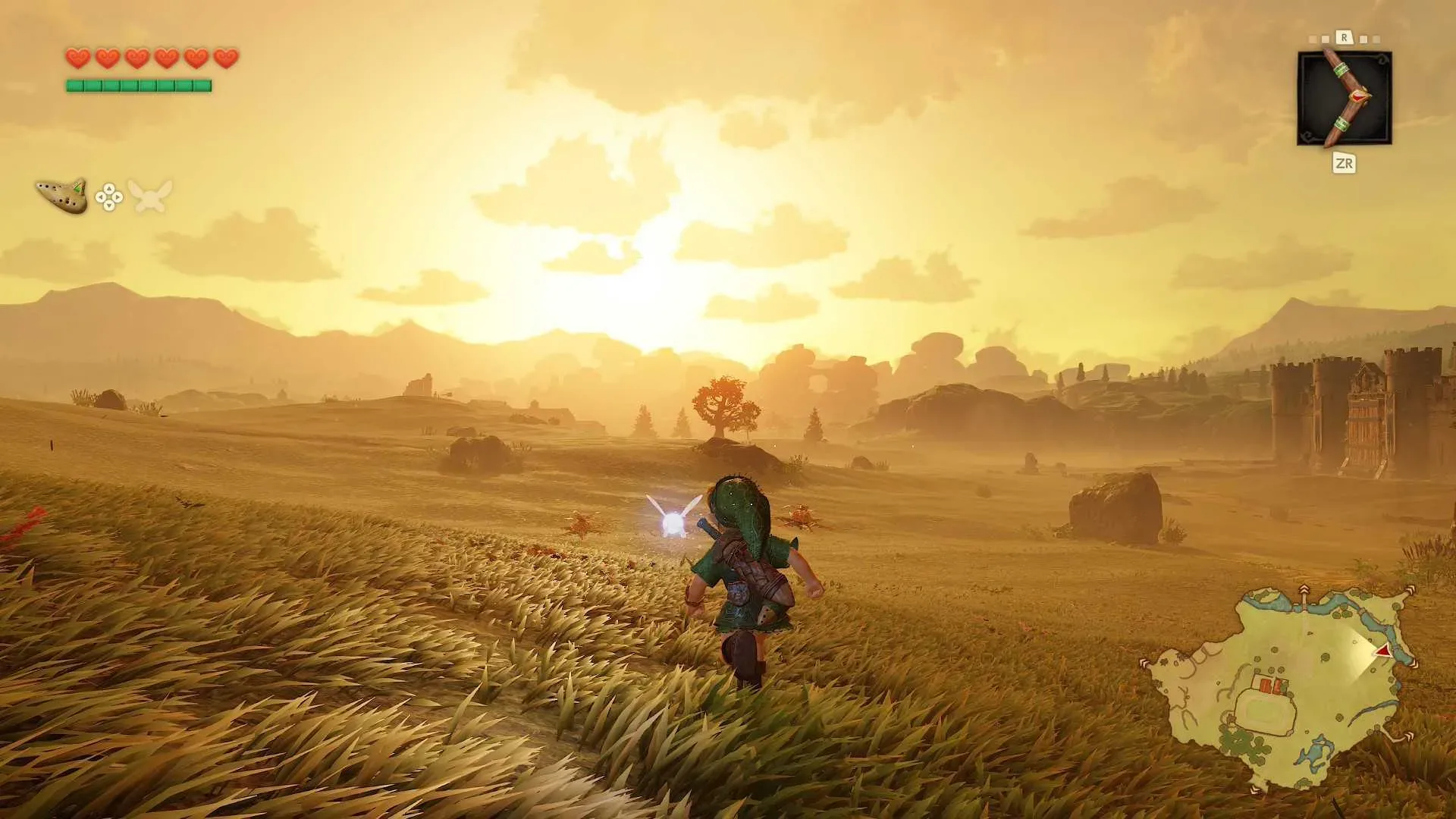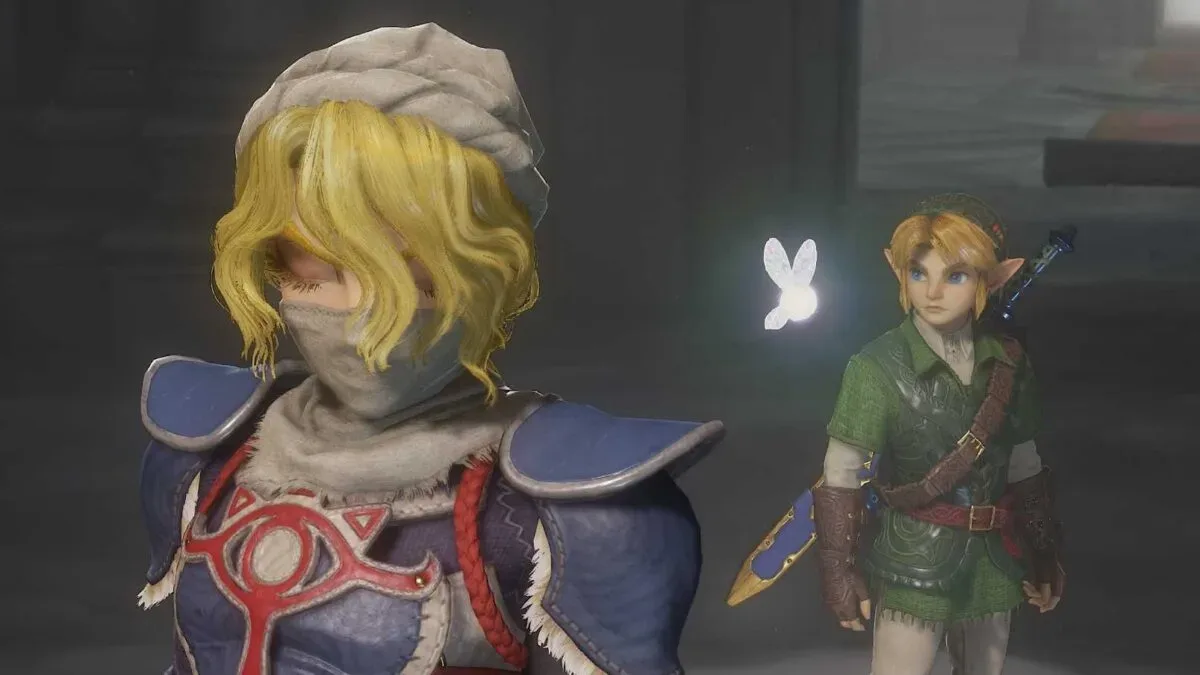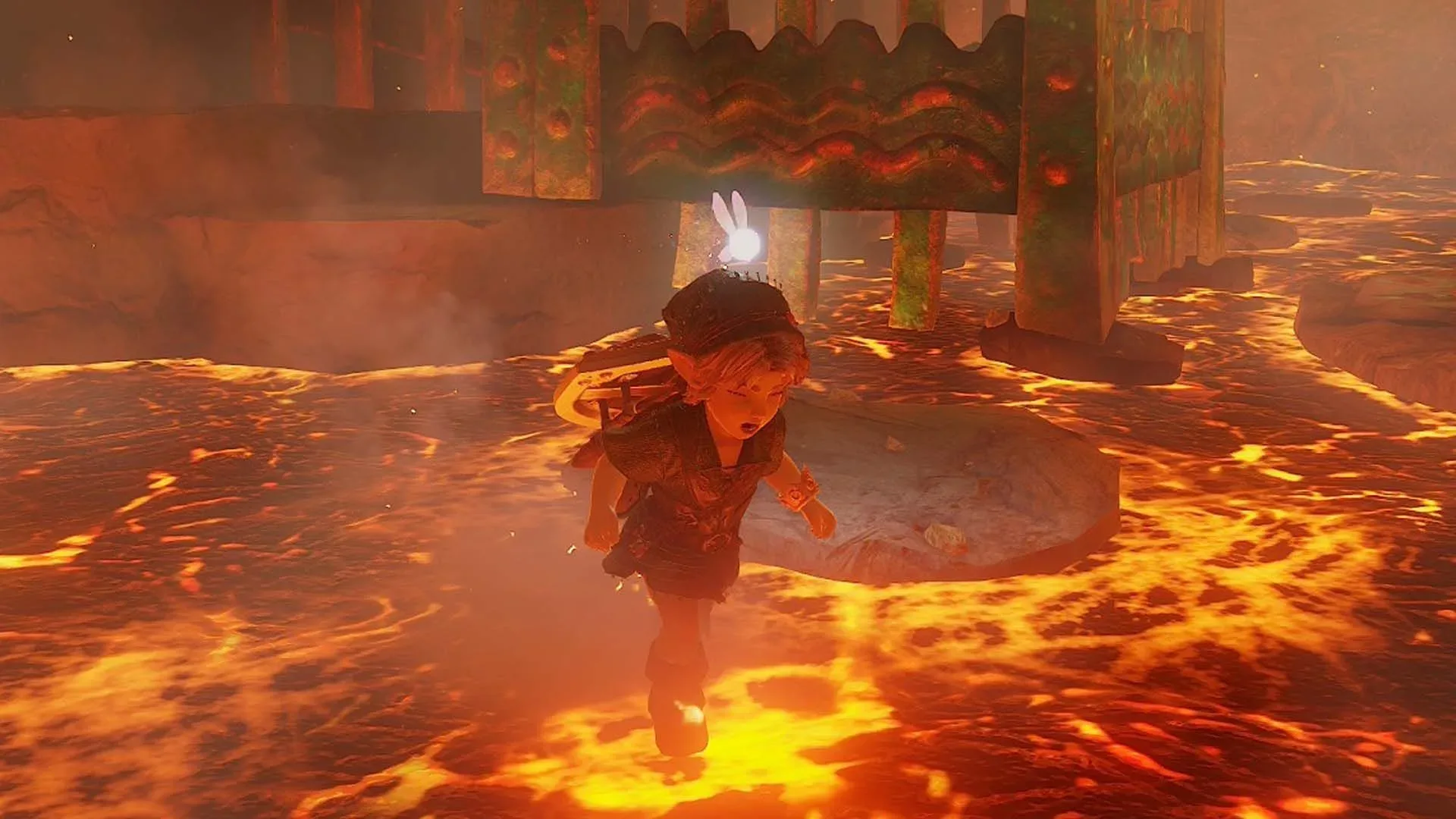
The new version of The Legend of Zelda: Ocarina of Time appears to face the most flattering problem a remake can have: it is extremely good at being Ocarina of Time. Its landscapes are beautiful, its controls are responsive, and the dungeon-and-exploration loop that made the original such a landmark still has real force. For players arriving fresh, or revisiting after years away, that makes a persuasive case for this remake as the preferred way to experience the adventure.
For people who know Hyrule too well, however, a faithful return carries a peculiar cost. The route through the game may have been transformed visually, but its sequence of revelations remains legible. A familiar puzzle does not stop being clever simply because its solution is remembered. Yet remembering changes the feeling of solving it. The player is no longer following a thread into the unknown; they are recognizing a path already worn into memory.
That tension is not a failure of the remake. It is the central tradeoff built into the project. The closer it stays to the original’s shape, the more reliably it preserves what players loved. The more it departs—through revised dungeons, changed combat, or newly designed challenges—the greater the risk of losing the specific game it was meant to bring forward.
A remake can restore a game without restoring surprise
“Faithful” is often treated as automatic praise in remake discussions, but it describes a design choice rather than a universal virtue. A faithful remake retains the original game’s core structure: major events, progression gates, puzzle logic, enemy behavior, side activities, and the general cadence of the journey. Visual presentation and controls can be modernized while the playable architecture stays substantially intact.
That appears to be the approach here. The broad critical path remains familiar, combat functions much as it did before, enemies behave in comparable ways, and the side content seems largely unchanged. Streamlining has also made progression smoother. For a newcomer, those decisions may reduce friction without compromising the adventure’s identity. For a veteran, they can make the old structure even easier to see.
The critical path is the chain of required objectives that advances the main story. It is distinct from optional secrets, collectibles, and challenge activities. A player may not remember every hidden item or the exact steps to earn the Biggoron Sword, for example, while still retaining a strong sense of where the main quest is going. That is enough to shift the experience. The essential turns arrive with less uncertainty: return to a key location, change Link’s age, cross Hyrule Field again, open the next route, enter the next dungeon.
There is an important practical distinction here. Forgetting a game’s details is not the same as encountering it without prior knowledge. A returning player may still be surprised by a minor secret, a room layout, or a small connection between systems. But the larger map of the adventure is already internalized. The emotional payoff of discovery is therefore difficult for any visual overhaul to reproduce.
Why Ocarina of Time’s old design is still so readable
That familiarity is especially powerful because Ocarina of Time is built around tightly organized puzzle design. Its dungeons teach players how a space works, introduce a tool or rule, and then ask them to apply that understanding in more demanding ways. The answer is generally not random experimentation. It is a chain of observation, action, and consequence.
Related coverage includes Ocarina of Time Remake Rekindles Hyrule's Magic, Even When Familiarity Dulls the Surprise.
This is often called a gameplay loop: the repeatable cycle of actions that structures play. In this case, exploration leads to clues and obstacles; obstacles lead to tools, keys, or new information; those tools open new possibilities; and each new possibility pushes exploration onward. The loop remains satisfying because it is concrete. Players can see a blocked door, identify an unavailable route, find an item or mechanism, and feel the world’s logic click into place.
The game’s 3D dungeon puzzle blueprint still matters because it combines spatial awareness with item-based progression. A room is not merely a combat arena or a corridor between cutscenes. It is a problem with visual information: height, platforms, switches, locked gates, targets, movable pieces, and routes that become meaningful once the player has gained the right capability.
That structure has aged into something more complicated than simple novelty. It can still be clever, but veterans may experience it with the warmth of recognition rather than the electricity of first discovery. The result is closer to rereading a formative book when one already knows every major turn: the construction remains visible, maybe more visible than ever, but suspense cannot be recreated on command.
The generational split is part of the remake’s appeal
A remake does not have to mean the same thing to everyone holding the controller. One returning player can view a location such as Gerudo Fortress as another checkpoint in a long-remembered itinerary. A younger player, by contrast, may see it as a wholly new place with unfamiliar rules, characters, and problems. Passing the controller within a family can make that divide unusually clear.
For newcomers, the remake’s modernization may be enough to make an older adventure feel immediate. They are not comparing minute revisions against an internal model built through repeated play. They are discovering the game’s connections for the first time. The landscapes, responsive movement, and clear puzzle language are not restoration work to them; they are the adventure itself.
For longtime players, the same precision can emphasize the distance between then and now. Nostalgia is not only affection for old assets or familiar music. It is also memory of uncertainty: not knowing how a dungeon worked, whether a strange object mattered, or where a newly acquired tool might lead. A remake can preserve the object of nostalgia with remarkable skill, but it cannot hand back the player’s former lack of knowledge.
That observation should not become an argument that remakes are only for newcomers. Replaying a known game has its own pleasures: mastery, appreciation of design, shared play, and the satisfaction of seeing a favorite world presented with more visual detail. It simply means that “best version” and “most personally transformative version” are not always the same category.
What returning players may be missing
The clearest request from deeply experienced players is not necessarily a less faithful base game. It is a companion mode that assumes familiarity. The remake currently has no Master Quest mode at launch and no indicated set of additional bonus dungeons designed around later lessons in Zelda design.
A Master Quest mode, in this context, would mean an alternate or more demanding arrangement of challenges rather than merely a difficulty number attached to the same rooms. Its value would be in making veterans look again: reconsidering item use, reading a room differently, and approaching familiar spaces with a changed set of expectations. Bonus dungeons could serve a similar role, offering fresh puzzle structures without altering the original story route that newcomers may want preserved.
Neither idea is confirmed as future content. There is only the possibility that Nintendo could pursue additions through DLC. DLC, or downloadable content, refers to extra material released after a game’s initial launch. It can range from small cosmetic additions to major expansions. Without announced details, though, it would be premature to treat a Master Quest or extra dungeons as promised.
The absence matters because it leaves the launch package in a very particular position. The remake’s strength is the intact original; its limitation for repeat players is also the intact original. Additional challenges would not solve the fact that the main story is familiar, but they could give expert players a parallel reason to engage with its systems.
A strong recommendation with an honest caveat
There is no contradiction in calling this remake the best way to play Ocarina of Time while feeling slightly unsatisfied by it as a returning player. Those are judgments aimed at different questions. One asks how effectively the remake presents the game. The other asks whether it can recreate a first encounter for someone who has replayed the original many times.
On the evidence available, the remake succeeds at the first question. The essential adventure is attractive, responsive, and structurally durable. The classic rhythm of exploring, puzzling, fighting, and advancing through a richly connected quest has not lost its appeal.
On the second question, it faces an impossible assignment. Fidelity preserves the old magic, but it also preserves the route by which players once found it. For an audience carrying decades of memory, even an excellent remake may feel less like a new journey than a beautiful return visit.
That is not a reason to dismiss it. It is a useful way to set expectations. New players may get the discovery that veterans remember. Returning players can get a polished, affectionate restoration of a foundational 3D adventure—and, perhaps, a renewed appreciation for just how clearly its design still communicates. Anyone looking for more Nintendo context can also read our report on a longtime Mario researcher’s plans to continue documenting Nintendo history.